
The Big Five in the Serengeti
The animals of the Serengeti are the reason this ecosystem is considered the greatest wildlife destination on Earth. Across nearly fifteen thousand square kilometres of plains, woodland and riverine forest, the Serengeti holds the densest concentration of large mammals anywhere in Africa — and at the top of every visitor's list are the Big Five: lion, leopard, elephant, buffalo and rhino. The term dates from the hunting era, describing the five most dangerous animals to pursue on foot, but today it is the photographer's checklist and the headline act of any safari.
While no single park guarantees all five in a day, the Serengeti and its neighbouring Ngorongoro Crater together offer one of the finest chances on the continent to see every one. Understanding the animals of Tanzania's Serengeti — where they live, how they behave and when to see them — is the key to a rewarding safari, and a knowledgeable guide who reads tracks, alarm calls and behaviour will find you far more than a brochure ever promises. Below we cover the Big Five in turn, then the migration, the predators, and a month-by-month calendar to help you plan.
Lion
The Serengeti is lion country above all. With a resident population numbering in the thousands, it offers some of the most reliable lion sightings in Africa, from prides lazing on granite kopjes to coordinated hunts on the open plains. The central Serengeti, in particular, is famous for its large, well-studied prides, some of which have been followed by researchers for decades. Watching a pride at dawn — cubs tumbling, females setting off to hunt, a great black-maned male surveying his territory — is one of the defining experiences of any safari, and the Serengeti delivers it more dependably than almost anywhere on the continent.
Leopard
Elusive and beautiful, leopards favour the riverine forests along the Seronera River, where they drape themselves over the branches of sausage trees and acacias in the heat of the day. Solitary and superbly camouflaged, they are the hardest of the cats to find, which makes every sighting feel earned. Patience and a sharp-eyed guide are everything, but the Serengeti remains one of the best places in Africa to find this most secretive of the big cats, often hauling a kill high into a tree to keep it safe from lions and hyenas.
Elephant
Elephant herds move through the Serengeti's woodlands and have increased steadily in recent years thanks to improved protection and anti-poaching efforts. Family groups led by an old matriarch, with calves of every size in tow, are a common and deeply moving sight, especially in the north and west of the park. Lone bulls feed quietly among the trees, and the chance to watch these intelligent, social giants interact at close range — rumbling, greeting, shepherding their young — is one of the quiet highlights of a Serengeti safari.
Buffalo
Cape buffalo are abundant throughout the Serengeti, gathering in herds that can number several hundred on the plains and along the rivers. Formidable, unpredictable and surprisingly fast, they are a Big Five staple and a favourite prey of the park's larger lion prides — and watching a pride test a buffalo herd is one of the great dramas of the bush. Old bulls, pushed out of the herd, are often found wallowing alone in muddy hollows, and they command respect even from lions.
Rhino
The rarest of the five, black rhino survive in small, carefully protected numbers in the Serengeti and, more reliably, in the nearby Ngorongoro Crater, where a handful can often be spotted on the open crater floor. Decades of poaching reduced their numbers drastically, so every sighting is both a genuine privilege and a sign of conservation slowly succeeding. For travellers determined to complete the Big Five, a day in the Ngorongoro Crater is usually the best opportunity, and a good guide will know where the resident animals tend to graze.
The great migration: wildebeest, zebra & gazelle
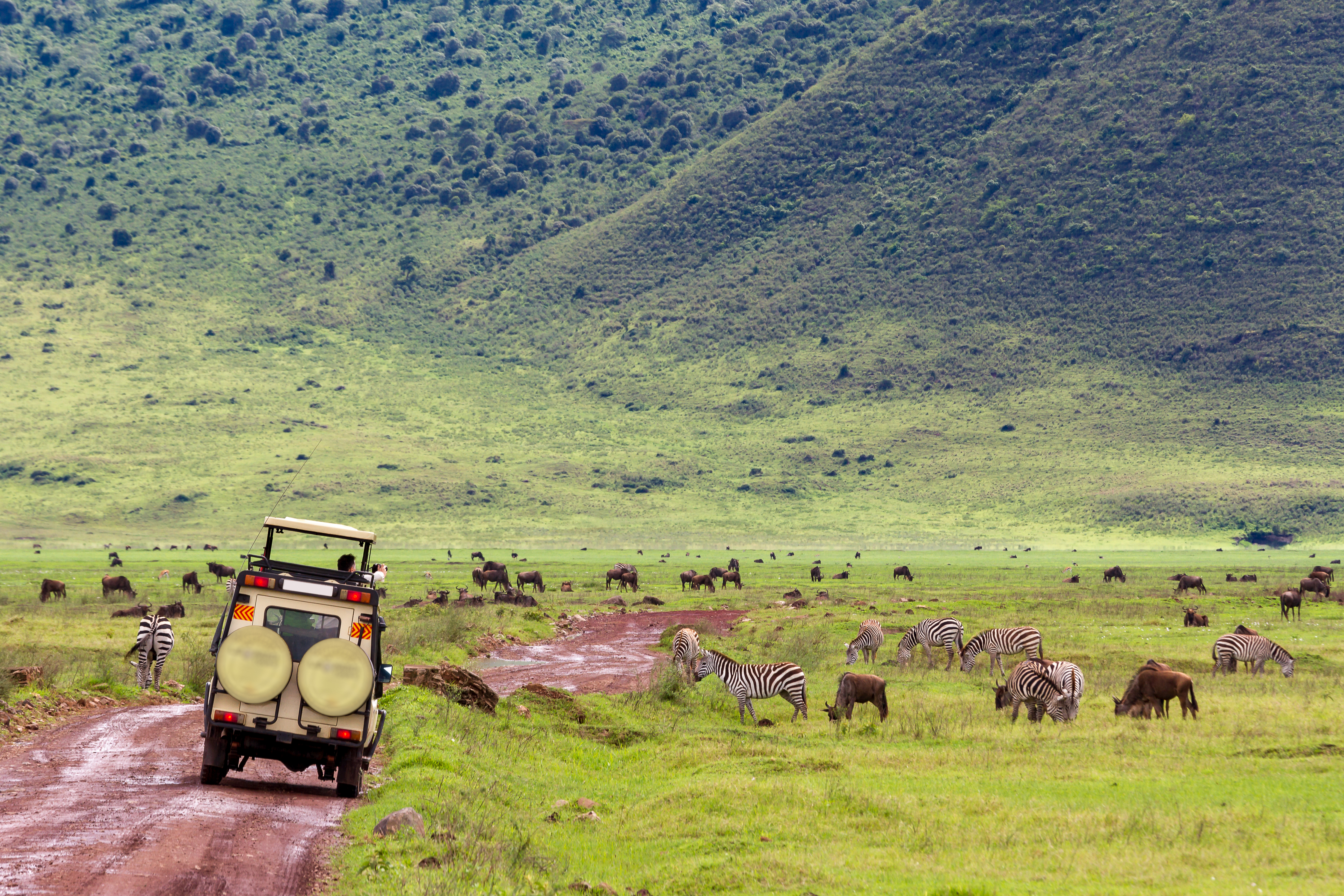
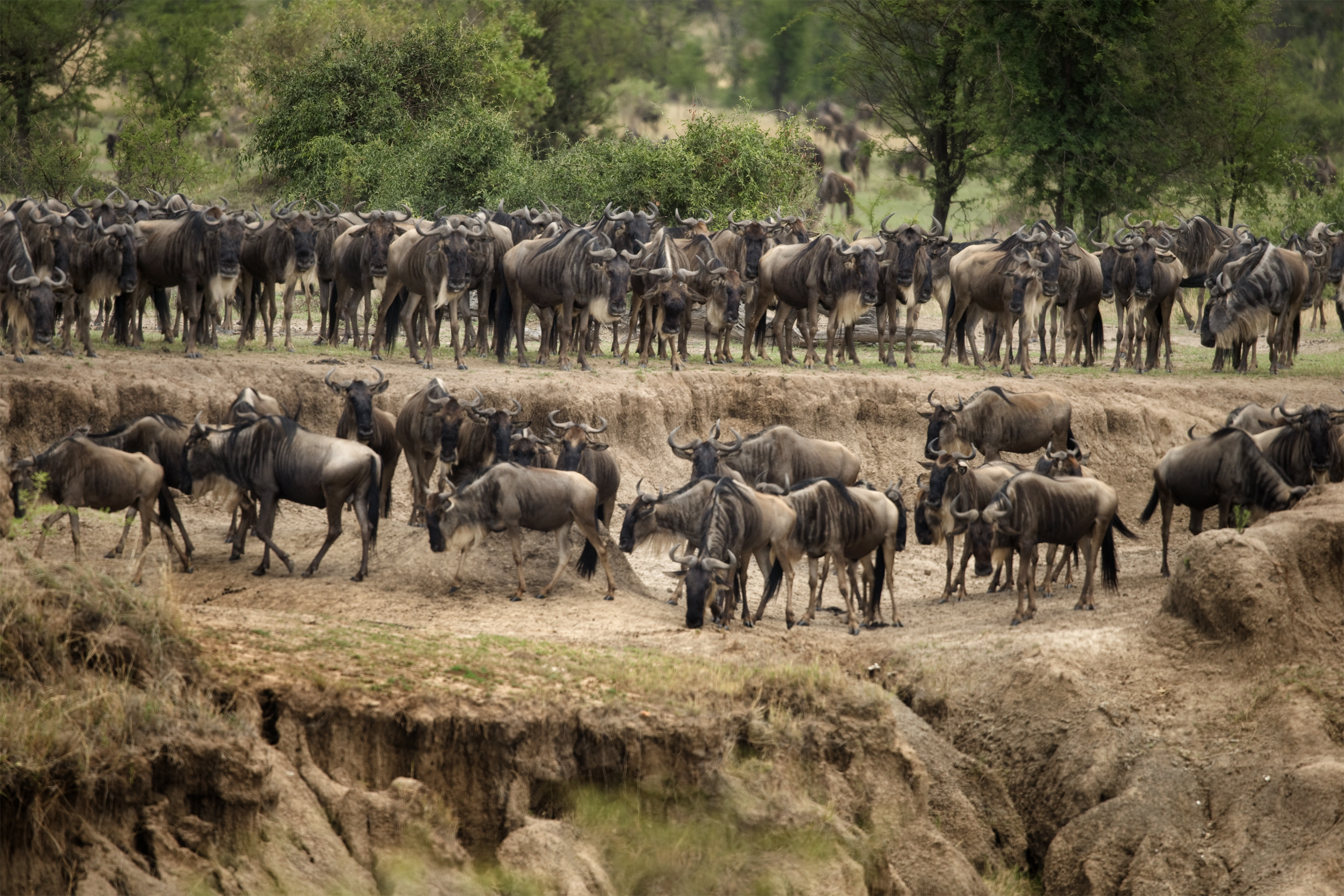
No account of Serengeti wildlife is complete without the Great Migration — the continuous, year-round movement of roughly 1.5 million wildebeest, 300,000 zebra and 500,000 gazelle in search of fresh grazing and water. This serengeti wildlife migration is the largest overland movement of animals on the planet, and it drives the entire ecosystem, from the timing of predator hunts to the dramatic river crossings that draw photographers from around the world.
The migration is not a single event but an endless circuit dictated by the rains. The herds calve on the southern short-grass plains early in the year, move north and west as the grass dries, and brave the crocodile-filled Grumeti and Mara rivers in the middle of the year before turning south again with the returning rains. Our dedicated Serengeti migration guide maps the full cycle month by month, but the essential point for planning is that the migration is somewhere in the ecosystem all year — the question is simply which region to visit when.
Predators & rare species to look for
Beyond lions and leopards, the Serengeti supports cheetah on the open southern plains, where the flat terrain suits their high-speed hunts; spotted hyena in large, complex clans that are formidable hunters in their own right rather than mere scavengers; and one of Africa's recovering populations of endangered wild dog, among the most efficient predators on the continent. Watching any of these hunt is among the most thrilling experiences a safari can offer.
Smaller treasures abound too. Serval and caracal stalk the long grass, bat-eared foxes and golden and black-backed jackals trot across the plains, honey badgers go about their fearless business, and over 500 bird species range from towering ostriches to jewel-bright lilac-breasted rollers and the comical secretary bird. A patient observer with a good guide is rewarded as richly as the Big Five hunter, and many returning visitors come to treasure these smaller sightings most of all.
Month-by-month wildlife calendar for the Serengeti
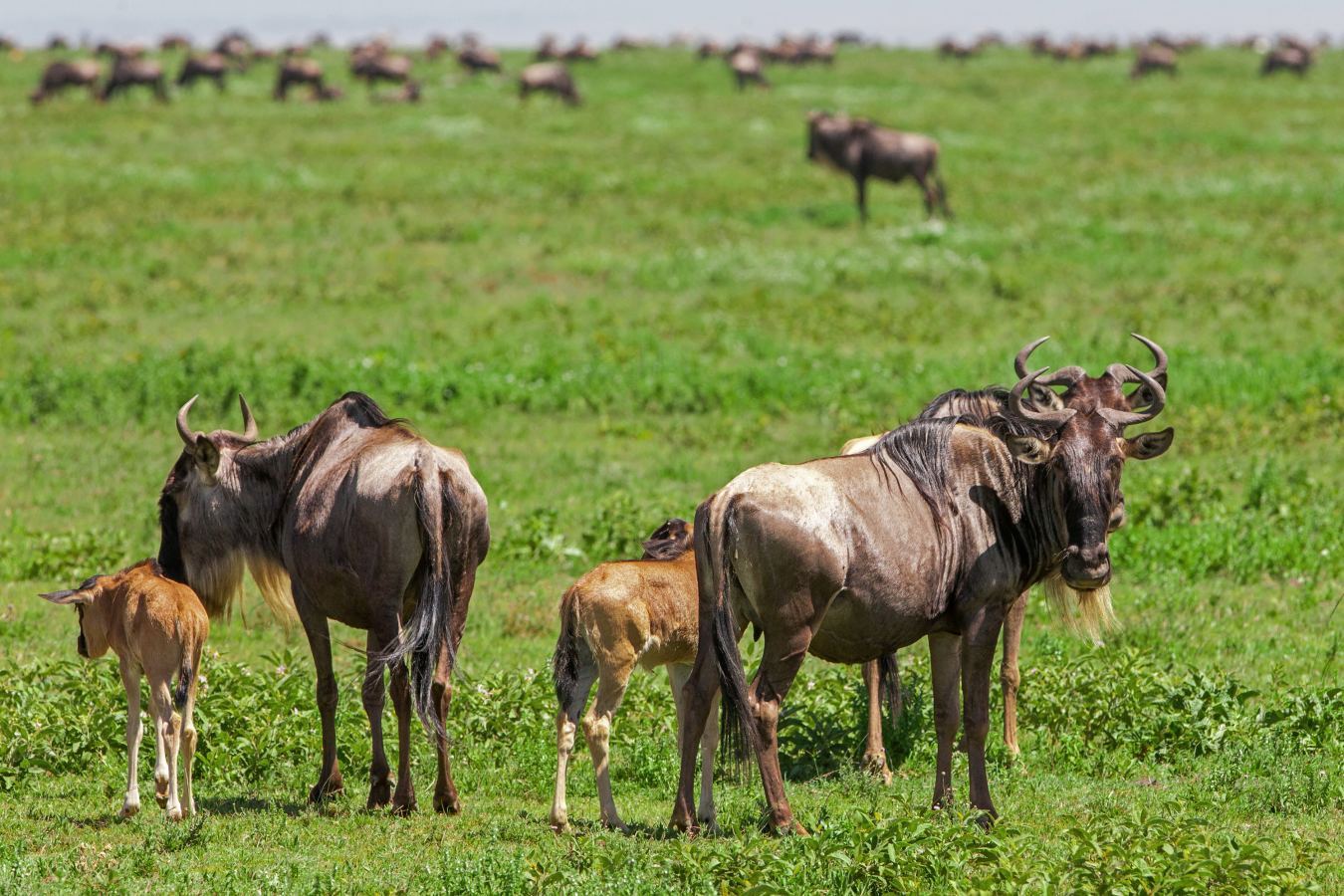
Timing shapes what you see. December to March brings the calving season to the southern plains around Ndutu, with hundreds of thousands of newborns and intense predator activity as cats target the vulnerable young. April and May are the green, quiet low season as the herds drift north and west, offering lush scenery, dramatic skies and excellent value. June sees the herds massing along the Grumeti River.
From July to September the migration in the Serengeti reaches its dramatic peak with the northern Mara River crossings, the scenes most people picture when they imagine the migration. October and November mark the return south as the short rains begin. Crucially, the Serengeti's resident wildlife — its lions, leopards, elephants, cheetahs and more — is superb every single month, regardless of where the migration sits, so there is no wrong time to visit, only different highlights.
Best areas in the Serengeti for wildlife viewing
The Serengeti is vast, and each region has its own character and its own best season. The central Seronera area offers superb year-round resident game and the most reliable big cats, making it ideal for first-timers and for any month of the year. The southern plains around Ndutu explode with life during the calving season from December to March. The western corridor follows the Grumeti River and comes into its own around June, while the far north holds the celebrated Mara River crossings from July to September with a wilder, less-visited atmosphere.
A tanzania wildlife safari planned around the right region for your travel dates is the single best way to maximise your sightings — and it is exactly the kind of judgement a local operator makes instinctively. Rather than book a generic Serengeti stay, the smart approach is to position your camps where the action will be during your specific window, which can mean the difference between watching the migration and merely hearing about it.
Plan around the herds with our Serengeti migration guide and our month-by-month best time to visit the Serengeti calendar.
Where to stay for the best access? See the best luxury Serengeti safari camps.
The Serengeti is not a zoo with fences and feeding times — it is a living, moving drama, and its animals write a different story across the plains every single day.
- Central Seronera: year-round big cats & resident game
- Southern plains (Ndutu): calving season, Dec–Mar
- Western corridor: Grumeti River, around Jun
- Northern Serengeti: Mara River crossings, Jul–Sep
- Ngorongoro Crater nearby: the best black rhino chance
Responsible wildlife viewing on safari
Seeing these animals comes with a responsibility to view them well. Good operators keep a respectful distance, never surround or crowd an animal, switch off engines at sightings where appropriate, and never bait or lure wildlife for a photograph. The behaviour of your vehicle directly affects the animals, the quality of everyone's sighting, and the long-term health of the ecosystem, so it is worth choosing a guide and company who take this seriously rather than chasing the dramatic shot at any cost.
The Serengeti and Ngorongoro are protected for a reason, and the fees you pay go directly towards anti-poaching, habitat protection and the communities who live alongside the wildlife. Travelling with a local, conservation-minded operator means more of that value stays in Tanzania and supports the people doing the daily work of protection. It is one of the quiet ways a safari does good as well as feeling good.
For photographers, the best results come from patience rather than proximity. Waiting quietly with a sleeping pride often rewards you with far better images — a yawn, a stretch, cubs at play — than pushing too close ever could. The animals relax, behave naturally, and reveal the moments that make a photograph memorable. The same patience that protects the wildlife also produces the finest pictures, which is one of the happy truths of ethical safari travel.
Finally, remember that wildlife viewing is a privilege, not a guarantee, and that mindset makes for a richer safari. Some of the most treasured sightings are the unexpected ones — a serval pouncing in the long grass, a newborn taking its first steps, a martial eagle stooping on its prey. Travelling with curiosity rather than a checklist, and with a guide who shares the small stories behind each animal, turns a game drive into something closer to genuine natural history. That is the spirit in which the Serengeti rewards you most generously, and it is the spirit in which we love to guide.
Plan a wildlife-focused safari with Sokwe
Seeing these animals at their best is a matter of being in the right place at the right time with a guide who understands their behaviour. That is exactly what we do as an Arusha-based, locally owned operator with guides who have spent their lives in these landscapes. Tell us which species matter most to you — the cats, the crossings, the rhino, the birds — and when you can travel, and we will design a wildlife-focused Serengeti itinerary built around your priorities and the season.
Plan your wildlife safari with Sokwe Africa Safari
Frequently asked questions
What animals live in the Serengeti?
Very nearly everything you picture on safari. All of the Big Five are present, alongside roughly 1.5 million wildebeest, 300,000 zebra and 500,000 gazelle on the migration circuit, plus cheetah, spotted hyena, wild dog, serval, caracal, bat-eared fox, jackal and honey badger. Over 500 bird species range from towering ostriches to jewel-bright lilac-breasted rollers.
Are there tigers in Africa?
No. Tigers are an Asian species and have never lived wild anywhere in Africa, so you will not meet one in the Serengeti or on any other African plain. The continent's big cats are the lion, the leopard and the cheetah, and the Serengeti holds all three in good numbers. Guests are often surprised by this, and never disappointed.
What is the best time of year to see predators in the Serengeti?
December to March, when the herds calve on the southern short-grass plains around Ndutu. Hundreds of thousands of newborns concentrate lion, cheetah and hyena activity into a small area, and hunts are frequent. That said, the park's resident predators hunt superbly every month of the year, so there is no wrong season, only different theatre.
Are there wild dogs in the Serengeti?
Yes, though they remain a rare privilege rather than a reliable sighting. The ecosystem supports one of Africa's recovering populations of this endangered predator, among the most efficient hunters on the continent, but the packs range enormously and no honest guide will promise you one. If wild dog sit at the top of your list, Tanzania's southern parks offer better odds.
Are there cheetah in the Serengeti?
Yes, and the open southern plains are among the finest cheetah country in Africa, because flat terrain and short grass suit their high-speed hunts. Sightings peak from December to March, when the wildebeest are calving around Ndutu and mothers with cubs hunt in plain view. A guide who knows the individual cats' territories improves your chances considerably.
Which part of the Serengeti is best for wildlife viewing?
It depends entirely on your dates. Central Seronera offers superb resident game and the most reliable big cats in any month, which makes it ideal for first-timers. The southern plains around Ndutu come alive for calving from December to March, the western corridor peaks around June along the Grumeti, and the wilder north holds the Mara crossings from July to September.