
Quick answer
A luxury safari lodge is defined by where it sits, who guides you, how it is designed and how the food is made, not by its pool or its thread count. The best ones put you in the most productive wildlife area for your dates, with a guide who knows the animals individually.
For what a luxury Serengeti safari costs and when to go, see our Luxury Serengeti Safari page, or ask for a tailored proposal and our Arusha team will reply within 24 hours.
How Much Does a Luxury Serengeti Safari Cost?
Luxury Serengeti safaris typically range from $4,500 to $8,000 per person, depending on the season, the camps you select and the length of the itinerary. That price includes your private safari vehicle, an expert guide, luxury accommodation, full board meals, park fees and airport transfers. Adding fly-in connections between camps raises the price, and travelling in the peak river-crossing months of July to October costs more than the quieter months of November and December.
If you want to go further, ultra-luxury journeys with private jets and exclusive-use properties start from $9,000 per person. If you want a private, well-guided northern circuit safari at a lower starting point, our Great Migration Safari and Classic Tanzania Big Five Safari begin at $4,200 and $3,500 per person. Every Sokwe safari is private and tailor-made, so these are starting points that we reshape around your dates and pace.
Our journeys at a glance
| Journey | Length | Price, per person | |
|---|---|---|---|
| Great Migration Safari | 7–10 days | From $4,200 | View |
| Classic Tanzania Big Five Safari | 5–8 days | From $3,500 | View |
| 7-Day Safari Luxury | 7 days | Priced on request | View |
| Serengeti and Zanzibar | Bush and beach | Tailored to you | View |
| Ultra-luxury, private jet | Tailored | From $9,000 | View |
Private groups only. The final price depends on your dates and the camps you choose.
When Is the Best Time for a Luxury Serengeti Safari?
The Serengeti delivers wildlife year-round, but timing decides what you see. The Great Migration follows a predictable pattern, and the right camp position matters as much as the dates.
| Months | What happens |
|---|---|
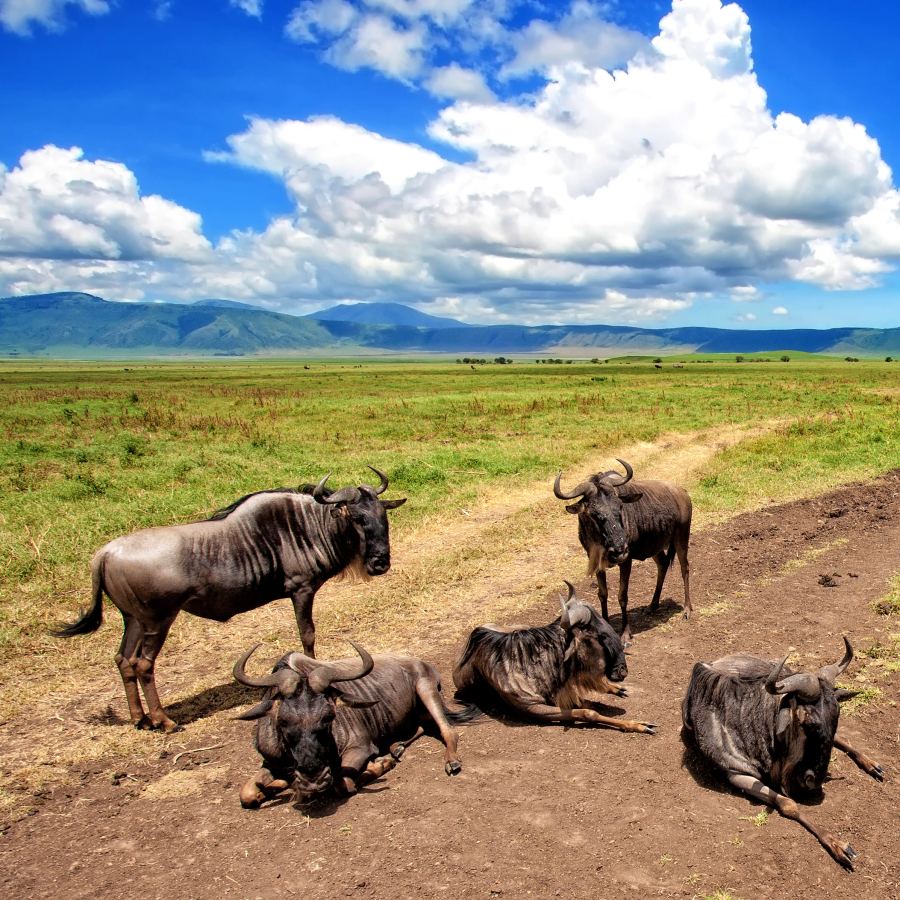
| January–February | Calving season on the southern plains. More than 500,000 calves are born, with exceptional predator activity. Camps around Ndutu offer exclusive positioning. |
| March–June | The herds move north through the central Serengeti. Lush landscapes and excellent general game viewing. |
| July–October | Mara River crossings. Peak season. Private camps in the Lamai and Mara North areas give front-row access. |
| November–December | The herds sweep back south. Quieter camps, lower rates and beautiful light for photography. |
What Makes a Luxury Serengeti Safari Different
Luxury in the Serengeti means privacy and time. Your safari vehicle and guide are reserved for your party alone, so you decide when to stay with a leopard and when to move on. Your camp sits in a prime game area, far from shared lodges and group schedules. Many guests add a private hot air balloon flight at dawn over the plains, and the classic finish is a few nights on a Zanzibar beach.
What Makes a Safari Lodge Truly Luxury
The word "luxury" is used freely in the safari industry, and not always accurately. A swimming pool and a high thread count do not a luxury lodge make — at least not in the sense that matters when you have travelled to one of the wildest places on Earth to witness something extraordinary. True luxury in a safari context is defined by a specific set of qualities: location within the most wildlife-productive zones of the park, a low ratio of tents to guides, exceptional food prepared with care and creativity, authentic design that connects you to the landscape rather than insulating you from it, and — above all — a guiding team of the highest calibre whose knowledge and passion transform every game drive into a revelation.
The finest luxury safari lodges in the Serengeti and Ngorongoro understand this definition implicitly. They are not simply hotels that happen to be surrounded by savannah. They are purpose-built environments where every element — from the orientation of your tent to the timing of your wake-up call — is designed to maximise your engagement with the wilderness around you. The best ones feel like home within a day, not because they are familiar, but because they are right. This guide outlines what to look for and what separates the exceptional from the merely good.

Location: The Non-Negotiable Factor
In the safari world, location is everything. A lodge positioned inside a private conservancy adjacent to the national park gives you access to wildlife viewing on private land — meaning off-road driving, night drives, and guided walking safaris that are simply not permitted inside the national park itself. A camp positioned in the northern Serengeti's Lamai Wedge places you within walking distance of the Mara River during migration season. A crater rim lodge in the Ngorongoro Conservation Area gives you the iconic view of the caldera from your veranda before you even begin the day's descent.
The most sought-after Serengeti lodges are those positioned in the northern Serengeti between July and October for the Mara River crossings, and in the Ndutu-adjacent area for the calving season. These seasonal positioning opportunities require camps that either move with the wildlife — mobile fly-camps that are erected and dismantled as the season demands — or have permanent positions in multiple zones that allow guests to be placed in the optimal location for their travel dates. When booking a luxury Tanzania safari through Sokwe Africa Safaris, this seasonal positioning intelligence is applied to every itinerary as a matter of course.
Which Part of the Serengeti Should Your Lodge Be In?
The Serengeti is not one place. It is a set of very different landscapes, and the lodge you choose decides which of them you wake up in. A camp that is perfectly placed in July can be a long drive from the action in February, which is why the honest answer to "which lodge is best?" always begins with "when are you travelling?"
The southern plains around Ndutu are short-grass country on the edge of the wider Serengeti ecosystem. They hold the calving season of the Great Migration and some of the finest big-cat viewing in Africa, with intimate game drives among cheetah, lion and wildebeest, far from the busier circuits. The central Serengeti around Seronera is the reliable heart of the park, with resident lion prides and some of the best leopard viewing in Africa, year-round.
The northern Serengeti, around Lamai and Kogatende, is remote and rewarding. Between July and October the Mara River crossings take place here, and resident lion, leopard and elephant roam the kopjes all year. The Western Corridor follows the Grumeti River toward Lake Victoria, a landscape of riverine forest and open savannah known for its crossings in June and July, giant Nile crocodiles and wilderness that few visitors ever see. To the east, the Ngorongoro Conservation Area adds the crater and its rim lodges, described below.
None of these areas is simply better than the others. Each is at its best in a different season, and some of the most rewarding safaris combine two of them, moving camp part-way through the trip so that you see both the open plains and the river country rather than choosing between them.
Month-by-month timing, and what each season costs, is set out on our Luxury Serengeti Safari page. For where to stay in each area, see our guide to where to stay in the Serengeti.
Guiding: The Heart of the Luxury Experience
You can sleep in the most beautiful tent in Africa and eat the finest bush dinner on the continent, and still have a mediocre safari if your guide is uninspired. Conversely, the right guide can turn a modest camp in a good wildlife area into the most memorable experience of your life. The finest luxury lodges in Tanzania employ guides who are not just competent drivers and wildlife spotters — they are naturalists, ecologists, storytellers, and interpreters who have spent years learning their specific area to a level of intimacy that most travellers never encounter.
The best guides know the individual animals in their territory. They know which lion pride denned where last month, which leopard female has new cubs in the kopje to the east, which cheetah coalition has been hunting the western boundary. They read tracks and signs with an ease that seems almost supernatural, explain animal behaviour in ways that illuminate rather than simply inform, and anticipate wildlife events with an accuracy born of genuine experience. Sokwe Africa Safaris selects guides based on precisely these qualities, and it is the single most consistent factor in the extraordinary feedback we receive from guests returning from their Tanzania safari.
Plan your luxury Serengeti safari
Tell us when you want to travel and what matters most. Our Arusha team replies with a tailored proposal, usually within 24 hours.
Design and Atmosphere: Living in the Landscape
The design of a luxury safari lodge should do two things simultaneously: provide genuine comfort and connect you inescapably to the environment. The finest lodges achieve this through open architecture — canvas walls that can be rolled back entirely to merge interior and exterior, decks positioned directly over waterholes or riverbanks, dining areas built into the landscape rather than enclosed against it. Waking up in a well-designed safari tent to the sound of lions calling across the plains, then opening the canvas to find the sun rising over the Serengeti from your bed, is an experience that no conventional hotel room can approach.
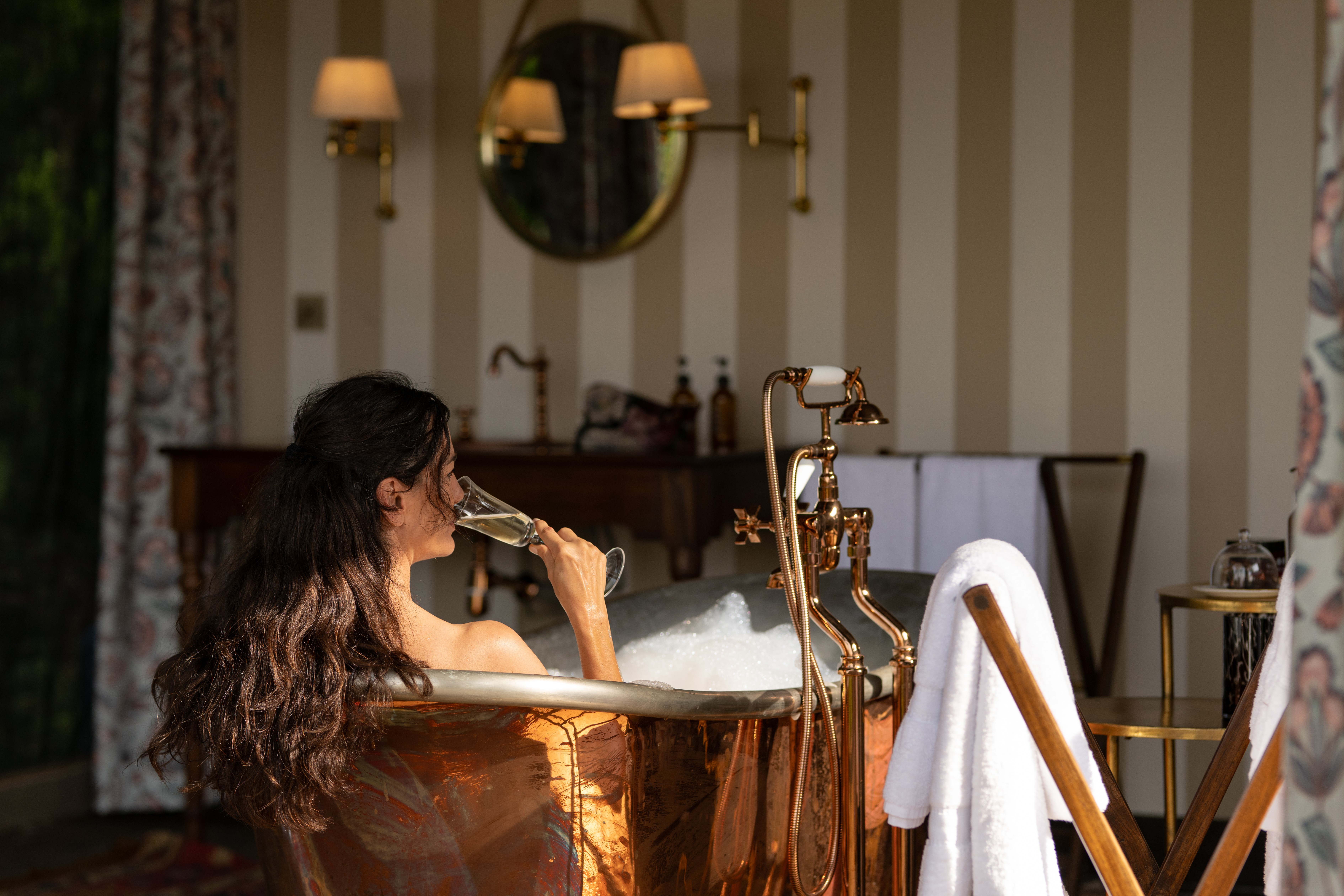
Furnishings should feel appropriate to the setting — natural materials, local textiles, artwork that reflects the culture and wildlife of the region — without being rustic. The finest luxury lodges have en-suite bathrooms with outdoor showers positioned to give views of the bush, plunge pools for the heat of the afternoon, and dining menus that feature seasonal, locally sourced ingredients prepared by chefs who understand that bush dining can be as refined as any restaurant in Europe or New York. These details matter not because they are indulgent but because they create the physical and emotional conditions in which you can fully inhabit the experience of being in wild Africa.
How to Compare Two Luxury Lodges
Brochures make every lodge look the same, so the comparison has to rest on questions rather than photographs. Start with position: where exactly is the camp relative to where the animals will be on your dates, and how long is the drive to the areas that matter? A beautiful camp that adds two hours of driving each way is a poor bargain.
Then ask about the people. How many guests does each guide look after, and will your vehicle and guide be yours alone for the whole trip? Find out whether the camp sits inside the national park or in a private conservancy next to it, because that decides whether off-road driving, night drives and guided walks are possible. Ask how many tents the camp has, since a small camp changes the feel of dinner, the noise at the waterhole and the attention you receive.
Finally, look at what is actually included. Meals, drinks, laundry, park fees, transfers and activities are treated differently from one lodge to the next, and the headline nightly rate rarely tells you the full cost of a stay. A lodge that looks more expensive on paper is sometimes the cheaper one once everything is counted. A good operator will answer all of these questions plainly, and you should hold us to the same standard.
The Ngorongoro Crater Rim Lodges: A Category of Their Own
The Ngorongoro Crater rim is one of the most dramatically situated hotel locations in the world. At 2,300 metres elevation, the rim is often wreathed in mist in the early morning, the montane forest alive with birds and the occasional buffalo emerging from the trees. The view from the rim down into the crater — 600 metres below, 20 kilometres across, containing one of the most extraordinary wildlife populations on Earth — is genuinely vertiginous in its impact.
The finest crater rim lodges are built to maximise this view without compromising the ecological integrity of the environment. Private plunge pools positioned at the crater edge, dining terraces that look directly into the caldera, and suites whose glass facades open the entire room to the panorama create an experience of complete immersion in one of Africa's great geological spectacles. Descending into the crater from your perch on the rim, game driving all day on the extraordinary floor below, and returning to a warm shower, a glass of Tanzanian wine, and a dinner served overlooking the crater as night falls over it — this is what luxury safari travel in Tanzania looks and feels like at its finest.
How We Choose Camps for a Private Safari
Every Sokwe safari is private and tailor-made, so our packages are starting points, not fixed departures. We begin with your dates and what you most want to see, place you where the wildlife will be, and only then choose the camp. Sometimes that means a small tented camp in a quiet corner rather than the best-known name.
Because we run the safari ourselves, from our office in Arusha at the gateway to the northern circuit, you deal with the same people from the first email until your guide drops you at the airport. You are booking the company that runs your safari, not an agency reselling it. We answer every enquiry within 24 hours and follow with a detailed itinerary and full costing within 48.
What Our Guests Say
“Our Tanzania Safari was beyond our expectations!”
“…a rare breed of guide who is genuinely interested in his guests…”
“…we had a truly unforgettable experience, and we highly recommend him and his company.”
Sokwe Africa Safaris Limited is based in Arusha and holds Tourism Class A licence No. 033510 from Tanzania’s Ministry of Natural Resources and Tourism. Read all our reviews on TripAdvisor.
See our Luxury Serengeti Safari page, or explore the Serengeti and Zanzibar combination.
Explore our handpicked Luxury Tanzania Safari packages — each built around the finest camps and most experienced guides in the Serengeti and Ngorongoro.
For complete exclusivity, see our Private Tanzania Safari tours with exclusive-use camp options available for families and couples.
Related: getting from Nairobi to the Serengeti.
More on this in Kilimanjaro, the Serengeti and Zanzibar in 14 days.
See also our guide: What to Expect at a Tanzania Safari Lodge, Tier by Tier.
See also our guide: Ngorongoro Serena Safari Lodge: the crater-rim classic explained.
Read about specific properties: Four Seasons Safari Lodge Serengeti, Singita Sasakwa and Ndutu Safari Lodge.
Learn more about conservation standards in Tanzania's protected areas at Tanzania National Parks Authority.
The finest safari lodges do not compete with the wilderness — they disappear into it, leaving you alone with the landscape and everything that moves within it.
- Location inside or adjacent to prime wildlife zones
- Private conservancy access for off-road and night drives
- Guide-to-guest ratio of 1:1 or 1:2 for private experience
- Open-architecture design connecting interior to landscape
- Seasonal positioning to follow migration and wildlife events
- Full board dining with locally sourced, chef-prepared menus
Frequently asked questions
What makes a safari lodge truly luxury?
Position in the most productive wildlife area for your dates, a low ratio of guests to guides, food prepared with care, design that connects you to the landscape, and above all an outstanding guide. A pool and a high thread count alone do not make a lodge luxurious.
Where should a luxury lodge be in the Serengeti?
It depends on when you travel. The northern Serengeti suits the Mara River crossings between July and October, and the southern plains around Ndutu suit the calving season. Camps in a private conservancy next to the park also offer off-road drives, night drives and guided walks.
Are Ngorongoro Crater rim lodges worth it?
For most travellers, yes. The rim sits at about 2,300 metres and looks 600 metres down into a crater 20 kilometres across, often wreathed in mist at dawn. You descend for a full game drive on the crater floor, then return to the rim for the evening.
Can I drive off-road or at night from a luxury camp?
Not inside the national park, where off-road driving, night drives and walking safaris are not permitted. They are possible on private land in a conservancy next to the park, so the camp's location decides which activities you can enjoy. Ask before you book.
Is Sokwe Africa Safaris licensed?
Yes. Sokwe Africa Safaris Limited is based in Arusha and holds Tourism Class A licence No. 033510, issued under Tanzania's Tourism Act by the Ministry of Natural Resources and Tourism, Tourism Division. Ask us for a copy at any time and we will send it.