
What are the big 5 safari animals?
Ask anyone planning a first African safari what they hope to see and the answer usually involves the big 5 safari animals: lion, leopard, elephant, buffalo and rhino. The phrase has become shorthand for safari success, yet few travellers know where it actually comes from, or which of the five are easy to find and which will genuinely test their patience. This guide explains the surprising origin of the term, profiles each of the five with the honesty of guides who look for them every day, and tells you exactly where in Tanzania your chances are best.
It is worth saying at the outset that the big five animals are not the five biggest, nor the five rarest. A giraffe towers over a leopard; a hippo is heavier than a buffalo; a wild dog sighting is far rarer than a lion. The list is a piece of history that has outlived its original meaning and become a rather enjoyable game — and like any game, it is more fun when you understand the rules, the odds and where the difficult points are scored. In Tanzania, happily, all five are present, protected and genuinely findable.
A hunters' term, not a size chart
The phrase was coined not by photographers or naturalists but by trophy hunters in the late nineteenth and early twentieth centuries, and it measured one thing only: danger. The big five were the five animals most dangerous to hunt on foot — the ones most likely to charge when wounded, to circle back on their pursuer, to fight rather than flee. That is the hunters' term origin, and it explains the list's apparent oddities. The buffalo, outwardly a large and placid cow, earns its place because a wounded buffalo is famously vengeful, while the taller giraffe and the heavier hippo, dangerous as the latter is in water, never qualified.
The wonderful irony is that a term invented for killing animals now drives their protection. Photographic safaris built around the big five bring in the park fees and employment that fund Tanzania's rangers and anti-poaching units, and animals once prized as trophies are worth incomparably more alive. When your guide announces on the radio that a rhino has been spotted, you are taking part in the modern version of the hunt — cameras instead of rifles, and everyone, including the rhino, goes home at the end of the day.
Lion: the sociable one you will almost certainly see
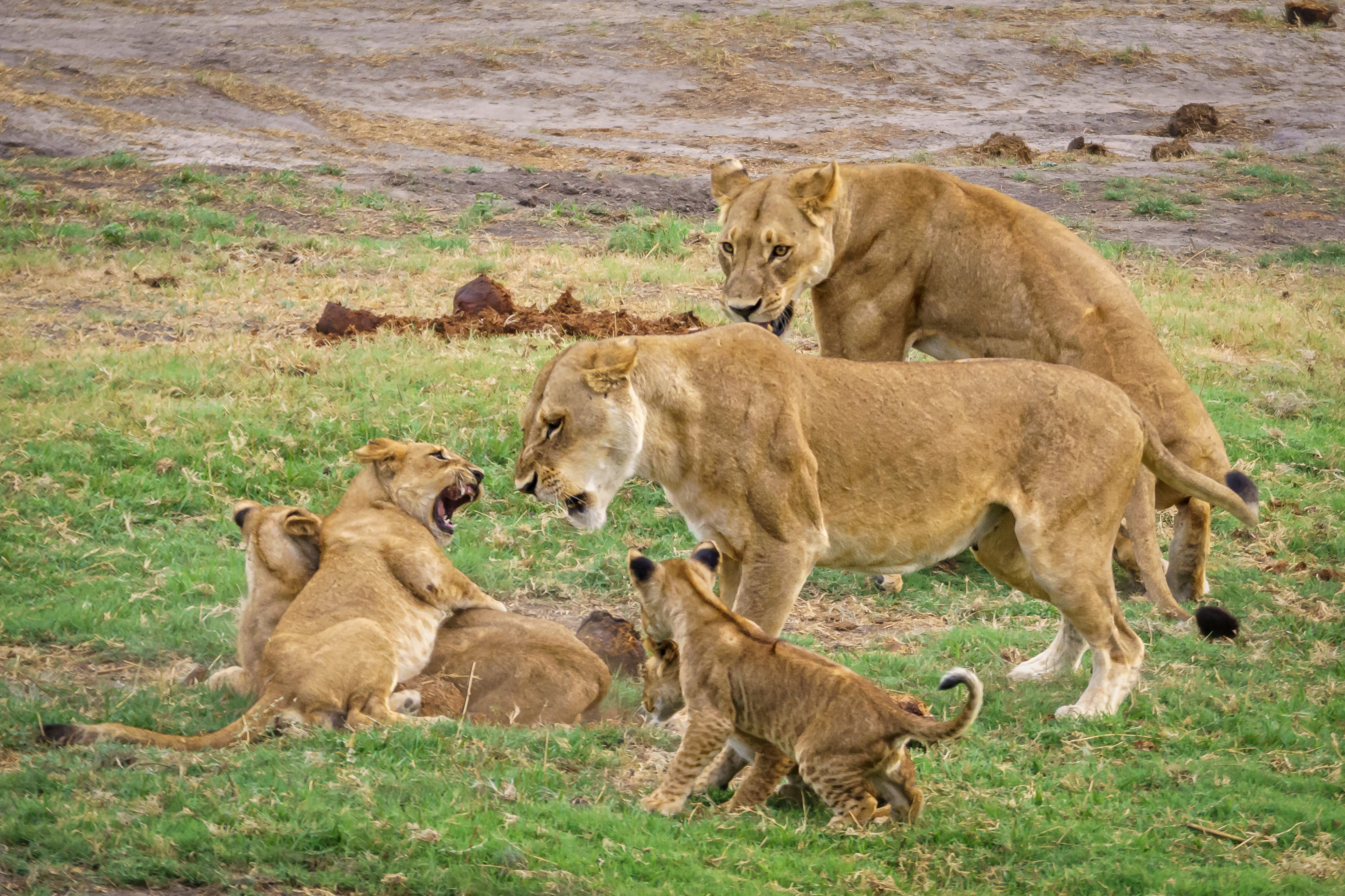
The lion is the easiest of the big five to find, and Tanzania is simply the best country on earth to find one — home to roughly a third of all the lions left in Africa. The Serengeti alone holds around three thousand, living in prides whose territories our guides know intimately, and the sight of a pride draped over a granite kopje in the morning sun is the defining image of the park. On a three-day Serengeti safari your chances of lions are, honestly, close to certain, and you will likely see them several times.
What surprises first-time visitors is not finding lions but watching them, because lions sleep up to twenty hours a day and much of what you see is magnificent idleness. The trick is timing: be out at first light, when the night's hunt may still be playing out, when cubs are active and the light is soft. The Ngorongoro Crater offers famously dense lion viewing too, and Tarangire and Lake Manyara hold healthy prides, so on a northern circuit the king of the list takes care of itself.
Leopard: the beautiful puzzle in the trees of Seronera
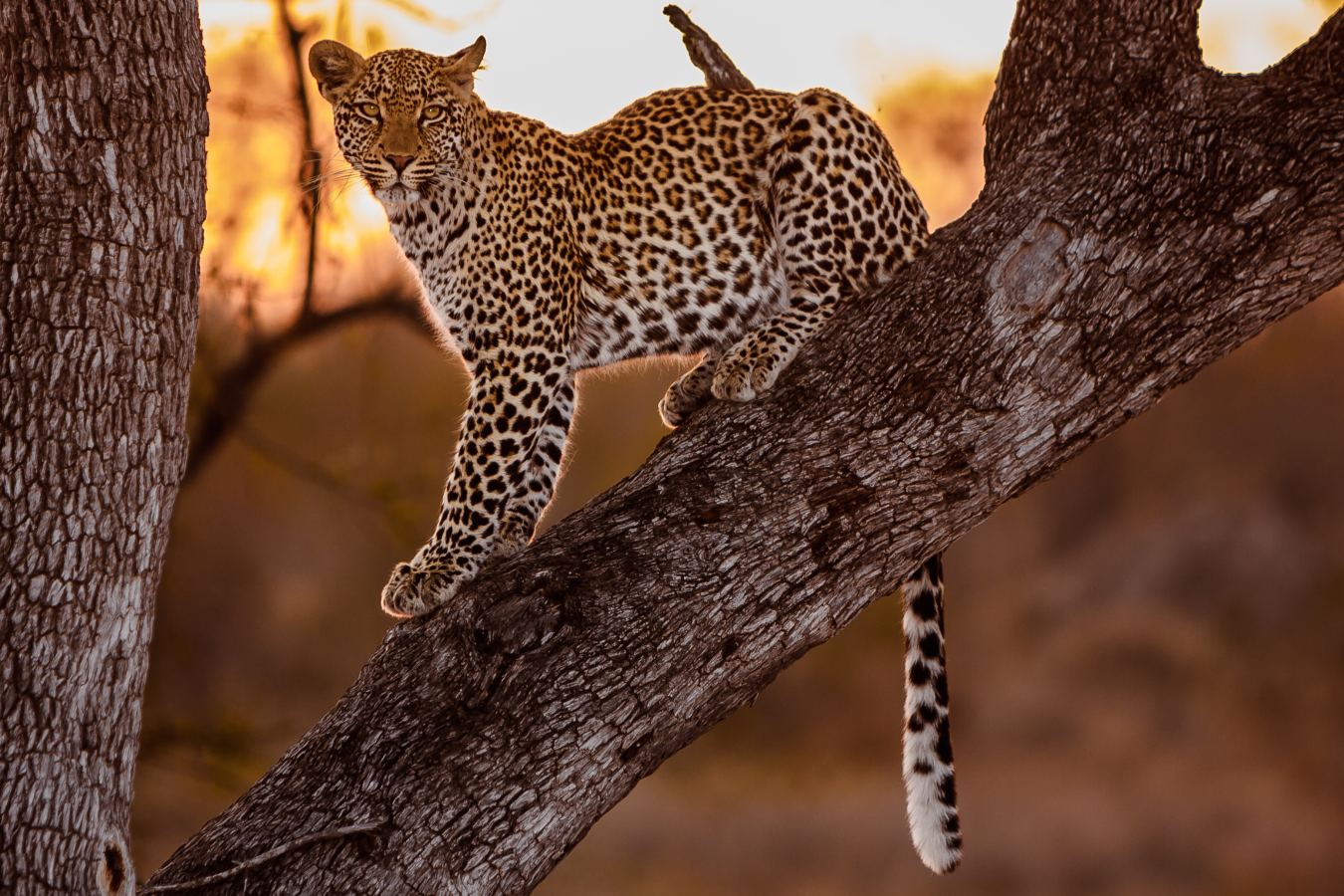
The leopard is the connoisseur's cat — solitary, silent and superbly camouflaged, and for many travellers the hardest of the five to find outside of the rhino. Leopards are actually common in Tanzania's parks; the challenge is that they do not want to be seen. The solution is to know where they rest, and the answer is usually a tree: draped along a horizontal limb of a sausage tree or an acacia, tail hanging like a bell-pull, a leopard in Seronera can hide in plain sight thirty metres from the road.
The Seronera Valley in the central Serengeti is, by common consent among guides, one of the finest leopard territories in Africa, its river lines dotted with exactly the sort of large shady trees leopards favour. A patient morning scanning those branches — this is where a guide's trained eye earns its keep — gives you a genuinely good chance, and we would expect to find leopard on most three-to-four-day Serengeti safaris. When you do, savour it: a leopard descending a trunk at dusk is, for many guests, the most beautiful sight of their trip.
Elephant: Tarangire's giants and the last great tuskers
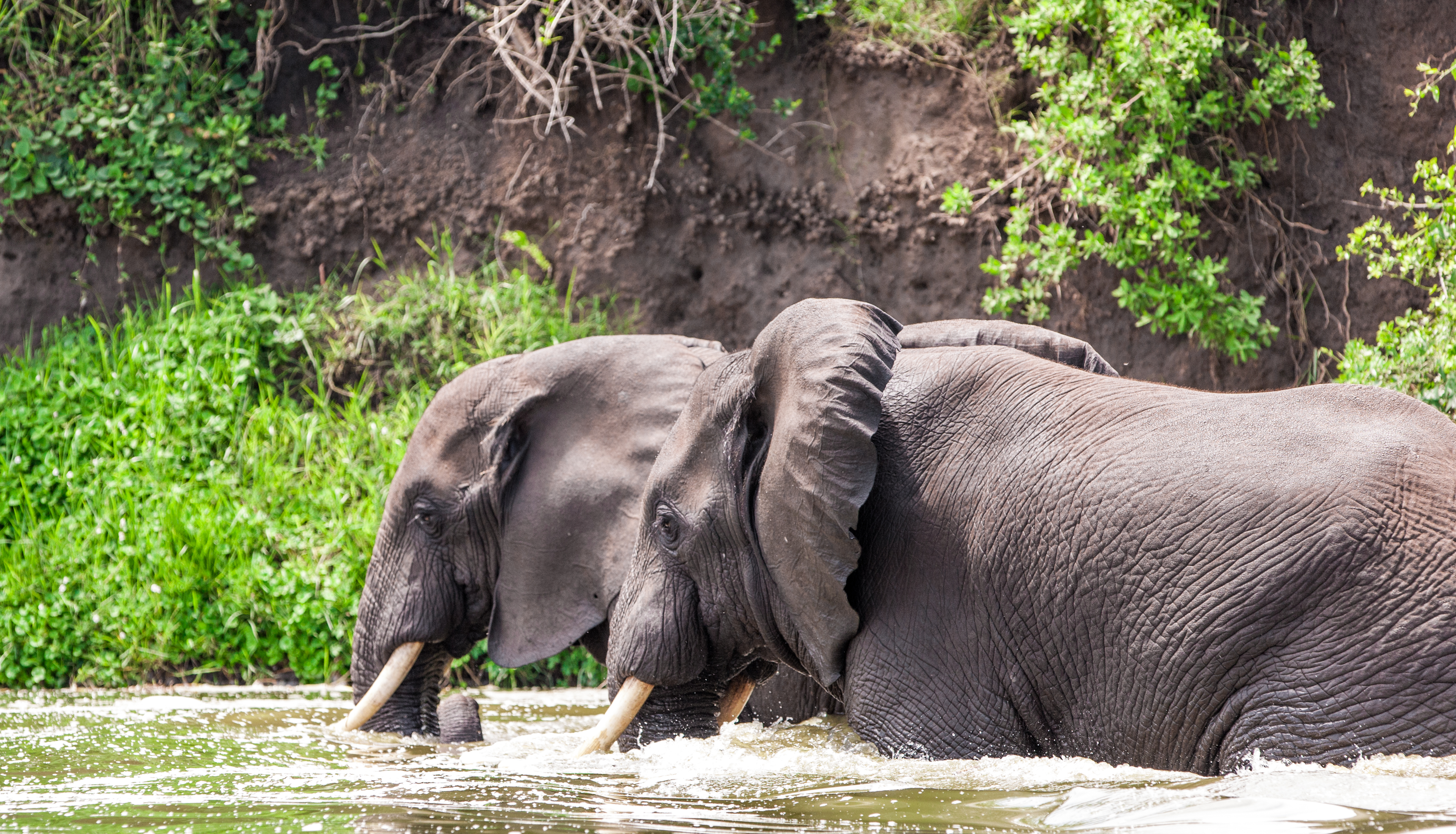
Nobody forgets their first wild elephant, and no park in northern Tanzania delivers elephants like Tarangire. In the dry season, from June to October, herds several hundred strong converge on the Tarangire River, and you can spend an hour parked quietly while families drink, spar, dust-bathe and shepherd wobbly calves around your vehicle. Tarangire's population numbers in the thousands, and among them walk some of East Africa's last great tuskers — old bulls whose ivory sweeps nearly to the ground, survivors of an age the term big five was coined in.
Elephants reward slow watching more than any other of the five. Sit with a breeding herd for long enough and the soap opera reveals itself: the matriarch's quiet authority, the teenagers testing their strength, the infants that have not yet learned what their trunks are for. Your chances in Tarangire in the dry months are effectively guaranteed, and the Serengeti and Ngorongoro will add more sightings, including the crater's own big-tusked bulls. If elephants are your priority, tell us — it changes how we weight an itinerary, and Tarangire earns two nights rather than one.
Cape buffalo: the underestimated one
The cape buffalo is the big five member travellers dismiss in advance and respect by the end of the trip. Yes, it resembles a bad-tempered cow, but look closer: the fused boss of horn like a helmet, the mud-caked bulk of a bull pushing 800 kilograms, and a stare our guides only half-jokingly describe as that of someone you owe money. Hunters feared wounded buffalo above almost everything — old solitary bulls remain among the most dangerous animals in the bush, which is precisely why the species made the original list.
The good news is that buffalo are the gimme of the big five in Tanzania: they are effectively everywhere. The Serengeti holds tens of thousands, the Ngorongoro Crater floor keeps large herds in permanent view, and Tarangire and Lake Manyara add more. A herd a thousand strong on the move, oxpeckers riding shotgun and dust rising in the evening light, is a genuinely stirring sight that deserves more than the quick photograph most visitors give it. Tick it early, then take the time to actually watch.
Black rhino: the honest hard one at Ngorongoro
Here is the honest part of this guide: the rhino is the difficult one, and anyone who promises you a certainty is not being straight with you. Poaching in the twentieth century reduced Tanzania's black rhino to a small, intensively protected population, and in the wild northern parks they are scattered and shy. For practical purposes, one place dominates your odds: the Ngorongoro Crater, whose enclosed 260-square-kilometre floor shelters one of East Africa's best-monitored black rhino populations, watched over by rangers around the clock.
On a full-day crater visit your chance of a black rhino sighting — often a prehistoric silhouette at a few hundred metres, moving through the morning mist with the crater wall behind — is good, and most guests who spend a proper day on the floor do see one. But sightings can be distant, and on some days the rhino simply stay in cover; that is wild Africa, not a zoo. Our advice: give the crater a full day rather than a half, go down at dawn when rhino are most active, and let your guide work the radio. The difficulty is exactly what makes the sighting sweet.
Can you see all five in one day?
The Ngorongoro Crater's famous claim is that it is the one place on earth where you can realistically see the big 5 in one day, and the claim is genuine — lion, elephant, buffalo and rhino all live on the crater floor, and leopard haunt the forested rim and the Lerai Forest below. Guides do complete the set in a single game drive, and when it happens it is a day guests talk about for years. Honesty, though, obliges us to add the odds: the leopard is the usual spoiler, and a one-day full house is the exception rather than the rule.
The far more reliable route is the classic northern circuit taken as a whole. A well-paced safari of five to seven days — Tarangire for elephant, the Serengeti and Seronera for lion and leopard, buffalo throughout, and a full day in the crater for rhino — converts a lucky day into a near-certain week. That is precisely how we design our itineraries at Sokwe: not chasing a checklist for its own sake, but sequencing the parks so that each of the five is sought where it is genuinely easiest to find.
The big five was a hunters' list of the animals most likely to fight back. Today the same five fund the rangers who protect them — cameras have replaced the rifles.
Beyond the big five: the animals that steal the show
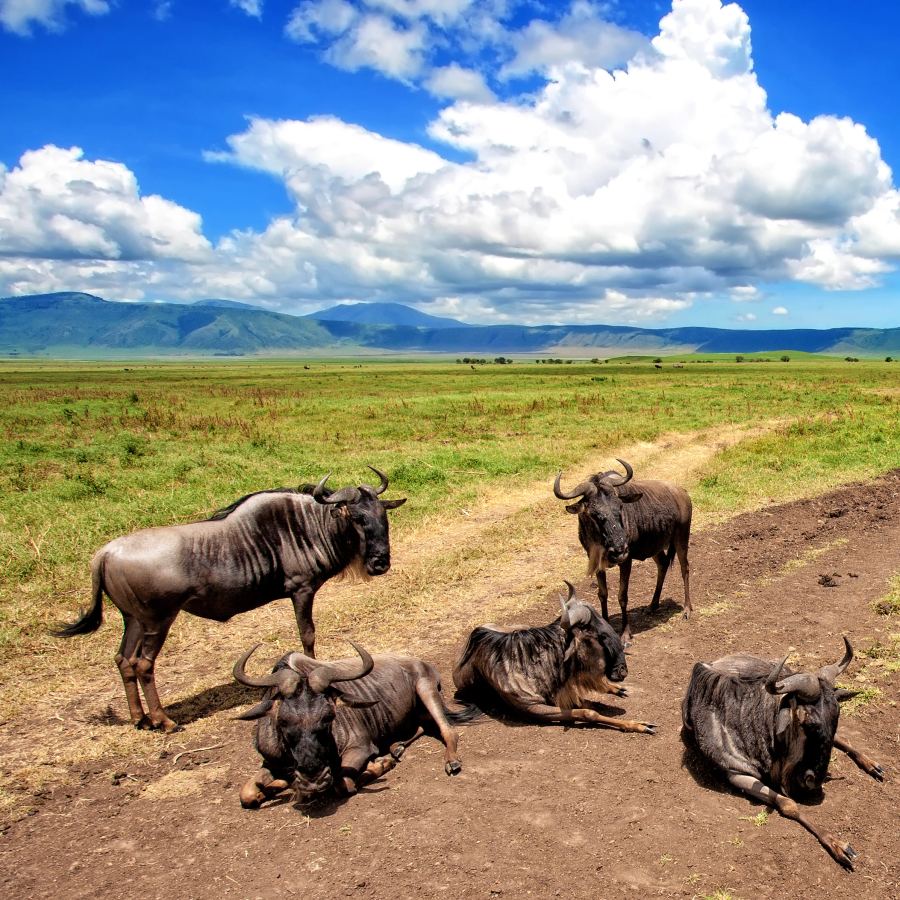
Every guide will tell you the same secret: guests arrive for the big five and go home talking about something else. It might be a cheetah teaching cubs to hunt on the short-grass plains, a caracal crossing the track at dusk, or the sheer absurd theatre of the wildebeest migration, two million animals strong. Giraffe, which missed the list only because they rarely fought the hunters who named it, remain many travellers' quiet favourite, and Tanzania is the best place in the world to see them.
There are rival lists worth knowing, too. The little five — elephant shrew, buffalo weaver, leopard tortoise, ant lion and rhino beetle — make a lovely game for children and sharp-eyed adults. Our advice is to hold the big five lightly: use it as a spine for your safari, not a scorecard, and leave room in each day for the unscripted sightings that no list predicts.
- Lion — Serengeti and Ngorongoro, near-certain
- Leopard — Seronera's trees, very good odds with patience
- Elephant — Tarangire in the dry season, effectively guaranteed
- Buffalo — everywhere, the easy tick
- Black rhino — Ngorongoro Crater, good odds on a full day, never promised
Keep exploring: our full Tanzania wildlife safari by animal guide, the animals of the Serengeti, our Ngorongoro crater guide, and our safari packages.
Photographing the big five
A few practical notes from our guides for photographing the five. Light matters more than lenses: the golden hours after dawn and before dusk flatter every animal, and a lion at sunrise on a 200-millimetre zoom will beat a midday lion on the longest lens money can buy. That said, a reach of 300 to 400 millimetres is the sweet spot for cats and rhino, while elephants and buffalo often come close enough that a wide lens — for the herd against the baobabs, the crater wall behind the rhino — earns its place in the bag.
The other half is fieldcraft, which on safari means your guide and your patience. Switch the engine off and let a sighting develop rather than racing between animals; the best frames come to those who wait ten minutes longer. Use beanbags rather than tripods in the vehicle, protect gear from dust between parks, and shoot the story as well as the portrait — the tail hanging from the leopard's branch, the dust around the buffalo herd. On a private safari the vehicle waits as long as you do, which is why photographers so often choose one.
Plan your big five safari with Sokwe
The big five is where most safari dreams begin, and Tanzania remains the finest place on earth to pursue all five — lion and leopard in the Serengeti, elephant in Tarangire, buffalo at every turn and black rhino on the floor of the Ngorongoro Crater. We are a Tanzanian operator based in Arusha, and finding these animals is what our guides do every day of the season. Five animals, one trip: tell us your dates and we will plan the big five safari route that finds them, with room left over for the sightings no list can predict.
Plan your big five safari with Sokwe Africa Safaris