
Seeing the Serengeti From Above
There are many ways to experience the Serengeti, but none of them prepare you for what it feels like to float above it at dawn in a hot air balloon. The silence is the first thing — the extraordinary, complete silence that descends the moment the burners cut out and the balloon drifts on the pre-dawn air currents, 300 metres above the golden plains. Below you, the Serengeti stretches in every direction to the horizon, uninterrupted and immense. Elephant families move through the acacia woodland like slow grey boats. A pride of lions rests on a kopje, still visible in the fading blue of the night. The first light of the sun touches the edge of the world, and the whole landscape turns from silver to gold in the space of thirty seconds.
A hot air balloon safari over the Serengeti is not a substitute for game drives — it is a complement to them, offering a perspective on the ecosystem that no vehicle can provide. From the air, you understand the Serengeti's scale in a way that is impossible from the ground. You see the patterns of animal movement — the tracks that converge on waterholes, the dispersal of prey species across the plains, the positions of predator territories relative to migration routes — that your guide explains on the ground but that only become fully visible from above. It is one of the most genuinely revelatory wildlife experiences available anywhere on Earth.
How a Serengeti Balloon Safari Works
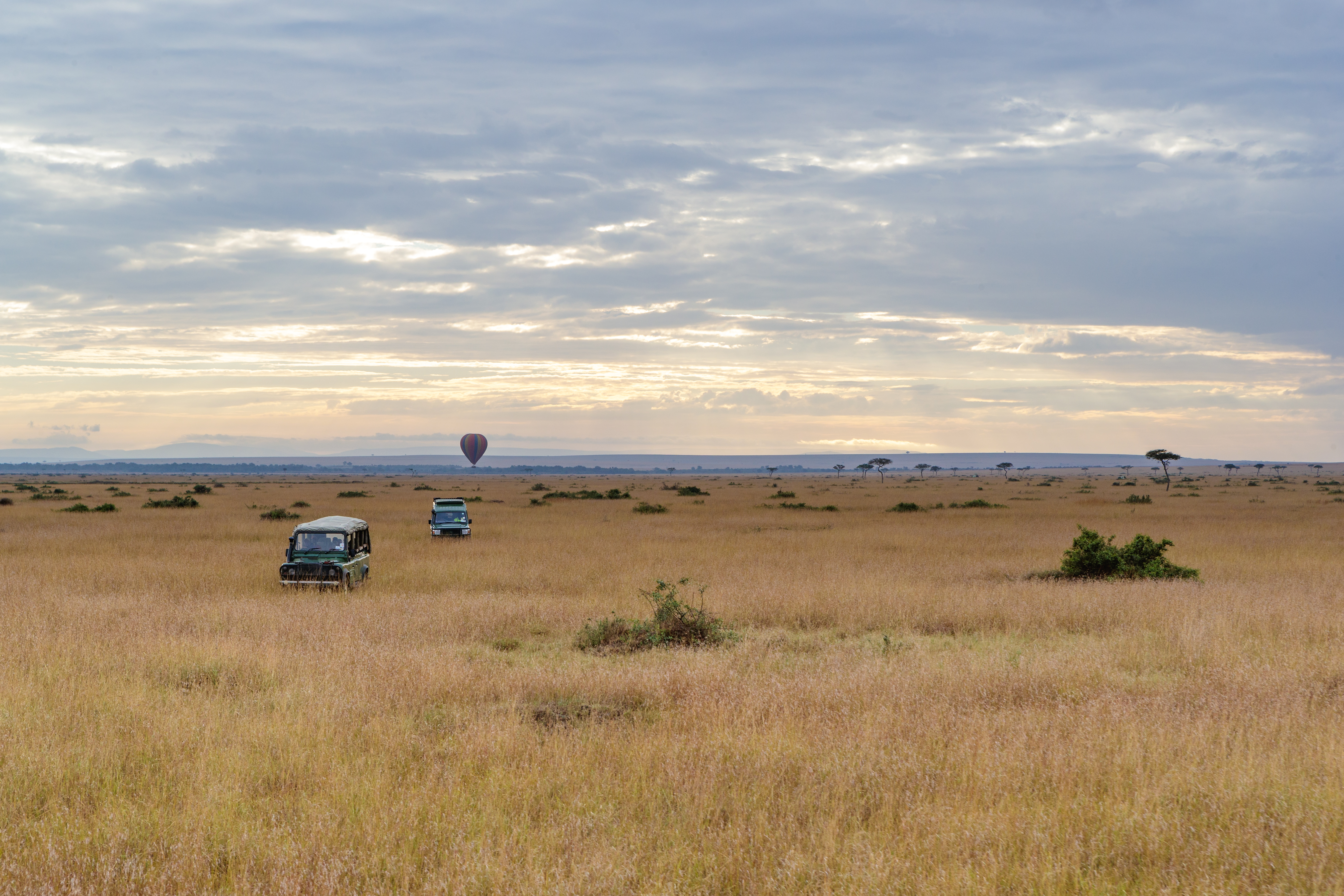
Hot air balloon safaris in the Serengeti typically depart before dawn — guests are collected from their camps between 5:00 and 5:30am and transferred to the inflation site, where the enormous envelopes are already being laid out and filled by the ground crew. The pre-dawn assembly of a hot air balloon on the Serengeti plains is itself a spectacle — the massive fabric catching the first tentative light, the burners roaring to fill it with heated air, and the basket rising slowly to vertical as the balloon strains upward against its tethers.
Flights typically last approximately one hour, covering anywhere from fifteen to forty kilometres depending on wind conditions. The pilot — highly experienced and licensed for East African ballooning — maintains a running commentary on the wildlife visible below, positioning the balloon to optimise viewing angles as the landscape reveals its morning activity. At landing — which can be anywhere in the ecosystem, depending on where the wind has carried you — a ground crew vehicle is waiting with a fully laid bush breakfast: champagne, coffee, hot food, and linen tablecloths spread on the open plain with the balloon deflating behind you.
What You Will See From the Balloon
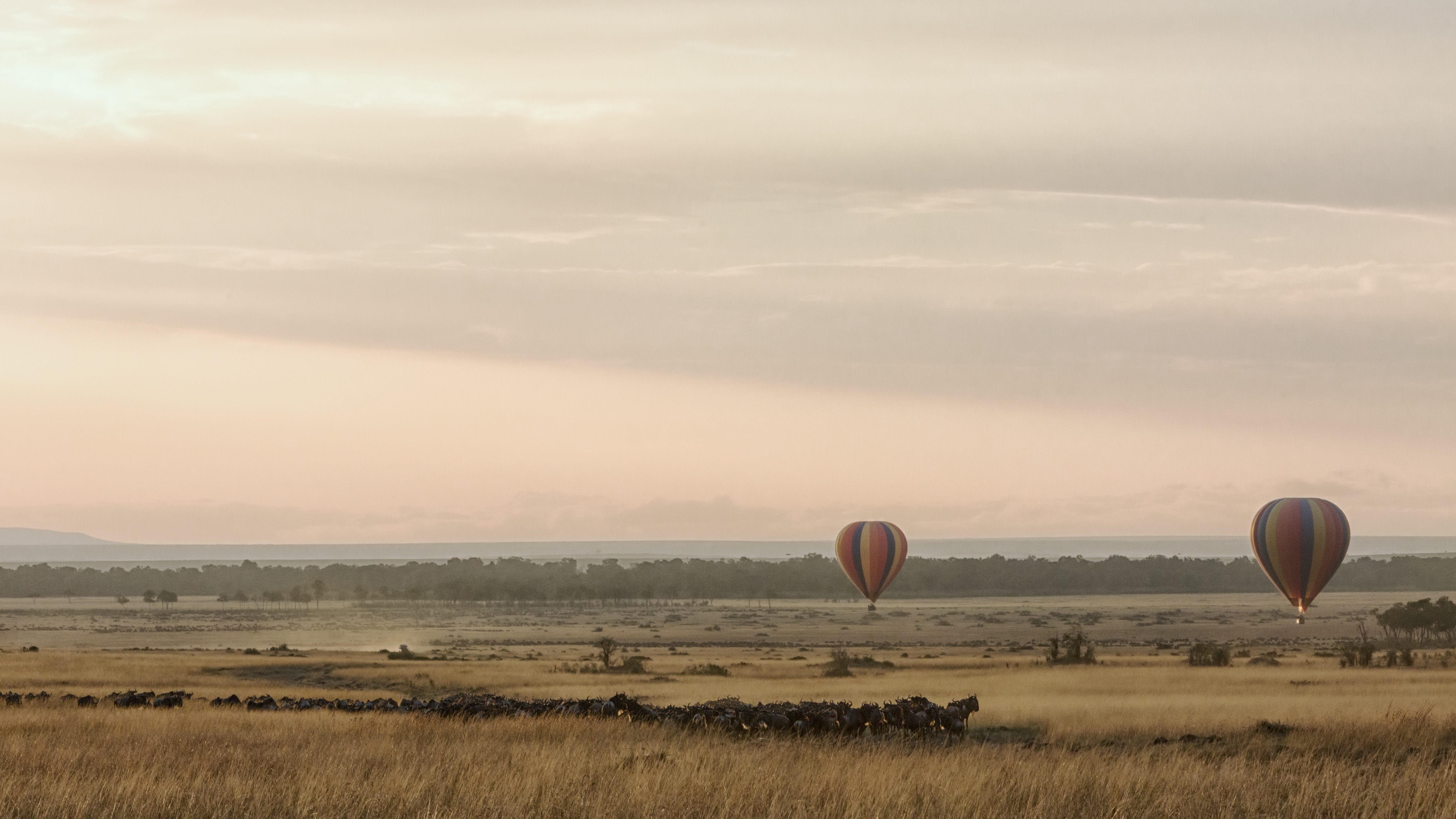
The wildlife experience from a hot air balloon is fundamentally different from a game drive, and what you see depends heavily on the season and the specific route the balloon takes. During the Great Migration (July to October in the northern Serengeti), balloon flights over the migration corridors reveal columns of wildebeest stretching from horizon to horizon — a sight that is literally impossible to comprehend from ground level but becomes achingly beautiful from the air. Individual river crossings can sometimes be seen from altitude, with the chaos of thousands of animals entering and exiting the Mara River visible as a swirling mass of movement from above.
Outside of migration season, balloon flights reveal the Serengeti's resident wildlife in its full ecological context. Elephant herds moving through woodland, buffalo masses grazing on the open plains, giraffe families feeding from the tops of fever trees, and the unmistakable rosette patterns of a leopard resting in the upper branches of an acacia — all are visible from the balloon in ways that ground-level game drives cannot provide. The bird's-eye perspective also reveals the geometric precision of hyena territories, the radiating tracks around waterholes, and the burn patterns from controlled fires that shape the grassland mosaic.
Practical Information: What to Know Before You Book
Hot air balloon safaris in the Serengeti operate year-round, weather permitting. Flights are weather-dependent and can be cancelled at short notice due to wind or storm conditions — this is rare but does occur, particularly during the long rains (March to May). The balloon carries between eight and sixteen passengers depending on the operator, and the basket is divided into sections that provide each group with their own viewing area. The flight takes place at altitudes ranging from ground level — skimming the treetops — to approximately 300 metres, with the pilot constantly adjusting to find the optimal viewing height for the wildlife activity below.
The physical requirements of a balloon safari are modest but should be noted. Boarding the basket requires stepping up and over the rim — a movement of approximately 60 centimetres — and standing for the duration of the flight. The basket is padded and secure, and the experience is far gentler than most first-time passengers expect. Children must typically be at least seven years of age and a minimum of 120 centimetres tall to participate. The total experience — from camp pick-up to return after the bush breakfast — takes approximately four to five hours, making it a perfect morning addition to a full game drive afternoon.
Booking Your Balloon Safari
Hot air balloon flights over the Serengeti are operated by a small number of licensed companies and must be booked in advance — during peak season (July to October), popular flight dates fill several months ahead. The cost ranges from approximately $550 to $650 per person including the bush champagne breakfast, and it is money that virtually every traveller who has done it describes as among the best they spent on their entire Tanzania trip. Sokwe Africa Safaris includes balloon safari coordination in our luxury itinerary planning service, securing preferred dates and integrating the flight seamlessly into your overall safari schedule.
The balloon experience pairs particularly well with the Serengeti's central zone, where the open landscape provides ideal flight conditions and wildlife density is excellent year-round. For migration-season balloon flights, the northern Serengeti offers views of the wildebeest herds that are genuinely unrepeatable. Wherever in the Serengeti you choose to fly, waking before dawn on the morning of a balloon safari — knowing that in two hours you will be floating above one of the most extraordinary wild places on Earth as the sun rises — is one of the most quietly thrilling feelings in travel.
Combine a balloon flight with the full Serengeti experience — see our Luxury Tanzania Safari packages where balloon safaris are available as a seamlessly integrated add-on.
Not sure when to visit for the best balloon views of the migration? Read our Best Time to Visit the Serengeti guide for a complete seasonal breakdown.
If you are planning the route, read getting from Nairobi to the Serengeti.
See also our guide: Is a Serengeti hot air balloon safari worth it? Cost, safety, what to expect and who should skip it.
For information on Serengeti National Park regulations and visitor guidelines, visit Tanzania National Parks Authority.
From ground level, the Serengeti is magnificent. From the air, at dawn, with the plains spread below and the silence complete, it is transcendent.
- Flights depart at 5:00–5:30am from your camp
- Duration: approximately 1 hour of flight time
- Total experience: 4–5 hours including transfer and breakfast
- Cost: approximately $550–$650 per person including bush breakfast
- Age minimum: 7 years, height minimum 120cm
- Best season: Year-round — migration flights July–October are spectacular
- Book: Several months ahead for peak season dates