
The Question Every First-Time Safari Traveller Asks
It is one of the most searched questions in luxury travel: is it safe to go on safari in Tanzania? The answer, for the vast majority of well-prepared travellers who visit Tanzania each year, is an unequivocal yes — and the evidence is not merely anecdotal. Tanzania welcomes over a million international tourists annually, consistently ranks among Africa's most politically stable nations, and has built an entire economy around ensuring that visitors feel secure, supported, and free to engage fully with one of the world's most extraordinary natural environments.
That said, the honest guide that every prospective traveller deserves does not simply offer blanket reassurance. Tanzania is a wild, remote, and genuinely untamed destination. The wildlife is real and unconfined. The distances between camps and medical facilities can be significant. The health preparation required is more involved than a trip to Europe. Understanding these realities clearly — and preparing for them intelligently — is precisely what transforms a potentially anxious first safari into a confident, deeply rewarding experience. This guide addresses every dimension of safety that matters for the luxury traveller considering Tanzania in 2026.
Tanzania's Political Stability and Travel Advisories
Tanzania has long been regarded as one of the more stable countries in East Africa, with no history of the prolonged conflicts that have affected some of its neighbours, and tourism is a major part of the economy and a national priority. That reputation is real, but it needs a modern footnote: the period around the general election in late October 2025 saw unrest in parts of the country, and official advice changed as a result. Anything you read that describes the situation without mentioning that is out of date.
Government advice differs, so read it yourself. As we last checked, on 11 October 2026, the UK Foreign, Commonwealth and Development Office advised against all but essential travel only within 20 kilometres of the border with Mozambique's Cabo Delgado province, and no longer advised against travel to the rest of the country. The US State Department rated Tanzania at Level 3, reconsider travel, citing unrest, crime, terrorism and the targeting of gay and lesbian people. The border area of greatest concern is in the far south-east, far from the northern safari circuit and Zanzibar, but that is context and not a guarantee. We have written a dated summary, Is Tanzania safe right now?, and a wider guide, Is Tanzania safe for tourists?, which you should read alongside this one. Check your own government's advice before booking and again before you fly, and register with your embassy's traveller service if there is one.
Wildlife Safety on Safari: What Travellers Need to Understand
The wildlife encountered on a Tanzania safari is wild, unmanaged, and governed entirely by its own instincts. This is precisely what makes the experience extraordinary — and it is also why the protocols observed in Tanzania's national parks and private conservancies exist. Understanding these protocols is not a cause for anxiety; it is the foundation of a genuinely immersive and safe safari experience.
Inside national parks, game viewing takes place from a vehicle at all times. Experienced guides know the behaviour of every major species and position vehicles to maximise wildlife encounters while maintaining the distances that ensure both guest safety and minimal disturbance to the animals. Lions, elephants, buffalo, leopards, and rhinoceros — the species that can be dangerous in certain circumstances — are observed daily by thousands of safari guests across Tanzania without incident, because the protocols are clear, the guides are trained, and the animals largely habituated to the presence of vehicles. In private conservancies adjacent to national parks, walking safaris and night drives are conducted by armed guides with extensive training in wilderness safety, adding an additional layer of protection for guests engaging with the bush on foot.
The most important safety rule on any Tanzania safari is straightforward: follow your guide's instructions without exception. Guides who have spent years or decades in the bush develop an instinctive reading of animal behaviour that no amount of prior research can replicate. When a guide asks guests to remain in the vehicle, to lower their voices, or to change position, it is always for a clear reason — and honouring that expertise is the single most effective safety measure available to any traveller in the African wilderness.
Health and Medical Safety: The Honest Assessment
Health preparation is the dimension of Tanzania safari safety that requires the most advance planning, and where the consequences of under-preparation are most keenly felt. Malaria is endemic across Tanzania's safari areas, and no luxury camp or private vehicle changes this fundamental fact. The risk is real and should be taken seriously — but it is entirely manageable with the correct preventive measures. Most travellers visiting Tanzania for safari take one of three prophylactic medications: atovaquone/proguanil, doxycycline, or mefloquine. Each has a different profile of side effects and dosing schedules, and the right choice depends on individual health history, the specific destinations visited, and the length of stay. A consultation with a travel medicine physician at least six to eight weeks before departure is not optional — it is an essential step in preparing for any Tanzania safari.
Yellow fever vaccination is required for entry into Tanzania for travellers arriving from countries where yellow fever is endemic, and strongly recommended for all international visitors. Proof of vaccination in the form of the International Certificate of Vaccination or Prophylaxis should be carried at all times. Other vaccinations routinely recommended for Tanzania include hepatitis A and B, typhoid, and tetanus. Medical facilities in Tanzania range from internationally accredited private hospitals in Dar es Salaam and Arusha to very limited rural clinics in remote safari areas. For serious medical emergencies arising in remote locations, medical evacuation to Nairobi or further afield may be necessary. This is a practical reality of remote wilderness travel, and it is precisely why comprehensive travel insurance with full medical evacuation coverage is the single most important piece of documentation a Tanzania safari traveller can carry.
Travel Insurance: Non-Negotiable for Tanzania Safari
No reputable luxury safari operator will confirm a booking without strongly advising — and many now requiring — comprehensive travel insurance that includes medical evacuation coverage. The distances between safari camps and major medical facilities, combined with the nature of wilderness environments, mean that a serious accident or medical emergency in a remote location like Ruaha or the western Serengeti could require helicopter evacuation, a flight to Nairobi or Johannesburg, and potentially significant medical expenses. Without insurance, these costs fall entirely on the traveller.
Policies worth considering for a Tanzania safari should include emergency medical evacuation coverage of at least $500,000, trip cancellation and interruption protection, baggage loss and delay coverage, and ideally coverage for adventure activities if walking safaris or water-based activities are planned. AMREF Flying Doctors, operating from Nairobi, provides an annual subscription service that covers emergency air evacuation across East Africa — a supplement to standard travel insurance that many experienced Tanzania travellers consider essential and which costs a fraction of what a single evacuation flight would otherwise cost.
Every itinerary arranged through Sokwe Africa Safaris includes detailed pre-departure health and insurance guidance, ensuring our guests arrive fully prepared for their Tanzania safari experience.
Explore our Private Tanzania Safari tours — designed with safety, exclusivity, and complete peace of mind at every stage of the journey.
Related reading: African Safari from Dubai: The Complete Luxury Guide for UAE Travellers.
More on this in Best Safaris in Tanzania — Honest Operator Rankings | Sokwe Africa Safari.
See also our guide: Solo female safari in Tanzania: a practical guide.
Related reading: Is Tanzania safe for tourists? An honest answer from an Arusha safari company.
More on this in Is Tanzania safe right now? What the travel advisories say (October 2026).
More on this in Is Tanzania safe to travel with kids? A parent's guide to safari with children.
See also our guide: Is Tanzania tap water safe to drink? What to drink, what to avoid and how camps manage it.
If you are planning this route, read Is Tanzania safe for pregnant women? Malaria, medical access and what to ask your doctor.
Food and Water Safety at Luxury Safari Camps
One of the significant advantages of travelling with a reputable luxury safari operator and staying at established high-end camps is that food and water safety are managed to a consistently high standard. All luxury camps in Tanzania provide purified or bottled water for drinking, brushing teeth, and all cooking. Food is prepared fresh daily using ingredients sourced from vetted suppliers, refrigerated and stored appropriately, and cooked by trained chefs who understand the heightened responsibility of feeding guests in environments without nearby medical support.
Travellers staying at luxury camps and lodges face a substantially lower risk of gastrointestinal illness than independent travellers eating outside established safari properties. The standard guidance — drink only sealed bottled or camp-purified water, eat only at established camps and reputable restaurants — is simple to follow within the luxury safari framework. Carrying oral rehydration salts and a basic antibiotic course prescribed by a physician adds a useful layer of self-sufficiency for remote locations, and most experienced safari travellers include these items as standard in their travel medical kit.
Personal Security and Petty Crime
Personal security risks for luxury safari travellers in Tanzania are low and, with basic precautions, almost entirely avoidable. Tanzania's safari areas — the national parks, private conservancies, and the camps within them — are not environments where petty crime or personal safety incidents occur with any meaningful frequency. The primary areas where travellers should exercise basic vigilance are urban centres, particularly Dar es Salaam and Arusha, and the busier tourist areas of Zanzibar's Stone Town.
Standard urban precautions apply in these environments: avoid displaying expensive jewellery, cameras, or electronic devices openly in crowded areas; use hotel safes for passports and valuables; avoid walking alone after dark in unfamiliar neighbourhoods; use pre-arranged taxis or hotel transport rather than unmarked vehicles. These are identical precautions to those a traveller would exercise in any major city globally. The northern and southern safari circuits themselves — the Serengeti, Ngorongoro, Tarangire, Ruaha — present no meaningful personal security concerns for travellers staying at established luxury camps.
Tanzania does not need to be feared — it needs to be respected. The wilderness asks the same of every visitor: arrive prepared, follow guidance, and engage with humility. Those who do find it to be one of the safest and most extraordinary places they have ever been.
Road Safety and Domestic Travel in Tanzania
Road conditions in Tanzania vary considerably, and road safety is a genuine consideration for travellers using ground transfers between destinations. The main roads connecting Arusha to the northern circuit parks are generally in reasonable condition, but rural roads within and adjacent to national parks can be deeply rutted, particularly during and after the long rains. Safari vehicles used by reputable operators are purpose-built four-wheel-drive vehicles maintained to high standards precisely because of these conditions — a genuine necessity rather than a luxury affectation.
For this reason, domestic charter flights between parks are strongly recommended not only for the time they save but for the comfort and safety they provide over long, rough road transfers. A flight from Arusha to the Serengeti takes forty-five minutes; the same journey by road takes six to eight hours on increasingly difficult tracks. For itineraries covering multiple parks — the northern and southern circuits, or any combination involving Ruaha or Mahale — charter flights eliminate the road safety variable entirely and preserve the safari energy for what matters: the wildlife, the camps, and the landscape.
Zanzibar Safety: What Travellers Should Know
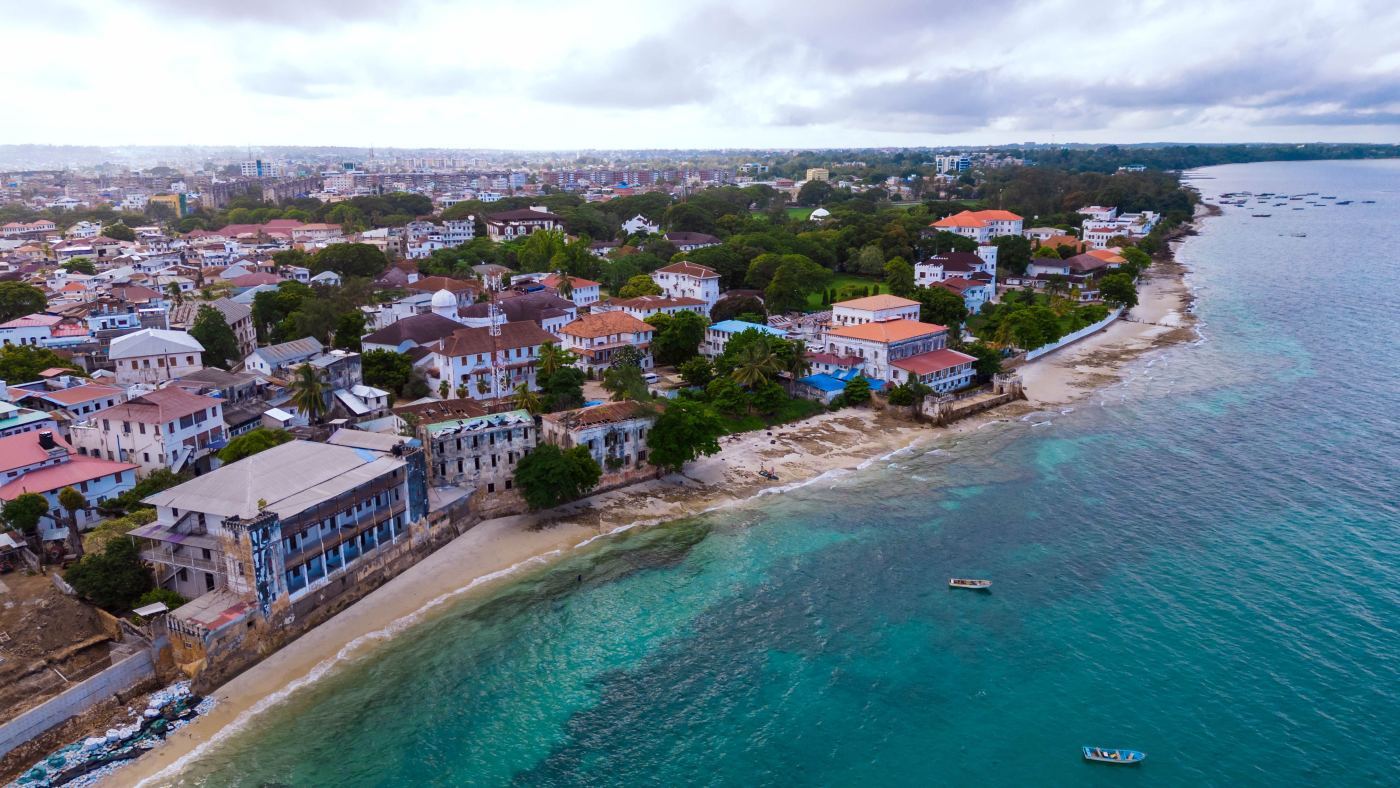
Zanzibar is generally a safe destination for international tourists, and the vast majority of visitors — including solo female travellers — have entirely positive experiences on the island. The beaches of the north and east coasts, the resort areas of Nungwi and Kendwa, and the private island retreats that form part of most luxury Tanzania itineraries are consistently reported as safe, welcoming, and well-managed environments.
Stone Town requires slightly more awareness than the resort beaches — it is a dense, labyrinthine urban environment where opportunistic theft can occur in busier areas near the port and the markets. Standard precautions apply: keep valuables secured, avoid displaying expensive items, and use recommended guides for Stone Town walking tours. Dress code awareness is also important in Zanzibar — a predominantly Muslim island where modest dress in non-beach settings is both culturally respectful and practically advisable. Covering shoulders and knees when exploring Stone Town and inland villages is a straightforward courtesy that is genuinely appreciated by local residents.
Solo and Female Travellers on Tanzania Safari
Tanzania is widely regarded as one of Africa's most welcoming destinations for solo travellers, including solo female travellers. The safari environment itself — where guests stay within the managed and staffed environment of a luxury camp, travel with professional guides, and are surrounded by vetted staff — is a particularly secure context for independent travel. Many of the most committed Tanzania safari regulars are solo women travellers who return year after year precisely because the experience combines genuine wilderness immersion with a structured safety framework that inspires confidence rather than concern.
Solo travellers booking through reputable luxury operators benefit from the additional security layer that private guidance and in-country support provide. Pre-arranged airport transfers, camp staff who know guests by name, guides who take personal responsibility for the safety and wellbeing of each guest — these are structural elements of a well-run luxury safari operation that contribute directly to the security of every traveller, regardless of whether they are travelling alone or in a group.
Planning a solo luxury safari in Tanzania? Our team at Sokwe Africa Safaris specialises in private, fully supported itineraries for solo travellers — with in-country guidance and dedicated support from arrival to departure.
- As at 11 October 2026 the UK advises against all but essential travel only within 20km of the Mozambique border, while the US rates Tanzania Level 3 (reconsider travel)
- The northern safari areas are far from the border region of concern, but check current official advice before booking and again before you fly
- Malaria prophylaxis is essential — consult a travel medicine physician six to eight weeks before departure
- Yellow fever vaccination certificate required for travellers arriving from endemic countries
- Comprehensive travel insurance with medical evacuation coverage of at least $500,000 is essential
- Domestic charter flights are recommended over long road transfers for comfort and safety
- Follow your guide's instructions at all times during game drives and walking safaris
- Basic urban precautions apply in Dar es Salaam, Arusha, and Stone Town Zanzibar
- Luxury camps manage food and water safety to consistently high international standards
FAQs: Is It Safe to Go on Safari in Tanzania?
Frequently asked questions
Is Tanzania safe for tourists in 2026?
For most visitors on an organised safari, yes, but advice is mixed and has changed since the October 2025 election. As at 11 October 2026 the UK advised against all but essential travel only within 20 kilometres of the Mozambique border, while the US rated Tanzania Level 3, reconsider travel. Read both official pages and our guide, Is Tanzania safe for tourists, before you book.
Is it safe to go on safari near wild animals?
Yes, when established protocols are followed. Game viewing in Tanzania's national parks takes place from a vehicle, and experienced guides are trained to position guests safely at all times. Animals in well-visited parks are habituated to vehicles, and serious wildlife incidents are extremely rare. Walking safaris in private conservancies are conducted by armed, qualified guides with extensive wilderness training.
Do I need malaria tablets for a Tanzania safari?
Yes. Malaria is endemic across Tanzania's safari areas and prophylactic medication is strongly recommended for all travellers. The most commonly prescribed options are atovaquone/proguanil, doxycycline, and mefloquine. A travel medicine physician should be consulted at least six to eight weeks before departure to determine the most appropriate option based on individual health history.
What travel insurance do I need for a Tanzania safari?
Comprehensive travel insurance with a minimum of $500,000 in medical evacuation coverage is essential. Policies should also cover trip cancellation, baggage loss, and any adventure activities planned. Many experienced Tanzania travellers supplement standard insurance with an AMREF Flying Doctors annual subscription for emergency air evacuation across East Africa.
Is Zanzibar safe for tourists?
Yes. Zanzibar is generally a safe destination for international tourists including solo female travellers. Resort areas in the north and east of the island are consistently safe and welcoming. Basic urban precautions should be observed in Stone Town, and modest dress is recommended when exploring non-beach areas out of respect for local culture.
Is Tanzania safe for solo female travellers?
Tanzania is widely regarded as one of Africa's most welcoming destinations for solo female travellers. The structured environment of a luxury safari — with professional guides, vetted camp staff, and in-country operator support — provides a particularly secure context for independent travel. Many experienced solo female travellers return to Tanzania year after year.
What is the biggest health risk on a Tanzania safari?
Malaria is the most significant preventable health risk for Tanzania safari travellers. It is entirely manageable with the correct prophylactic medication, consistent use of insect repellent, and long-sleeved clothing at dawn and dusk. Other preparation priorities include yellow fever vaccination, comprehensive travel insurance with evacuation coverage, and awareness of food and water safety protocols.