
The Art of Packing for the Bush
There is a particular kind of traveller who arrives in Tanzania having packed as though for a fortnight in a European city — multiple suitcases, formal clothing, hard-sided luggage — and discovers at the first domestic charter airstrip that the rules of travel here are fundamentally different. The light aircraft connecting Tanzania's luxury camps operates under strict weight limits that no amount of status or persuasion will override: fifteen kilograms per person, in soft-sided bags, non-negotiable. What goes into those fifteen kilograms determines not just the practicality of the journey but, in ways that are easy to underestimate, the quality of the experience itself.
Packing for a luxury safari in Tanzania is an exercise in deliberate simplicity — in choosing with precision rather than abundance, in understanding that the environment you are entering has its own requirements that supersede the conventions of luxury travel elsewhere. The good news is that the finest luxury camps in Tanzania provide far more than most travellers bring with them: laundry services that return clothing clean and pressed within hours, high-quality toiletries and amenities in every ensuite bathroom, warm layers available for early morning drives, and in many cases a camp boutique stocked with forgotten essentials. This guide tells the luxury traveller exactly what to bring, what to leave behind, and how to navigate the specific requirements of the Tanzania safari packing list with the intelligence and efficiency that this extraordinary journey deserves.
The Most Important Rule: The Fifteen-Kilogram Limit
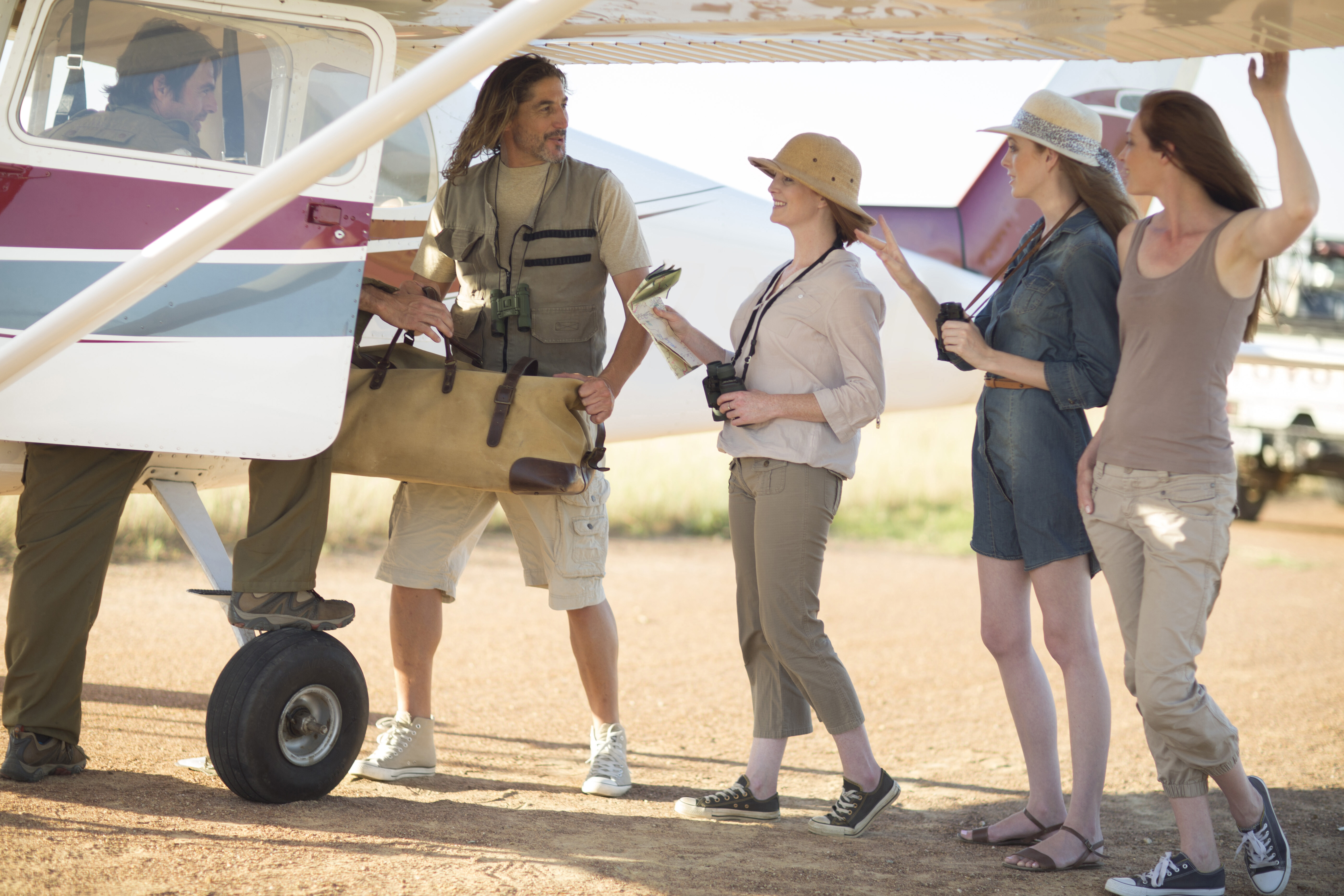
Before addressing what to pack for a safari in Tanzania, the single most important logistical reality must be clearly understood: domestic charter flights between Tanzania's safari parks impose a strict baggage limit of fifteen kilograms per person, inclusive of hand luggage, in soft-sided, collapsible bags. Hard-sided suitcases, wheeled trolleys, and rigid cases are not permitted on light aircraft and will not be accepted at charter airstrips. This is not a guideline — it is an operational requirement determined by the weight and balance calculations of small aircraft carrying multiple passengers and their belongings across short distances.
In practice, fifteen kilograms is considerably more than it sounds when packing correctly for a safari. A week's worth of lightweight, quick-drying safari clothing, a camera system, personal medications, toiletries in travel sizes, and the few other essentials outlined in this guide sit comfortably within fifteen kilograms in a medium-sized soft duffel bag with room to spare. Travellers who are concerned about the limit should weigh their packed bag at home before departure — the exercise almost always produces a pleasant surprise. Excess luggage from international flights can typically be stored at the first camp or at the operator's Arusha office and collected on return, meaning that items needed only for the Zanzibar beach extension can be kept separate from the safari duffel without any inconvenience.
Clothing: The Foundation of the Safari Wardrobe
Colours and Fabrics
The clothing choices for a Tanzania safari are governed by two practical principles: colour and fabric. Colour matters because the African bush is a sensory environment in which wildlife responds to visual stimulus, and bright, reflective clothing can disturb animal behaviour and compromise game viewing experiences. The safari wardrobe is built around a palette of neutral, earth-toned colours — khaki, olive, tan, stone, sand, and muted greens — that blend naturally into the savannah landscape without creating visual contrast. White, bright red, and fluorescent colours should be left at home entirely. Black and dark navy, while not disruptive to wildlife, absorb heat in the East African sun and attract tsetse flies, and are best avoided in the bush.
Fabric matters because the safari environment places specific demands on clothing — warmth in the early morning, breathability in the midday heat, quick drying after the afternoon shower, and durability through days of game driving on dusty tracks. Lightweight merino wool, technical cotton blends, and quality linen perform best across the full range of conditions. Fast-drying synthetic fabrics work well for base layers and active wear. Avoid heavy denim, which takes days to dry and provides no insulation benefit, and avoid delicate fabrics that cannot be washed and dried repeatedly without losing their quality.
What Clothing to Pack
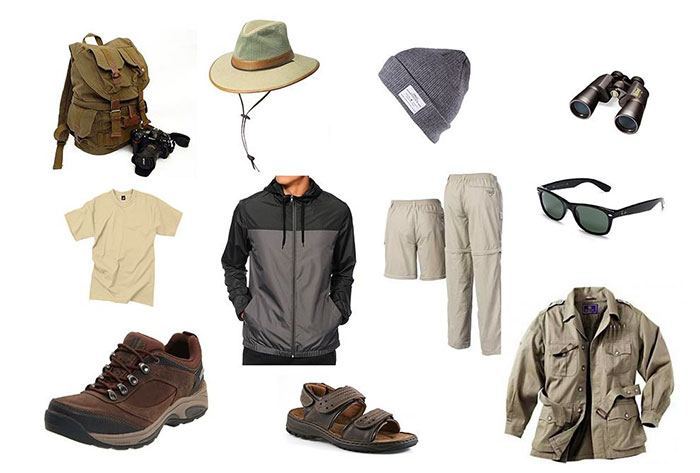
For a seven-to-ten-night Tanzania safari, the following clothing allocation provides everything needed without approaching the weight limit. Three to four lightweight long-sleeved shirts or blouses in neutral tones — long sleeves provide sun protection and insect protection in the evenings without the need for additional layers. Two to three pairs of lightweight safari trousers or convertible zip-off trousers in khaki or olive. One pair of comfortable shorts for warmer afternoons if preferred. Three to four lightweight T-shirts or base layers for wearing under shirts during cold morning drives or alone during warmer afternoons.
Evening wear at Tanzania's luxury camps is casual by most standards — a clean shirt or blouse and trousers or a simple dress is entirely appropriate for bush dinners and sundowners. There is no requirement for formal evening wear at any luxury safari camp in Tanzania, and the traveller who has packed a blazer and dress shoes will find them both unnecessary and space-consuming. One warm fleece or midweight down jacket is essential for early morning game drives, when temperatures in the Serengeti can drop to 12°C or 15°C even in the dry season, and a lightweight waterproof outer layer covers the occasional shower without adding significant weight to the bag.
Footwear
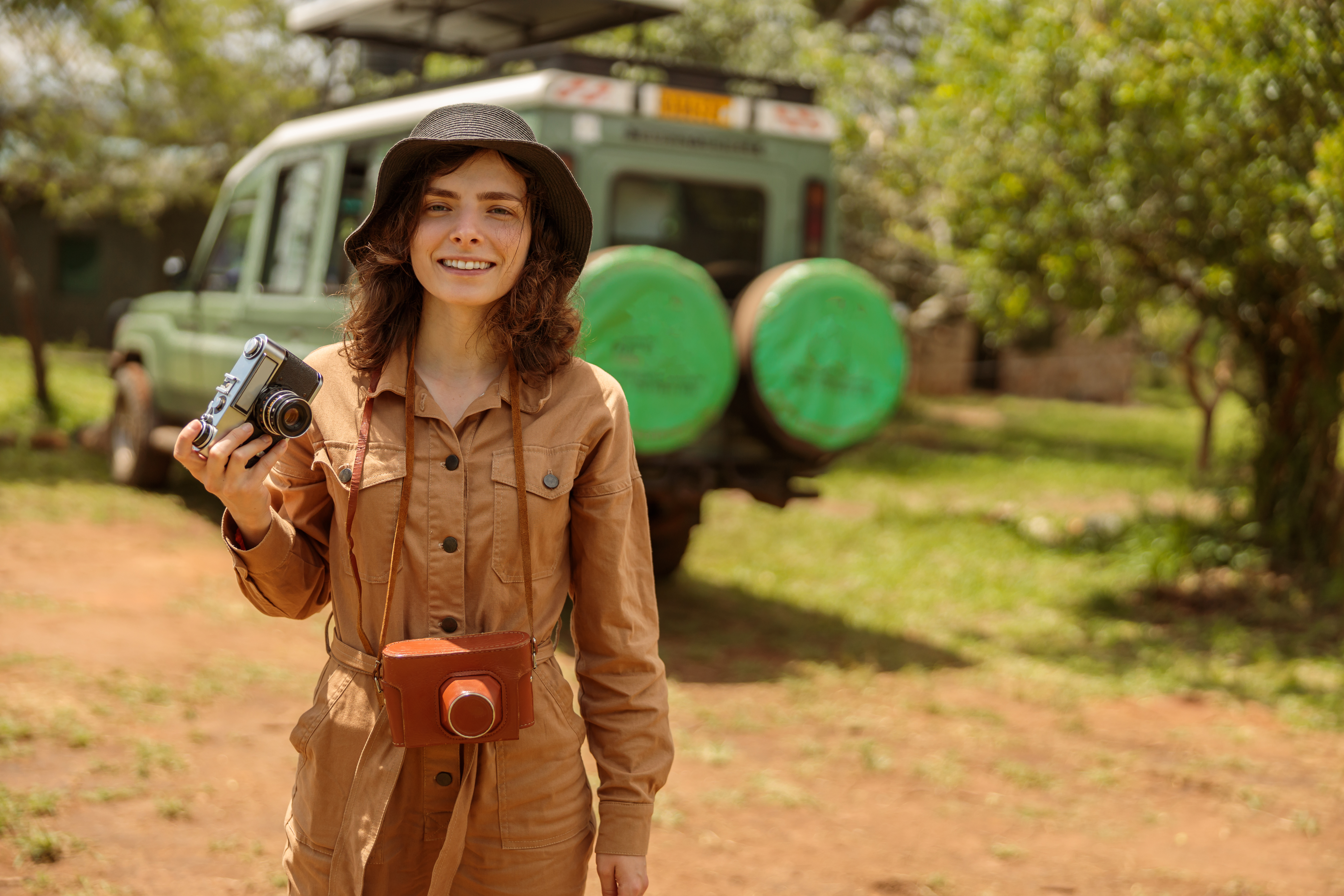
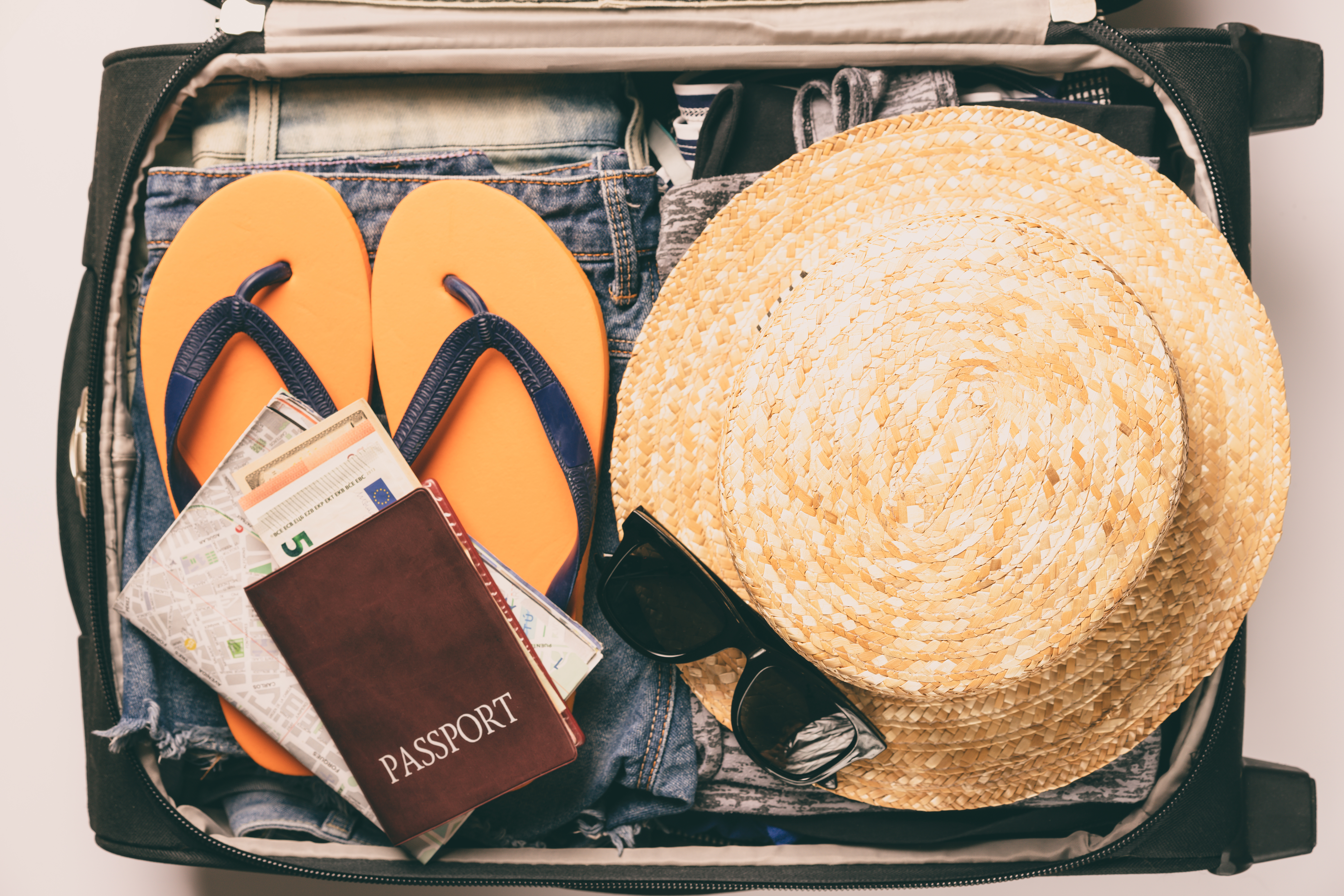
Footwear for a Tanzania safari requires more thought than most travellers give it. The primary requirement is a comfortable, neutral-coloured pair of closed-toe walking shoes or lightweight hiking boots that can handle the uneven terrain of walking safaris and camp pathways, provide ankle support if needed, and dry relatively quickly. These should be broken in well before departure — new footwear on a safari is a reliable recipe for blisters. A pair of lightweight sandals or flip-flops for in-camp use and the Zanzibar beach extension covers all other footwear needs without adding significant weight. Formal shoes are entirely unnecessary and should remain at home.
Sun, Insects, and Skin Protection
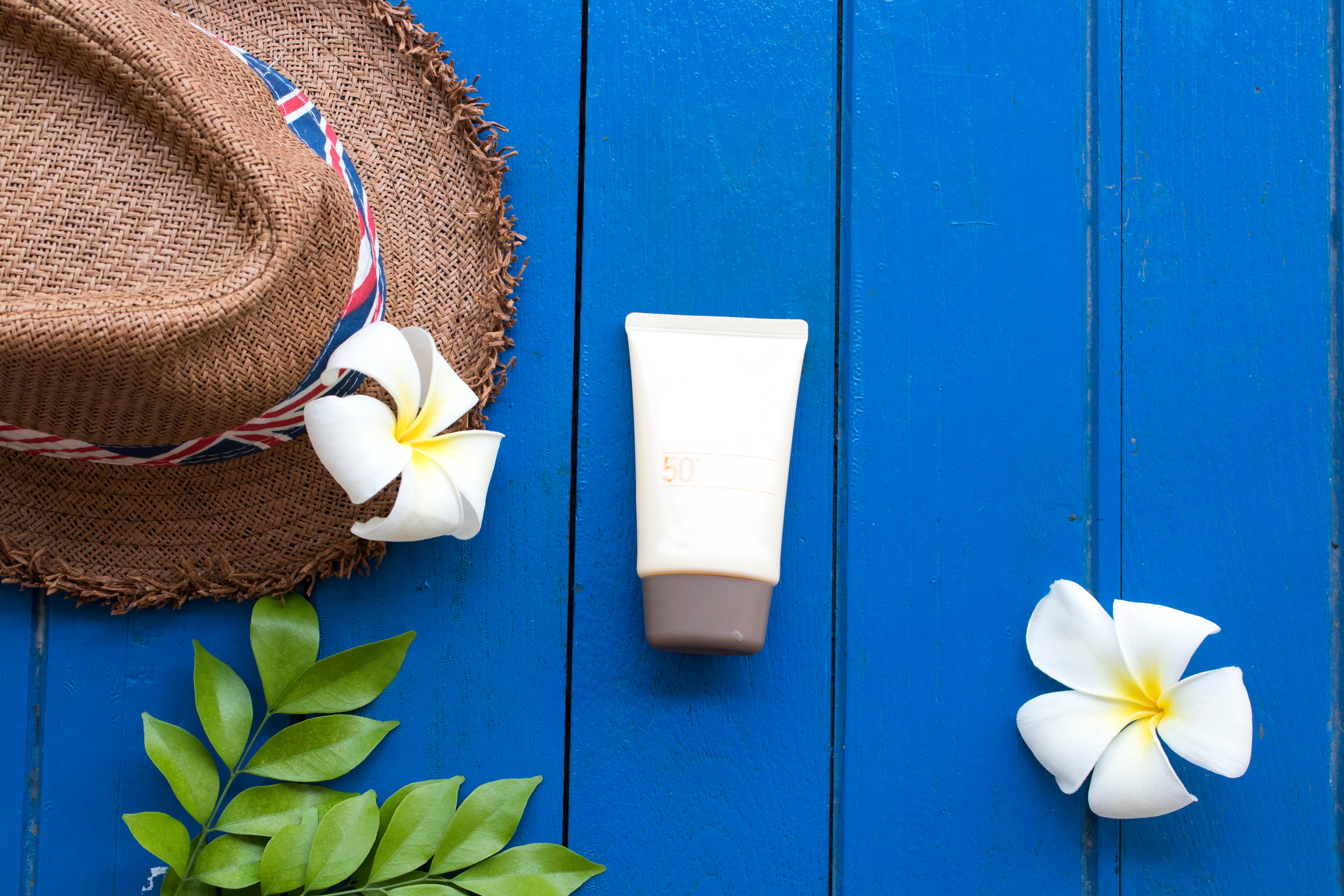
The equatorial sun in Tanzania is stronger than most travellers from Europe or North America appreciate until they have experienced it. Sun protection is not optional — it is essential, and it should be comprehensive. A broad-spectrum sunscreen of SPF 50 or higher should be applied before every morning game drive and reapplied during any midday stop. A wide-brimmed hat — in a neutral colour — provides essential face and neck protection during open-vehicle game drives and should be worn consistently between approximately 9am and 4pm. Quality UV-protective sunglasses are equally important for eye protection and for reducing fatigue during long mornings in the open vehicle.
Insect repellent containing DEET or picaridin is an essential component of the Tanzania safari kit, applied to exposed skin during the evening hours when mosquito activity peaks. Long-sleeved shirts and long trousers worn from dusk provide a physical barrier that reduces reliance on repellent alone. Permethrin-treated clothing — available from specialist safari and outdoor equipment retailers — provides an additional layer of insect protection that many experienced safari travellers swear by. A small tube of antihistamine cream for insect bites and a basic first aid kit including blister plasters, antiseptic wipes, and pain relief complete the basic health and protection kit.
Optics: Binoculars and Camera Equipment
Binoculars
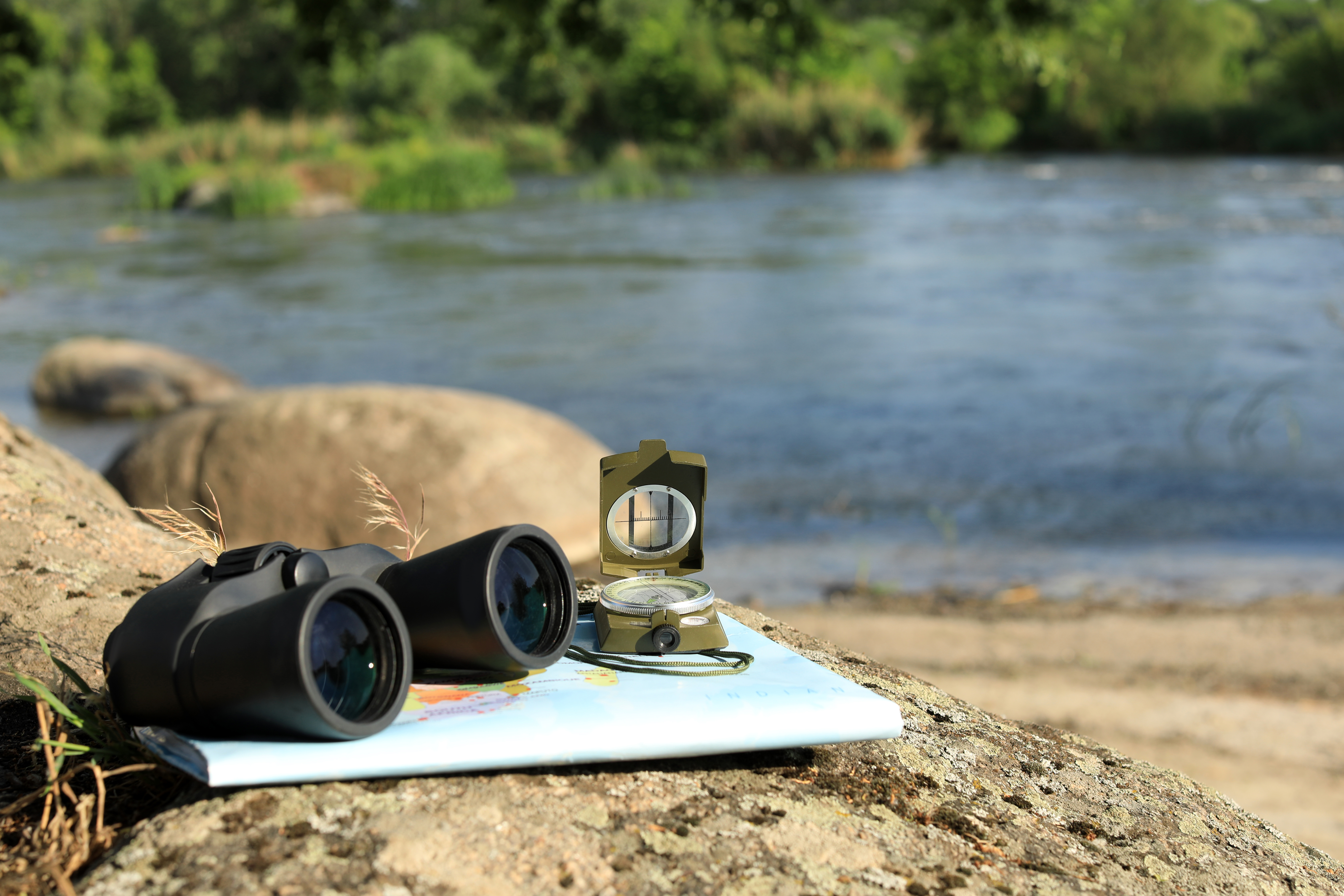
A quality pair of binoculars is, after clothing, the single most important item on the Tanzania safari packing list — and the item most commonly underinvested in by first-time safari travellers. The difference between arriving in the Serengeti with a borrowed pair of 7x35 binoculars and a quality 8x42 or 10x42 glass is the difference between seeing that there is a leopard in the distant acacia tree and seeing the leopard's eyes, the pattern of its rosettes, and the impala it is watching two hundred metres below. Quality optics transform the safari experience from a wildlife-spotting exercise into an act of genuine observation.
For Tanzania safari use, an 8x42 or 10x42 binocular provides the ideal balance of magnification, field of view, brightness, and weight. The leading optics manufacturers — Swarovski, Zeiss, Leica, and Nikon at the premium end — produce binoculars that perform brilliantly in the low-light conditions of early morning and late afternoon game drives and that are robust enough to withstand the dust and vibration of safari vehicles. A single quality binocular purchase, if not already owned, is one of the most worthwhile pre-safari investments a traveller can make.
Camera Equipment
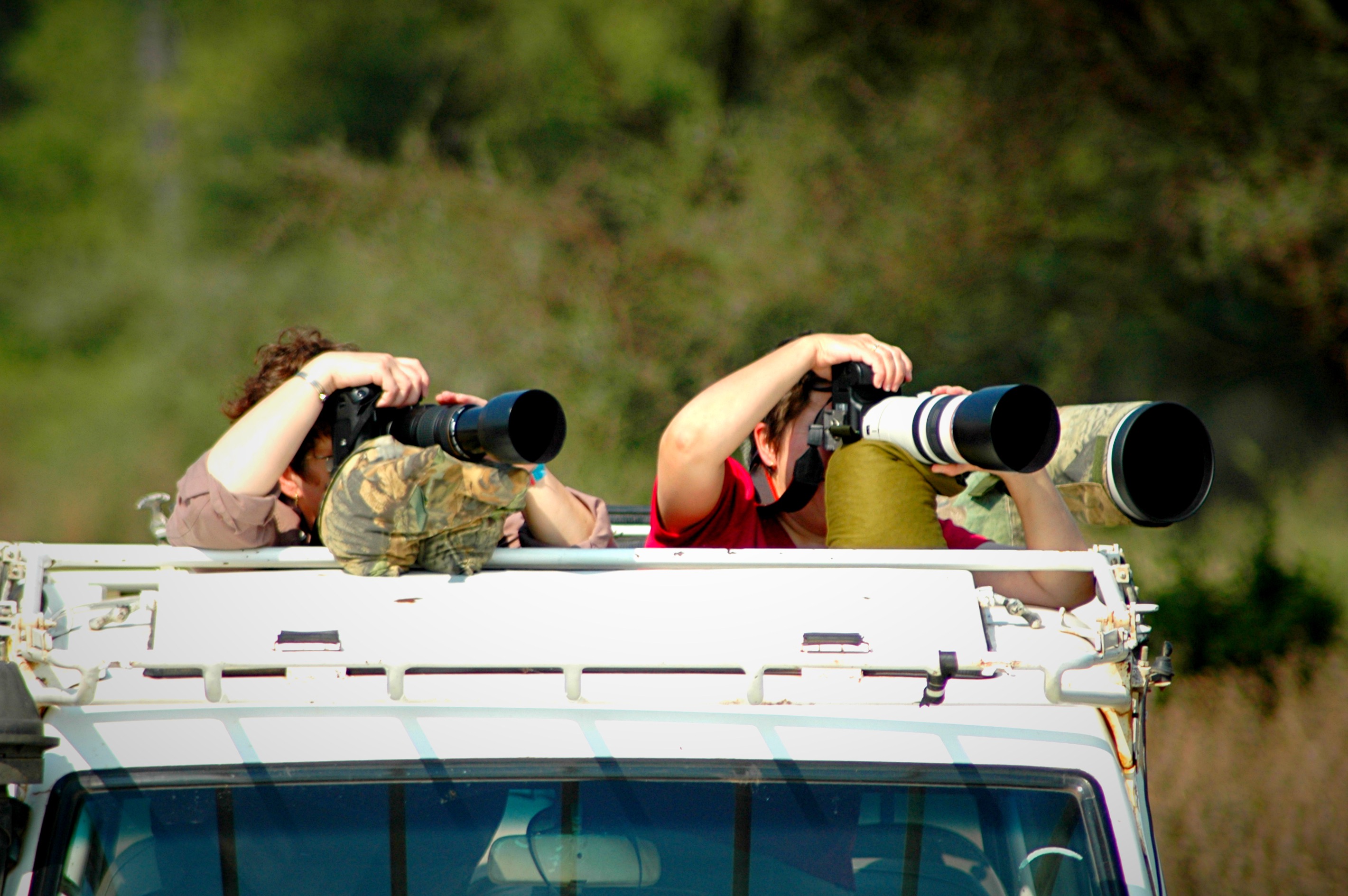
Tanzania's wildlife and landscapes are among the most photographically rewarding on earth, and the question of how much camera equipment to bring is one of the most common and most personal on the safari packing list. The honest answer is: bring what you know how to use well, and leave behind anything that requires learning during the trip itself. A camera that a traveller knows intimately will produce better images than a superior camera used uncertainly, and the Serengeti in peak season is not the optimal classroom for learning new equipment.
For those using interchangeable lens cameras — DSLR or mirrorless — a versatile zoom lens covering the 100mm to 400mm range provides the reach required for the majority of wildlife photography scenarios, supplemented by a wider lens for landscapes and camp photography. A 500mm or 600mm prime lens delivers exceptional image quality for bird and distant wildlife photography but adds weight and requires a more deliberate shooting discipline. For travellers using smartphone cameras or compact cameras, the quality available from current generation devices is entirely sufficient for producing beautiful safari images, and the smaller format has the considerable advantage of being available instantly without unpacking a camera bag.
Memory cards, spare batteries, and a portable charger should all be packed in sufficient quantity — luxury camps provide charging facilities in most rooms, but long game drives can exhaust a single battery, and missing the moment because of an empty charge is one of the easiest and most preventable safari regrets. A LensCoat or similar neoprene lens cover protects valuable optics from the dust that is an inescapable feature of dry-season game drives and is well worth the minimal weight it adds.
Health and Medications
The health kit for a Tanzania safari is more important than most travellers appreciate until they are in a remote camp two hours from the nearest clinic. Malaria prophylaxis — prescribed by a travel medicine physician — should be packed in sufficient quantity for the full duration of the trip plus several days' additional supply. A prescription anti-diarrhoeal medication, rehydration sachets, and a broad-spectrum antibiotic prescribed for standby use — all discussed with and provided by a travel medicine specialist before departure — form the core of the emergency health kit that most travellers never need but are profoundly grateful to have if they do.
Personal prescription medications should be carried in their original packaging with a copy of the prescription, in quantities that comfortably exceed the trip duration in case of delays or loss. Altitude considerations apply for travellers spending time at Ngorongoro, where the crater rim sits at 2,300 metres — those with known altitude sensitivity should discuss this with their physician before departure. A digital thermometer, antiseptic wound spray, and waterproof blister plasters round out a practical first aid kit that adds minimal weight and covers the vast majority of minor medical situations that arise in the bush.
The luxury safari traveller who packs precisely — who has thought carefully about every item in the bag and can justify its presence — arrives in Tanzania not weighed down by what they brought but liberated by what they chose to leave behind. That lightness, both physical and psychological, is part of the experience.
Essential Documents and Valuables
The documentation required for a Tanzania safari should be organised before departure and carried in a dedicated travel document wallet throughout the journey. A valid passport with a minimum of six months' validity beyond the travel dates, printed or digital copies of the Tanzania e-visa, yellow fever vaccination certificate where applicable, comprehensive travel insurance documents including emergency contact numbers and policy reference, and the full itinerary with camp contact details and charter flight references — these form the core of the document kit that should never be packed in checked luggage.
Cash in US dollars — small denomination bills of $1, $5, $10, and $20 — is essential for tips at camps and for any incidental purchases that arise during the journey. Most luxury camps in Tanzania do not accept credit cards for tips, and the cultural significance of tipping camp staff and guides means that arriving without appropriate cash is both practically inconvenient and socially awkward. A total cash allowance of $200 to $400 per person for a ten-night safari is a reasonable guideline, encompassing guide tips, camp staff tips, and any small purchases from camp boutiques or roadside markets.
Our specialists at Private Tanzania Safari provide every confirmed guest with a comprehensive pre-departure guide covering packing, health preparation, and all logistical details specific to their itinerary.
Explore our Luxury Tanzania Safari packages and begin the planning process that ends with the perfectly packed bag and the perfectly prepared mind.
Related reading: our luxury Serengeti safari.
Worth reading alongside this: our what a safari costs per person.
See also our 7, 10 and 12-day itineraries.
If you are planning this route, read Can you wear shorts on safari in Tanzania? What to wear, what to avoid and local dress norms.
What Not to Pack for a Tanzania Safari
The Tanzania safari packing list is as much about what to leave behind as what to bring. Hard-sided suitcases are incompatible with charter flight requirements and should not come beyond the international gateway. Camouflage-patterned clothing is prohibited in Tanzania — it is reserved for military use and its presence on a civilian traveller can cause genuine complications at border crossings and park gates. Bright colours, white clothing, and heavily scented perfumes or aftershaves are not banned but are genuinely counterproductive in the bush environment, where neutral colours and minimal fragrance contribute to better wildlife encounters.
Unnecessary electronics — tablets that duplicate smartphone functions, laptops carried out of habit rather than necessity, multiple camera systems that exceed what will realistically be used — add weight without adding value. Formal evening wear, jewellery beyond simple personal pieces, and high-heeled footwear are all entirely redundant in the safari context and should remain at home without hesitation. Drone equipment requires advance permits in Tanzania and is not permitted within national park boundaries under any circumstances — travellers hoping to fly drones should verify current regulations and permit requirements with their operator well in advance.
Complete your Tanzania journey with the perfect beach conclusion — discover our Tanzania Safari and Zanzibar Packages and pack for both the bush and the Indian Ocean in a single well-organised bag.
- Fifteen kilograms per person in soft-sided bags — the non-negotiable charter flight limit
- Neutral colours only — khaki, olive, tan, stone, sand, and muted greens for all bush clothing
- Three to four long-sleeved shirts, two to three safari trousers, one warm fleece, one waterproof layer
- Comfortable broken-in walking shoes and camp sandals — no formal footwear required
- SPF 50 sunscreen, wide-brimmed hat, UV sunglasses, and DEET insect repellent
- Quality 8x42 or 10x42 binoculars — the single most important wildlife-viewing investment
- Camera with telephoto reach, spare batteries, memory cards, and a dust-protective lens cover
- Malaria prophylaxis, personal medications, standby antibiotic, and rehydration sachets from travel physician
- Small-denomination USD cash for tips — $200 to $400 per person for a ten-night safari
- Passport, visa, vaccination certificate, insurance documents, and full itinerary in a dedicated document wallet
FAQs: What to Pack for a Safari in Tanzania
Frequently asked questions
What is the luggage limit on domestic flights in Tanzania?
Domestic charter flights in Tanzania impose a strict limit of fifteen kilograms per person inclusive of hand luggage, in soft-sided, collapsible bags. Hard-sided suitcases are not permitted. Excess luggage can typically be stored at the first camp or at the operator's Arusha office for collection on return.
What colours should I wear on a Tanzania safari?
Neutral, earth-toned colours — khaki, olive, tan, stone, sand, and muted greens — are ideal for safari. Bright colours, white, and fluorescent tones can disturb wildlife and should be avoided. Camouflage clothing is prohibited in Tanzania and must not be packed. Black and dark navy absorb heat and attract tsetse flies and are best avoided in the bush.
Do I need special camera equipment for a Tanzania safari?
A telephoto lens with a reach of at least 200mm to 400mm is recommended for wildlife photography. However, the most important factor is familiarity with whatever equipment you bring — a well-known camera produces better results than a superior one used uncertainly. Smartphones and compact cameras produce excellent results for travellers who prefer a lighter kit.
What medications should I pack for a Tanzania safari?
Malaria prophylaxis prescribed by a travel medicine physician is essential. A standby antibiotic, anti-diarrhoeal medication, rehydration sachets, and a basic first aid kit are strongly recommended. All personal prescription medications should be carried in original packaging with copies of prescriptions. Consult a travel medicine specialist at least six weeks before departure.
Do I need formal clothing for luxury safari camps in Tanzania?
No. Tanzania's luxury safari camps are smart-casual environments where a clean shirt or blouse and trousers are entirely appropriate for evening dining and sundowners. Formal wear, suits, blazers, and dress shoes are unnecessary and should not be packed. The emphasis is on comfort, practicality, and connection with the natural environment.
Can I do laundry at luxury safari camps in Tanzania?
Yes. Virtually all luxury safari camps in Tanzania offer same-day or next-day laundry services, typically included within the fully inclusive rate or available for a modest additional charge. This means that a ten-night safari requires clothing for only three to four days — the remainder can be laundered and returned during the stay.
How much cash should I bring to Tanzania for tips?
A general guideline is $200 to $400 per person for a ten-night safari, covering guide tips, camp staff tips, and incidental purchases. Tips are always paid in US dollars at Tanzania's luxury camps — small denomination bills of $1, $5, $10, and $20 are most practical. Specific tipping guidance is provided by most operators in their pre-departure materials.