
The shortest war in history
The Anglo-Zanzibar war of 27 August 1896 holds a record no other conflict has ever come close to: it is the shortest war in history, over in somewhere between 38 and 45 minutes. In less time than it takes to eat a leisurely breakfast, a Royal Navy squadron reduced a sultan's palace to rubble, sank his only warship, ended his two-day reign and changed the course of Zanzibar history. Behind the pub-quiz record lies a gripping tale of poison, ambition, empire and a young man who gambled everything against the world's most powerful navy.
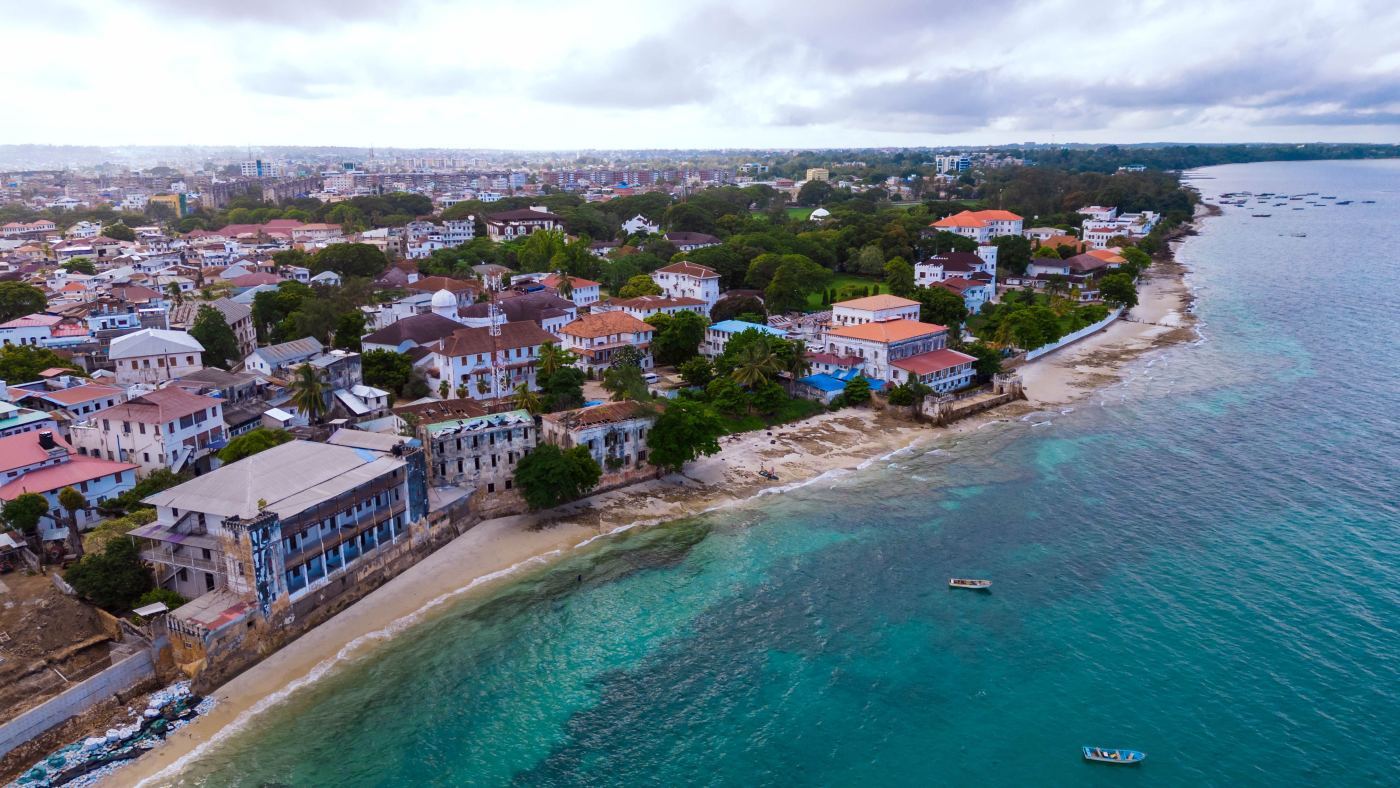
What makes the story irresistible for travellers is that it happened somewhere you can actually stand. The bombardment unfolded along the seafront of Stone Town, the old quarter of Zanzibar City, and the sites of that August morning — palace, harbour, waterfront gardens — sit within a ten-minute stroll of each other today. In this guide we tell the tale properly, weigh in on the 38-versus-45-minute debate, and show you exactly where to walk the story on your own visit to Zanzibar.
A sultan dies and a throne is seized
The trouble began two days earlier, on 25 August 1896, when Sultan Hamad bin Thuwaini died suddenly in his palace at around half past eleven in the morning. The speed of what followed fuelled rumours — never proven — that he had been poisoned. Within hours his ambitious young cousin, Khalid bin Barghash, had moved into the palace complex on the seafront, gathered his supporters and proclaimed himself sultan, without so much as a nod to the British consulate a few hundred metres away.
That nod mattered enormously. Zanzibar had been a British protectorate since 1890, and under an earlier agreement any new sultan required the consul's approval before taking the throne. Britain preferred the more compliant Hamoud bin Muhammed, and Sultan Khalid — who had already tried to seize the palace once before, in 1893 — was precisely the man London did not want. When Khalid raised his flag, the acting consul-general, Basil Cave, saw not a succession but a coup, and the machinery of the British empire began, very quickly, to turn.
An ultimatum on the waterfront
Cave telegraphed London and was authorised to take whatever measures he considered necessary. Royal Navy warships converged on Zanzibar harbour, and by the evening of 26 August five vessels lay at anchor within sight of the palace — the cruisers St George and Philomel, HMS Racoon, and the gunboats Thrush and Sparrow, under Rear-Admiral Harry Rawson. Cave delivered his ultimatum: Khalid was to haul down his flag and leave the palace by nine o'clock the following morning, or the ships would open fire.
Khalid, remarkably, decided to stand. He assembled roughly 2,800 defenders — palace guards, servants, armed townspeople — and a shore battery that says everything about the mismatch: a seventeenth-century bronze cannon, a few Maxim guns and a Gatling gun, pointed at modern cruisers. In the harbour floated his entire navy, the Glasgow, a wooden royal yacht built in Britain in the 1870s and armed more for ceremony than for war. Through the night Khalid insisted he did not believe the British would really shoot.
27 August 1896: the 38 minutes
On the morning of 27 August 1896 the waterfront held its breath. At eight o'clock Khalid sent word asking for talks; Cave replied that there was nothing to discuss unless the flag came down. At nine the deadline expired. At two minutes past nine, Racoon, Thrush and Sparrow opened fire on the palace, and the first shells of the shortest war in history crashed into the wooden buildings of the seafront. The shore battery managed only a brief, ragged reply before it was silenced; the old bronze cannon never stood a chance.
The palace complex — the ceremonial Beit al-Hukum, the adjoining harem and the tall Beit al-Ajaib, the House of Wonders — was largely built of timber and packed with nearly three thousand defenders. High-explosive shells set it ablaze and brought floors and towers crashing down, and the casualty toll mounted with terrible speed. Sultan Khalid himself is generally agreed to have slipped out through a rear exit early in the bombardment, leaving his flag flying and his followers to endure the barrage he had chosen to invite.
By about twenty to ten it was over. The flag over the palace came down — accounts differ on whether it was hauled down in surrender or simply shot away — and the guns fell silent. Around 500 shells had been fired. Roughly 500 Zanzibaris were killed or wounded, most of them in the burning palace, while on the British side a single petty officer aboard Thrush was badly injured and not one man was killed. It was less a battle than a demonstration, brutal and brief, of what late-Victorian naval firepower could do.
The Glasgow goes down
The war's one naval engagement was as unequal as everything else that morning. The Glasgow, loyal to her sultan, fired on the British flagship St George, and the cruiser's reply was swift and overwhelming. Within minutes the Glasgow was sunk, settling into the shallow harbour with her masts still clear of the water; her crew scrambled into the rigging and were rescued by British boats. For years afterwards those masts poked above the harbour as a strange memorial, until the wreck was finally broken up in 1912.
38 minutes or 45? The great debate
How long did the Anglo-Zanzibar war actually last? Nobody stood on the waterfront with a stopwatch, and the sources disagree: firing began at about 9.02am and ceased somewhere between 9.40 and 9.45, which gives a range of roughly 38 to 45 minutes. Guinness World Records has settled on around 38 minutes, and that is the figure most often quoted, but you will find perfectly respectable histories saying 40 or 45. The discrepancy comes down to when you stop the clock — the last shell, the flag coming down, or the formal ceasefire.
Whichever figure you prefer, the record is in no danger — the next-shortest wars in history are measured in days, not minutes. Historians enjoy pointing out that calling it a war at all is generous, since it was a one-sided bombardment with a declared start time, but a state of war formally existed, however briefly, and so the record stands, and Zanzibar keeps its unlikely place in every book of superlatives ever printed.
What happened next — and the end of the slave trade era
Khalid fled to the German consulate down the seafront, and what followed was pure comic opera. The Germans, unwilling to hand him over, waited for a high tide and carried him from the consulate steps directly into a warship's boat — so that he technically never set foot on Zanzibari soil — and spirited him to Dar es Salaam. He lived in German East Africa until the British captured him during the First World War, saw exile in the Seychelles and St Helena, and died in Mombasa in 1927.
In Stone Town, Britain installed Hamoud bin Muhammed as sultan that same afternoon and, with cold imperial logic, billed Zanzibar for the cost of the shells. But the aftermath carried one change of real and lasting weight: within months, under sustained British pressure, Sultan Hamoud decreed the abolition of the legal status of slavery in Zanzibar, in April 1897. Zanzibar had been the hub of the East African slave trade for centuries, and this was a decisive step in that terrible commerce's final end — a sombre and important thread of Zanzibar history that Stone Town remembers today with honesty and dignity.
Where to stand in Stone Town today
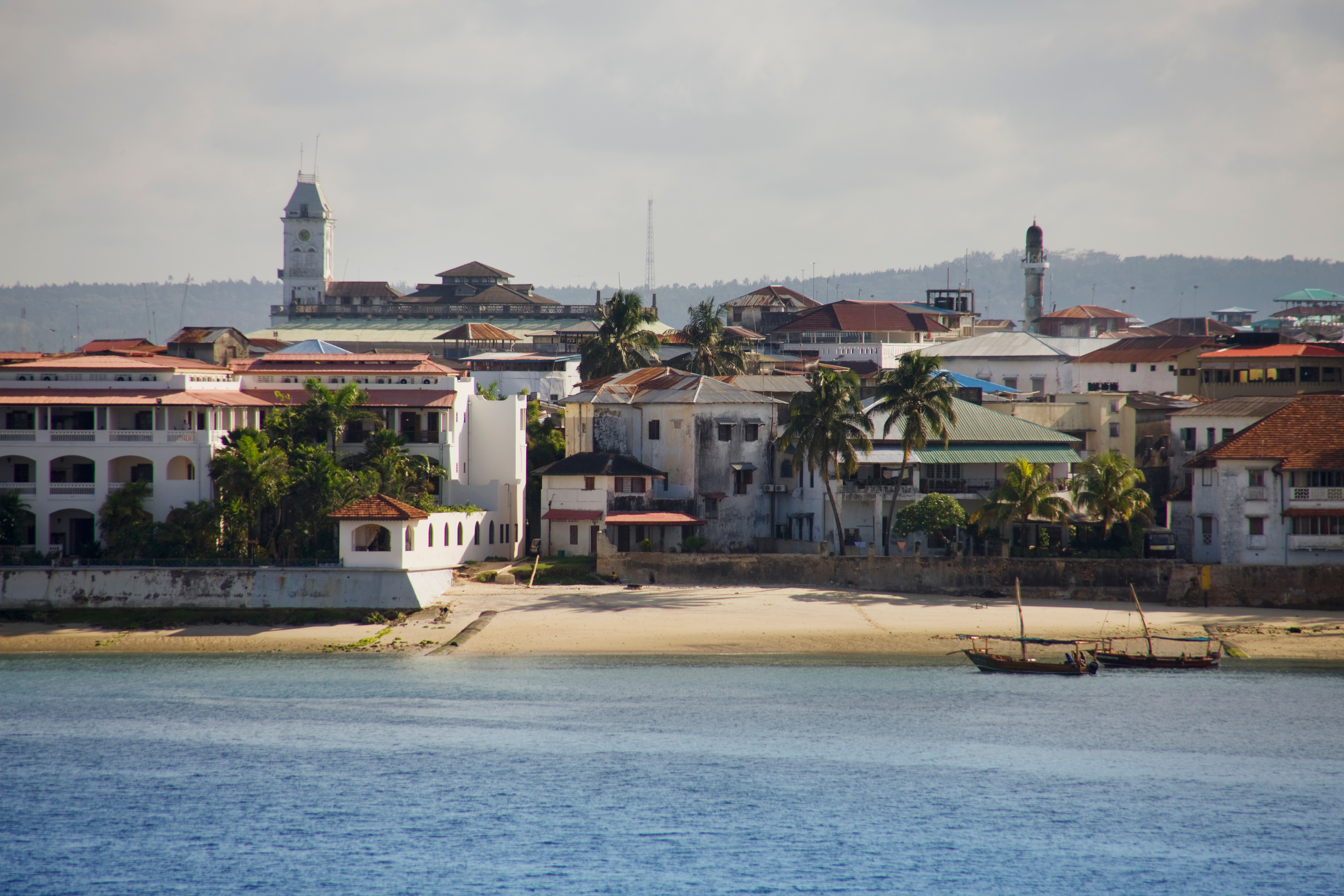
Here is the traveller's payoff: the entire war happened along a few hundred metres of seafront that you can walk today. Start at Forodhani Gardens, the waterfront park where locals gather every evening for the famous street-food market. The British squadron lay at anchor just offshore, roughly where dhows and ferries pass now; stand at the sea wall at nine in the morning and you are looking at the exact stretch of water from which HMS Racoon and her consorts opened fire, at almost exactly the spot where the shells came ashore.
Turn around and the palace complex is in front of you. The Beit al-Hukum and the old harem were shattered in the bombardment and never rebuilt, but the Beit al-Ajaib — the House of Wonders, once the tallest building in East Africa — survived the shelling, and the neighbouring Palace Museum occupies the sultans' later residence. Do note that the House of Wonders has been closed for restoration since a partial collapse in 2020, so you will be admiring its grand tiers from the outside — a good guide will more than compensate with the stories.
A few steps south stands the Old Fort, the seventeenth-century Omani stronghold that shrugged off the morning rather better than the wooden palace did, and beyond it wait Stone Town's deeper layers: the carved doors, the Darajani market, the Freddie Mercury house, and the Anglican cathedral built on the site of the old slave market, whose moving memorial deserves an unhurried, respectful visit. Few places on earth pack this much history into so small and beautiful a maze of streets.
A guided history walk brings it alive
You can wander the seafront alone with this article in hand, but the story truly comes alive when told on the spot by someone who grew up with it. A knowledgeable guide will walk you the line of the bombardment, point out where the Glasgow settled and where Khalid slipped away, and set the 38 minutes in the sweep of Omani sultans, spice fortunes and the slave trade that shaped the island. At Sokwe Africa Safaris our guided Stone Town walks tell the Anglo-Zanzibar war on the exact waterfront where it happened, alongside the markets, doors and hidden courtyards.
Practically, a history walk takes a relaxed half day, and mornings are best — cooler air, softer light, and the pleasing symmetry of standing at Forodhani at the very hour the ultimatum expired. It pairs beautifully with a spice-farm tour and slots easily into the first or last day of a beach stay. Most of our guests visit Stone Town as part of a bush-and-beach holiday, flying in from the Serengeti for a few days of Indian Ocean sand with a dose of history in the middle.
For thirty-eight minutes the harbour shook — and when the smoke cleared, an empire had made its point and an era had begun to end.
- Date — 27 August 1896, 9.02am to about 9.40am
- Duration — 38 to 45 minutes, the shortest war in history
- Forces — five Royal Navy ships against 2,800 defenders and one royal yacht
- Losses — around 500 Zanzibari casualties, one British sailor injured, the Glasgow sunk
- Aftermath — Sultan Hamoud installed; legal status of slavery abolished in 1897
- Where to stand — Forodhani Gardens, the Palace Museum and the House of Wonders, Stone Town
Plan your Zanzibar days: our full Stone Town guide · more things to do in Zanzibar · combining safari and Zanzibar · our Zanzibar beach holidays
Making Zanzibar part of a bigger Tanzanian journey
The beauty of Zanzibar is that its history comes with a holiday attached. The classic Tanzanian itinerary runs safari first, beach second: a week among the Serengeti's lions and the Ngorongoro Crater's wildlife, then a short flight to the island for four or five nights of white sand and warm ocean. Slipping a Stone Town history walk between airport and beach resort costs half a day and gives context to everything you see afterwards — the architecture, the spice farms, the dhows — all suddenly connected to sultans, empires and those famous 38 minutes.
Timing is easy, because Stone Town works year-round. The long dry season from June to October is the most comfortable and matches peak safari conditions, while the January-to-February window is hotter but beautifully quiet; only the heavy rains of April and May are worth planning around. Budget-wise, a private guided Stone Town half day is a modest add-on to a Zanzibar stay — typically well under a hundred US dollars per person — and in our experience it is consistently the excursion guests rank alongside their best game drives when they look back on the trip.
Add the shortest war to your Zanzibar days
The Anglo-Zanzibar war lasted less than an hour, but it makes for one of the most memorable mornings you can spend in East Africa — a thriller of a story told on the exact waterfront where it happened, in one of the loveliest old towns on the Indian Ocean. If Zanzibar is on your itinerary, give Stone Town the half day it deserves. Tell us your dates and we will build it in — safari, beach, and 38 minutes of history in between, arranged door to door by our team in Arusha. Get in touch and we will start planning.
Plan your Zanzibar and Stone Town journey with Sokwe Africa Safaris