
What resort really means on safari
Search for the best resorts in Africa and you will quickly discover that the word means something different out here. On safari, the finest resorts are not high-rise hotels with a thousand rooms — they are lodges and camps, often with just eight to twenty suites, set inside or beside the continent's greatest wilderness areas. The best African safari resorts pair genuine luxury — private plunge pools, superb kitchens, spa treatments, infinity pools overlooking the plains — with something no city hotel can offer: elephants at the waterhole, lions calling at night, and a guide who knows every track for fifty miles.
As a safari operator based in Arusha, we spend our working lives inspecting these properties, and we can tell you honestly that they are not all equal. Location matters more than thread count, the style of property shapes the whole trip, and prices in 2026 vary enormously for reasons that are not always obvious from a website. This guide ranks the great safari resort styles by experience — crater-rim lodges, Serengeti camps, private conservancies, river lodges in the wild south and the Zanzibar beach resorts that finish a trip — so you can build a holiday around the right ones.
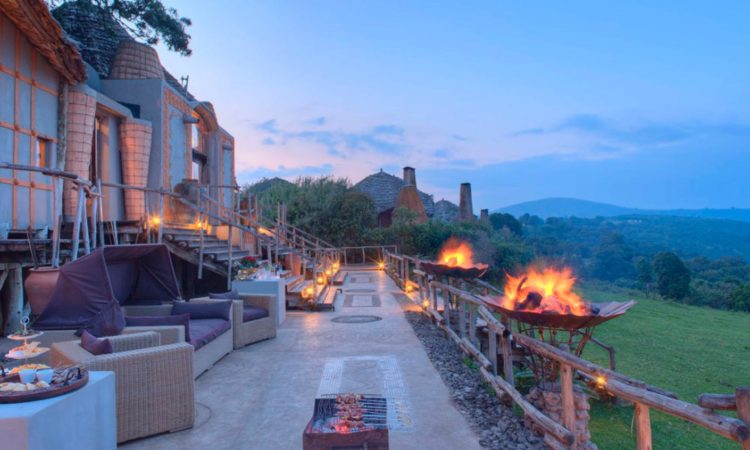
Ngorongoro crater-rim lodges: rooms above a wonder
If one setting defines the best african safari resorts, it is the rim of the Ngorongoro Crater. A handful of lodges sit at around 2,300 metres on the crater's forested edge, and from your bed, your bath or the terrace at breakfast you look 600 metres down into a sixteen-kilometre-wide caldera holding some 25,000 large animals, including the black rhino. No hotel view anywhere in the world quite compares. Evenings are cool enough for log fires, the air smells of highland forest, and the crater floor below changes colour hour by hour.
The trade-offs are worth knowing. A crater rim lodge commands serious money — expect roughly 1,200 to 3,500 US dollars per person per night at the top properties in 2026 — and the crater floor itself gets busy, so the smart play is one or two nights on the rim with a dawn descent, when you enter the caldera before the day-trip vehicles arrive. Because there are so few rim rooms, the best lodges sell out eight to twelve months ahead for June to October and the Christmas weeks. We cover the individual properties in detail elsewhere, but as a category, nothing on the continent beats the theatre of waking above the crater.
Serengeti luxury camps: the moveable resorts
The Serengeti hosts the greatest concentration of luxury african safari resorts in East Africa, and the most interesting of them do not stand still. The finest Serengeti properties fall into two families: permanent lodges — stone, timber and glass, with infinity pools, wine cellars and spas, anchored in prime year-round game areas — and luxury tented camps, some of which physically move two or three times a year to follow the wildebeest migration. A top mobile camp gives you canvas walls and bucket-shower romance on the outside and king beds, fine linen and proper dining on the inside.
Choosing between them is really about choosing what you want outside the door. From December to March the migration masses on the southern plains for calving season; June and July bring the Grumeti River crossings in the west; August to October is Mara River crossing drama in the north. A camp positioned in the right sector at the right month puts the greatest wildlife show on earth within a short morning drive. Permanent lodges in the central Seronera and western corridor deliver superb resident game — big cats above all — in every month, which makes them the safer pick if your dates are fixed.
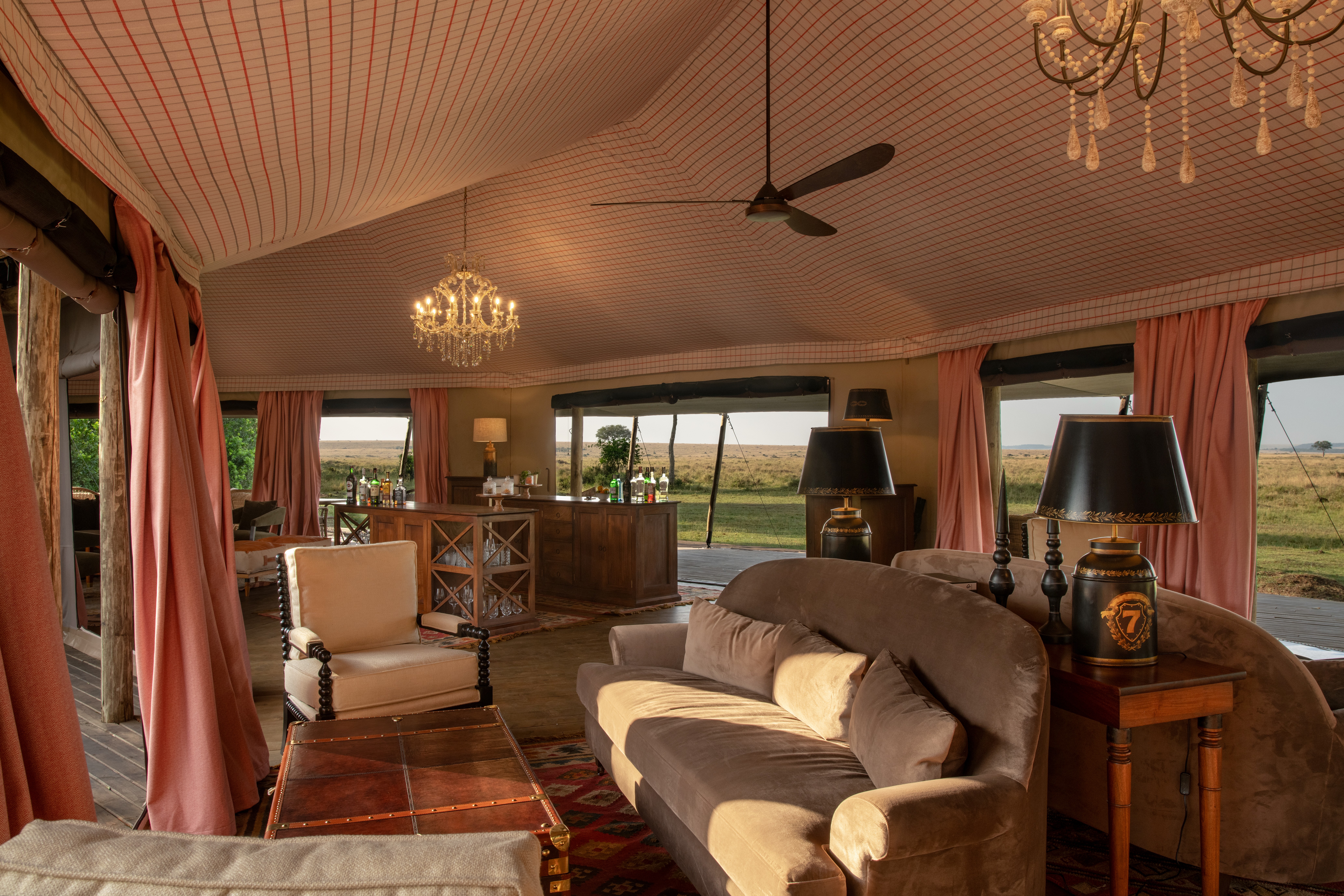
Private conservancies: Kenya's exclusive answer
Across the border in Kenya, the private conservancy model has produced some of the best resorts in Africa for travellers who prize exclusivity. Conservancies are community-owned lands bordering the Masai Mara and Laikipia where a small number of camps lease exclusive traversing rights, capping vehicle numbers at a fraction of what the public reserves allow. The result is extraordinary: you might watch a leopard hunt at dusk with no other car in sight, something nearly impossible in the main Mara during migration season, and the conservancy fees go directly to Maasai landowning families.
A private conservancy also unlocks activities the national parks and reserves forbid — night game drives with spotlights, off-road driving to sit close to a sighting, and walking safaris with Maasai guides. The camps themselves are among the most polished on the continent, typically ten to twelve tents with private decks, excellent food and rates that bundle everything in. Expect around 900 to 2,500 dollars per person per night in 2026, conservancy fees included. For a second safari, or for photographers and honeymooners who want the bush to themselves, conservancies are hard to beat, and they combine beautifully with a Tanzanian circuit next door.
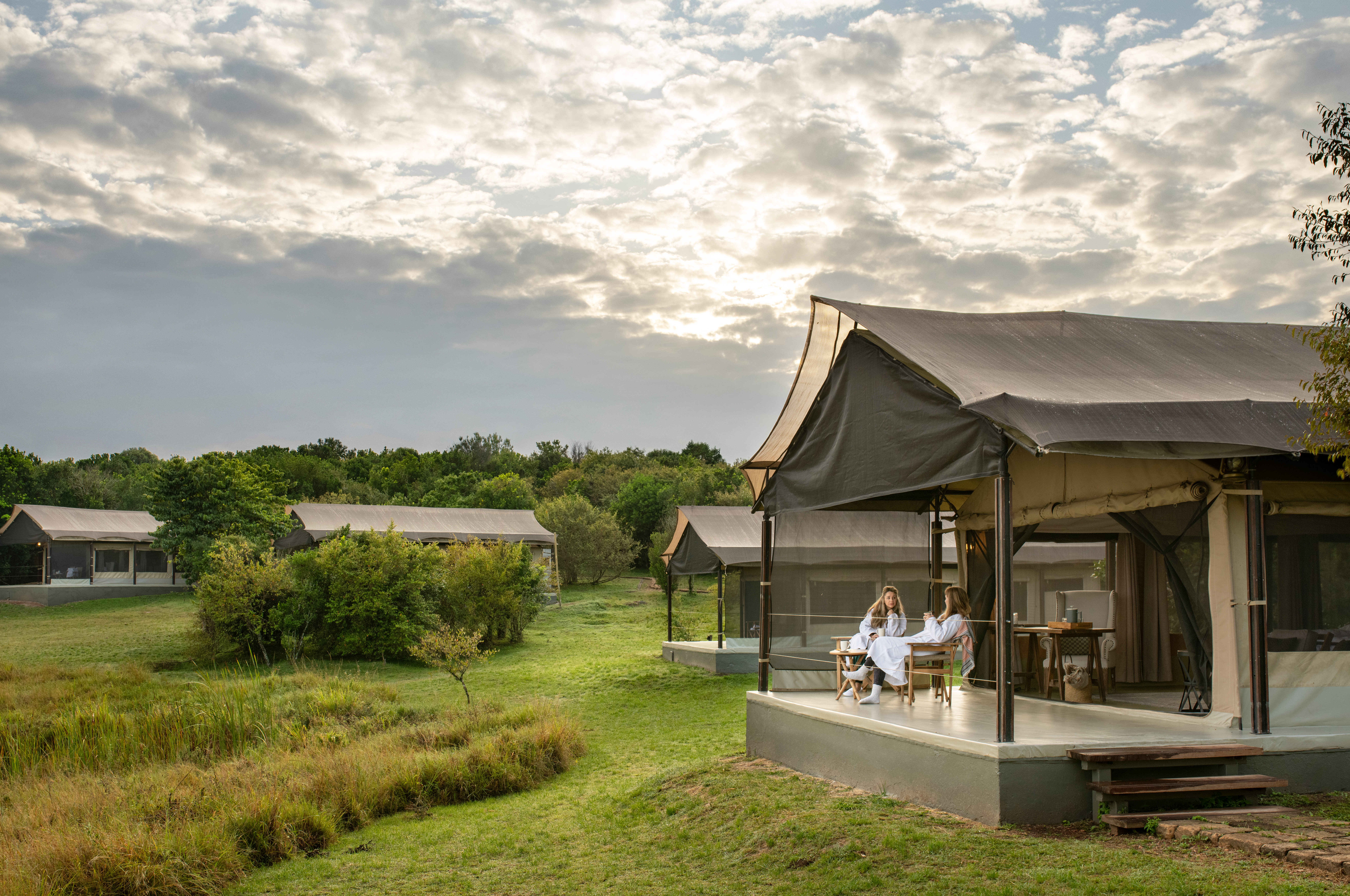
Southern-circuit river lodges: Ruaha and Nyerere
The connoisseur's choice among the best african safari resorts sits far from the famous circuits, in southern Tanzania. Ruaha National Park and Nyerere National Park — the latter carved from the old Selous Game Reserve — hold a small collection of river lodges and camps strung along the Great Ruaha and Rufiji rivers, and they offer something the north cannot: near-total solitude. These are parks where you can drive all day and see no other vehicle, where huge elephant herds and one of Africa's best wild dog populations gather along the water from June to October, and where your lodge may be the only one for miles.
The river setting shapes the experience. Nyerere's lodges run boat safaris among hippos, crocodiles and legions of waterbirds, while both parks offer proper walking safaris with armed guides — activities largely unavailable in the northern parks. The properties range from characterful owner-run camps at around 600 to 900 dollars per person per night to genuinely lavish river lodges at 1,000 to 1,800 dollars, almost always sold with flights included because the south is a fly-in destination. For travellers who have done the Serengeti, or who simply want wilderness without witnesses, the southern river lodges are the most underrated luxury in Africa.
Zanzibar beach resorts: how the best trips finish
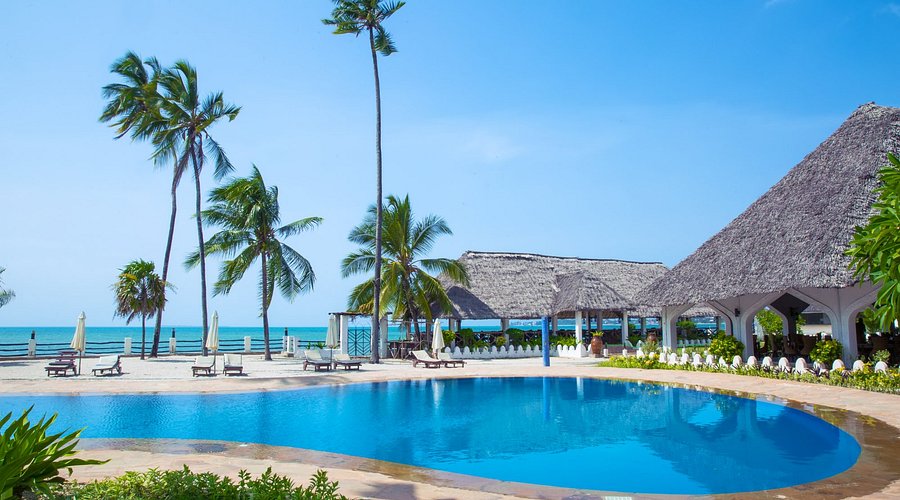
Every great safari itinerary we build ends the same way: with sand. Zanzibar sits a short flight from every Tanzanian park, and its north-east and east coasts hold genuine world-class beach resorts — the kind with barefoot butlers, dhow sunset cruises, private villas with plunge pools and some of the finest Indian Ocean diving anywhere, around Mnemba Atoll especially. After a week of dawn game drives and dust, three or four nights of warm turquoise water is not an indulgence; it is the correct way to let the safari settle in before the flight home.
The island runs from lively beach hotels at 250 to 500 dollars per room per night to serious luxury resorts and private-island properties at 800 to 2,500 dollars and beyond in 2026. Two practical notes from long experience: the east coast is tidal, so if you want all-day swimming choose the north-east around Nungwi and Matemwe or a property with a superb pool, and July to October plus December to February are the dry, sparkling months that match perfectly with peak safari season. Add a half-day in Stone Town, a UNESCO World Heritage Site, on your way through.
What all-inclusive really includes on safari
Nearly all top safari resorts price themselves all-inclusive, but the phrase covers different things at different properties, and the gaps catch travellers out. As a baseline, a quality lodge or camp rate includes your suite, all meals, most drinks including decent house wines and spirits, twice-daily shared game drives, and laundry. The best properties go further: park and conservancy fees, premium drinks, walking safaris, night drives where permitted, and even spa treatments folded into the rate, so that you genuinely never open your wallet.
What is almost never included is worth listing plainly: international flights, the light-aircraft transfers between parks (typically 200 to 450 dollars per leg), champagne and top-shelf spirits at some properties, balloon safaris over the Serengeti at around 600 dollars per person, and staff gratuities, for which 20 to 30 dollars per guest per day is a sensible 2026 benchmark. When you compare two resorts, always compare the full delivered cost — a camp that looks 300 dollars dearer but includes park fees and transfers is often the cheaper stay. This is precisely the arithmetic a good local operator does for you.
- Usually included — suite, all meals, house drinks, twice-daily game drives, laundry
- Often included at the top end — park and conservancy fees, walks, night drives
- Rarely included — flights between parks, balloon safaris, premium champagne, tips
- Always ask — transfer costs, single supplements, festive-season surcharges
2026 price bands: what the best resorts cost
Honest numbers help more than adjectives, so here are the bands we are quoting for 2026. Comfortable mid-range lodges and tented camps across Tanzania and Kenya run 350 to 600 dollars per person per night all-inclusive. The classic luxury tier — the elegant permanent lodges and migration camps most travellers picture — runs 650 to 1,200 dollars. The top tier, meaning crater-rim icons, private conservancy camps and exclusive-use villas with private guides and vehicles, runs 1,300 to 3,500 dollars per person per night, and a handful of trophy properties exceed even that in the peak months.
Season moves these numbers by 30 to 40 per cent. January to early March and June to October are peak, with the highest rates and the strongest wildlife; April and May are green season, when the same suite can cost half price and the parks are emerald and empty, at the cost of some rain. A realistic budget for a superb seven-night luxury safari plus four nights on Zanzibar for two people in 2026 is 22,000 to 40,000 dollars including internal flights — and meaningfully less in green season. The best luxury african safari tours are not cheap, but every dollar is visible in the experience.
The best resorts in Africa do not have a thousand rooms — they have twelve tents, one waterhole and a view you will describe for the rest of your life.
More on this in Hot Air Balloon Safaris: An Unforgettable Perspective of the Serengeti.
Related reading: Luxury safari Kenya: the complete guide.
If you are planning this route, read Private Safari Tanzania: Everything You Need to Know in 2026.
More on this in Tanzania luxury tours: beyond the game drive.
See also our guide: Tanzania resorts: beach, bush and everything between.
More on this in Tulia Zanzibar: the small all-inclusive that safari guests love.
Building a bush-and-beach resort itinerary
The finest way to experience these properties is not to pick one but to sequence three or four into a beach and bush journey, and the order matters. Our classic ten- to twelve-night shape starts in the highlands with a night near Arusha to shake off the flight, then two nights at a crater rim lodge for Ngorongoro, then three or four nights in a Serengeti luxury camp positioned for the migration, and finishes with three or four nights at a Zanzibar beach resort. Bush first, beach last — game drives start before dawn, and the beach is where you finally sleep in.
Variations abound. Travellers with more time add Tarangire's elephant country at the front or swap the Serengeti's second camp for a Kenyan private conservancy across the border. Safari veterans replace the northern circuit entirely with Ruaha and Nyerere river lodges before the flight to the island. The connective tissue is light aircraft — Tanzania's charter network links every park to Zanzibar in under a few hours — which is why an experienced operator matters: sequencing the flights, matching each resort's strongest season to your dates and holding rooms at properties that sell out a year ahead is genuinely specialist work.
Ready for the trip of a lifetime?
The best African safari resorts reward exactly the kind of planning this guide describes: the right crater-rim lodge for the view, the right Serengeti camp for your month, a conservancy or river lodge for solitude, and the right stretch of Zanzibar sand to finish. Want the trip of a lifetime? Tell Sokwe Africa Safaris your dates, your budget band and what stirs you most — migration drama, privacy, honeymoon romance, family space — and we will pair the right resorts with the right parks, at honest prices, with every transfer and park fee handled. Contact us today and we will start shaping it within a day.
Plan your luxury safari resort itinerary with Sokwe Africa Safaris