The honest answer first
Yes, an Italian-speaking safari guide can be arranged in Tanzania, and we arrange them. But we will give you the honest picture before the reassuring one, because this is a subject where operators tend to say whatever closes the booking and let the guest find out on day one. Tanzania's professional driver-guides are trained, licensed and examined in English and Swahili. That is the language of the guiding profession here. The number of guides across the northern circuit who speak genuinely fluent Italian — fluent enough to explain lion behaviour, not just order lunch — is small. A few dozen at most, and most of them are contracted well ahead by the Italian tour operators who have worked this market for decades.
So the question is never simply whether an Italian-speaking guide exists. It is whether one is available on your dates, whether he or she is as good a naturalist as the best English-speaking guide we could otherwise give you, and whether the difference matters enough to your group to accept a supplement and book early. For some travellers it plainly does. For others, once they understand the trade, it does not.
We write this page because we are asked the question several times a month, usually by email from Milan, Rome or Turin, and usually after the enquirer has already been told yes by two other operators. We would like to be the operator who told them the truth first. The rest of this page sets out what that truth looks like on the ground — how many guides, what they cost, when to ask, and what to do when the answer on your dates is no — so that whoever you eventually travel with, you book with your eyes open.
What the trade-off actually is
The best guides in Tanzania are the ones who read the bush: who notice the impala staring in one direction and drive to where the leopard will be, who know which pride is where this week and put you there an hour before the action. That skill takes years and it is concentrated among guides who trained and worked in English. Fluent Italian speakers who are also top-tier naturalists exist, but they are rare, and when they are booked you are choosing between an outstanding guide who explains in English and an Italian-speaking guide who is likely to be less experienced in the field.
We would rather be plain about that choice than hide it. Our standing advice is that the guide who finds the leopard is worth more than the guide who describes it in your mother tongue, and most Italian guests who have travelled with an excellent English-speaking guide and a good translator agree afterwards. But if someone in your party has little English, the calculation changes, and that is exactly the information we need at the enquiry stage.
There is also a supplement. Italian-speaking guides command a premium because they are scarce, and we pass it on transparently rather than burying it in the package price. It is in the same territory as the German-speaking supplement we publish elsewhere — typically several tens of euros a day — and we will quote it as a separate line so you can decide with the number in front of you.
It helps to understand where the Italian-speaking guides come from. Most learned the language working for the Italian tour operators that have run group departures to Tanzania since the 1980s, particularly on the Zanzibar-heavy circuits. They are experienced in that model: larger groups, fixed itineraries, a rhythm built around the beach at the end. Fewer of them have spent years in the private-vehicle, small-camp end of the market where the finest naturalist guiding is done. That is not a criticism, simply a description of two different careers, and it is why the very best Italian-speaking guide and the very best guide are usually different people.
When we do secure a fluent Italian-speaking guide who is also a first-rate naturalist, we say so, and those bookings are the easiest we ever make. They are rare enough that we do not build a marketing promise around them.
How to get one, and when to ask
Notice is everything. Tell us at the first enquiry that an Italian-speaking guide matters, and tell us how much: essential, preferred, or nice-to-have. With four to six months' notice outside the peak months we can usually secure one. With two weeks' notice in August, we cannot promise it, and we will not pretend otherwise. The Italian operators book their guides for the whole season, and what remains in high season is what remains.
If we cannot secure a fluent guide on your dates, there are three honest alternatives. The first is an English-speaking guide of the highest standard, plus a written Italian briefing each evening covering what you saw and what tomorrow holds. The second is an Italian-speaking host or translator travelling with you in the vehicle — not a guide, but a bridge, and for a group with mixed English this works remarkably well. The third is to shift dates by a few weeks into a quieter month, when the fluent guides are far more likely to be free.
Italian travellers will also find our Tanzania safari from Italy guide useful, and our luxury Serengeti safari page covers what a private guide changes.
The written daily briefing deserves more explanation, because guests are sceptical until they have had one. Each evening at camp, your guide and our office prepare a short summary in Italian of the day — what you saw, where, and why it mattered — and a preview of tomorrow: departure time, route, what to look for, what to wear. It is delivered on paper or to your phone. It does not replace conversation in the vehicle, but it means nobody in the party is ever unsure what happened or what is planned, and for a group where two people speak good English and two speak little, it closes most of the gap at a fraction of the cost of a second person in the vehicle.
The Italian-speaking host is the fuller solution. This is a native or fluent Italian speaker, usually based in Arusha, who travels with you for the safari and sits beside the guide. The guide guides; the host translates and, just as usefully, handles the small daily questions at camp that a guest would otherwise put to a receptionist in English. The cost is a daily rate plus the host's seat, meals and accommodation, and we quote it as a line of its own. For groups of four or more it is often the best value of the three options, because the cost is shared while the guide quality is not compromised.
What Italian guests tend to want, in our experience
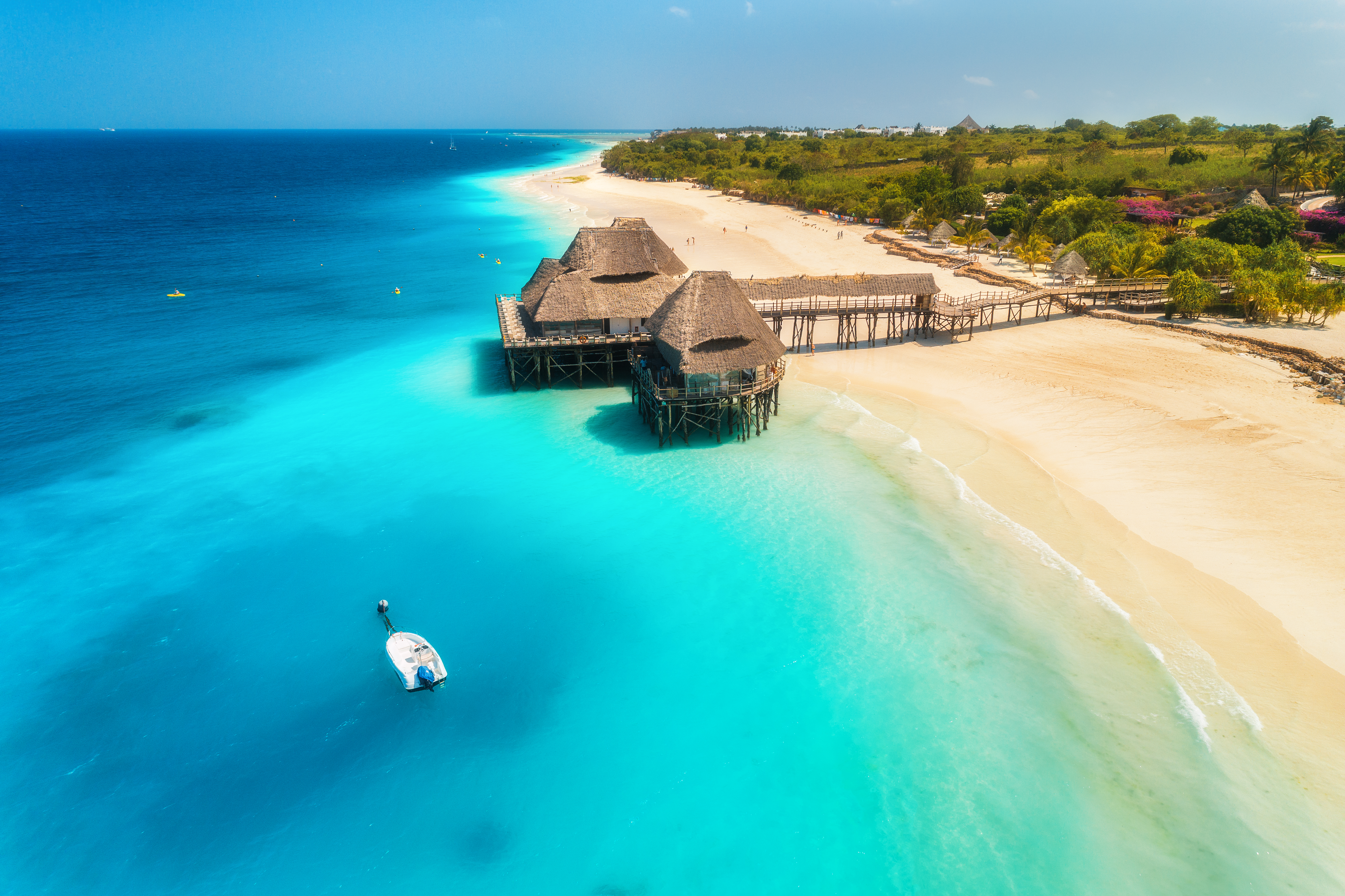
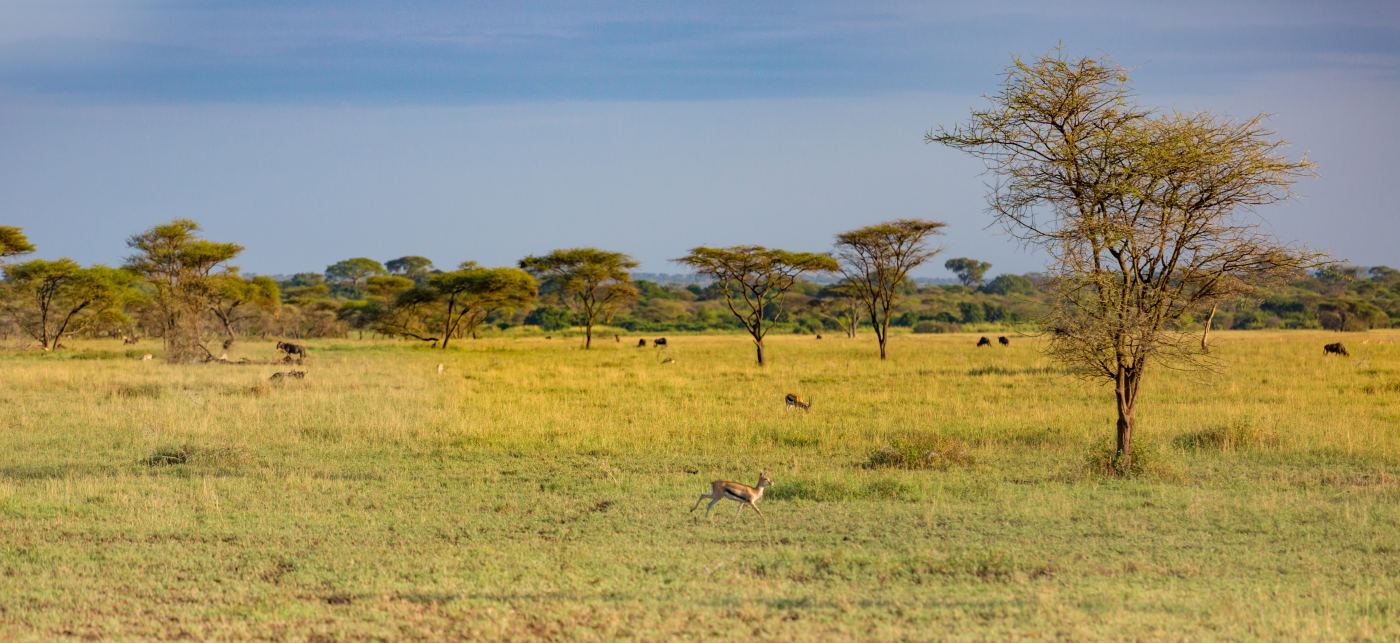
Italian travellers have been coming to Tanzania for a very long time, and the pattern of what they book is distinct. Zanzibar features heavily, usually as three to five days at the end of a safari, and the north coast beaches around Nungwi and Kendwa are consistently the first choice. On the safari side, the classic northern circuit — Tarangire, Ngorongoro and the Serengeti — remains the backbone, with the Serengeti's central Seronera area especially popular for its year-round big cats.
Food is a genuine consideration, and it is worth raising. Most good camps and lodges cater well for Italian guests, and the better ones will adjust menus if told in advance. What cannot be adjusted is the coffee, which across most of the bush is not what an Italian would call coffee; we mention it because it is the single complaint we hear most often, and forewarned guests laugh about it rather than write about it.
Dietary and language needs, the desire for a private vehicle rather than a shared one, and a preference for smaller camps over large lodges — these come up again and again with Italian guests, and they all point the same way: towards a private, tailored itinerary rather than a fixed group departure. That is the only kind of safari we run, which is one reason we have built a good relationship with Italian travellers over the years.
What it costs, honestly
A private northern-circuit safari at a good mid-to-upper standard runs roughly 350 to 550 US dollars per person per day travelling as a couple, all-inclusive of park fees, a private vehicle and guide, accommodation and meals. Luxury camps take that from about 700 upwards. The Italian-speaking guide supplement sits on top of that daily rate, and we quote it separately. Zanzibar at the end adds a flight of a few hundred dollars and beach accommodation at whatever level you choose.
Park fees are the fixed part of that arithmetic and the same for everyone: around 70 US dollars per adult per day in the Serengeti, a similar daily fee for Ngorongoro plus roughly 300 dollars per vehicle for the crater descent, and about 53 dollars per adult per day in Tarangire. They are set by the parks, not by us, and they are one reason a Tanzanian safari costs what it does.
The practical version
- Tell us at the first enquiry, and tell us how essential Italian is
- Give four to six months' notice, more for July to October
- Expect a daily supplement, quoted separately
- If no fluent guide is free, choose between a top English-speaking guide with an Italian host, a written daily briefing, or shifting dates
- Raise food preferences early; camps adjust menus with notice
- Book Zanzibar accommodation at the same time as the safari, not after
We will never place you with a guide whose Italian is weak and let you discover it in the vehicle. If we say we have secured a fluent Italian-speaking guide, we have, and we will tell you who. If we cannot, we will say so at the enquiry stage and offer you the alternatives above with their costs, so that the choice is yours and made with the facts.
Tell us what you need
Send us your dates, your party size and how important an Italian-speaking guide is to your group, and we will come back within a day with what we can genuinely secure, what it costs, and the alternatives if the answer on your dates is no. We are an Arusha-based licensed operator, and we would rather lose a booking by being honest than win one by being vague.
Ask us about an Italian-speaking guide
Frequently asked questions
Are there Italian-speaking safari guides in Tanzania?
Yes, but few — perhaps a few dozen genuinely fluent speakers across the northern circuit, most contracted ahead by Italian tour operators. Tanzanian guides are trained and licensed in English and Swahili, so Italian speakers are a small specialist pool.
How much does an Italian-speaking guide cost?
A daily supplement on top of the normal safari rate, reflecting their scarcity. We quote it as a separate line rather than burying it in the package price, so you can decide with the number in front of you.
How far ahead do I need to book one?
Four to six months outside peak season, longer for July to October. With two weeks' notice in August we cannot promise one, and we will not pretend otherwise.
Is an Italian-speaking guide as good as an English-speaking one?
Sometimes, but the top naturalist guides are concentrated among those who trained in English. You may be choosing between an outstanding English-speaking guide and a less experienced Italian speaker. We will tell you honestly which you are getting.
What if no Italian-speaking guide is available on our dates?
Three honest options: a top English-speaking guide with a written Italian briefing each evening, an Italian-speaking host travelling with you as a translator, or shifting your dates into a quieter month when fluent guides are freer.
Do the camps cater for Italian guests?
Yes, and the better ones adjust menus with notice. The one consistent complaint is the coffee, which in most of the bush is not what an Italian would recognise as coffee — better to know now.