
What luxury under canvas really means
Ask seasoned safari-goers where they most love to stay and the answer is rarely a hotel — it is a tent. Luxury tented camps are the soul of a Tanzania safari: spacious canvas suites with proper beds, en-suite bathrooms and private verandahs, set unfenced in the middle of the wild so that lion roar and hyena whoop become your night-time soundtrack. The word tent misleads almost everyone who has not experienced one. This is not camping. It is some of the most comfortable, most atmospheric accommodation in Africa, and this guide explains exactly what you get, what it costs in 2026, and where to find the best of it.
The confusion is understandable, because Tanzania safari camps span everything from simple fly-camps to canvas palaces with plunge pools and wine cellars. At the luxury end, the canvas is really just the outer skin: inside you will find king-size beds, flushing loos, hot showers, writing desks, Persian rugs and electric light, all raised on timber decks with sweeping views. What the canvas adds — and what no concrete wall can — is immersion. You hear everything, smell the rain on the dust, and wake inside the landscape rather than beside it. That is the magic travellers pay for, and it is worth every dollar.
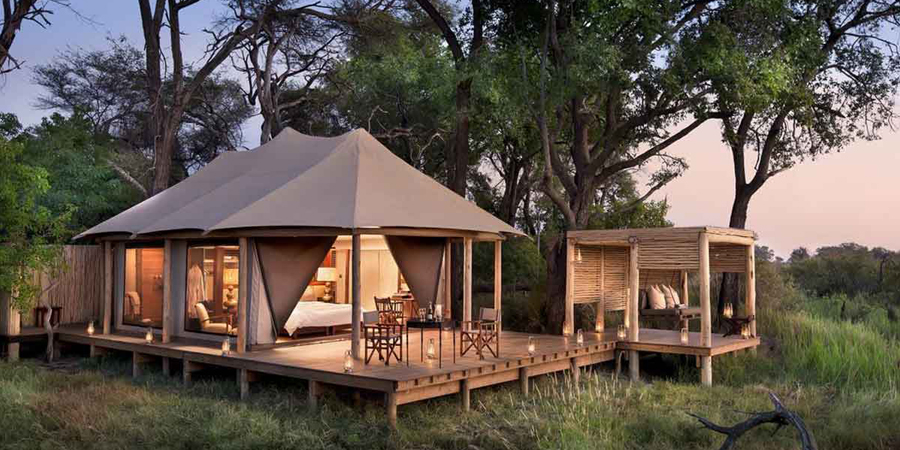
Inside the tent: what you actually get
A typical luxury en-suite tent in Tanzania measures forty to sixty square metres — larger than many city hotel rooms — and is furnished more like a stylish country house than a campsite. Expect a proper king or twin bed with fine linen, bedside lighting and charging points, a seating area, a dressing area, and an en-suite bathroom with a flushing toilet, double basins and a hot shower; many camps add a romantic bucket shower under the stars or a freestanding bathtub facing the plains. Canvas walls roll up to gauze, so the breeze and the view pour in while the insects stay out.
The private verandah deserves special mention, because it is where much of the joy happens: morning coffee delivered as the sun rises, an afternoon siesta watching elephants file past, a quiet gin as the light turns gold. Top-tier camps go further still, with private plunge pools, outdoor day beds, personal butlers and even star beds for sleeping out under the Milky Way. Every luxury camp runs on solar power with Wi-Fi in the mess tent or in the rooms, laundry included, and radios or whistles for calling an escort after dark — because the camps are unfenced, and that is precisely the point.
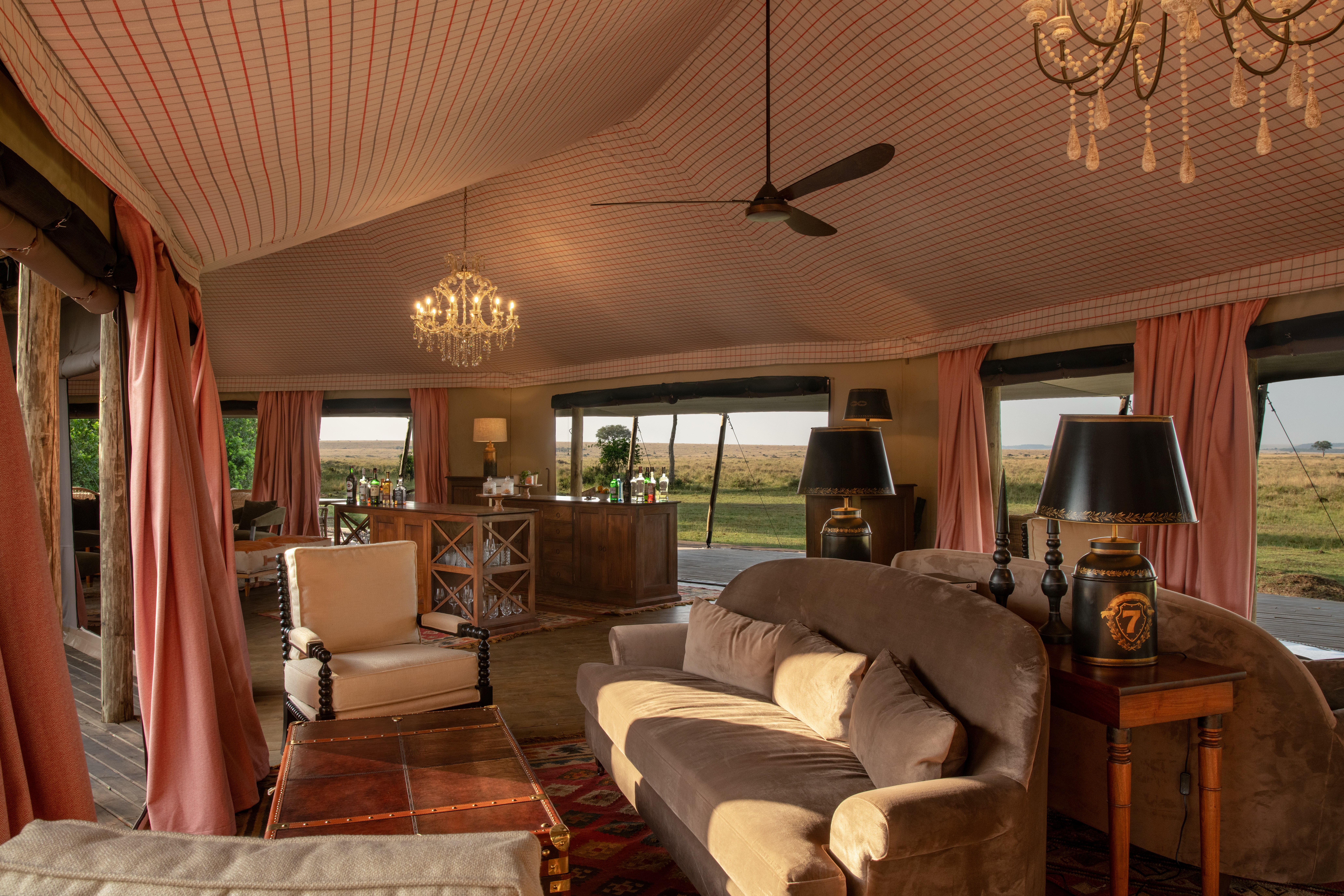
Permanent tented camps vs mobile migration camps
Luxury tented camps come in two distinct breeds, and choosing between them shapes your whole trip. A permanent tented camp stays in one place year-round, built on raised timber decks with plumbed bathrooms, larger tents, swimming pools and more elaborate dining. Because it never moves, everything can be heavier and more polished: proper furniture, extensive wine lists, spa tents, family suites. Permanent camps suit travellers who want maximum comfort and a settled base, and they anchor the prime game areas of the Serengeti, Tarangire, Ruaha and Nyerere.
A mobile migration camp, by contrast, is designed to move with the wildebeest. These camps relocate two or three times a year — typically the southern Serengeti plains around Ndutu from December to March for the calving season, central Serengeti in the shoulder months, and the northern Serengeti near the Mara River from July to October for the river crossings. The tents are slightly simpler, usually with safari-style bucket showers filled with hot water on request, but the location is unbeatable: you sleep within minutes of the herds rather than driving hours to reach them.
Neither style is better; they answer different questions. If your safari is built around the Great Migration, a mobile migration camp puts you in the right place at the right time and delivers the most authentic, old-Africa atmosphere of all. If you value bigger bathrooms, a pool for the midday heat and a touch more polish, a permanent camp wins. Many of the best luxury itineraries we build at Sokwe combine both — a permanent camp in one region, a mobile camp in the migration zone — so you get the comfort and the front-row seat in a single trip.
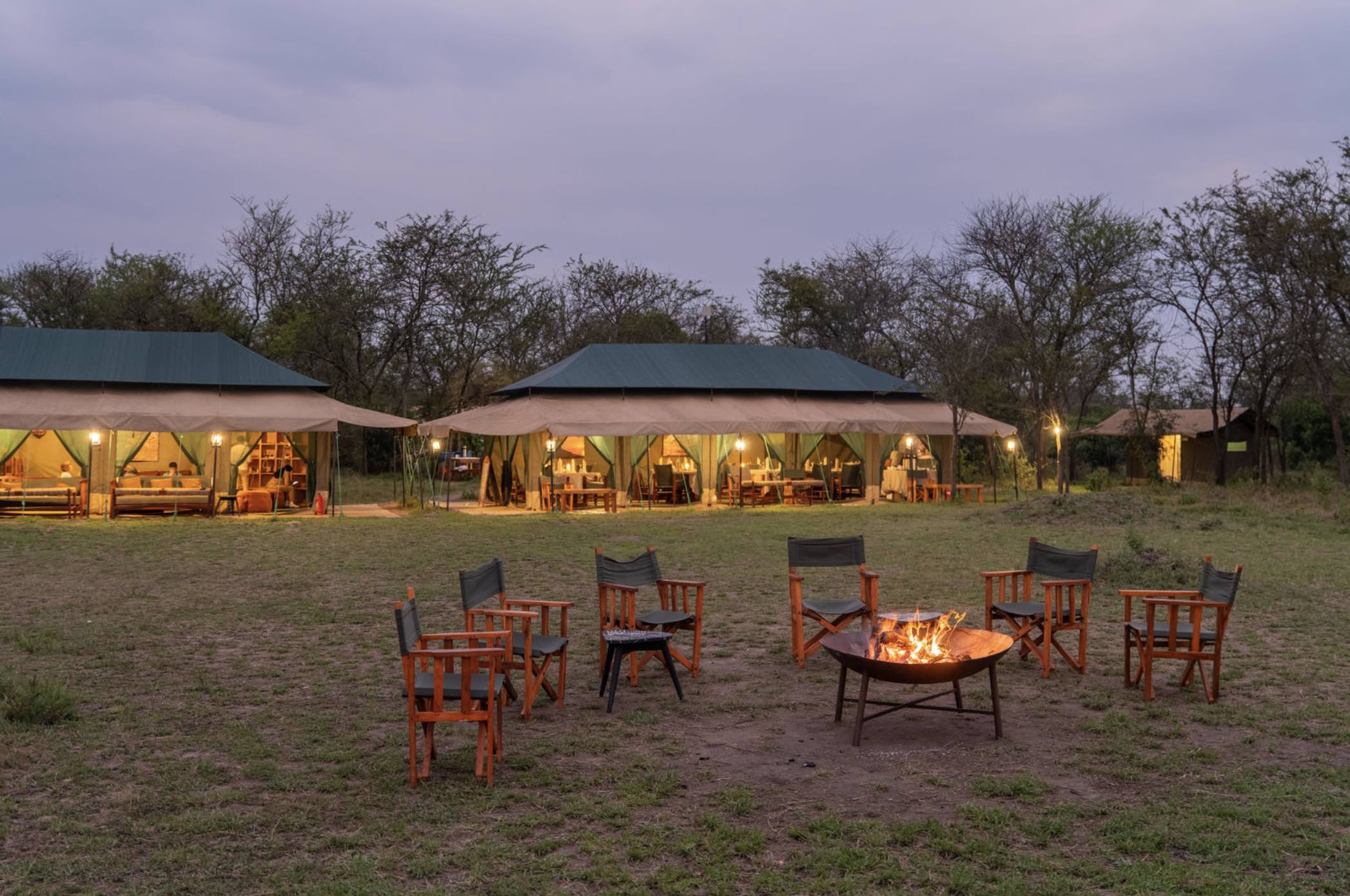
Why canvas beats concrete
Travellers often assume a solid-walled lodge must be the superior choice, and Tanzania safari lodges certainly have their place — we compare the two honestly in our guide to camps vs lodges. But there is a reason the most sought-after properties in the Serengeti are tents. Concrete insulates you from the very thing you flew across the world to experience. Under canvas, the bush is present all night: the whoop of hyena, the sawing cough of a leopard, the surprisingly loud munching of a buffalo grazing beside your deck. Guests consistently tell us these nights were the most memorable of their safari.
Canvas also treads more lightly. Tented camps sit on low-impact platforms that can be removed without trace, which is why national park authorities favour them in the most sensitive, wildlife-rich zones — and why tents so often occupy the best positions in the park while lodges sit on the periphery. Smaller too: most luxury safari camps have just eight to twelve tents, so you dine with the same guides each evening, staff learn your names and your gin order by day two, and game drives feel personal rather than processed. Intimacy, location and atmosphere: that is the case for canvas.
The Serengeti: heartland of the luxury camp
No discussion of luxury tented camps starts anywhere but the Serengeti, home to the greatest concentration of top-flight canvas in Africa. The central Seronera valley offers superb year-round game and the widest choice of permanent camps; the western corridor comes alive from May to July as the migration pushes towards the Grumeti River; and the northern Kogatende and Lamai sectors host the famous Mara River crossings from July to October, served by both permanent camps and the mobile specialists. In the south, the short-grass plains around Ndutu stage the wildebeest calving from late January to March.
A luxury Serengeti safari usually means three to four nights split between two of these zones, matched carefully to the month you travel — location matters far more than brand names here, and a beautiful camp in the wrong sector will leave you driving hours to the action. This is where good local advice earns its keep. If you are weighing tents against solid walls for this region, our round-up of the best luxury lodges in the Serengeti and Ngorongoro covers the bricks-and-mortar side of the equation.
Tarangire and the Ngorongoro highlands
Tarangire is the connoisseur's choice on the northern circuit and arguably Tanzania's most underrated park for a luxury tented stay. In the dry season from June to October its river draws some of the largest elephant herds in Africa, and its baobab-studded landscape is gloriously photogenic. The park's southern reaches hold small, exclusive permanent camps where you can add night drives and walking safaris — activities forbidden inside the Serengeti — and see barely another vehicle all day. Two nights here at the start of a safari is one of our most consistent recommendations.
The Ngorongoro Crater itself is lodge country — the cold, misty rim at 2,300 metres suits fireplaces and solid walls — but the wider highlands and the Karatu farmland just outside the conservation area offer characterful tented options among the coffee plantations, at friendlier prices than the rim. Many travellers happily base here for crater day trips, banking the savings for an extra night under canvas in the Serengeti. Lake Manyara, en route, adds tree-climbing lions and flamingo-fringed shorelines for those with an extra day to spare.
Ruaha and Nyerere: canvas in the wild south
For travellers who want their luxury tented camps with genuine solitude, southern Tanzania is the answer. Ruaha, the country's largest park, and Nyerere, carved from the legendary Selous, hold only a handful of camps between them — intimate, beautifully sited properties along the Great Ruaha and Rufiji rivers where you may not see another vehicle from breakfast to sundowner. The game is superb, with huge elephant herds, dense lion prides and Africa's best wild dog viewing, and the camps offer boat safaris and guided walks the northern parks cannot.
Southern camps are fly-in destinations, reached by light aircraft from Dar es Salaam or Zanzibar, and they operate seasonally, with most closing during the heaviest rains from March to May. The style is classic and unpretentious — river views, open-fronted tents, dinners under ancient baobabs — and prices are often gentler than equivalent quality in the Serengeti. A week split between Ruaha and Nyerere is, for many repeat visitors, the purest tented-camp experience Tanzania offers, and it pairs beautifully with a Zanzibar beach finale.
A day in the life of a luxury camp
The rhythm of camp life is half the pleasure. You are woken before dawn with coffee and biscuits brought to your verandah, then out on a game drive as the light breaks and the predators are still working. Back in camp by late morning for a proper brunch, the heat of the day is for the plunge pool, a massage, a book on the day bed or a siesta serenaded by doves. Mid-afternoon brings tea and cake, then the second drive, timed to the golden hours when the bush stirs back to life.
As the sun drops, your guide finds a view, unfolds a table and produces the sundowner — a cold gin and tonic on the bonnet as the sky performs. Evenings mean fire-lit drinks, dinners that would grace a good restaurant, and, once or twice a stay, a surprise bush dinner under the stars with lanterns strung between the acacias. Nothing about this rhythm is rushed and everything is included: at a proper luxury camp your drives, meals, drinks and laundry are all in the rate, and the only decision left to you is whether to take the second helping of dessert.
The canvas is the point: you do not visit the wilderness from a luxury tented camp, you live inside it — with a king-size bed, a hot shower and a cold gin.
More on this in Tarangire Safari Lodge: the view that sells itself.
More on this in Singita Sasakwa: inside the Serengeti's most exclusive address.
What luxury tented camps cost in 2026
Realistic 2026 numbers, per person per night sharing, almost always fully inclusive of meals, drinks, game drives and laundry: entry-level luxury permanent tented camps run roughly 550 to 850 dollars; the established mid-tier names sit between 900 and 1,400 dollars; and the top-tier properties with private plunge pools, butlers and blue-chip locations command 1,500 to 2,500 dollars and beyond. Quality mobile migration camps generally fall between 700 and 1,200 dollars in peak season, which is excellent value given their front-row positioning during the crossings and the calving.
Season moves these figures dramatically. Peak rates apply from July to October and again over Christmas, while the green season from November to March, excluding the holidays, brings discounts of 25 to 40 per cent at many Tanzania safari camps, along with lush scenery, newborn animals and far fewer vehicles. April and May are cheaper still, though some camps close. Remember to add park and concession fees of roughly 70 to 150 dollars per person per day and light-aircraft flights when budgeting — a good operator will quote everything as one transparent figure so there are no surprises.
- Entry luxury permanent camps — $550–850 pp/night
- Mid-tier luxury camps — $900–1,400 pp/night
- Top-tier camps with plunge pools and butlers — $1,500–2,500+
- Mobile migration camps — $700–1,200 in peak season
- Green season savings — 25–40% off, November to March
- Rates are fully inclusive; add park fees and flights
Combining camps into an itinerary
The art of a great tented safari lies in the sequence. A classic seven-night northern itinerary might open with two nights at an exclusive Tarangire camp for elephants, walks and night drives, pause a night in the Karatu highlands for the Ngorongoro Crater, then finish with four nights split across two Serengeti camps chosen for the month you travel — a permanent camp in the central valley and a mobile migration camp wherever the herds are. Sequencing from good to extraordinary means the trip builds rather than peaks early, a small trick that makes a large difference.
With ten nights or more the combinations open up further: north plus the wild south, with Ruaha or Nyerere adding boat safaris and walking; or safari plus beach, trading the last days of dust for Zanzibar's white sand. Fly-in connections make all of this painless, and because the finest luxury safari camps hold only eight to twelve tents, the prime properties for July to October and the February calving sell out nine to twelve months ahead. Booking early is not a sales line; it is simply how the best tents are won.
Let us match you to the right camps
Camp websites all photograph beautifully; what they cannot tell you is how the guiding compares, which tents have the best views, which managers run the happiest teams and which locations actually suit your travel month. We know these camps personally — Sokwe Africa Safaris is based in Arusha, we inspect and revisit the properties we sell, and we place travellers in them every week of the year. Tell us your style, your dates and your budget, and we will match you to the right ones honestly, including the ones we would skip.
A luxury tented camp is the difference between seeing the wilderness and belonging to it for a few precious days, and choosing well is nine tenths of the trip. Contact Sokwe Africa Safaris today with your dates and wish list, and we will design a private, seamless itinerary around the finest luxury tented camps in Tanzania — canvas, comfort and lion song included.
Plan your luxury tented camp safari with Sokwe Africa Safaris
Frequently asked questions
What does a luxury tented camp in Tanzania cost in 2026?
Good luxury camps sit in the middle of the market, while top-tier properties with private plunge pools, butlers and blue-chip locations command 1,500 to 2,500 dollars per person per night and beyond.
What is the difference between a permanent and a mobile camp?
Permanent camps stay in one place year-round and can offer more infrastructure. Mobile camps move with the migration, which puts you closer to the herds at the cost of some polish — for migration travel that trade is usually worth making.
What do you actually get inside a luxury safari tent?
Canvas walls, but a proper bed, an en-suite bathroom with hot water, and in the better camps a veranda and sometimes a plunge pool. It is a permanent structure in everything but name.
Why choose canvas over a lodge?
Position and sound. Camps can sit deep inside the parks where lodges cannot, and canvas leaves you inside the night rather than behind glass.
Where are Tanzania's best luxury tented camps?
The Serengeti is the heartland, with Tarangire and the Ngorongoro highlands close behind. Ruaha and Nyerere in the wild south offer the same canvas with far fewer vehicles.
How many camps should one itinerary include?
Fewer than most people plan. Each move costs half a day, so two or three well-chosen camps over ten days beats five in the same window.