Start with how guiding works here
Every professional safari guide in Tanzania is trained, examined and licensed in English and Swahili. English is the language of the guiding profession, of the parks, of the camps and of the training colleges, and it is the language in which the country's best naturalists learned their craft. That is the starting fact behind every question about a guide who speaks German, French or Spanish, and it explains why the honest answer to those questions is more complicated than a simple yes.
Guides who are genuinely fluent in a third language do exist. They are few, they are known, and they are booked months ahead by the European operators who have worked Tanzania for decades. What we can do — and what we will not do — is set out below, language by language, so that you can decide with the facts rather than discover the reality in the vehicle on day one.
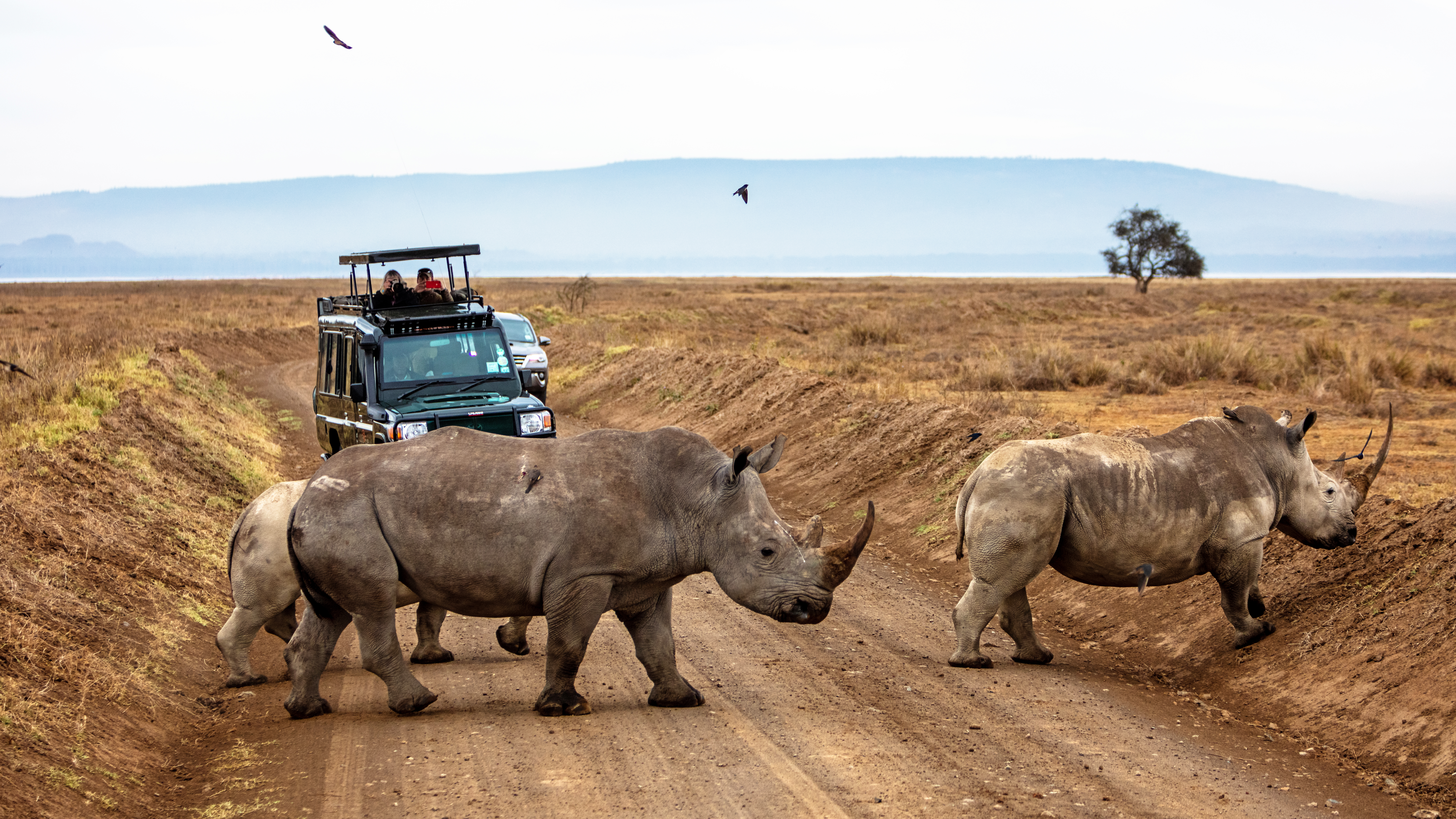
The licensing point is worth a moment, because it explains the whole picture. A Tanzanian driver-guide qualifies through training that is delivered and examined in English, and the guiding licence is issued in English. The park authorities, the camp managers, the pilots on the light aircraft and the radio network between vehicles all work in English or Swahili. A guide who speaks German or French has learned it in addition to the profession, not as part of it, usually through years of working with one European operator. That is why the fluent speakers are few, why they tend to be attached to the operators who trained them, and why they are booked for the whole season by June.
German-speaking guides
German is the best served of the three, because Germany, Austria and Switzerland have sent travellers to Tanzania for a very long time. Fluent German-speaking guides are still a small pool, but with four to six months' notice outside peak season we can usually secure one. They command a supplement of roughly 60 to 120 euros a day, which we quote separately, and some lodges also have German-speaking hosts, which helps at the camp even when the guide is English-speaking.
The trade-off is the same as for every third language. The finest naturalist guides in Tanzania — the ones who read the bush and put you in front of a hunt before it happens — trained in English and are rarely German speakers. So on any given date you may be choosing between an outstanding English-speaking guide and a German-speaking guide who is a less experienced naturalist. We will tell you which you are getting, and we would rather give you the guide who finds the leopard than the one who describes the empty plain fluently.
German-speaking travellers should also know that several lodges in the northern circuit have German-speaking managers or hosts, a legacy of the long German connection to Tanzania. It does not solve the vehicle, but it means that at the camp — where a great deal of the small daily conversation happens — there is often someone who can help. Tell us your dates and we can steer you towards those properties where the choice is otherwise equal.
French-speaking guides
French is thinner. There is a French-speaking market for Tanzania, but it is smaller than the German or Italian ones, and the pool of fluent French-speaking guides on the northern circuit is correspondingly small. We can sometimes secure one with generous notice in the quieter months; in July and August we will not promise it. Where we cannot, the most reliable alternative is a French-speaking host or translator travelling in the vehicle alongside a top English-speaking guide, which for families with mixed English works well.
French-speaking travellers do have one advantage: Rwanda, which many combine with Tanzania for gorilla trekking, is a French-speaking country with far more French-speaking guides. If language matters to your group and a gorilla extension is on the table, that combination can be arranged so that the French-heavy part of the trip falls in Rwanda, where it is easy, and the Tanzanian safari runs with an excellent English-speaking guide.
Compare the countries in Tours in East Africa, and see what a private guide changes in our luxury Serengeti safari guide.
One practical note for francophone families: the northern circuit's camps are used to French-speaking guests from Belgium, Switzerland and Quebec as well as France, and menus, safety briefings and the small printed material at the better properties are often available in French even where the staff are not fluent. It is a small thing that makes the evenings easier, and we will tell you which camps do it.
Spanish-speaking guides
Spanish is the hardest to arrange. The Spanish-speaking market for Tanzania is growing but still small, and fluent Spanish-speaking guides are very rare on the northern circuit. We will look, and occasionally we succeed, but we would be misleading you to suggest it is likely on any given date. For Spanish-speaking groups the realistic plan is an outstanding English-speaking guide plus a Spanish-speaking host, or a written Spanish briefing each evening covering the day and the plan for tomorrow.
It is worth saying that many Spanish-speaking guests who have travelled this way report that the guide's field skill mattered far more than they expected and the language barrier far less. Wildlife does not need much translation. The moments that do — the explanation of why a cheetah hunts at midday, or what the vultures are telling you — are the ones a good host bridges easily.
For Spanish and Portuguese-speaking travellers there is one more practical route worth knowing. Several of the larger camps employ staff from across East and Southern Africa, and it is not unusual to find a Mozambican or Angolan host with good Portuguese, or a manager who has worked in Spain. It is never something we can promise, but when we are placing a Spanish-speaking group we ask each camp on the shortlist, and the answer sometimes tips the choice between two otherwise equal properties.
The alternatives, ranked honestly
When a fluent guide in your language is not available, there are three routes, and we rank them by how well they work in practice. The first and best is a translator or host in the vehicle: a native speaker of your language who travels with you and bridges the guide's explanations. It adds a person and a cost, but it keeps the best guide in the driving seat. The second is a written daily briefing in your language, prepared each evening, which suits groups where most people have some English and one or two do not. The third is moving your dates into a quieter month, when the few fluent guides are far more likely to be free.
What we will not offer is a fourth route: a guide whose command of your language is weak, presented as fluent. It happens in this industry, and guests find out on the first morning. If we tell you we have secured a fluent guide, we have, and we will tell you who. If we have not, we will say so before you book.
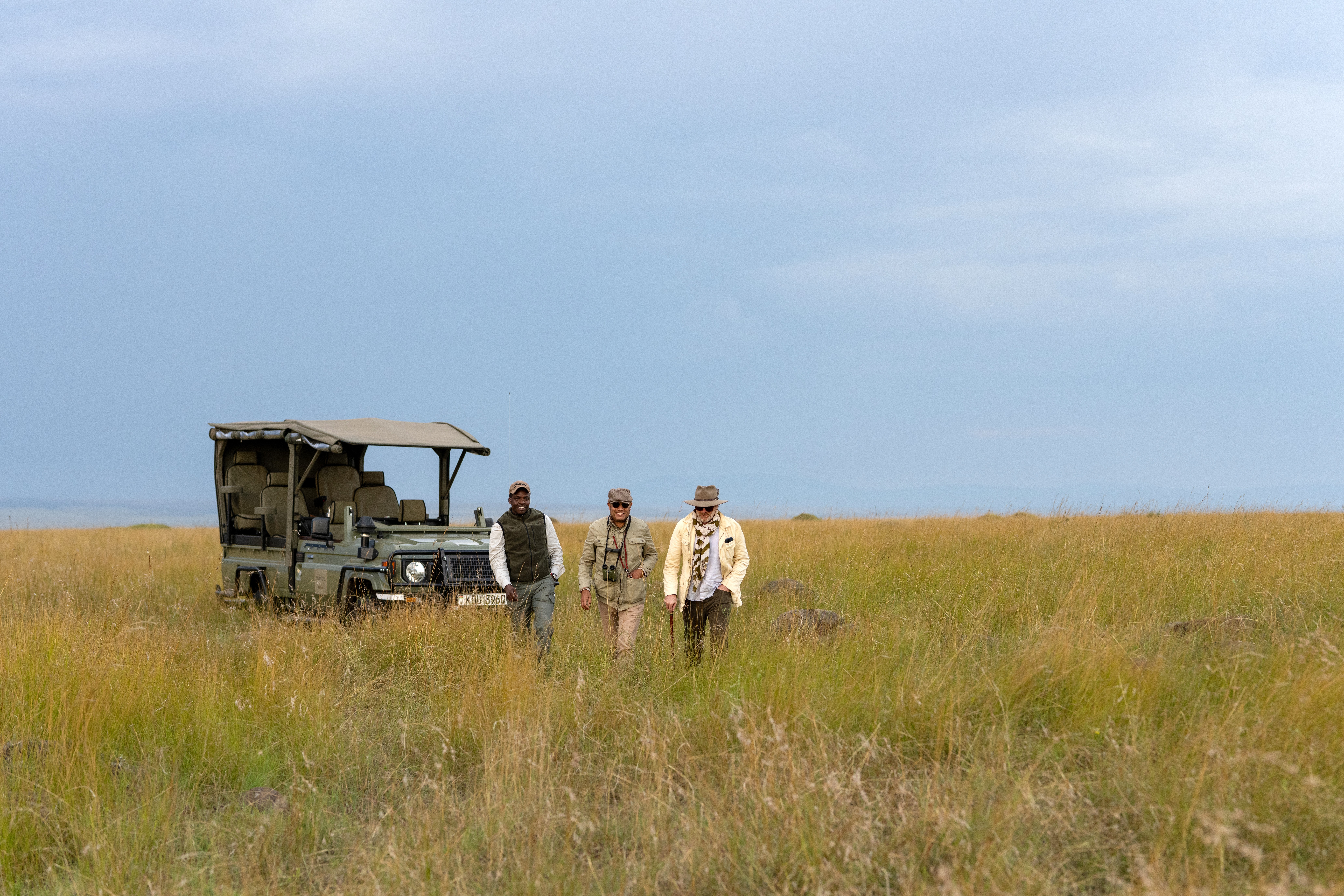
The host option works better than most guests expect, so it is worth describing. A native speaker of your language, usually Arusha-based, travels with you for the whole safari and sits up front with the guide. In the vehicle they translate the guide's explanations; at camp they handle the questions that would otherwise go to an English-speaking receptionist; on the road they are a second pair of eyes. The guide remains the best naturalist we can give you. The cost is the host's daily rate, seat, meals and accommodation, quoted as a separate line. For a group of four or more sharing that cost it is frequently the best value of all the options, and for a family with children whose English is limited it is close to essential.
The written daily briefing is the lighter version. Each evening you receive a short summary in your language of the day's sightings and a plan for tomorrow: departure time, route, what to look for, what to wear. It is prepared by the guide with our office and delivered on paper or to your phone. It suits groups where most people have working English and one or two do not, and it costs very little.
Costs
The safari itself costs what it costs regardless of language: roughly 350 to 550 US dollars per person per day for a private northern-circuit safari at a good standard, luxury camps from about 700. Park fees are fixed and identical for everyone — around 70 US dollars per adult per day in the Serengeti, a similar daily fee in Ngorongoro plus roughly 300 dollars per vehicle for the crater, about 53 dollars per adult per day in Tarangire. A third-language guide adds a daily supplement on top, and a host or translator adds their own daily cost and a seat in the vehicle. We quote every one of these as a separate line.
What to tell us
- Which language, and how essential it is — required, preferred, or helpful
- Who in the group has little or no English
- Your dates, and how flexible they are
- Whether a gorilla extension in Rwanda is on the table, which changes the French picture
- Whether you would accept a host or translator instead of a fluent guide
Give us those five things at the first enquiry and we can tell you within a day what is genuinely possible on your dates, what it costs, and which alternative we would recommend if the answer is no. That is a more useful reply than the reassuring one, and it is the only kind we give.
If you are reading this in your own language through a translation tool, that itself is useful information for us: it tells us the party's English is limited enough that a host is probably the right answer rather than a hoped-for guide. Say so. It changes the recommendation, and it changes it in your favour.
Ask us
Tell us the language, the dates and how much it matters, and we will reply within a day with an honest answer: what we can secure, what it costs, and what we would recommend instead if the answer on your dates is no.
Ask about a guide in your language
Frequently asked questions
Can I get a German-speaking safari guide in Tanzania?
Usually, with four to six months' notice outside peak season, at a supplement of roughly 60 to 120 euros a day. In July and August the small pool of fluent German speakers is often fully booked, and we will not promise one at short notice.
Are there French-speaking safari guides in Tanzania?
A few, and harder to secure than German. With generous notice in quieter months we can sometimes arrange one. If a Rwanda gorilla extension is part of your trip, French is far easier there.
Can you arrange a Spanish-speaking guide?
Rarely. Fluent Spanish-speaking guides are very scarce on the northern circuit. The realistic plan is an outstanding English-speaking guide with a Spanish-speaking host or a written daily briefing.
Is a guide who speaks my language as good as an English-speaking one?
Not necessarily. Tanzania's best naturalist guides trained in English and are rarely fluent in a third language, so on some dates you are choosing between field skill and language. We will tell you honestly which you are getting.
What is the best alternative if no fluent guide is available?
A native-speaking host or translator in the vehicle alongside a top English-speaking guide. It keeps the best guide in the driving seat and bridges the explanations that matter.
Does a third-language guide change the safari price?
The safari rate and park fees are the same for everyone. The guide adds a daily supplement, and a host adds a separate daily cost plus a seat in the vehicle — all quoted as separate lines.