
What East Africa means for safari travellers
Tours in East Africa cover four countries that between them hold the greatest concentration of large mammals left on earth: Tanzania, Kenya, Uganda and Rwanda. The region sits astride the equator, lifted high by the Rift Valley and cooled by altitude, which is why the plains here carry game in numbers the rest of the continent cannot match. It is also why the choice is genuinely difficult. Each country does something the others cannot, the borders are politically simple to cross but logistically fiddly, and the honest answer to "which one" depends entirely on how many days you have and what you most want to see.
We are based in Arusha, at the foot of Mount Meru and two hours from the Kenyan border, so we plan across the region rather than defending one country. This guide sets out what each destination is actually best for, how east africa tours combine in practice, what the permits and visas really cost, and which months work where. No country is the winner. The Serengeti, the Masai Mara, Bwindi and Volcanoes each earn their reputation, and the useful question is which combination fits your dates, your budget and your appetite for moving around.
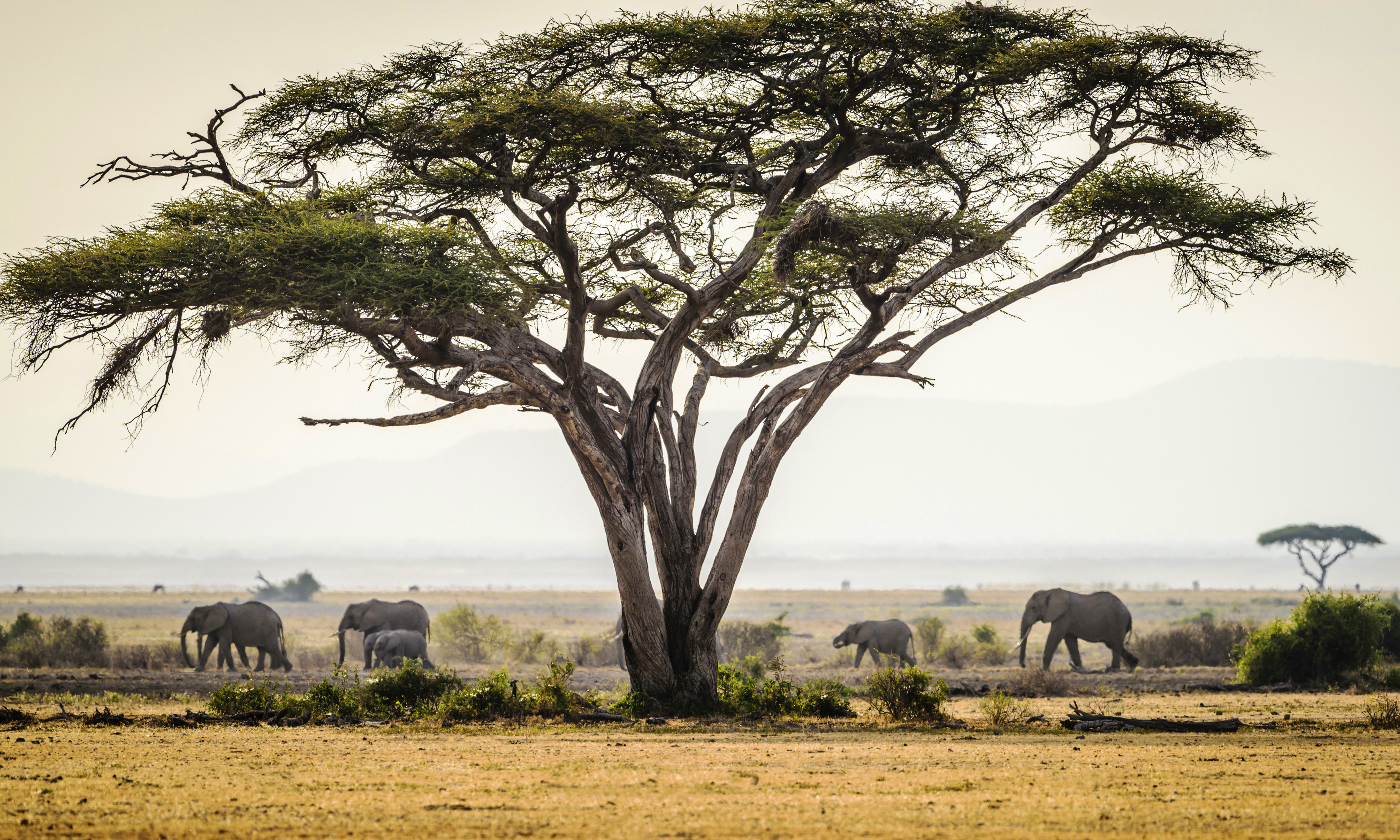
Tanzania: the most complete single country
If you only have one trip and want the widest range of experiences without changing countries, Tanzania is the strongest choice in East Africa. It holds the Serengeti, where the great migration spends roughly nine months of the year; the Ngorongoro Crater, a collapsed caldera with resident lion, elephant and around thirty of the last black rhino in the north; Tarangire's baobabs and elephant herds; Mount Kilimanjaro; and Zanzibar, an hour's flight from the mainland. Very few countries anywhere let you go from calving herds to a coral reef inside a fortnight without an international transfer.
The practical advantage is that the northern circuit is compact and drivable. Arusha to Tarangire is around two hours, Ngorongoro another two, and the Serengeti is either a long but scenic drive or a fifty-minute charter. That means a seven-night safari here delivers three or four genuinely distinct ecosystems. The trade-off is cost: Tanzanian park fees are the highest in the region, with Serengeti entry at around 70 US dollars per adult per day plus VAT and a separate Ngorongoro crater vehicle fee, and those numbers are baked into every quote you will receive.
Kenya: the Masai Mara, conservancies and easy access
Kenya is the region's most accessible country and, for many travellers, its easiest first safari. Nairobi is served by more long-haul carriers than anywhere else in East Africa, the domestic air network is excellent, and you can be in the Masai Mara ninety minutes after landing. The Mara itself is the northern extension of the Serengeti ecosystem, smaller and more densely stocked with predators, and from roughly July to October it receives the migration herds and the Mara River crossings that most people picture when they imagine an east africa safari.
Kenya's real innovation is the private conservancy. Community-owned land bordering the Mara — Naboisho, Olare Motorogi, Mara North and others — caps vehicle numbers, permits off-road driving, night drives and walking, and pays landowners directly. Game viewing there is often better than inside the reserve and far less crowded, though bed-night fees push the price up. Beyond the Mara, Amboseli offers elephants against Kilimanjaro, Laikipia has rhino and wild dog, and Samburu holds dry-country species you will not see further south. Kenya rewards a two or three stop itinerary rather than a single base.
Uganda: gorillas, chimpanzees and green country
Uganda is where east african tours change character entirely. The draw is mountain gorilla trekking in Bwindi Impenetrable Forest and Mgahinga, where habituated families are visited by eight people a day for one strictly timed hour. A foreign non-resident permit costs 800 US dollars, and while that sounds steep, it is roughly half the Rwandan price and includes a genuinely wild forest setting. Uganda also has the best chimpanzee tracking in the region, in Kibale Forest, where the community numbers over a thousand and sightings are close to reliable.
What surprises people is how much else there is. Queen Elizabeth National Park has tree-climbing lions in the Ishasha sector, Murchison Falls has the Nile forcing itself through a seven-metre gap, and Kidepo in the far north-east is as remote as anywhere in Africa. The caveat is driving: Uganda's parks are spread out and the roads between them are slow, so a proper circuit needs ten days or a willingness to pay for internal flights. Come for the primates, stay for the greenest, least crowded country in the region.
Rwanda: compact, premium and easy to combine
Rwanda has positioned itself deliberately at the top of the market. A gorilla permit in Volcanoes National Park costs 1,500 US dollars, and the country makes no apology for it: fewer visitors, higher conservation revenue, and a level of organisation you notice from the airport onwards. The practical argument for Rwanda is time. Kigali to the trailhead at Musanze is a smooth two-and-a-half-hour drive on tarmac, which means a two-night gorilla add-on is genuinely feasible — something Uganda's geography makes much harder to promise.
That compactness is why Rwanda works so well bolted onto a longer trip elsewhere. Travellers finishing a Tanzanian or Kenyan safari can fly to Kigali, trek gorillas the following morning, and be home two days later. Rwanda also has Nyungwe Forest for chimpanzees and canopy walks, and Akagera, a genuinely restored savannah park where lion and rhino have been reintroduced and the Big Five are once again present. It will not fill a fortnight on its own, but as a three or four-night component it is the most efficient thing in East Africa.
How multi-country tours in East Africa actually work
The single most useful thing to know is the East Africa Tourist Visa. It costs 100 US dollars, lasts ninety days, allows multiple entries, and covers Kenya, Uganda and Rwanda on one document — apply through the country you enter first and it remains valid as you move between the three. Tanzania is not part of it. A Tanzanian visa is a separate 50 dollars for most nationalities and 100 dollars for United States passport holders, so a Tanzania-plus-Kenya trip needs two visas while a Kenya-Uganda-Rwanda loop needs only one.
Flights, not borders, are what shape a multi-country itinerary. There is no scheduled air link between the Serengeti and the Masai Mara, so the common Tanzania-Kenya routing goes back through Kilimanjaro or Arusha to Nairobi, which costs the better part of a day. The exception is the seasonal cross-border charter between the northern Serengeti and the Mara, which runs in migration months and saves that day entirely. Kigali connects well to Nairobi, Entebbe and Kilimanjaro, which is why Rwanda so often becomes the pivot point in a regional trip.
What tours in East Africa cost, country by country
Prices vary more by accommodation tier than by country, but the underlying costs do differ. In Tanzania, a good mid-range safari runs roughly 350 to 550 US dollars per person per day all-inclusive, with luxury camps from about 700 and the top mobile and private-concession camps well beyond 1,200. Kenya sits slightly below that for comparable lodges, though Mara conservancy camps quickly close the gap because their conservancy fees are built into the nightly rate. In both countries, park fees are a large and non-negotiable share of what you pay.
Uganda and Rwanda work differently because the permit dominates. Uganda's ground costs are the lowest in the region — 250 to 400 dollars a day is realistic for comfortable lodges — but each gorilla permit adds 800 and each chimpanzee permit around 250. Rwanda's lodging near Volcanoes ranges from about 400 a night to well over 1,500, and the 1,500-dollar permit sits on top. As a rough guide, budget 3,000 to 5,000 US dollars per person for a week in Tanzania or Kenya at mid-range level, and add roughly 2,500 to 3,500 for a two-night gorilla extension.
Best months across the region
The regional dry season runs from late June to October and is the safest all-round window: game concentrates near water, roads are firm, and the Mara River crossings happen somewhere between the northern Serengeti and the Masai Mara from about July to early October. January and February are the other prime slot, when the migration calves on the short-grass plains around Ndutu in southern Serengeti and predator activity is at its highest of the year. Both periods carry peak pricing and need booking six to twelve months ahead for the better camps.
The rains change the calculation rather than ruining it. The long rains from late March to May bring green landscapes, superb birding and discounts of thirty per cent or more, though some seasonal camps close and black-cotton soil makes parts of the Serengeti hard going. For gorilla trekking, the drier months of June to September and December to February mean firmer forest trails, but permits sell year-round and the forest is wet whenever you go. November's short rains are brief, usually afternoon-only, and often the best value in the calendar.
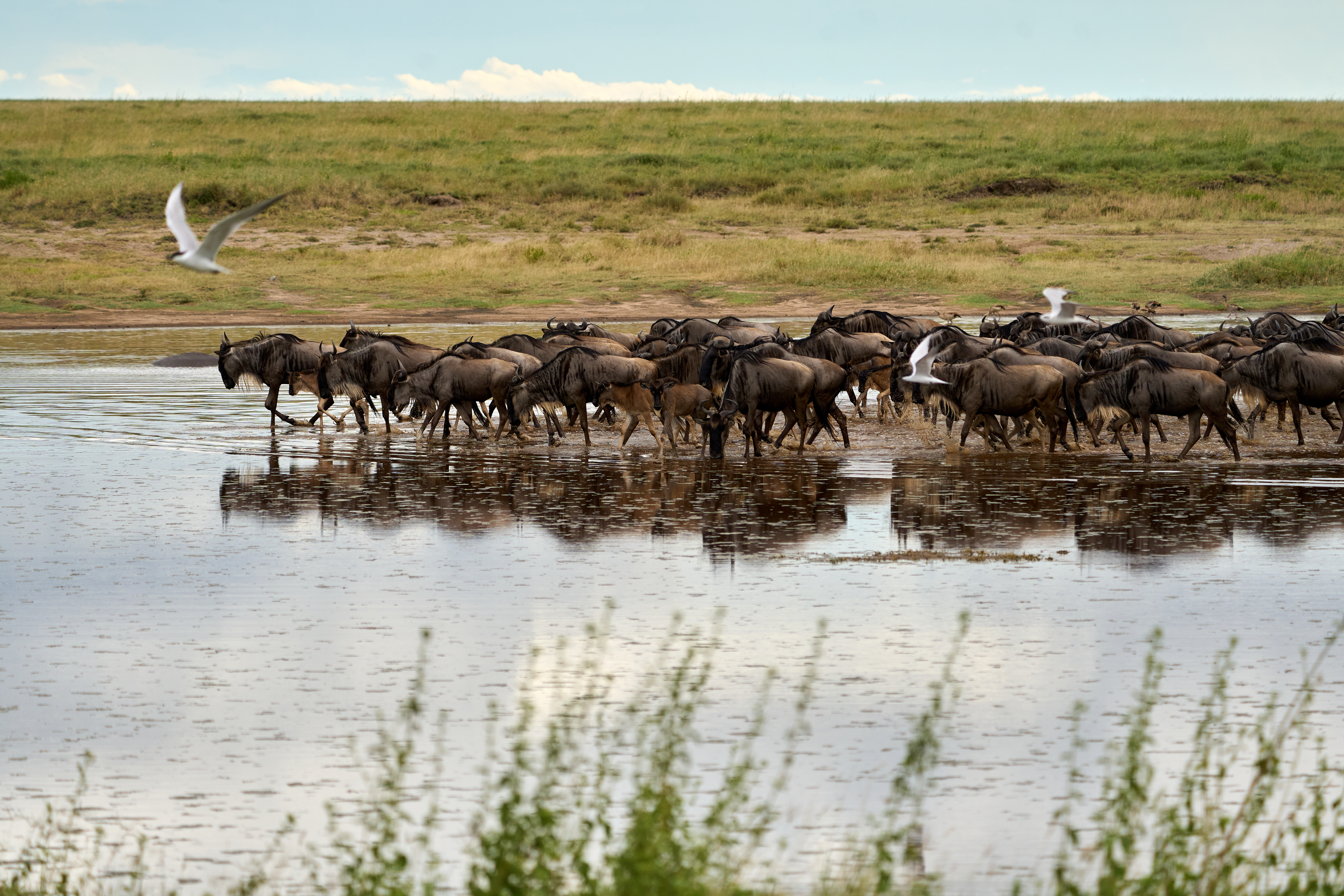
More on this in Masai Mara safari guide: when to go, where to stay, what it costs.
More on this in Rwanda vs Uganda gorilla trekking: which should you choose?.
Sensible pairings and how long you need
The pairings that work are the ones that respect flying time. With seven to nine days, stay in one country: northern Tanzania, or Kenya's Mara plus Amboseli or Laikipia. With ten to twelve days, the two strongest combinations are Kenya and Tanzania — Mara and Serengeti in migration season, ideally on the cross-border charter — or a safari in either country followed by gorillas in Rwanda. With fourteen days or more, you can add Zanzibar or the Kenyan coast to a safari-and-gorillas trip and still have unhurried days in each place.
The combination we advise against is trying to fit Uganda, Rwanda and a northern-circuit safari into under two weeks. It can be sold, but you will spend three of those days in transit and arrive at each place tired. If primates are the priority and time is short, choose Rwanda for its proximity to the trailheads; if primates matter and you have a fortnight, choose Uganda for the gorillas, the Kibale chimpanzees and the Ishasha lions together. Note too that Tanzania has its own excellent chimpanzee trekking in the Mahale Mountains, though it is remote and requires dedicated flights.
East Africa is not four rival destinations. It is one region with four front doors, and the right one depends entirely on how many days you can give it.
- Tanzania — most complete single country, migration, crater, Kilimanjaro, Zanzibar
- Kenya — easiest access, Masai Mara crossings, private conservancies
- Uganda — gorillas at 800 dollars, best chimpanzee tracking, long drives
- Rwanda — 1,500-dollar permits, compact, best short add-on
- East Africa Tourist Visa covers Kenya, Uganda and Rwanda, not Tanzania
- Peak months: July to October and January to February
Plan your East Africa tour with Sokwe
We run tours in East Africa as one region rather than four separate products, which mostly means we spend our time on the joins: which border to use, whether the cross-border charter is running on your dates, when a Kigali night saves a wasted day, and which permits to secure before anything else is confirmed. Gorilla permits in particular are limited daily and are the one element that should be booked first — the rest of an itinerary can be built around them, but they will not bend around an itinerary.
Tell us how many days you actually have, the months you can travel, and whether the priority is the migration, the gorillas, the coast or simply the least amount of moving about. We will come back with a route that fits, with honest costs per country, park fees and permits itemised rather than hidden in a day rate. Get in touch with Sokwe Africa Safaris and we will route it properly, whether that is a single-country safari done well or a full regional journey across all four.
Frequently asked questions
What does a safari in Tanzania or Kenya cost per day?
Roughly 350 to 550 US dollars per person per day all-inclusive at a good standard, with luxury camps from about 700 and the top mobile and private-concession camps well beyond 1,200.
How much does Uganda cost compared with Tanzania?
Uganda is cheaper on the ground — 250 to 400 dollars a day is realistic for comfortable lodges — but each gorilla permit adds 800 dollars and each chimpanzee permit around 250, which changes the arithmetic quickly.
Why is Rwanda more expensive?
The permit. Rwanda's gorilla permit is 1,500 dollars per person, and lodging near Volcanoes ranges from about 400 a night to well over 1,500. It buys a very short, very polished trip.
What does a gorilla extension add to a safari?
Budget roughly 2,500 to 3,500 US dollars per person on top of a week in Tanzania or Kenya for a two-night gorilla extension, permit included.
Which East African country should we choose for a first safari?
Tanzania is the most complete single country — the northern parks alone cover plains, crater and woodland. Kenya offers the Masai Mara, the conservancies and the easiest access. Uganda and Rwanda are primate destinations that pair with a savannah safari rather than replacing one.
Can you combine several East African countries in one trip?
Yes, and sensible pairings matter more than covering ground. Tanzania with Uganda, or Kenya with Rwanda, work well; trying to fit all four into a fortnight does not.