
What the Mara actually is
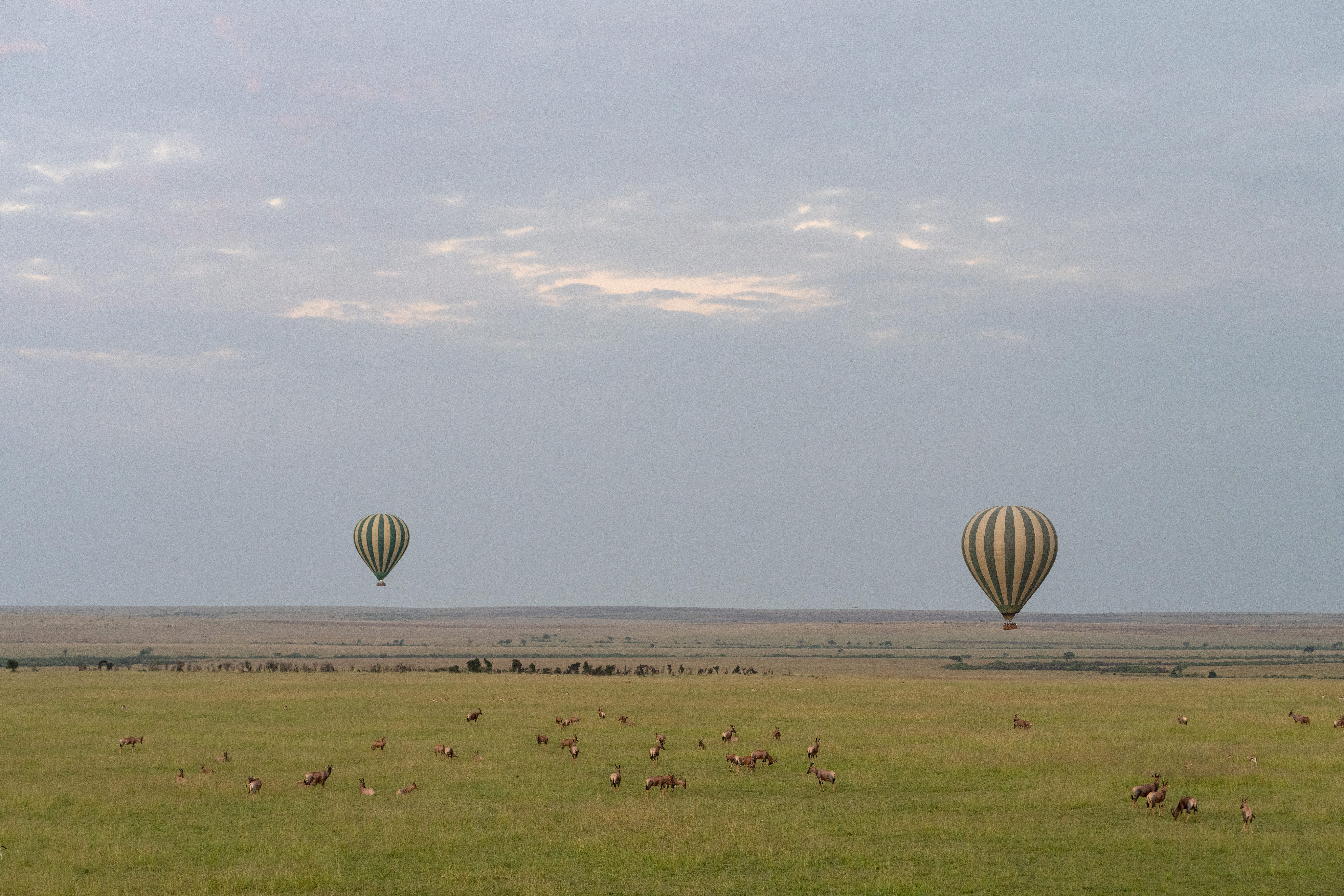
The Masai Mara National Reserve occupies roughly 1,500 square kilometres in south-western Kenya, and it is the northern tip of a single ecosystem that continues across the border as Tanzania's Serengeti. The animals do not recognise the boundary. The same wildebeest, the same lion prides in some cases, the same rolling grassland — the Mara is simply the Kenyan name for the top of the system, and the border is an administrative line rather than an ecological one.
What distinguishes it is density rather than scale. The Serengeti is roughly ten times larger, but the Mara concentrates a comparable weight of wildlife into a much smaller area, particularly between July and October when the migration is in residence. Predator density in the Mara is among the highest recorded anywhere in Africa, and the open, rolling terrain means you see a great deal of it. Sightings per hour are genuinely higher here than almost anywhere else on the continent.
The trade-off, stated honestly, is people. The reserve proper can be busy at peak times, and a river crossing may be watched by fifty vehicles. This is the single most common disappointment we hear from guests who booked the Mara without understanding it, and it is entirely avoidable if you know about the conservancies — which is the most useful thing in this guide.
The conservancies: what most visitors never hear about
Bordering the national reserve are a series of private conservancies — Naboisho, Olare Motorogi, Mara North, Ol Kinyei and others — leased from Maasai landowning families and managed for both conservation and low-volume tourism. They are the reason experienced safari travellers keep returning to Kenya, and they change the experience completely.
Conservancies cap the number of beds per acre, which means vehicle numbers at any sighting are limited, often to five vehicles or fewer by agreement. They permit off-road driving, so a guide can position properly for a hunt rather than watching from a track two hundred metres away. They permit night drives and walking safaris, neither of which is allowed inside the national reserve. And the conservation fee goes directly to Maasai families as land rent, which is one of the most functional community-conservation models in Africa.
The cost is higher per night than a camp inside the reserve, and guests sometimes balk at that. Our view is that it is the best-value upgrade available anywhere in East Africa. Paying more per night to see the same animals with five vehicles instead of fifty is not a luxury purchase; it is the difference between the safari you imagined and the one you photograph over someone else's roof hatch.
The river crossings, and an honest expectation
The Mara River crossings run roughly July to October, when the migration reaches the northern end of the ecosystem and the herds move back and forth across the water in search of grazing. It is the most photographed wildlife event on earth and it deserves the reputation. A crossing in full commitment is an hour of continuous noise, dust and movement that no film conveys.
What no operator can tell you is when. Herds gather on the bank for hours and then turn away without entering the water. A crossing may happen at nine in the morning or not at all that day. The honest guidance is the same as on the Tanzanian side: give yourself at least three nights in crossing country, preferably four, because you are buying mornings at the river rather than scenery.
If your dates fall outside July to October, the Mara is still excellent — resident game is abundant year round and the big cats do not migrate. But do not let anyone sell you a crossing itinerary in February. The herds are calving on the southern Serengeti plains then, four hundred kilometres away.
Compare the two sides in Serengeti vs Masai Mara, or read our Mara River crossing guide.
Related reading: Kenya safari tours to the Masai Mara: the complete guide.
Mara or Serengeti — which should you choose?
If you have one week and one country, the honest answer depends on what you want. The Mara is smaller, denser and easier: shorter drives, higher sighting rates, and Nairobi is a well-connected hub with a short flight or a five-hour drive to the reserve. For a first safari with limited days, it is arguably the more efficient choice.
The Serengeti is vastly larger and gives you something the Mara cannot — genuine emptiness. There are stretches of the southern plains where you will not see another vehicle all morning, and the sense of scale is the thing most guests describe afterwards. It also holds the calving season, which the Mara has no equivalent of. Tanzania's park fees are higher, and distances mean more driving or an internal flight.
For most of our guests the real answer is both, and that is the itinerary we build most often. The two sit either side of one border and combine naturally into ten to fourteen days. Doing so also removes the timing gamble: whichever side the herds happen to be on, you are there.
Where to stay
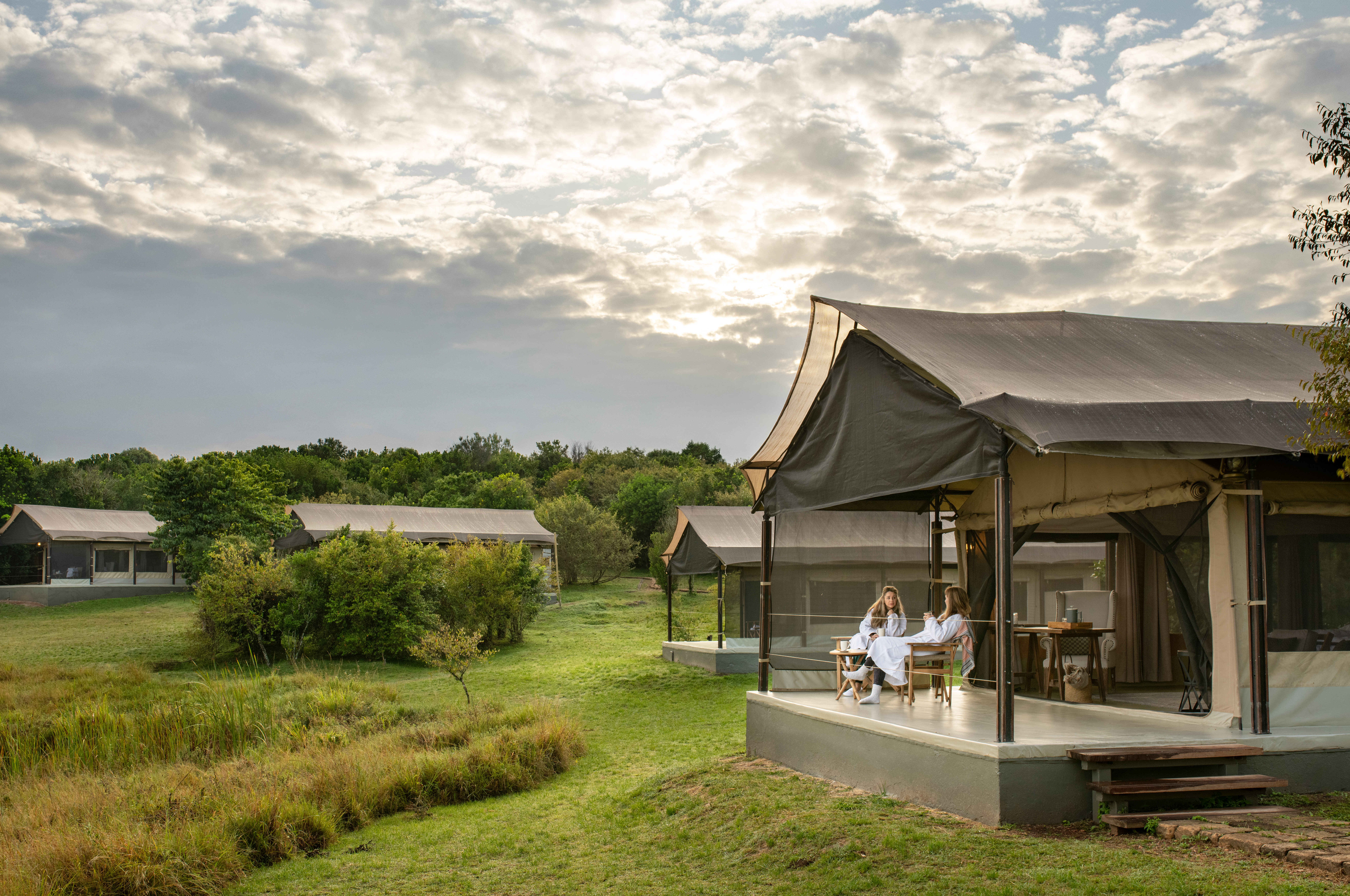
Accommodation splits into three broad tiers. Inside the reserve you have permanent lodges and tented camps at every level, from functional to genuinely luxurious, with the advantage of being close to the crossing points and the disadvantage of shared traffic. Along the reserve boundary sit a number of large lodges offering good value and easy access, though they can feel more hotel than camp.
In the conservancies you find smaller camps, typically eight to twelve tents, with exclusive traversing rights over a large private area. This is where the finest guiding in Kenya tends to be, partly because the guides are often Maasai from the landowning families and know the ground intimately. If your budget allows only one splurge on a Kenyan itinerary, put it here rather than on a bigger tent inside the reserve.
Mobile camps also operate seasonally, moving with the migration much as they do in Tanzania. They are simpler than permanent lodges and put you closest to the action during the crossing months. Guests who have done both frequently prefer them, and they are usually cheaper than the equivalent permanent property.
Getting there, and how long to stay
Most visitors arrive through Nairobi. From Wilson Airport, small aircraft reach the Mara's airstrips in about forty-five minutes, and there are several scheduled departures daily. The alternative is a road transfer of five to six hours through the Rift Valley escarpment — genuinely scenic for the first half, tiring for the second, and the final stretch of road is rough. For any trip of a week or less we recommend flying at least one direction.
Note the baggage limit on those flights: typically 15kg in soft bags only, hard suitcases refused. This catches people out constantly, and the answer is to leave a bag at your Nairobi hotel, which every hotel will store without fuss. Bring what you need for the bush and collect the rest on the way through.
On duration, three nights is the practical minimum and four to five is materially better. The Mara rewards staying still — the best sightings come from being on the ground early, following a lion pride across consecutive mornings, and being present when something develops. Guests who allocate two nights spend most of their time arriving and leaving.
If you have a week in Kenya, the natural pairing is the Mara plus one contrasting environment. Amboseli gives you enormous elephant herds against Kilimanjaro; Lake Nakuru and Lake Naivasha give you flamingos, rhino and a boat trip; Laikipia in the north offers rhino conservancies, walking and camel treks, and far fewer visitors than the Mara. Any of these break up the driving and stop the trip becoming one long game drive.
What a Masai Mara safari costs
As a working range, expect roughly 400 to 700 US dollars per person per night for a good mid-to-upper-range camp inside the reserve, all inclusive of meals, game drives and park fees. Conservancy camps generally run 600 to 1,200, reflecting the lower bed density and the conservancy fee that goes to the Maasai landowners. Budget options exist below this, though usually with shared vehicles.
Kenya's park and conservancy fees are lower than Tanzania's national park fees, which is why a Kenyan safari often prices below a Tanzanian one of similar standard. Internal flights from Nairobi Wilson to the Mara airstrips cost a few hundred dollars return and save a five-hour drive each way — for a short trip that is money well spent.
One line item worth understanding before you compare quotes: the conservancy fee. Camps inside a conservancy charge roughly 100 to 150 US dollars per person per night on top of the accommodation rate, and that money is the land rent paid to the Maasai families who own the ground. It is not a markup and no operator can remove it. When a conservancy camp looks expensive against a lodge inside the reserve, a good part of the difference is that payment — which is also precisely what keeps the vehicle numbers low and the wildlife where it is.
A realistic all-in figure for a week combining the Mara with one other Kenyan area, at a good standard with a private vehicle, is roughly 4,000 to 7,000 dollars per person excluding international flights. As with Tanzania, the spread is almost entirely accommodation, and we will always show you where a night saved buys nothing and where it costs you the trip.
Plan your Kenya safari
If you have travelled to the Serengeti with us before, the Mara is the natural second trip rather than a repeat of the first — same ecosystem, different country, and the conservancy model gives you a kind of access that Tanzania's national parks simply do not permit. Several of our returning guests describe it as the better half of the two.
Tell us your dates and whether you want the Mara alone or combined with Tanzania, and we will be straightforward about which conservancies fit your budget and where a cheaper camp costs you more than it saves. We are an Arusha operator running the Tanzanian half directly and working with trusted partners on the Kenyan side.
Ready to make it real? Explore luxury Tanzania safari or talk to us about dates and prices.
Plan your safari with Sokwe Africa Safari
Frequently asked questions
When is the best time to visit the Masai Mara?
July to October for the river crossings and the migration in residence. Resident wildlife including all the big cats is excellent year-round, and January to March is quieter and cheaper with very good general game viewing.
What is the difference between the Masai Mara reserve and the conservancies?
The conservancies are private areas leased from Maasai families bordering the reserve. They cap vehicle numbers, permit off-road driving, night drives and walking safaris — none of which the national reserve allows — and pay land rent directly to Maasai landowners.
Is the Masai Mara better than the Serengeti?
Neither is better. The Mara is smaller and denser with higher sighting rates and shorter drives; the Serengeti is far larger with genuine emptiness and the calving season. Most of our guests combine both, which also removes the timing gamble.
How much does a Masai Mara safari cost?
Roughly 400–700 US dollars per person per night inside the reserve and 600–1,200 in the conservancies, all inclusive. A week combining the Mara with another Kenyan area runs about 4,000–7,000 per person excluding international flights.
Are river crossings guaranteed in the Masai Mara?
No. Herds regularly gather for hours then turn away without entering the water, and no operator can predict the day. Three to four nights in crossing country during July to October meaningfully improves your odds.
Can you combine the Masai Mara with a Tanzania safari?
Yes, and it is the itinerary we build most often. The two sit either side of one border in the same ecosystem and combine naturally into ten to fourteen days, usually via Nairobi and Kilimanjaro or a direct Serengeti–Mara air link.