
The thing that matters more than your camera
Before any discussion of gear, the single largest determinant of the photographs you bring home from Tanzania is the vehicle you are sitting in and the person driving it. A photographer in a shared minibus with a fixed departure time and eight other guests will be beaten every time by someone with an ordinary camera in a private vehicle whose guide understands sun angle and is willing to sit still for two hours. Position and patience produce images; equipment merely records them.
This is worth stating bluntly because a great many visitors spend heavily on a lens and then economise on the safari itself, which is precisely the wrong way round. If photography is a serious priority for your trip, the private vehicle is not a luxury upgrade, it is the core equipment. It determines whether you can be at a sighting before the light arrives and stay after the other vehicles have left, which is when nearly all the best frames are made.
Tell your operator at the enquiry stage. A guide briefed for photography behaves differently from one briefed for general game viewing: he approaches from the side that puts the sun behind you, he cuts the engine to stop vibration, he positions so there is clean background rather than a road or another vehicle, and he does not move the moment the animal is visible. None of this happens by default.
What to actually bring
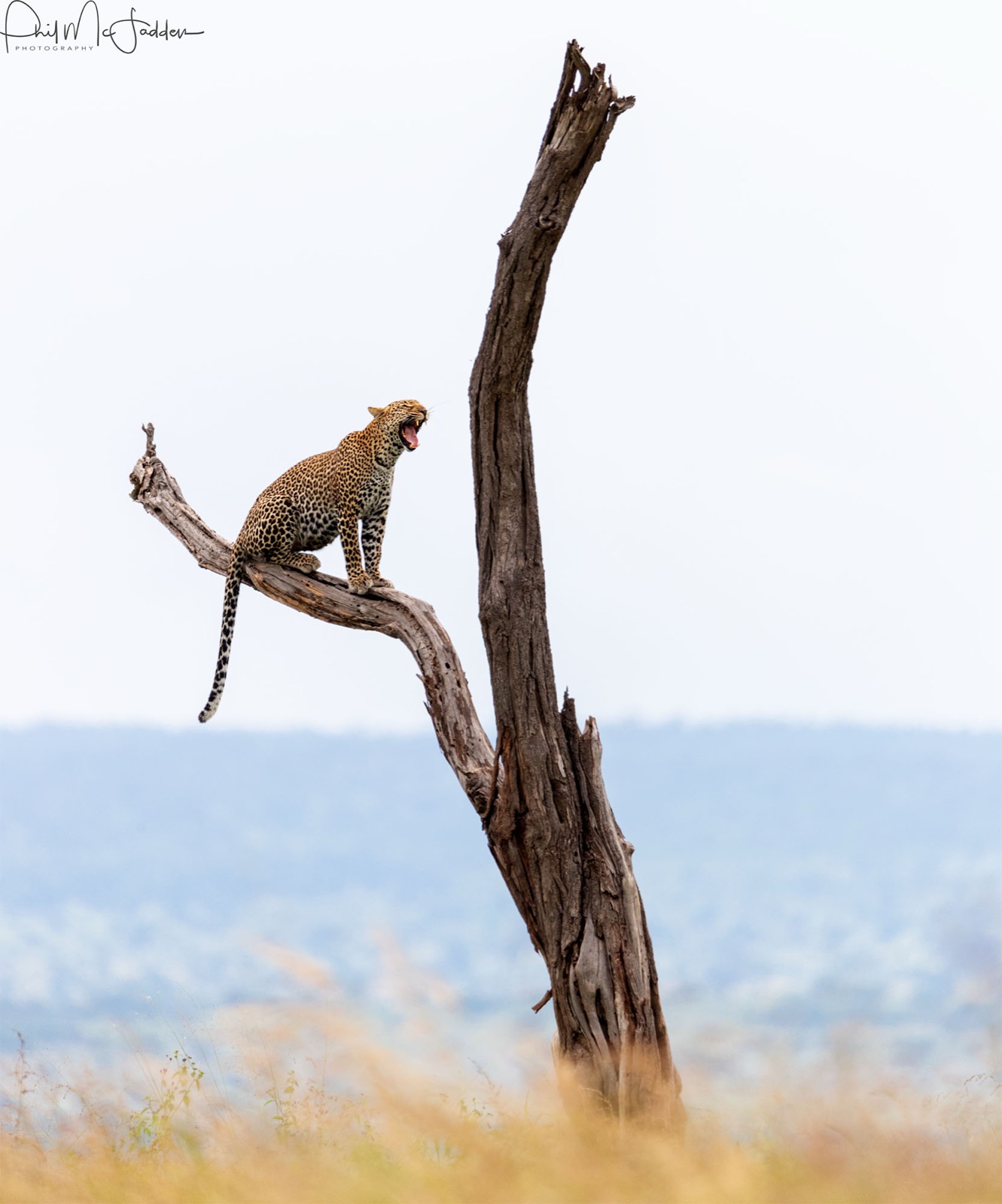
For most people two bodies and two lenses is the right answer, and if you can only manage one body, prioritise a good telephoto zoom over anything else. A 100–400mm or 200–500mm covers the overwhelming majority of safari situations. A fixed 600mm produces beautiful results and will frustrate you regularly, because animals do not stay at 600mm distance and changing lenses on a dusty plain is how sensors get ruined.
The second lens should be wide — something in the 24–70mm range. This is the lens most first-time safari photographers forget and most regret forgetting. Elephant at close range, a landscape with a storm building, camp at night, the inside of a vehicle, your travelling companions: none of these work at 400mm. A great many of the images people end up printing are the wide ones.
Bring more memory cards and more batteries than you think you need, and bring them as physically separate items rather than relying on one large card. Charging is generally available in camps but often only during generator hours, and a mobile camp in the Serengeti may run power for a few hours in the evening only. A bean bag is worth more than a tripod — tripods are essentially useless in a vehicle, whereas a bean bag over the window frame or roof hatch edge is the single most effective stabiliser available.
Settings that work in these parks
Start with shutter speed, because motion blur is the failure mode that ruins more safari photographs than anything else. For a stationary animal, 1/500th is a sensible floor with a long lens. For anything moving — a hunting cheetah, birds in flight, a river crossing — you want 1/2000th or faster and you should not be shy about raising ISO to get there. A slightly noisy sharp image is usable; a clean blurred one is not.
Shoot in aperture priority with auto ISO and a minimum shutter speed set, if your camera supports it. Light changes constantly on safari — you go from open plain to deep shade under an acacia in seconds — and manual exposure means missing the shot while you adjust. Set a maximum ISO you are comfortable with and let the camera work within it. Modern sensors handle ISO 6400 far better than most people expect.
Expose for the highlights and recover shadows afterwards. East African light is extremely contrasty, and a blown-out white sky or a lost highlight on a pale animal cannot be brought back, whereas underexposed shadow detail usually can. Many experienced safari photographers dial in a third to two-thirds of a stop of negative exposure compensation and leave it there all day.
Light, and why the day has two halves
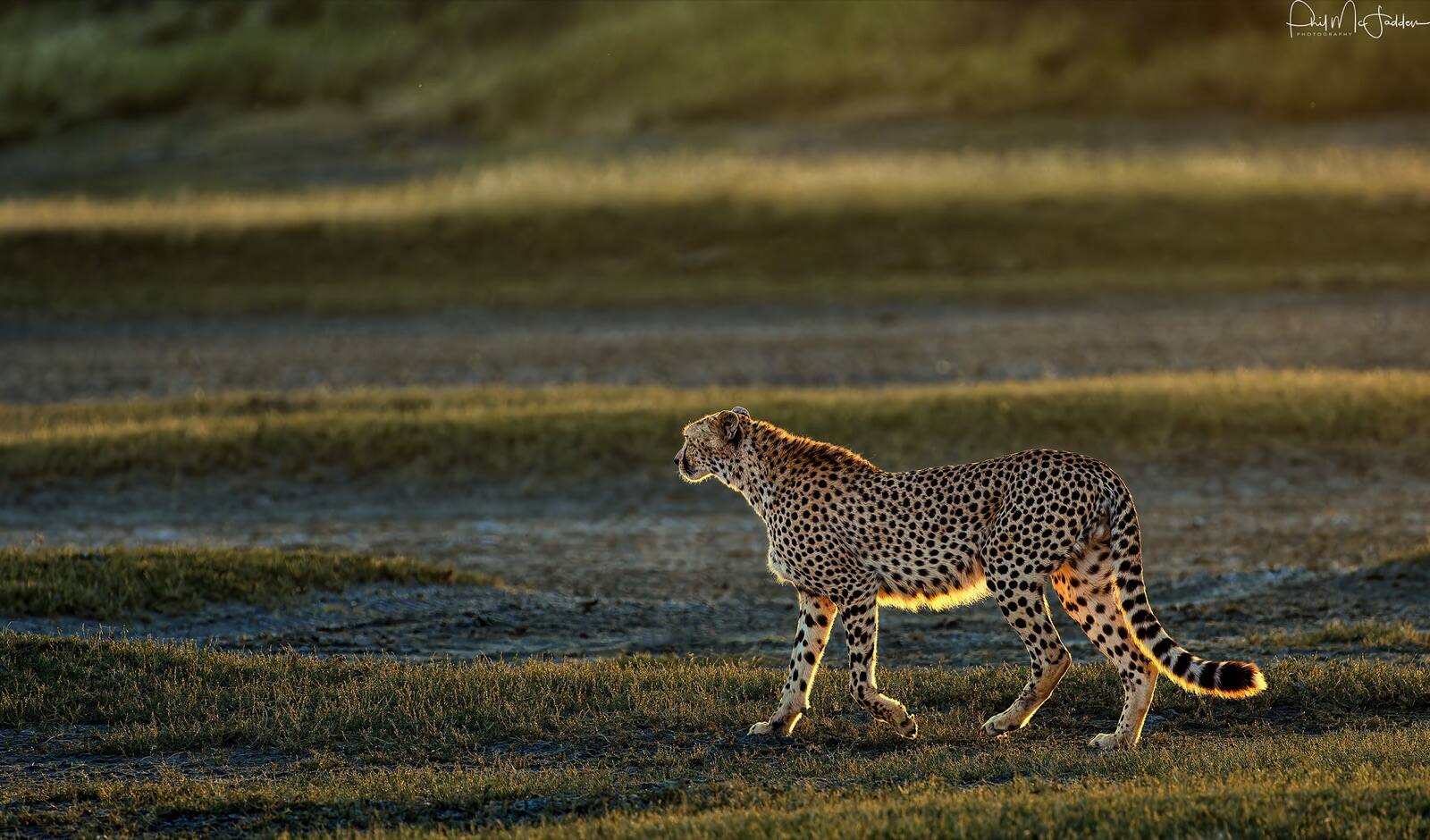
The productive photographic hours in Tanzania are roughly from first light until about nine in the morning, and from four in the afternoon until the gates close. Between those windows the sun is high, the light is flat and white, contrast is brutal, and heat shimmer degrades anything shot at distance. This is not a matter of preference; it is a physical constraint of shooting near the equator.
Structure your day around it. Leave camp before dawn rather than after breakfast — this is the single most common change we suggest to guests and the one that most transforms their results. Take the middle of the day to eat, sleep and review images, and go out again for the second window. Guests who insist on driving straight through the middle hours end up tired, and their memory cards show it.
Heat shimmer deserves a specific mention because it defeats people who do not know what they are looking at. Images that appear soft despite correct focus and a fast shutter are usually shimmer, not error. The mitigations are to shoot earlier, get physically closer, and shoot from as low an angle as the vehicle allows, since a low angle passes through less rising hot air than a high one.
See our photographic safari guide and read about what to pack for a Tanzania safari.
Dust, and protecting your equipment
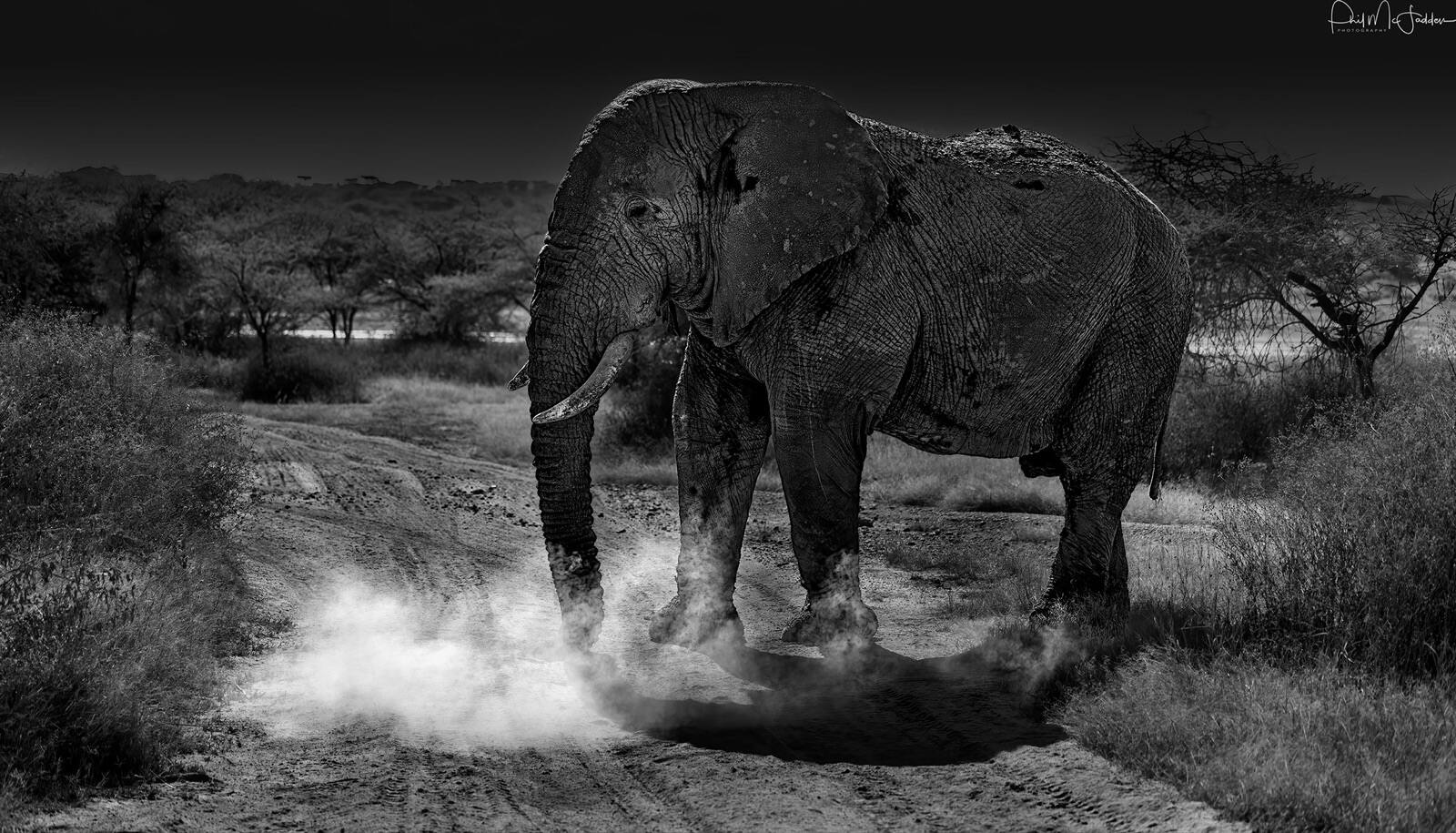
Dust is the real enemy in the dry season, and it is finer and more pervasive than most visitors anticipate. The practical rules are simple: change lenses as rarely as possible, and never with the vehicle moving or in wind; keep bodies in a closed bag rather than on the seat; and bring a rocket blower rather than compressed air, which can drive particles further in. A cheap rain cover doubles as a dust cover and weighs nothing.
In the green season the problem inverts and becomes moisture. Afternoon storms arrive quickly, and a camera bag left open in an unroofed vehicle can be soaked in under a minute. Dry bags or simple heavy-duty plastic sacks solve it. Condensation is the other issue — bringing a cold camera out of an air-conditioned room into humid air fogs the lens internally, so leave equipment to acclimatise rather than shooting immediately.
Composition, and the shot most people miss
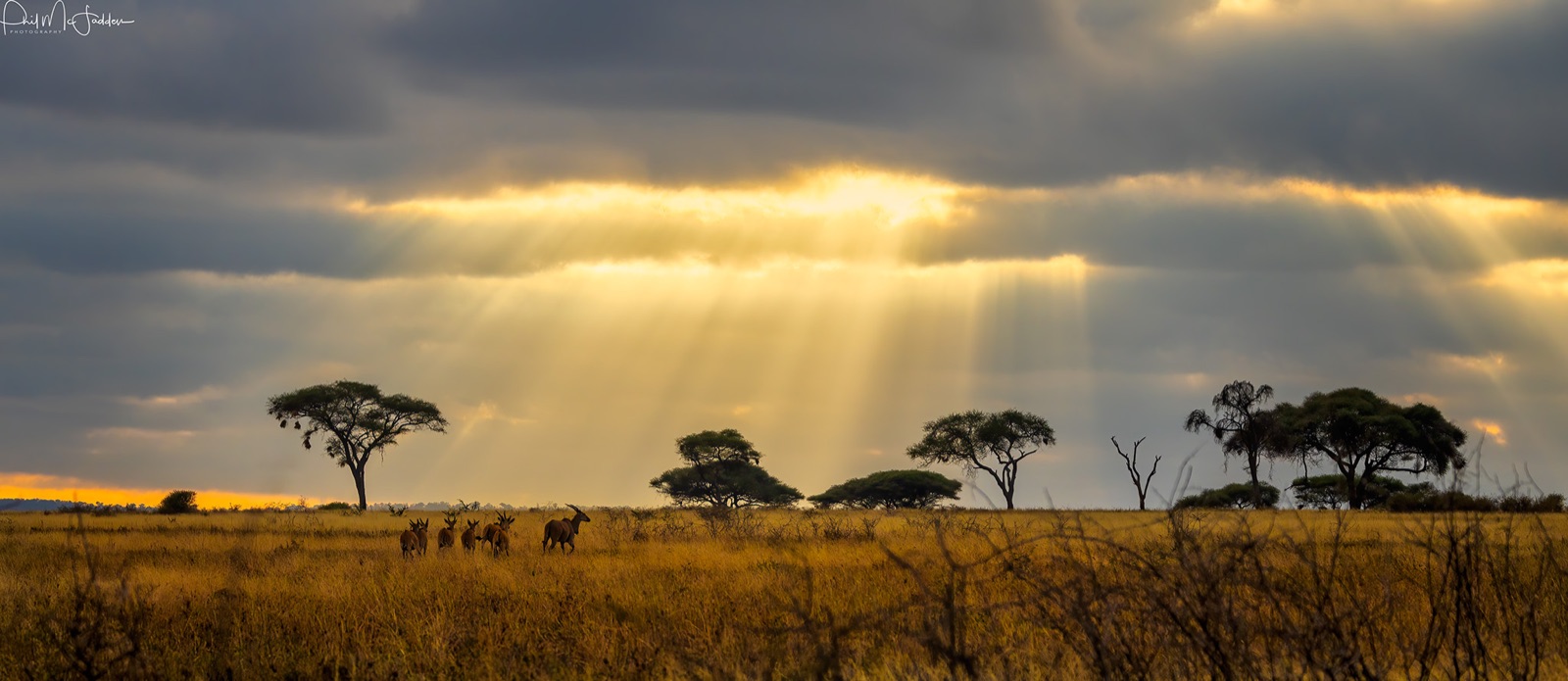
The commonest failing in safari photography is not technical, it is that almost everybody photographs the animal and forgets the picture. A lion filling the frame at 400mm is a record of having seen a lion. A lion small in a wide landscape, with a storm building behind it and the plain running to the horizon, is a photograph that says something about where you were. Shoot both, but do not let the long lens stop you reaching for the wide one.
Get low wherever the vehicle allows. Nearly every safari image is taken from the eye level of someone sitting in a raised 4x4, which is why so many of them look the same. Shooting through an open door at ground level, where that is safe and your guide permits it, changes the animal's relationship to the horizon entirely and puts the viewer in the scene rather than above it. It is the single easiest way to make your images look different from everyone else's.
Watch the background before you watch the subject. A superb animal in front of a distant vehicle, a road, or a bright patch of sky is a wasted frame, and it is usually fixable by moving two metres. This is where a briefed guide is worth more than any equipment: ask him to reposition for background rather than for distance, and he will understand exactly what you mean.
Ethics in the field
There is a line between photographing wildlife and interfering with it, and it is not always obvious to visitors. Vehicles that crowd a cheetah preparing to hunt will cause her to abandon the attempt, and for a mother who has not eaten in two days that is a genuine cost. Positioning between a predator and its prey does the same. Driving off-road in a national park where it is prohibited damages the ground and is illegal.
We ask our guides to hold the line on this even when guests push, and occasionally that means saying no to a closer approach. It costs a photograph now and again. We think that is the correct trade, and in our experience the guests who most appreciate it are the serious photographers, who generally understand the ethics better than anyone else in the vehicle.
One last thing about coming home
Back up every night, without exception, and to two places. Camps rarely have reliable internet, so cloud backup is usually not an option, and the failure mode we see most often is a single card carried for ten days and then lost or corrupted. A small portable SSD and a laptop, or simply a second set of cards that never leaves your day bag, removes the entire risk for very little weight.
Working with a Sokwe guide
Several of our guides photograph seriously themselves, and if you tell us photography is your priority we will match you with one of them. That changes the specifics of how the day runs: earlier starts, longer stationary periods, approach angles chosen for light rather than for the shortest route, and a willingness to abandon a plan when the sky does something interesting.
It also changes the itinerary. A photographic trip should have fewer parks and more nights in each, because returning to the same sighting on consecutive mornings is how you get the frame you actually want. We will usually recommend cutting a park from a draft itinerary rather than adding one, which is the opposite of what most operators propose.
Plan a photographic safari
Tell us photography is the point of your trip and we will build it that way — fewer parks, longer stays, dawn starts, and a guide who understands why you want to sit in one place for three hours. We are based in Arusha and we run our own vehicles, so these are decisions we can actually make rather than requests we pass along.
Plan your safari with Sokwe Africa Safari
Frequently asked questions
What lens do I need for a Tanzania safari?
A telephoto zoom in the 100–400mm or 200–500mm range covers most situations and is more useful than a fixed 600mm. Bring a wide lens too — around 24–70mm — for landscapes, close elephant encounters and camp life. It is the lens most people forget and regret.
What camera settings work best on safari?
Aperture priority with auto ISO and a minimum shutter speed. Use 1/500th as a floor for stationary animals and 1/2000th or faster for anything moving. Expose for the highlights and recover shadows later, since East African light is extremely contrasty.
What time of day is best for safari photography?
First light to about nine in the morning, and four in the afternoon until the gates close. Between those windows the light is flat and heat shimmer degrades distant shots. Leaving camp before dawn rather than after breakfast is the single biggest improvement most guests can make.
Do I need a private vehicle for photography?
If photography matters to you, yes. It determines whether you can arrive before the light and stay after other vehicles leave, and whether the guide positions for sun angle rather than for the group's average preference. It matters more than any lens.
Is a tripod useful on safari?
Generally not — you shoot from a vehicle where a tripod cannot be deployed. A bean bag rested on the window frame or roof hatch is far more effective and is the accessory experienced safari photographers consider essential.
How do I protect my camera from dust?
Change lenses as rarely as possible and never in wind or while moving, keep bodies in a closed bag, and carry a rocket blower rather than compressed air. In the green season the concern shifts to sudden rain and condensation instead.