
South Africa vs Tanzania: an honest starting point
Search for advice on South Africa vs Tanzania for safari and you will mostly find operators quietly steering you towards whichever country they happen to sell. So let us declare our interest at once: Sokwe Africa Safaris is a Tanzanian company, based in Arusha, and we run safaris only in East Africa. That is exactly why this comparison is worth your time — because we are going to tell you, plainly and specifically, where South Africa beats us. Both countries deliver a genuinely superb safari; they simply deliver it in very different ways, and the right choice depends far more on the traveller than on the animals.
The honest summary runs like this. South Africa wins on infrastructure, entry-level affordability, self-drive freedom, malaria-free family reserves and the variety of a holiday that can include Cape Town and the winelands. Tanzania wins on wildlife density and sheer spectacle, the great migration, the Ngorongoro Crater, an unfenced wilderness feel at enormous scale, and a warm-water beach finale on Zanzibar. Neither list cancels the other out. The rest of this guide unpacks each point with real numbers and real trade-offs, then closes with a simple framework for deciding which country fits your trip — and the answer for travellers lucky enough to manage both.
Where South Africa wins
Credit where it is due: South Africa has the best tourism infrastructure on the continent, and it is not close. Direct long-haul flights land in Johannesburg and Cape Town from Europe, the Gulf and the United States. The roads are excellent and mostly tarred, mobile coverage is broad, private hospitals are world-class, and the industry has been polished over decades. Kruger National Park has rest camps with fuel stations, shops and restaurants inside the park itself. For a nervous first-time visitor to Africa, or anyone who values things simply working, South Africa removes friction in a way no East African destination quite matches.
South Africa also owns three advantages Tanzania cannot copy. First, self-drive affordability: you can hire a car in Johannesburg, pay Kruger's international conservation fee of roughly 25 to 30 US dollars per adult per day, and stay in self-catering rest camps for well under 100 dollars a night. Second, malaria-free Big Five reserves — Madikwe, Pilanesberg and the Eastern Cape reserves such as Addo, Shamwari and Kwandwe — where families with babies or pregnant travellers need no prophylaxis at all. Third, the add-ons: Cape Town, the Garden Route and the wine country of Stellenbosch and Franschhoek turn a safari into a varied touring holiday.
Kruger vs Serengeti: the heart of the matter
The Kruger vs Serengeti question is where most people really want the comparison settled. Kruger is vast — nearly 20,000 square kilometres, about the size of Wales — with all of the Big Five well established and an extensive road network that makes wildlife accessible to anyone with a hire car. You will see plenty. The honest caveats are that much of Kruger is dense bushveld where animals hide well, that tarred roads and day visitors give parts of the park a busy feel, and that a good sighting near a main camp can quickly draw a queue of twenty vehicles.
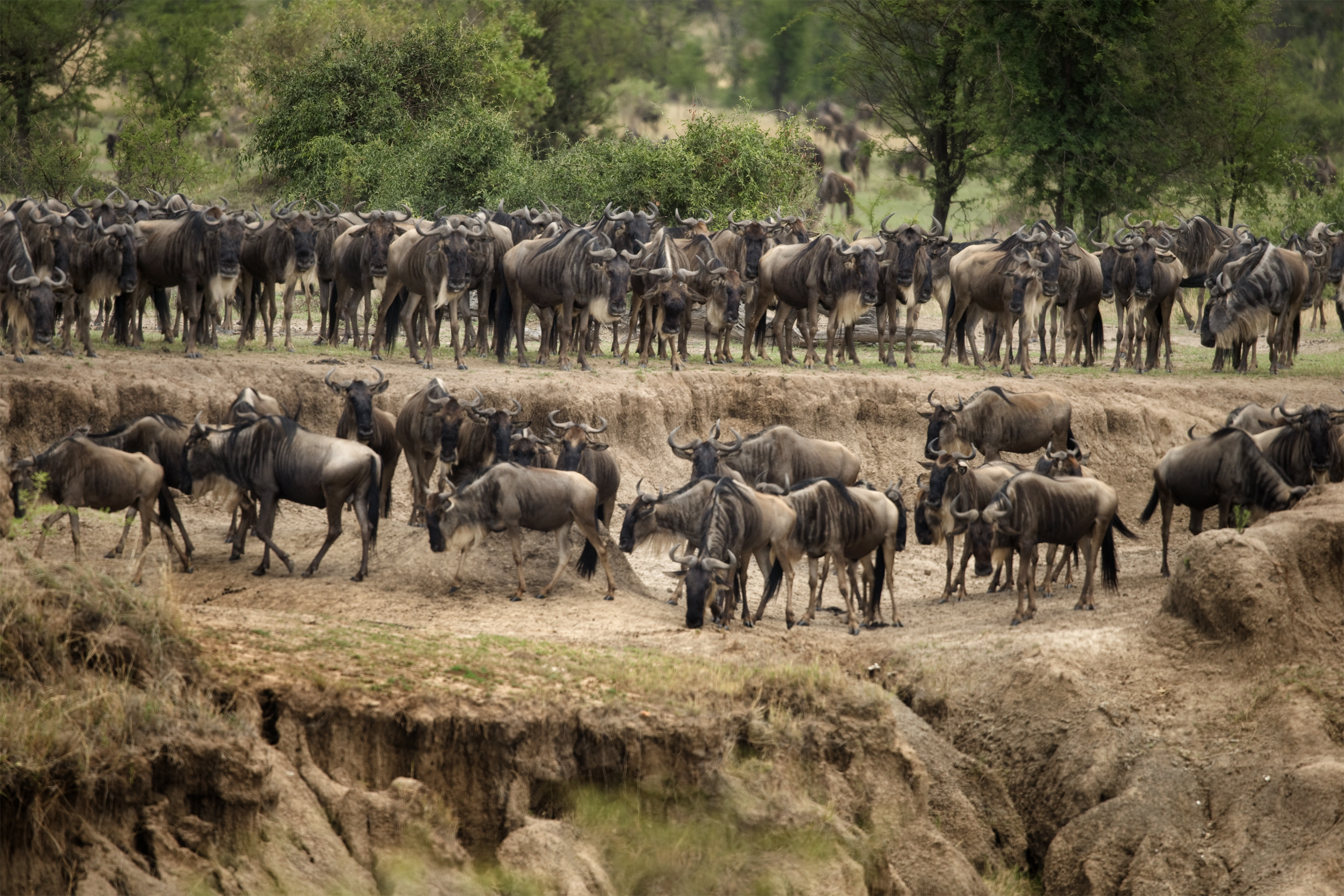
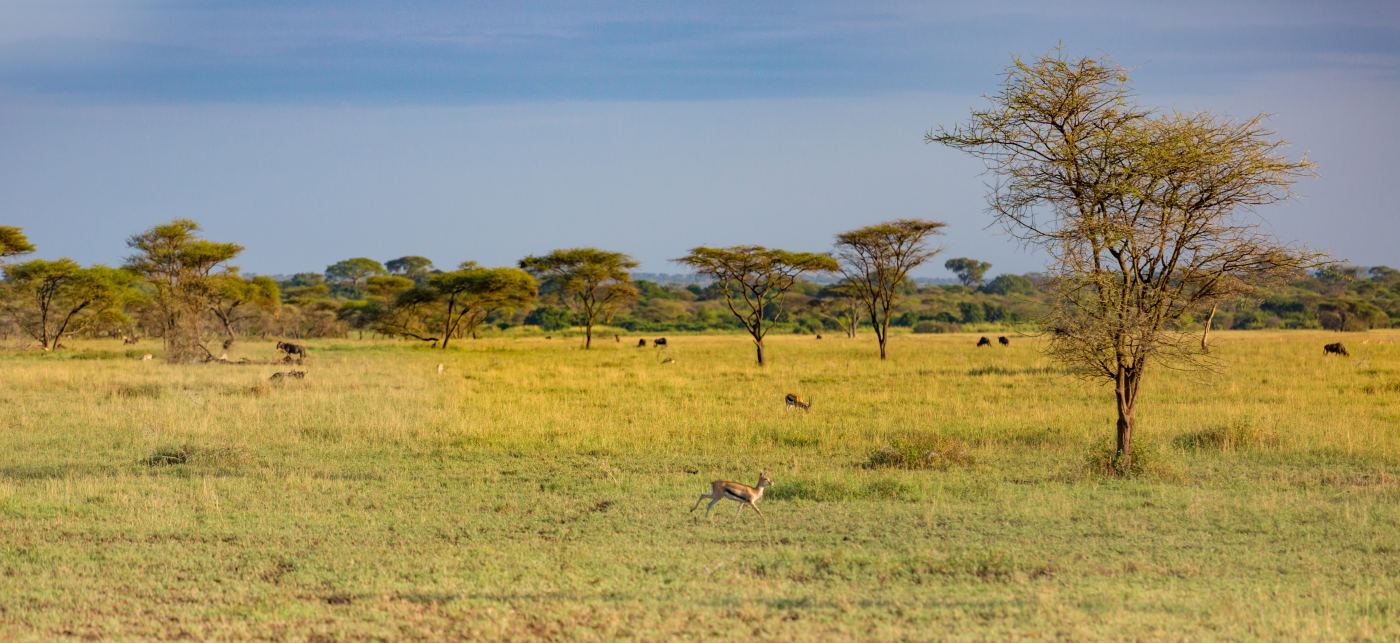
The Serengeti plays a different game altogether. The national park covers 14,750 square kilometres inside an unfenced ecosystem of some 30,000, and its signature is open grassland where visibility is measured in kilometres rather than metres. Resident game is abundant year-round, the ecosystem holds one of the highest lion densities in Africa, and on top of all that circulates the migration — around 1.5 million wildebeest with hundreds of thousands of zebra and gazelle. One fair concession going the other way: for leopard viewing specifically, the private reserves on Kruger's western boundary, Sabi Sands above all, are the best on the continent — though at luxury-lodge prices, not Kruger self-drive prices.
Where Tanzania wins
Tanzania's first advantage is the one nothing in Southern Africa can answer: the great migration. The herds move through the Serengeti ecosystem all year — mass calving at Ndutu in January and February, when up to 8,000 wildebeest are born each day at the peak, then the dramatic Grumeti and Mara river crossings between June and October. The second is concentration. The Ngorongoro Crater holds roughly 25,000 large animals on a caldera floor of 260 square kilometres, very likely the densest gathering of big game on earth, and a single morning there can produce lion, elephant, buffalo, hyena and, with luck, black rhino.
The third advantage is harder to measure but travellers feel it immediately: wilderness. Around a third of Tanzania's land is protected, the parks are unfenced, and animals move along corridors that have existed for millennia. Camps in the Serengeti are mostly tented, and the night sounds of lion and hyena come to you through canvas rather than glass. South Africa's reserves are almost all fenced, and even mighty Kruger — wonderful as it is — carries a more managed, tamer feel, with its tarmac and its rest-camp shops. If the emotional point of a safari is to feel small inside something ancient and wild, Tanzania delivers that sensation more completely.
Malaria, families and the malaria-free question
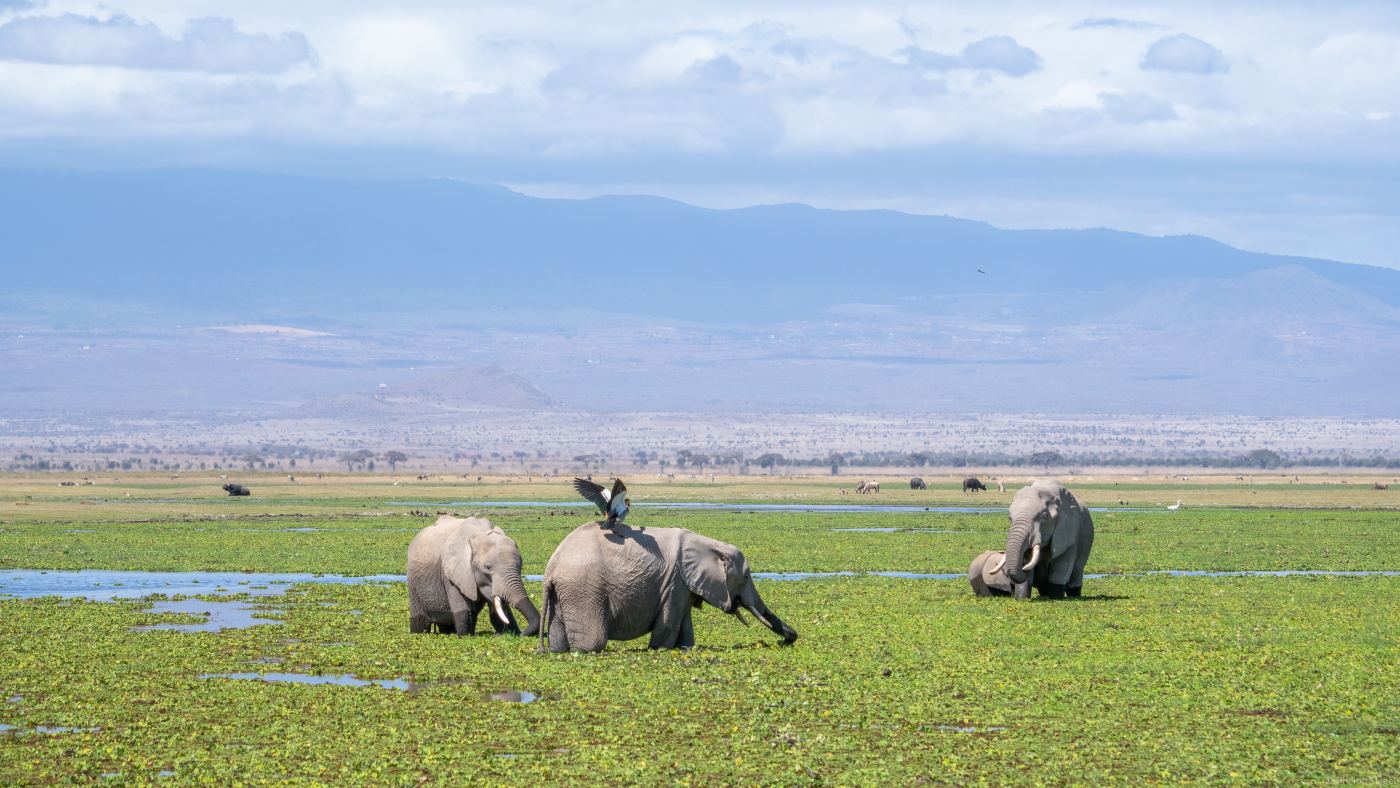
Here is the section a Tanzanian operator is supposed to gloss over, so let us not. Northern Tanzania is a malarial region. Visitors are advised to take prophylaxis such as Malarone, use repellent and sleep under nets, and the overwhelming majority do so and have no trouble at all; the higher-altitude stops, such as the Ngorongoro Crater rim at around 2,300 metres, carry lower risk, but the risk is never zero. South Africa's malaria-free reserves are therefore a genuine and unique advantage. If you are travelling with a baby, a toddler or a pregnant partner, Madikwe or the Eastern Cape is the sensible choice, and we will happily tell you so.
For families who can take prophylaxis, however, the calculation changes. Tanzania works beautifully for children of roughly six and upwards: a private vehicle and guide mean the day runs at your family's pace, and no fenced reserve on earth matches the effect on a child of watching a hundred thousand wildebeest cover a plain to the horizon. Our honest rule of thumb after years of advising families is this — under-fives or medical reasons to avoid malaria tablets, choose South Africa's malaria-free reserves; everyone else, treat malaria as a manageable factor in the decision rather than a veto on East Africa.
Self-drive vs guided: two different safaris
South Africa is the continent's great self-drive destination, and Kruger was practically designed for it. The freedom is real: your own car, your own pace, a picnic where you choose, and a total cost that guided East Africa cannot approach. The honest downsides are equally real. Untrained eyes miss most of what a professional spots — the leopard's tail hanging from a marula branch, the drag mark crossing the road — and good sightings on the tar can turn into patient queues of vehicles. Private lodges in Sabi Sands and elsewhere offer superb guiding, of course, but at that point the price advantage largely disappears.
Tanzania is, for practical purposes, a guided destination. Distances are long, park tracks are rough, and the system is built around a private 4x4 with a professional driver-guide who stays with you throughout. That structure raises the cost, and we will not pretend otherwise, but it transforms the game viewing: a good Tanzanian guide reads tracks and bird alarm calls, works the radio network, positions the vehicle for light, and explains what you are watching so that a lion hunt becomes a story rather than a photograph. Whether you prefer independence or interpretation is a question of temperament as much as budget, and only you can answer it.
What each country really costs
Now the numbers, stated as plainly as we can. In South Africa, a self-drive Kruger trip can genuinely be done for 100 to 150 US dollars per person per day including car hire, fuel, park fees, rest-camp accommodation and food — a figure no guided East African safari can touch. Mid-range private reserves run roughly 350 to 600 dollars per person per night, and the celebrated Sabi Sands lodges charge 1,000 to 2,500 dollars and beyond, which makes them as expensive as anywhere in Africa. South Africa's advantage, in short, lives at the entry level; at the top end the two countries converge.
Tanzania's realistic floor is higher. A guided camping or simple-lodge safari starts around 250 to 350 dollars per person per day, mid-range lodges and tented camps run 400 to 600, and luxury camps 700 to 1,500 or more. Park fees are a genuine driver of that floor: Serengeti entry is around 83 dollars per adult per day plus VAT in peak season, and the Ngorongoro Crater carries a vehicle service fee of just under 300 dollars. What you buy for the difference is the guide, the vehicle, the unfenced wilderness and the spectacle — which is precisely why the fair comparison is value against your priorities, not price alone.
Beaches, wine country and everything after the safari
What surrounds the safari matters, because almost nobody flies this far for game drives alone. South Africa's supporting cast is superb: Cape Town is one of the world's great cities, the winelands of Stellenbosch and Franschhoek are a destination in their own right, the Garden Route makes a glorious self-drive, and between June and November the whales come to Hermanus. The honest footnote concerns the beaches: they are beautiful to look at, but the Atlantic runs a bracing 12 to 16 degrees, and even the warmer Indian Ocean side around Durban is a long way from the postcard-tropical swimming most safari-goers imagine.
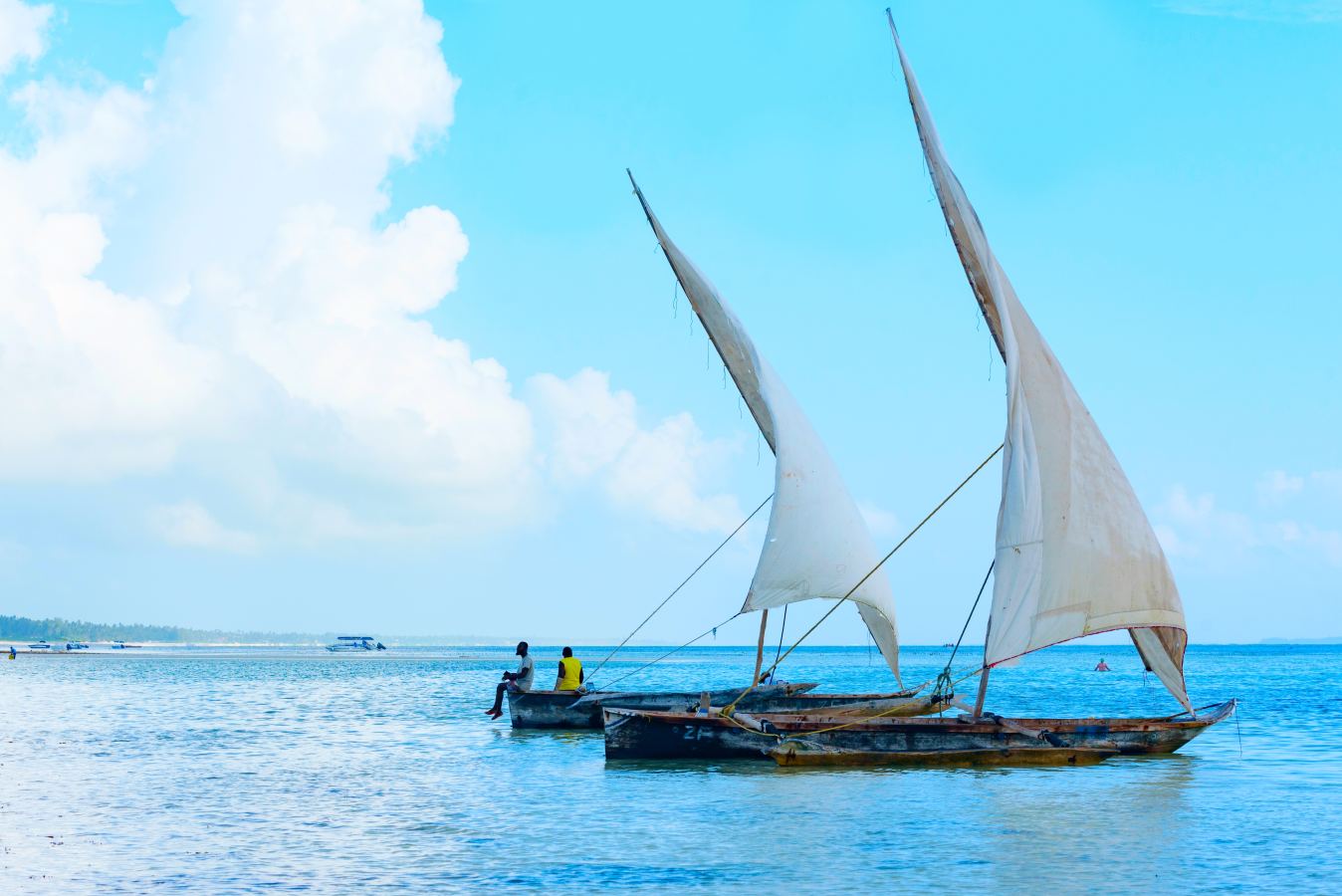
Tanzania answers with Zanzibar, and it is a decisive answer if your dream ends on a beach. Ninety minutes by light aircraft from the Serengeti airstrips puts you on white coral sand beside a 27-degree Indian Ocean, with the carved doorways of Stone Town to wander and the Mnemba Atoll reef to snorkel. This is the classic bush-and-beach combination, and no equivalent exists in South Africa at any price. So the add-on question resolves neatly: if your perfect final chapter is a cellar tour and a mountain-backed city, choose South Africa; if it is warm ocean and bare feet after the dust of the plains, choose Tanzania.
The verdict: which traveller should pick which
Choose South Africa if any of the following describes you: it is your first trip to Africa and you want maximum ease and familiarity; you are travelling with children under six, or with anyone who cannot take malaria prophylaxis; your budget sits under roughly 200 dollars per person per day, where self-drive Kruger is unbeatable; you want a varied holiday in which safari is one chapter alongside Cape Town, wine and coast; or you are short on time and want to bolt three days of Big Five viewing onto another itinerary. On every one of those measures, South Africa is the better answer, and we say so without hesitation.
Choose Tanzania if the safari itself is the point of the journey. If you want to stand a realistic chance of watching a river crossing, or newborn wildebeest finding their legs at Ndutu; if the Ngorongoro Crater and the density of predators on the southern plains are the images that made you start planning; if you want unfenced wilderness, canvas walls and lion calling in the dark rather than a fenced reserve, however well run; if your trip should end in a warm ocean on Zanzibar; and if this is a once-in-a-decade journey where spectacle outranks convenience — then the South Africa safari vs Tanzania question answers itself, and it answers it in our favour.
Choose South Africa for the easiest safari of your life. Choose Tanzania for the greatest one.
- South Africa wins — infrastructure, self-drive value, malaria-free family reserves, Cape Town and wine country
- Tanzania wins — the migration, wildlife density, the Ngorongoro Crater, unfenced wilderness, Zanzibar
- Costs — South Africa cheaper at entry level; the two converge at the luxury end
- Families — under-fives to South Africa's malaria-free reserves; six and up thrive in Tanzania
- Style — self-drive freedom versus expert private guiding
- The lifetime answer — do both, as two separate trips
The both-in-one-lifetime answer
People sometimes ask whether they can combine the two countries in a single trip, and the honest answer is that you can but mostly should not: Johannesburg and Kilimanjaro are some 4,000 kilometres apart, the flight connections eat a day in each direction, and each country deserves an unhurried itinerary rather than half of one. The happier answer is both in one lifetime. Many of our guests came to Tanzania years after a self-drive Kruger holiday, ready for the full spectacle; others go on to South Africa afterwards for the wine, the whales and the Cape. They are not rivals so much as two different chapters of the same love affair with Africa.
If Tanzania wins your list
If you have read this far and South Africa fits your family, your budget or your appetite for independence, go with our blessing — you will have a wonderful safari, and everything we have written here will still be true when you are ready for the Serengeti. But if the migration, the crater, the unfenced wilderness and the warm water of Zanzibar have settled the argument, then you already know who to talk to. Tell Sokwe Africa Safaris your dates, your budget and who is travelling, and we will design a Tanzania safari that shows you, in person, exactly why we were happy to make this comparison a fair fight.
Plan your Tanzania safari with Sokwe Africa Safaris