
Why start your African safari in Tanzania?
If you are planning a safari in Africa, Tanzania is the strongest single answer to the question of where to begin. No other country combines the sheer density of wildlife, the spectacle of the great migration, the natural wonder of the Ngorongoro Crater and an easy beach finale on Zanzibar within one straightforward trip. Kenya has the Masai Mara, Botswana has the Okavango, South Africa has Kruger — all magnificent — but none offers a first-time visitor so much, so reliably, in a single fortnight. This guide explains why, what a Tanzanian safari actually involves, and what it honestly costs.
We say this as a Tanzanian operator, so you would expect us to be partial — but the numbers back it up. The Serengeti ecosystem holds around two million wildebeest, zebra and gazelle plus the highest concentration of large predators in Africa. The Ngorongoro Crater packs some 25,000 large animals into a single caldera you can drive across in a morning. And because the famous parks sit close together on the northern circuit, you see all of it without long, empty transit days. For a first safari, that combination is very hard to argue against.
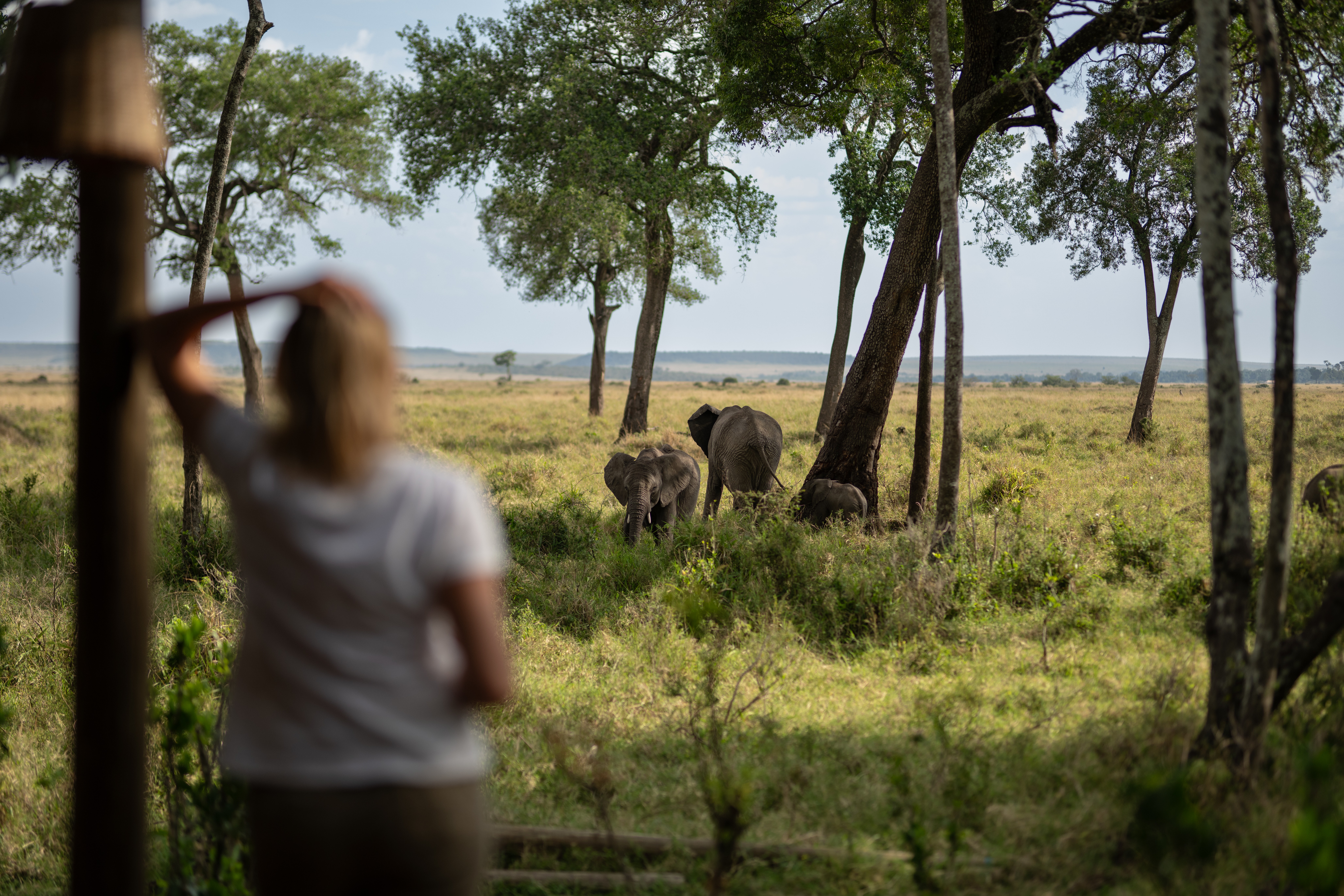
What an African safari actually is
Strip away the marketing and a safari is beautifully simple: you stay in lodges or tented camps inside or beside wildlife areas, and each day you go out with a professional guide in an open-sided 4x4 to find animals. These outings are called game drives, and they are the heartbeat of the trip — typically a long morning drive from around 6.30am when predators are active, a return to camp for lunch and rest, then an afternoon drive until sunset. Some travellers picture hardship; the reality, even at mid-range level, is comfortable beds, good cooking and cold drinks in remarkable places.
The phrase you will meet everywhere is the big five — lion, leopard, elephant, buffalo and rhino, the old hunters' list of the most formidable animals to track on foot. It survives as a convenient shorthand, and Tanzania is one of the few countries where seeing all five on one trip is realistic, with black rhino resident in the Ngorongoro Crater. But fixating on a checklist undersells the experience. The moments people actually remember are a cheetah teaching cubs to hunt, ten thousand wildebeest pouring over a ridge, or an elephant herd crossing the track close enough to hear them breathe.
The great migration: the greatest wildlife show on earth
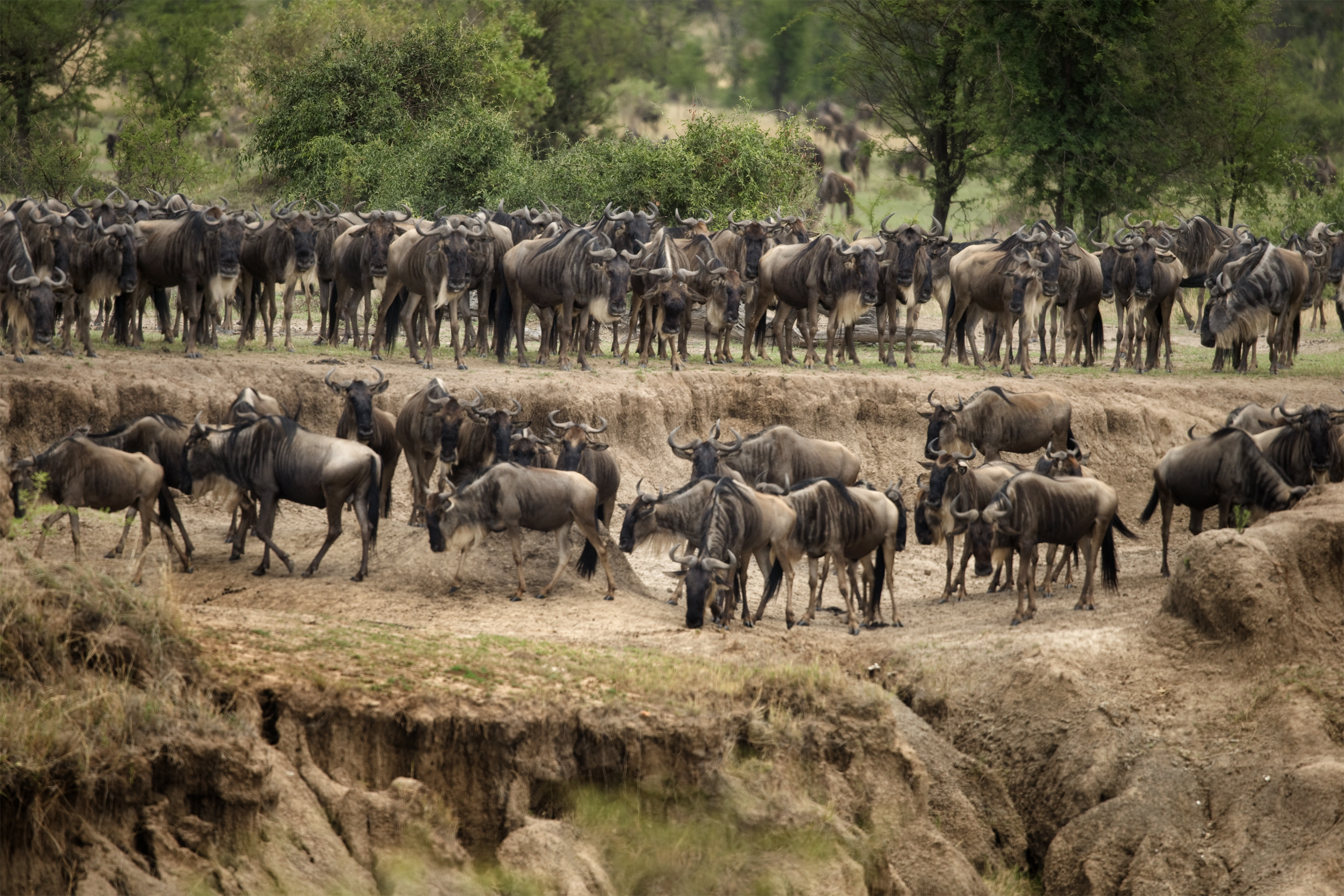
The great migration is the single biggest reason to point your first African safari at Tanzania. Around 1.5 million wildebeest, joined by hundreds of thousands of zebra and gazelle, move in a continuous clockwise circuit around the Serengeti ecosystem all year — and crucially, they spend roughly nine to ten months of that year on the Tanzanian side. Kenya's Masai Mara hosts the herds for a spectacular but brief window around August to October; in Tanzania there is a migration spectacle to be found in some corner of the Serengeti in virtually any month you travel.
The character of the spectacle changes with the calendar. From roughly late January to March the herds mass on the short-grass plains around Ndutu for calving season, when some 8,000 calves are born each day and the predator action is at its most intense. June brings dramatic crossings of the Grumeti River in the western corridor, while July to October is the season of the famous Mara River crossings in the northern Serengeti — crocodiles, dust and thundering hooves. A good operator builds your itinerary around where the herds actually are, not around a fixed map.
The Ngorongoro Crater and the northern circuit
If the migration is Tanzania's headline act, the Ngorongoro Crater is its guarantee. This 260 square kilometre collapsed volcano is a natural amphitheatre with year-round water and grazing, which means its resident wildlife — lion, elephant, buffalo, hyena, flamingo-fringed lakes and one of East Africa's best chances of black rhino — simply does not leave. On a single morning game drive across the crater floor you can realistically see more large animals than some parks elsewhere in Africa deliver in a week. For a first-timer nervous about luck, the crater removes most of the gamble.
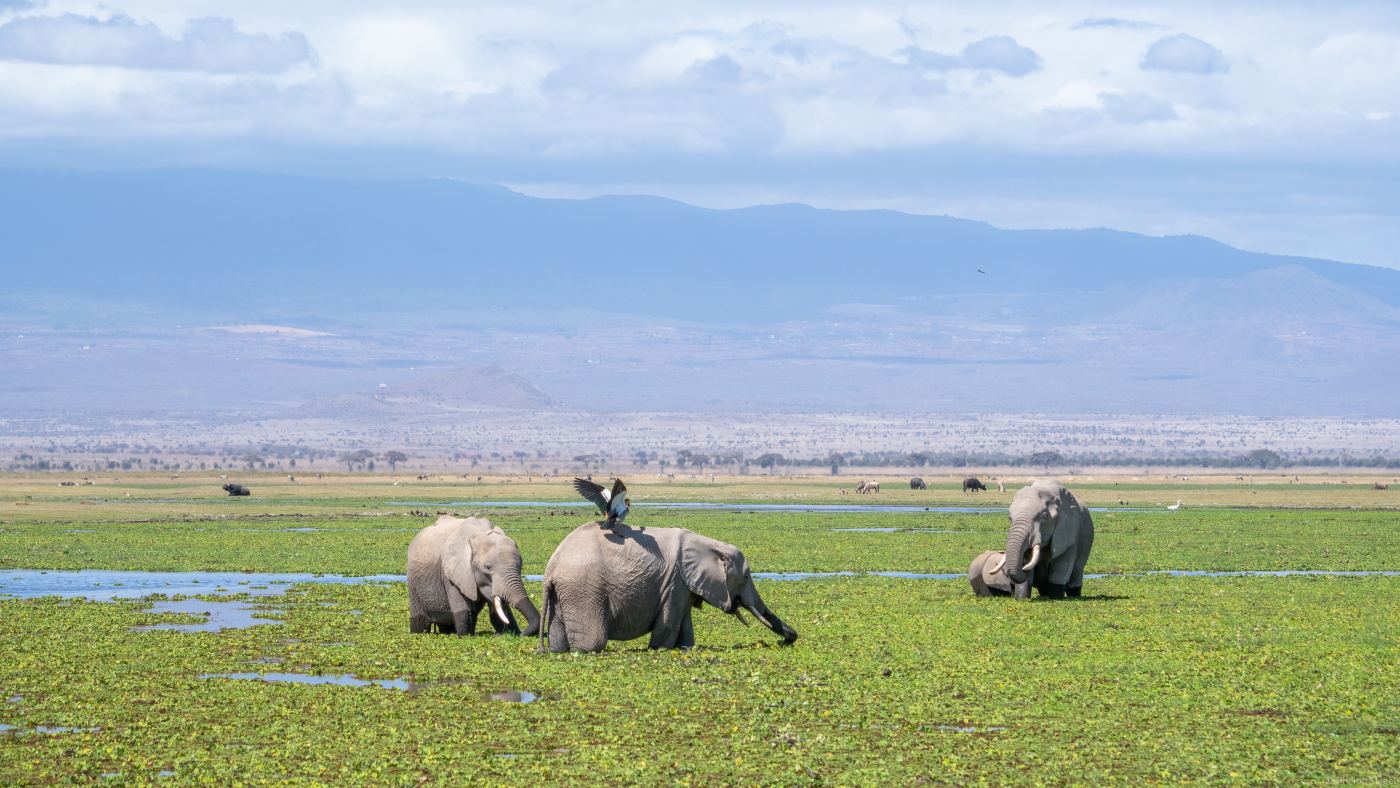
The crater is one stop on Tanzania's northern circuit, the compact chain of parks that makes the country so efficient to explore. A classic route runs from Arusha through Tarangire, famous for its huge elephant herds and ancient baobabs, past Lake Manyara, up over the crater rim and on into the endless plains of the Serengeti. Each park has a genuinely different landscape and cast of animals, the driving distances between them are manageable, and the route builds naturally to a Serengeti crescendo. It is, quite simply, the best-designed first safari geography in Africa.
What an African safari tour includes day to day
Most African safari tours in Tanzania are sold as packages, and once you land almost everything is handled. A typical package includes your safari vehicle and dedicated professional guide for the entire trip, all park entry and crater fees, all accommodation, three meals a day, drinking water and airport transfers. Your guide is with you from arrival to departure — driver, wildlife expert, translator and problem-solver in one — and the quality of that one person shapes the trip more than any lodge. At Sokwe we regard our guides as the product; the vehicles and camps support them.
A representative day runs like this: wake before dawn to coffee, out of camp by 6.30am for the morning game drive while lions are still moving, breakfast either back at camp or as a picnic in the bush, a midday rest during the hot, quiet hours, then an afternoon drive until the light turns golden and you head back for dinner under a staggering sky. Full-day drives with picnic lunches are common in the Serengeti and the crater. Optional extras include hot air balloon flights over the plains, walking safaris in certain areas, and Maasai cultural visits.
- Guide and 4x4 for the whole trip
- All park and crater fees
- Lodges or tented camps, full board
- Daily game drives, flexible timings
- Airport transfers included
- Balloon flights and cultural visits as extras
What a safari in Tanzania honestly costs
Honesty matters here, because a safari in Africa is not a cheap holiday and anyone who tells you otherwise is hiding something in the fine print. In Tanzania, realistic 2026 pricing for a well-run mid-range safari is roughly 350 to 600 US dollars per person per day, covering vehicle, guide, park fees and full-board lodges. Budget camping trips can bring that down towards 250 dollars, while luxury lodges and tented camps run from about 700 to well over 1,500 dollars per day. Park fees alone are significant — the Serengeti costs over 80 dollars per adult per day.
Against its rivals, Tanzania sits in the sensible middle and arguably delivers the most per dollar. Botswana's celebrated camps commonly start around 1,000 dollars per person per day and climb steeply, pricing out many first-timers. South Africa can be cheaper, but much of its accessible safari happens in smaller fenced reserves — excellent, yet a different experience from the open Serengeti. Kenya is Tanzania's closest comparison at broadly similar prices, without the crater or the year-round migration presence. When you divide cost by spectacle, a Tanzanian safari is consistently the strongest first-safari value in Africa.
When to go
Tanzania is a genuine year-round destination, which removes another first-timer anxiety. The long dry season from June to October is the classic window: grass is short, animals crowd the remaining water, skies are clear and the Mara River crossings run in the north. It is also peak season, so lodges are busiest and prices highest. January to March is superb in its own right — calving season on the Ndutu plains, big cats everywhere, warm days — while November's short rains and the green season of April and May bring dramatic skies, lower prices and far fewer vehicles.
Our honest advice is to choose the month by what you most want to see rather than chasing a mythical single best week. Crossings? July to October in the northern Serengeti. Predator action and newborn wildebeest? Late January to March around Ndutu. Lowest prices and near-empty parks, accepting some afternoon rain? April, May or November. Only the heart of the long rains genuinely compromises game viewing, and even then the Ngorongoro Crater and Tarangire still deliver. There is no month in which a well-planned Tanzanian safari disappoints.
From the plains to the beach: the Zanzibar finish
Here is an advantage no landlocked rival can match: Tanzania lets you end your safari on a genuinely world-class tropical island. Zanzibar lies a short, inexpensive internal flight from the Serengeti's airstrips or from Arusha, so after a week of dawn starts and dusty triumphs you can be barefoot on white sand by mid-afternoon. Three or four nights of swimming, snorkelling around coral reefs and wandering the ancient alleys of Stone Town is the perfect decompression, and it turns a safari into a complete holiday that also works beautifully for honeymoons and families.
The logistics are refreshingly simple because it is all one country: no second visa, no border crossing, no international flight in the middle of your trip. The classic pattern is six or seven nights on safari followed by three or four on the beach, and it remains the most requested itinerary we build. If you are comparing an African safari in Tanzania against, say, Botswana plus a flight to Mauritius, the difference in cost, flying time and hassle is enormous. Bush and beach in one seamless trip is a Tanzanian speciality, and it is a very good one.
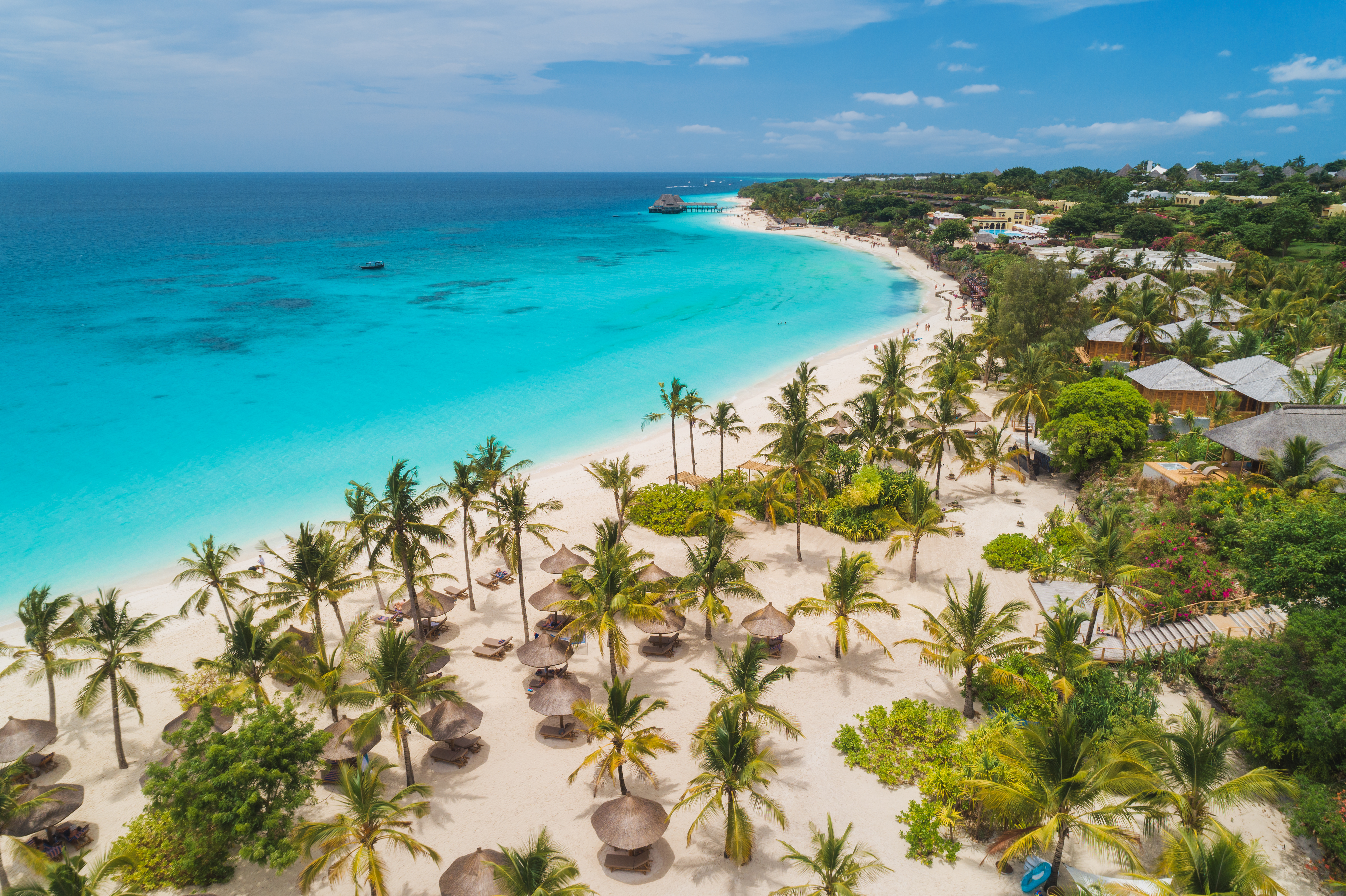
Divide the cost by the spectacle and Tanzania is the strongest first-safari value in Africa — the migration, the crater and the beach in one country, one visa, one trip.
More on this in Is Ngorongoro Crater worth it? An honest guide to what you see, the crowds and how to do it well.
How to choose a safari operator
The operator you book with matters more than almost any other decision, because on safari the company is the product: their guide sits beside you all week, their vehicle carries you, their judgement decides where you are when the migration crosses. Look for a licensed Tanzanian operator with named guides, recent independent reviews, transparent itemised quotes and direct answers to direct questions. Be wary of prices dramatically below the ranges above — the savings usually come out of guide quality, vehicle maintenance or park fees, which are exactly the things you cannot afford to compromise on.
Ask any operator three questions before you pay a deposit. Where will the migration herds be during my dates, and how does the itinerary respond to that? Who exactly will guide me, and how long have they guided? What precisely is excluded from the quote? A good company answers specifically; a bad one answers vaguely. Sokwe Africa Safaris is based in Arusha, at the gateway to the northern circuit, and we build every safari around the traveller and the season rather than a fixed brochure route — which is what you should demand from whoever you book with.
Start your African safari where the wildlife is
An African safari is one of the few travel experiences that genuinely exceeds its own legend, and where you take your first one shapes everything. Tanzania offers the densest wildlife, the great migration for most of the year, the guaranteed drama of the Ngorongoro Crater, a compact northern circuit that wastes none of your holiday, honest value against every rival, and a beach finale a short flight away. Tell us your dates, your budget and what you dream of seeing, and we will show you Tanzania properly — from the first game drive to the last sundowner.
Start planning your African safari in Tanzania with Sokwe Africa Safaris