

Ngorongoro Crater appears on nearly every northern Tanzania itinerary, and it has a reputation as one of the finest wildlife experiences in Africa. It also has a reputation for crowds and a significant fee, which leads many travellers to ask whether it is really worth the time and money. We take guests there often, so here is a straight account: what the crater is, what you will see, where it disappoints and how to get the most from it. For most visitors it is worth it, and for some the right approach makes the difference.
The short answer
Yes, for most people it is one of the highlights of a Tanzania safari, because of the combination of spectacular scenery and dense, easily seen wildlife in a compact area. It is particularly good for first-time visitors and for anyone who wants a high chance of seeing a variety of animals in a single day. It is less good for people who dislike other vehicles, who want a remote wilderness feel or who are short of time and money and need to choose between several places. A well-timed early start and a good guide make a large difference to how it feels.
What the crater is
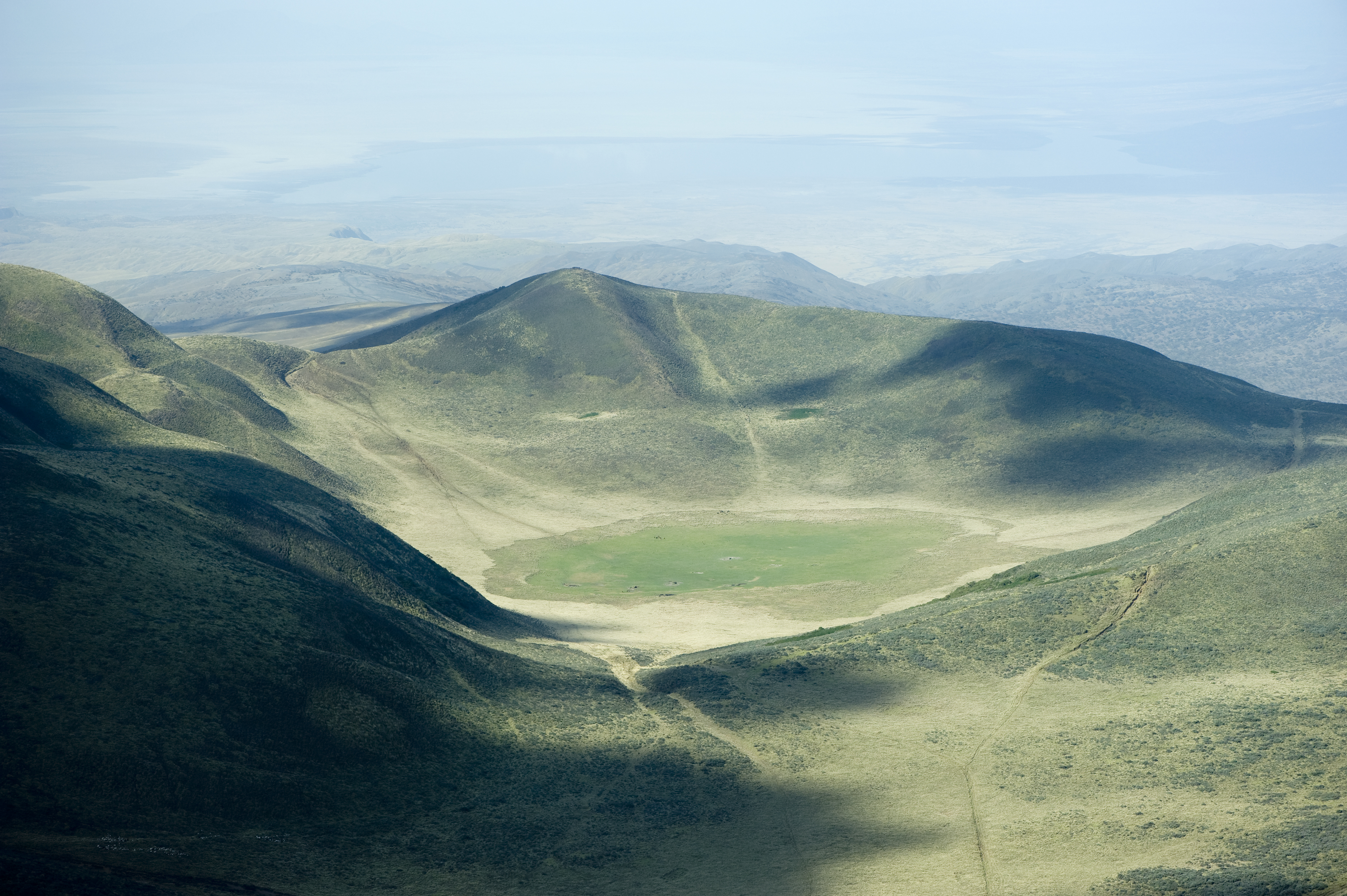
Ngorongoro Crater is the collapsed caldera of an ancient volcano, one of the largest unbroken volcanic calderas in the world. The floor is roughly 260 square kilometres, about 19 kilometres across, enclosed by walls rising several hundred metres on every side. It lies within the Ngorongoro Conservation Area, which is a UNESCO World Heritage Site, and it is managed differently from a national park, since Maasai pastoralists live in parts of the area alongside wildlife. The crater rim sits at over 2,000 metres, so mornings can be cold and misty.
The floor contains grassland, a soda lake called Lake Magadi, a freshwater swamp, forest patches and rivers, and the walls help keep animals within the crater for much of the time, which is why numbers are so high. Often quoted figures put the resident large mammal population at around 25,000 animals, though counts vary from year to year. The result is a wildlife spectacle that fits into a single morning, with a backdrop that is hard to match anywhere in Africa.
What you will see
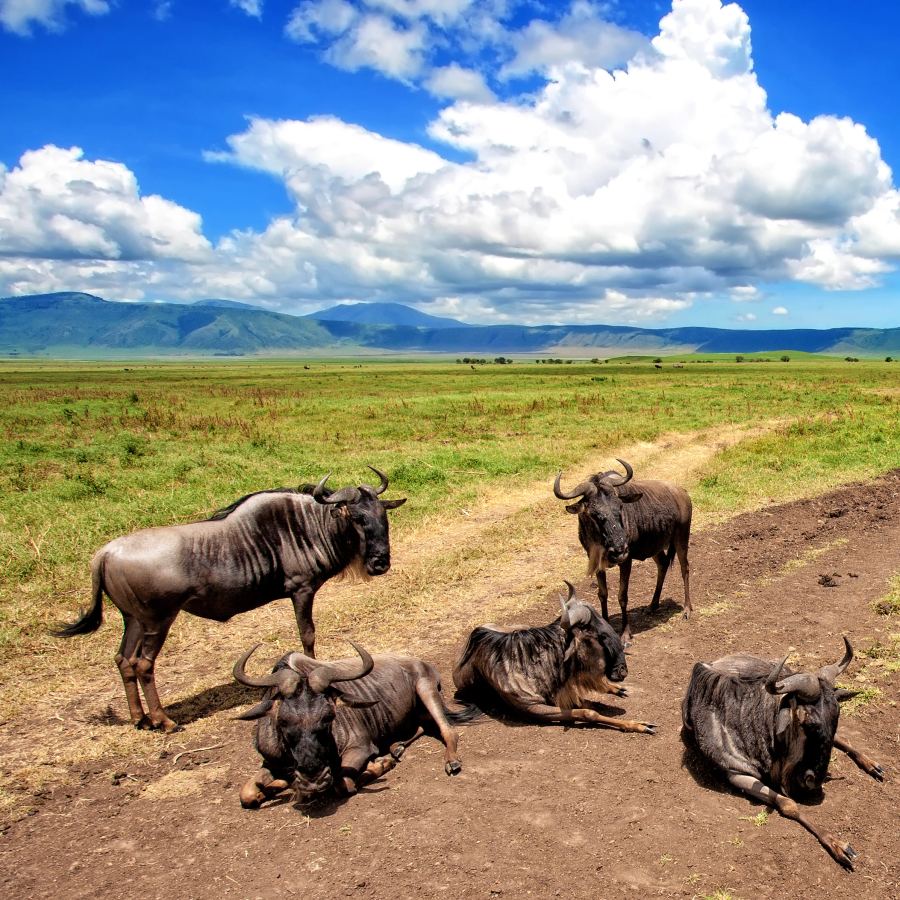
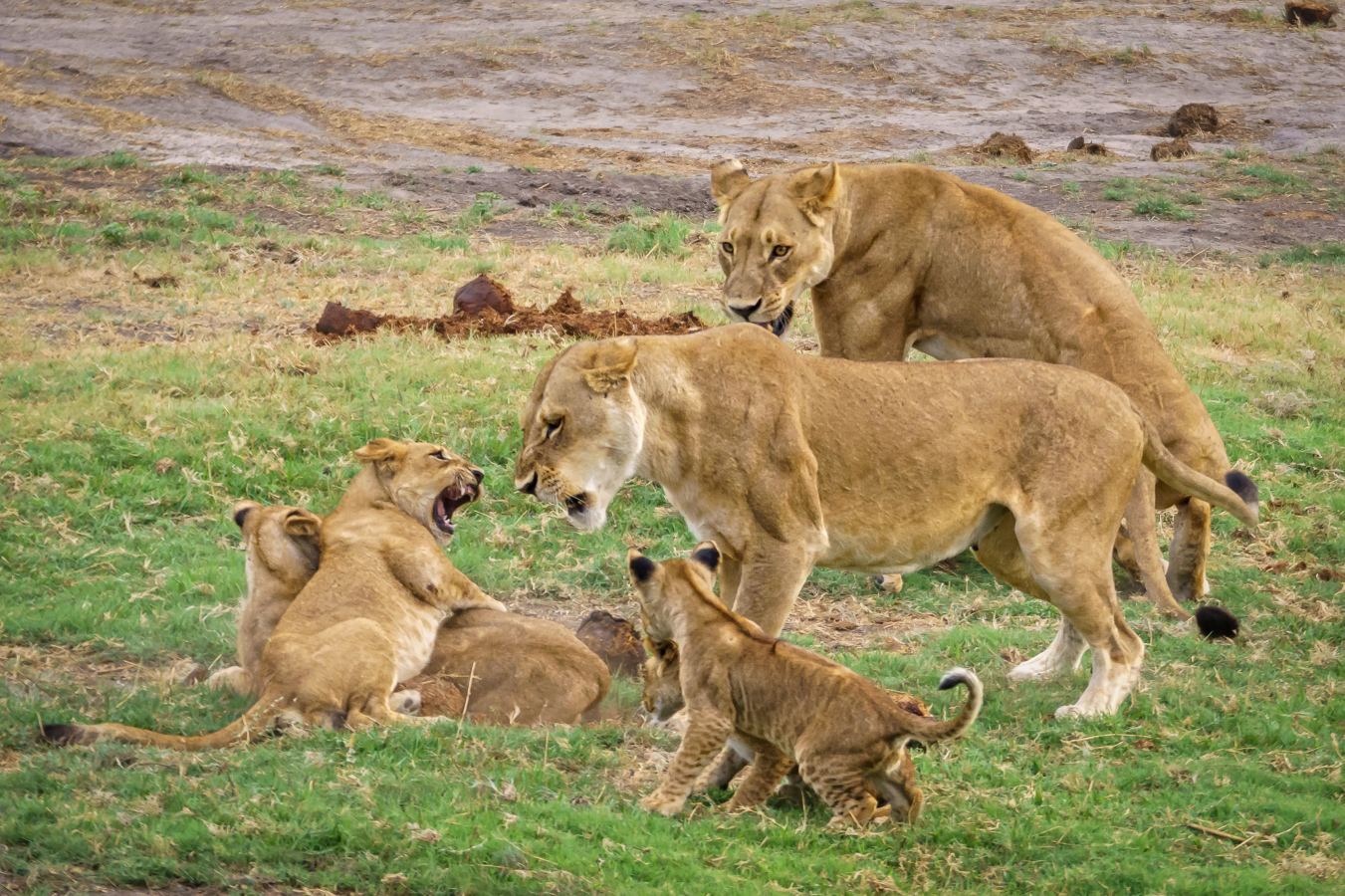
The crater is known for its density of animals and the quality of its predator viewing. Lions are commonly seen, often resting on the plains or near the roads, and hyenas are common, with clans active around dens and waterholes. Wildebeest, zebra, buffalo, Thomson's and Grant's gazelles and eland graze the grasslands. Elephants are present, often single large bulls in the forest and near the swamp, and hippos wallow in the pools, where you may be able to watch them from a safe distance at a picnic site.
The crater is also one of the better places in Tanzania to look for the endangered black rhino, though sightings depend on luck and distance, and the animals are often far away. Leopards are present but rarely seen, and giraffes do not live on the crater floor. Birdlife is rich, with flamingos on Lake Magadi at certain times, secretary birds, kori bustards, crowned cranes and many raptors. For photographers, the light in the early morning and the contrast of mist and wildlife can be superb.
Planning your visit? See our guides to the Ngorongoro Crater safari, Serengeti vs Ngorongoro, park fees and private Tanzania safari options.
Related reading: Ngorongoro Crater facts: size, depth, how it formed, and your questions answered.
The honest downsides
The first is crowds. The crater is accessible, famous and compact, so many vehicles descend each day, and at popular sightings you may share the view with a dozen others. This is the point at which a good guide matters, because they know how to position the vehicle, where to go to avoid the traffic and how to use radio information to find quieter spots. It is also why timing matters: arriving at the gate when it opens gives you the early light and fewer vehicles.
The second is cost. The conservation area charges entry fees and a separate fee for each vehicle that descends into the crater, and because the descent is time-limited, you pay for a few hours. Our park fees guide sets out the current figures. The third is the lack of a wilderness feel: the roads are set, the animals are used to vehicles and the experience is closer to a managed spectacle than to the remote parks of the south. And the fourth is that rhinos and leopards, the species many people hope for, are not guaranteed.
How long to spend, and how to do it well
A single morning in the crater is enough for most visitors, and a full day is the maximum, since time on the floor is limited and the animals are less active in the midday heat. Descend as early as the gates allow, spend the morning on the floor, have a picnic lunch at the hippo pool or a designated area and head back up around midday. Some guests prefer to stay on the rim and descend in the morning, which avoids a long drive and gives you a view over the caldera at sunset.
Consider where it fits in your itinerary. Combined with Tarangire and Lake Manyara, and followed by the Serengeti, it forms the classic northern circuit. If you have only a short time, the crater is a strong choice because of its density of wildlife, though a visit of one to two nights is enough. If you are doing a long trip with several remote camps, you might shorten it or choose a quieter morning. Ask us what makes sense for your dates.
A typical day in the crater
The day usually begins early, with breakfast and a drive to the descent road while the light is still soft. The road down is steep and winding, and the first view of the crater floor, often with mist lying in the hollows, is one many guests describe as the moment the trip becomes real. Once on the floor, the guide heads for areas where wildlife is concentrated: the open grassland for predators and herds, the Lerai forest for elephants and the swamp and pools for hippos and birds.
Mid-morning is often the best time for predators, which are most active in the cooler hours, and the guide will adjust to what is happening on the day. A picnic lunch at the hippo pool is a pleasant interval, although you remain in the vehicle or on the designated area and watch for kites, which will steal food from an open box. After lunch, wildlife activity slows as the heat builds, and most guests are ready to climb out of the crater and head to the next camp or lodge.
Practical tips for the descent
Bring layers, since the rim can be cold and misty and the floor warmer. Bring binoculars, a camera with a long lens if you have one and a hat and sunscreen for the floor. Keep a small amount of cash and your passport details for any extra fees your operator has not covered. Eat a good breakfast and carry water, since you may be out for several hours. Be patient: the best sightings often come after quiet waiting, and a flexible approach beats a rigid checklist.
Ask your guide to explain the rules, such as staying on tracks, keeping a respectful distance and not feeding animals. Be considerate of other vehicles at sightings, giving each other space and not blocking views. If you are travelling with children or older guests, tell your guide in advance so that the pace and the break times can be adjusted. And remember that the crater is a protected landscape lived in by people as well as animals, so behave with the same care you would show in someone's home.
When to go
The crater can be visited all year, which is part of its value, since animals do not migrate out of it as they do elsewhere. The dry season, roughly June to October, has the best road conditions and good wildlife viewing, though it is also the busiest. The green season, roughly November to May, brings rain, fewer visitors, lush grass and lower rates, though the weather can be cool and wet and some tracks can be muddy. April and May are the wettest months, and many camps close or offer reduced services.
Because the rim is high, you should bring warm clothes whatever the season, including a fleece or jacket for the early descent, and a rain jacket in the wetter months. Binoculars are especially useful for distant rhinos and for birds. If you are a photographer, ask your guide about timing and positioning, since the morning mist and low sun can make a memorable photograph. The weather often changes quickly, so layers are the answer.
Where to stay
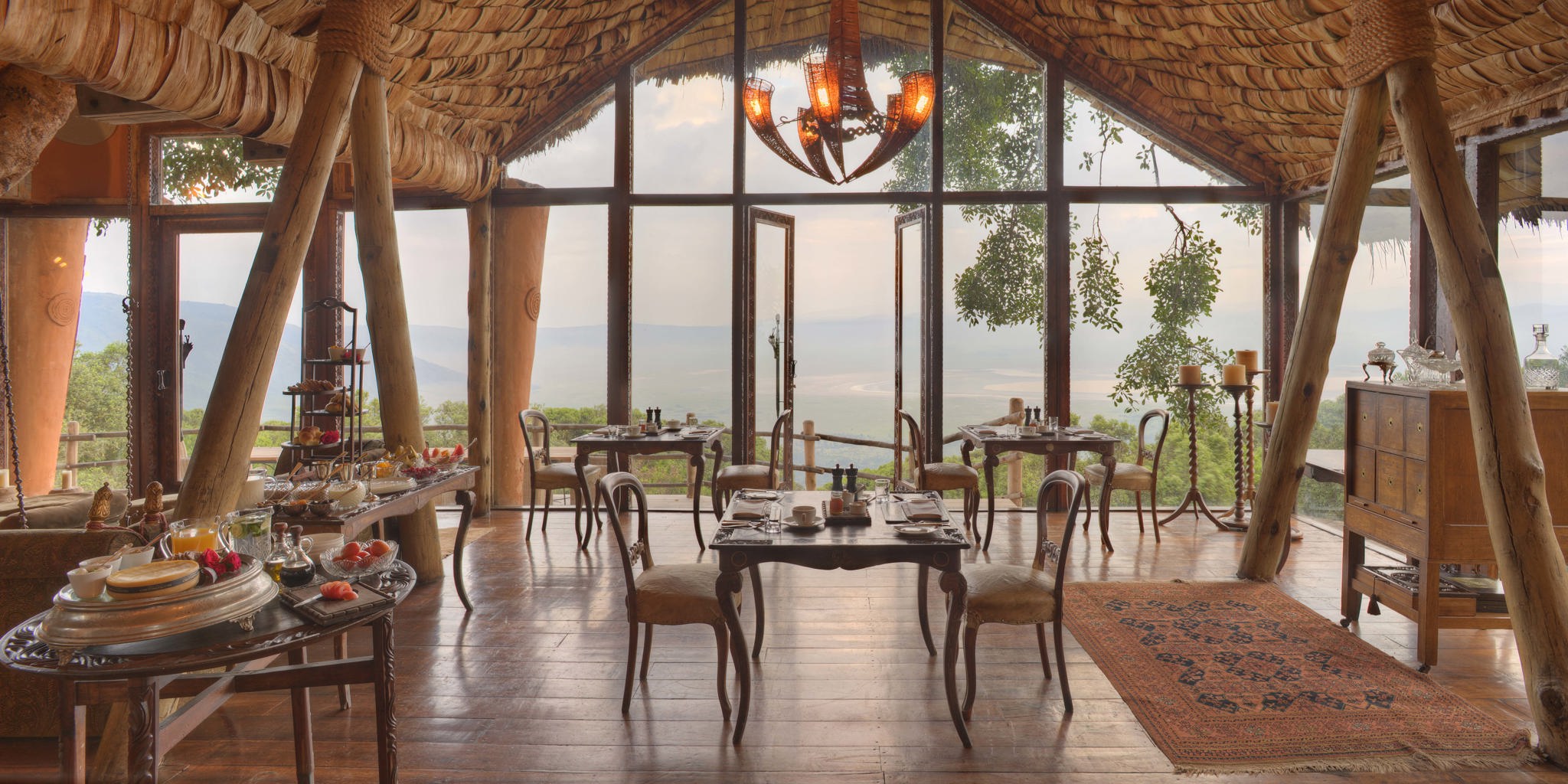
Accommodation ranges from lodges on the crater rim with views across the caldera to camps and lodges in nearby areas such as Karatu, which offer a lower price and a different atmosphere. Rim lodges save time in the morning, since you can be at the descent gate quickly, and they offer the extraordinary experience of waking to the view. Karatu lodges are usually quieter, greener and more affordable, with farm and forest settings and a longer morning drive.
If budget allows, one night on the rim is a highlight for many guests; if not, a night in Karatu and an early start works well. Be aware that rim lodges are usually priced at a premium and book out quickly in the dry season. Whichever you choose, talk to us about how it fits with the rest of the itinerary, because travel times and early starts affect how rested you are. A well-designed route avoids long drives straight after the crater.
Our view
We think the crater is worth it for most people, and we usually include it, particularly for first-time visitors. It gives a dependable, rewarding day, in a setting that few other places can match. We would only suggest skipping it if you are very short of time or budget, or if you are specifically looking for remote, uncrowded wilderness, in which case we might propose other areas. A good guide, an early start and realistic expectations will turn a busy place into a memorable one.
Want to know how the crater fits into your itinerary? Talk to Sokwe Africa Safaris. We will plan the timing, the rim or Karatu choice and the early start with you.
Frequently asked questions
Is Ngorongoro Crater worth visiting?
For most visitors, yes. It offers dense, easily seen wildlife and dramatic scenery in a compact area, making it especially good for first-time visitors. It can be crowded, so an early start and a good guide matter.
How much time do I need at Ngorongoro Crater?
One morning on the crater floor is enough for most visitors, and a full day is the maximum because time in the crater is limited and midday is quiet. One or two nights in the area works well.
Will I see the Big Five in Ngorongoro Crater?
Lions, elephants and buffalo are common and black rhinos are possible but often distant. Leopards are present but rarely seen. Wildlife depends on luck, so no guide can guarantee a sighting.
When is the best time to visit Ngorongoro Crater?
It can be visited all year because animals stay in the crater. The dry season, June to October, has the best roads and is busiest, while the green season offers fewer visitors and lower rates but more rain.
Is Ngorongoro Crater crowded?
It can be, particularly in the dry season, because it is compact and popular. An early start, a good guide who knows the quieter areas and flexibility about where to stop all help.
Is the crater fee worth it?
The fee is significant and charged per vehicle, but most visitors feel the density of wildlife and the setting justify it. See our park fees guide for current figures and consider sharing a private vehicle to spread the cost.