
The geography almost nobody plans around
Most itineraries treat Tanzania as a triangle of Serengeti, Ngorongoro and Zanzibar, which leaves out roughly half the country. The African great lakes Tanzania shares with its neighbours — Victoria in the north-west, Tanganyika down the western border, and Nyasa in the far south — sit along the two arms of the Great Rift Valley and account for some of the most extraordinary freshwater on the planet. Between them they hold chimpanzees, more fish species than any comparable body of water on earth, working ferry ports, and a version of Tanzania that almost no visitor sees.
These are not lakes in the ornamental sense. Lake Victoria is the size of Ireland. Lake Tanganyika holds a significant share of the world's surface freshwater. Lake Nyasa runs for hundreds of kilometres along a rift wall so steep it looks like a fjord. Getting to any of them takes a flight and a commitment of days rather than hours, which is precisely why they remain quiet.
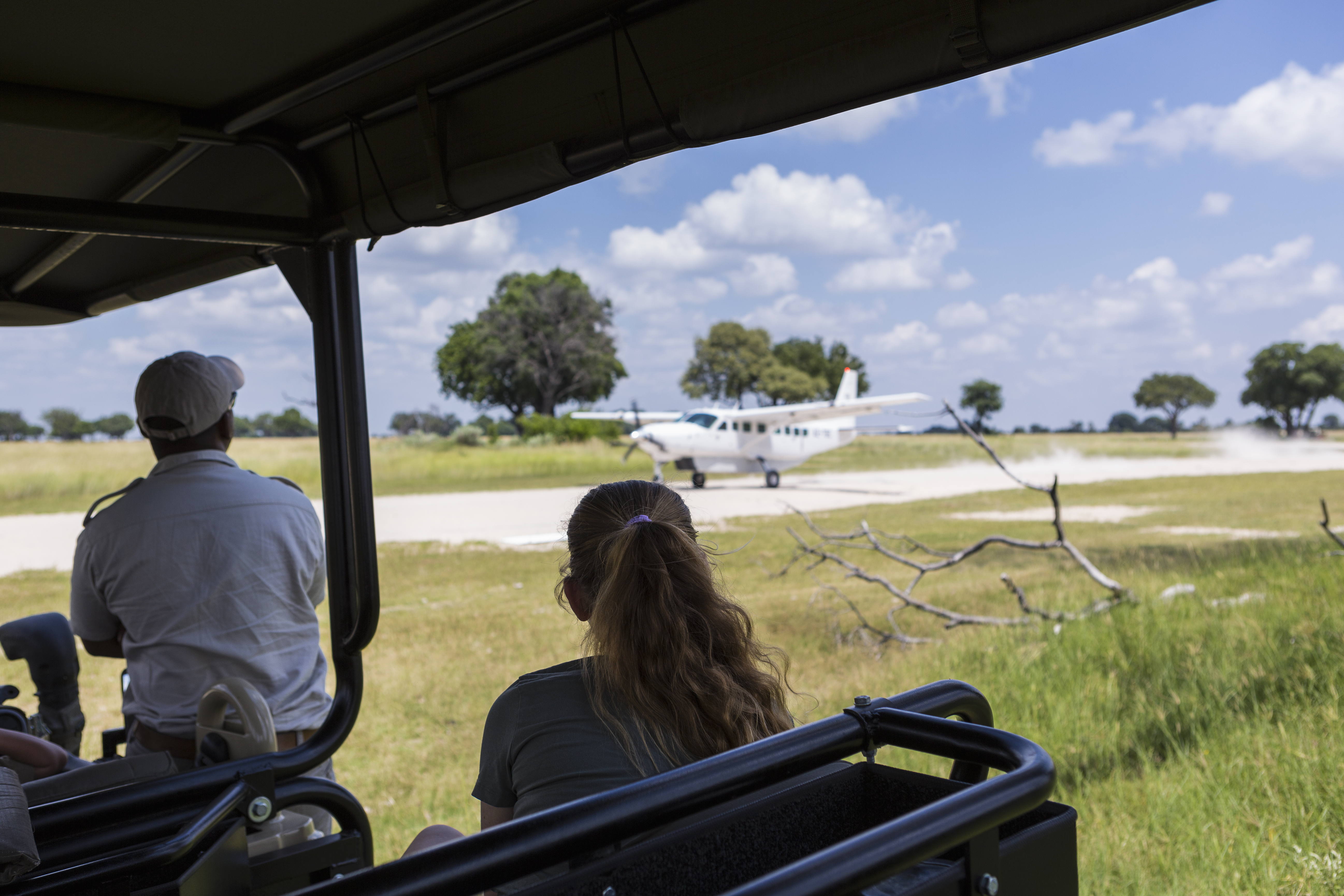
Lake Victoria: the biggest lake in Africa
Lake Victoria is the largest lake in Africa by surface area and the second-largest freshwater lake in the world, shared between Tanzania, Uganda and Kenya. Tanzania holds the largest slice of it, roughly half. Unlike its rift-valley neighbours it is shallow, and it is a working lake first and foremost, ringed by fishing villages, cargo ports and one of the densest rural populations in East Africa. What makes Lake Victoria Tanzania's most overlooked corner is not empty wilderness; it is the sheer scale of human life along the shore.
For travellers the practical gateway is Mwanza, Tanzania's second city, built among enormous granite boulders that have earned it the nickname Rock City. It has a proper airport with daily flights from Dar es Salaam and Arusha and, crucially, sits a couple of hours' drive from the western Serengeti. That geography makes Mwanza the one great lakes destination you can add without redesigning your whole trip: a night or two gives you the Bismarck Rock viewpoint, boat trips to fishing villages on the islands, and a sense of ordinary Tanzanian urban life.
The wildlife highlight of the Tanzanian side is Rubondo Island National Park, a forested island in the south-west corner of the lake. Rubondo is unusual: it was used from the 1960s onwards to release confiscated and captive-born animals, and now holds a wild, self-sustaining chimpanzee population alongside sitatunga antelope, elephants and exceptional birdlife. Habituation has been slow, patient work, so sightings are far less reliable than at Mahale — but you can walk in real forest, fish for Nile perch and sleep on an island where the only sounds are birds and water.
Kigoma, Ujiji and the long western shore
Lake Tanganyika is the headline act. It is the world's second-deepest lake at almost 1,500 metres, the second-oldest, and the longest freshwater lake anywhere — a narrow trench nearly 700 kilometres from end to end, shared by Tanzania, the Democratic Republic of Congo, Burundi and Zambia. The water is startlingly clear, the shore is a wall of forested mountains dropping straight in, and the lake is old enough — several million years — to have evolved life found nowhere else.
Kigoma is the Tanzanian port and the base for everything on this coast. It is the western terminus of the Central Line railway from Dar es Salaam, a two-day journey railway enthusiasts still make, and it has scheduled flights from Dar and connections via Arusha. Kigoma is a modest, agreeable town of mango trees and lake breezes rather than a destination in itself, but it is where boats, charters and permits are arranged, and most Lake Tanganyika trips begin with a night here.
Ten kilometres south sits Ujiji, one of the oldest settlements on the lake and for centuries the terminus of the Arab-Swahili caravan route from the coast — including, unavoidably, the slave and ivory trade. It is best known for a single afternoon in November 1871, when Henry Morton Stanley found the missing missionary David Livingstone here and produced the most quoted greeting in exploration history. The Livingstone Memorial museum is small, faded and rather moving, marked by mango trees said to be grafted from the original.
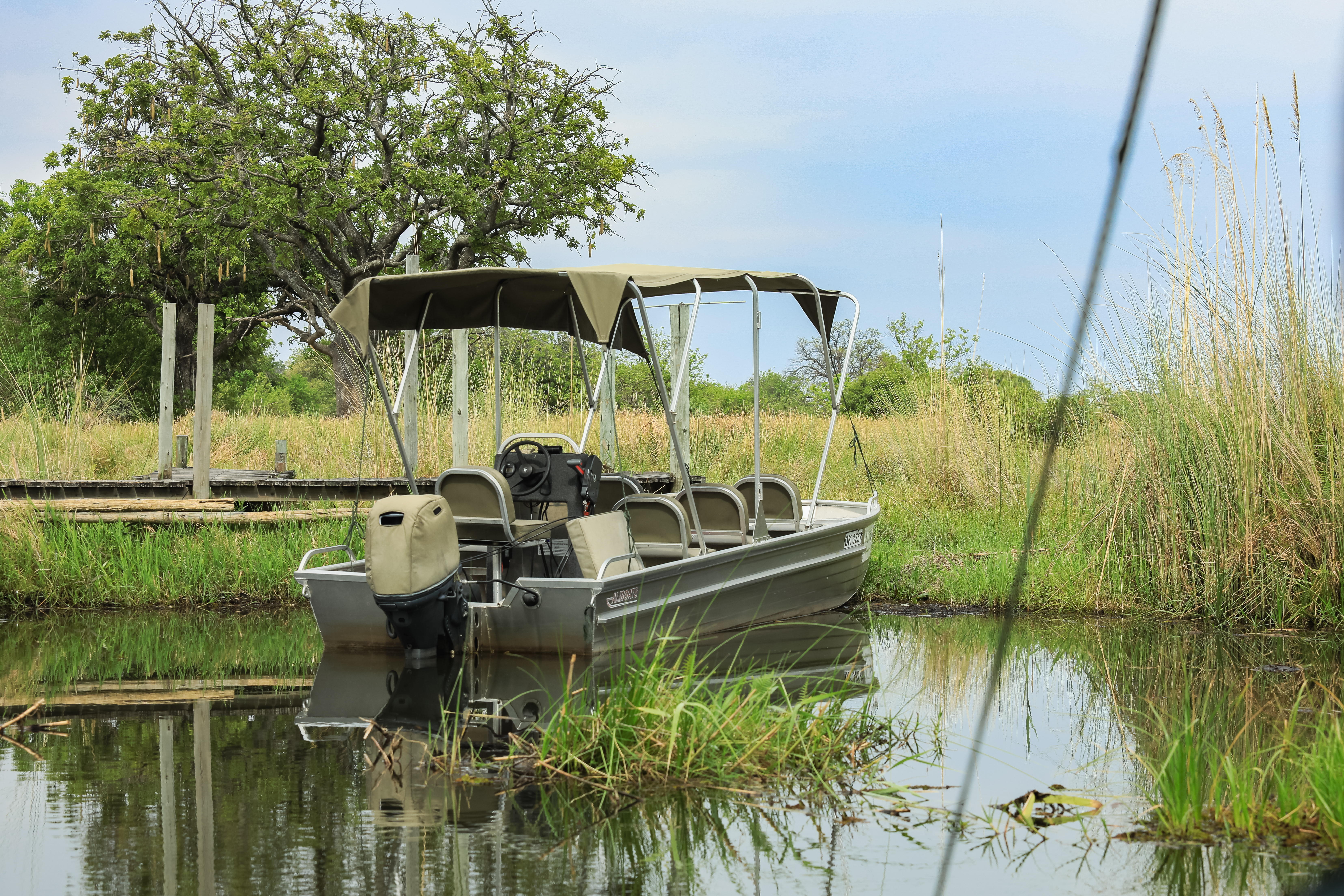
The MV Liemba, and a caution about it
The MV Liemba is the ferry that travel writers cannot resist. She was built in Germany in 1913, carried in pieces to the lake, scuttled by her own crew during the First World War, salvaged in the 1920s and has worked the Kigoma–Mpulungu route ever since — a century-old vessel still carrying passengers, palm oil and dried fish between villages that have no road, with people boarding from small boats that come alongside in open water.
The honest caveat: the ferry MV Liemba has spent long stretches out of service for refit, her schedule has never been reliable, and conditions aboard are basic. Do not build an itinerary that depends on her sailing on a particular day. We treat her as a bonus to be confirmed close to travel and always plan a boat charter or flight as the fallback; private boats along the same coast deliver much of the same feeling in more comfort.
Mahale and Gombe: chimpanzees on a beach
This is the real reason to come west. Mahale Mountains National Park runs along the Tanganyika shore south of Kigoma, and it is the finest place in the world to sit with wild chimpanzees. The M-group here has been studied continuously by Japanese primatologists since the 1960s, so the animals are thoroughly habituated and success rates are high. There are no roads in the park at all: you fly to a grass strip, transfer by boat, then walk up through steep forest until you find them — and afterwards swim off a white sand beach with the mountains behind you.
Gombe Stream, an hour or two north of Kigoma by boat, is Tanzania's smallest national park at around 35 square kilometres and the most famous chimpanzee site anywhere thanks to Jane Goodall's work from 1960 onwards. It is cheaper and far easier to reach than Mahale — a day trip from Kigoma is possible — but the forest is smaller, the terrain steep and the accommodation basic. Our advice is simple: come for Gombe if the history matters most, and for Mahale if the encounter itself does. Our full guide to chimpanzee trekking sets out the differences.
Time and cost are where people get caught out. Mahale needs a minimum of three nights on the ground to be worth the journey, and realistically four, because a single wet morning can cost you a trekking day. The two established camps are small and seasonal, with rates broadly in the USD 900–1,400 per person per night range fully inclusive, and charter flights from Arusha adding roughly USD 1,000–1,700 return per person depending on routing and party size. All in, a Mahale week lands between USD 8,000 and USD 12,000 per person before international flights. The best months are roughly June to October, when the chimps tend to range lower and the forest tracks are passable; several camps close entirely around March to May, and the few rooms go early.
Lake Nyasa: Tanzania's quiet southern shore
In the far south sits the lake that changes name with the shore you stand on: Lake Nyasa in Tanzania, Lake Malawi to the west, Niassa in Mozambique. It is Africa's third-largest lake and one of its most beautiful, hemmed in by the Livingstone Mountains rising abruptly from the water. The Tanzanian shore sees a tiny fraction of the visitors that Malawi's resorts do. Matema Beach at the northern tip is the usual base: a long sweep of sand, a few simple guesthouses, pottery villages nearby and almost nobody else.
It suits a very particular traveller. There is no luxury lodging, transport is by bus, local ferry or a long drive from Mbeya, and the pleasures are swimming, snorkelling over rocky reefs and doing very little. What makes it worth the effort is what it pairs with: Kitulo National Park and its wildflower plateau in the December-to-April rains, and the highland tea country around Mbeya. It fits onto the end of a southern Tanzania safari rather than standing alone.
The fish nobody expects to care about
The cichlid fish of these lakes are, quietly, one of the most important evolutionary stories on earth. Lake Nyasa alone holds roughly a thousand species, the most of any lake in the world; Tanganyika's older, deeper waters have produced around 250 species of remarkable diversity; Victoria's cichlids radiated into hundreds of species in a geological blink, almost all of them found in that one lake and nowhere else.
You do not need to be an ichthyologist to enjoy this. Snorkelling over a rocky shore at Mahale or Matema puts you among clouds of small, absurdly coloured fish a few metres from the beach, in water clear enough to read the bottom at ten metres. It is also a cautionary tale: the introduction of Nile perch to Lake Victoria collapsed much of that lake's cichlid diversity while creating the fishery that now feeds and employs millions. Both facts are true at once, and the fishing villages you pass are living inside that trade-off.
Who should go to the great lakes of Tanzania
We are straightforward with clients about this: the African great lakes Tanzania offers are not a first safari. If you have never been to East Africa, the northern circuit will give you more wildlife per day, more comfortably, for less money. The lakes are for second and third visits — people who have seen the migration, who want chimpanzees rather than more lions, who are comfortable with light aircraft, weather delays and a camp with no road access, and anyone allergic to a queue of vehicles at a leopard sighting.
The practical shape of a lake trip is a flight, then patience. Mwanza and Rubondo bolt onto a western Serengeti itinerary with one extra flight and three or four days. Mahale needs its own week: the charter from Arusha takes several hours with a fuel stop. Lake Nyasa is a southern-circuit extension reached by road from Mbeya. Trying to see all three great lakes in one trip is a fortnight of flying, and we generally talk people out of it.
You fly for hours to sit on a beach on the world's second-deepest lake, walk uphill into the forest, and spend an hour with chimpanzees who have known researchers by name for sixty years.
- Victoria — largest in Africa; Mwanza and Rubondo Island; easiest to add to a Serengeti trip
- Tanganyika — second-deepest in the world; Kigoma, Ujiji, Mahale and Gombe chimps
- Nyasa — Africa's third-largest; Matema Beach, Livingstone Mountains, cichlid snorkelling
- Best window June to October in the west; several camps close March to May
- Mahale needs four nights minimum and its own charter flight
- Not a first safari — ideal for returning travellers and primate enthusiasts
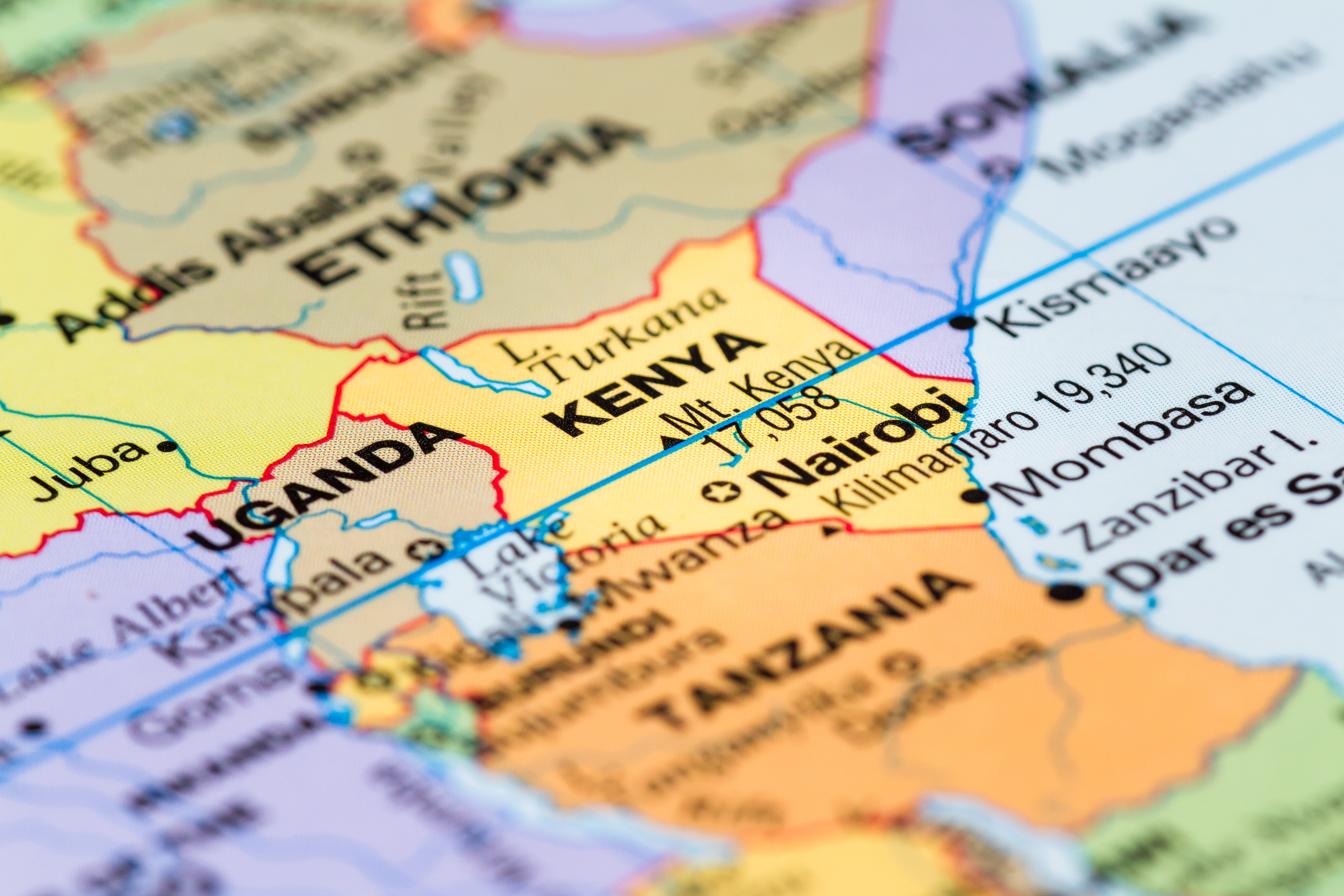
How we sequence a great lakes itinerary
The pattern that works best is to front-load the wildlife and finish with the water. Three or four nights in the Serengeti satisfies the big-game appetite and puts you in the right half of the country. From there a charter west to Mahale for four nights delivers the chimpanzees, the beach and the forest — two entirely different Tanzanias in a fortnight. Add Zanzibar at the end if you want a soft landing, or fly back to Kilimanjaro for the flight home.
The cheaper alternative swaps Mahale for Rubondo Island: end a western Serengeti safari at Mwanza, take a short hop and boat transfer to Rubondo, and spend three nights walking, fishing and birding before flying home from Mwanza. It costs a fraction of a Mahale week and still gives you Lake Victoria, forest walking and a chance — no promises — at chimpanzees. For travellers who want the great lakes without the great expense, this is the itinerary we recommend most often.
Ready to go where almost nobody goes?
Ready to go where almost nobody goes? We plan lake-and-chimp journeys for travellers who have done the classics — Mahale and Gombe for the chimpanzees, Rubondo and Mwanza for Lake Victoria, the Tanganyika shore for the history and the water, and the quiet southern beaches of Lake Nyasa. Sokwe Africa Safaris is based in Arusha, we know which charters actually fly and which camps are worth their rates, and we will say honestly if your dates or budget do not fit. Tell us when you can travel and what pulled you towards the lakes, and we will send a realistic plan rather than a brochure.