
Why this is the join that works
If you are running a safari across Kenya and Tanzania, the day you cross from one to the other is the day most likely to go wrong, and the Amboseli-to-Arusha leg is the one that goes wrong least. Amboseli sits in south-eastern Kenya within two to three hours of the Namanga border, Arusha sits about two hours beyond it, and the whole journey fits inside a single day with a game drive at the start and daylight to spare at the end. That is why we use it on our own two-country itineraries, and why we recommend it to anyone building their own.
The comparison that makes the case is the alternative. A Mara-to-Serengeti join looks shorter on the map and is far longer in practice, because the direct crossing is closed to tourists and the western loop is slow and rough. A Nairobi-to-Arusha join without a park at either end is a transit day with nothing to show for it. Amboseli-to-Arusha is the only version that begins with a game drive, crosses at a proper one-stop border post, and ends in daylight at the gateway to the parks you came for.
The morning: a last game drive
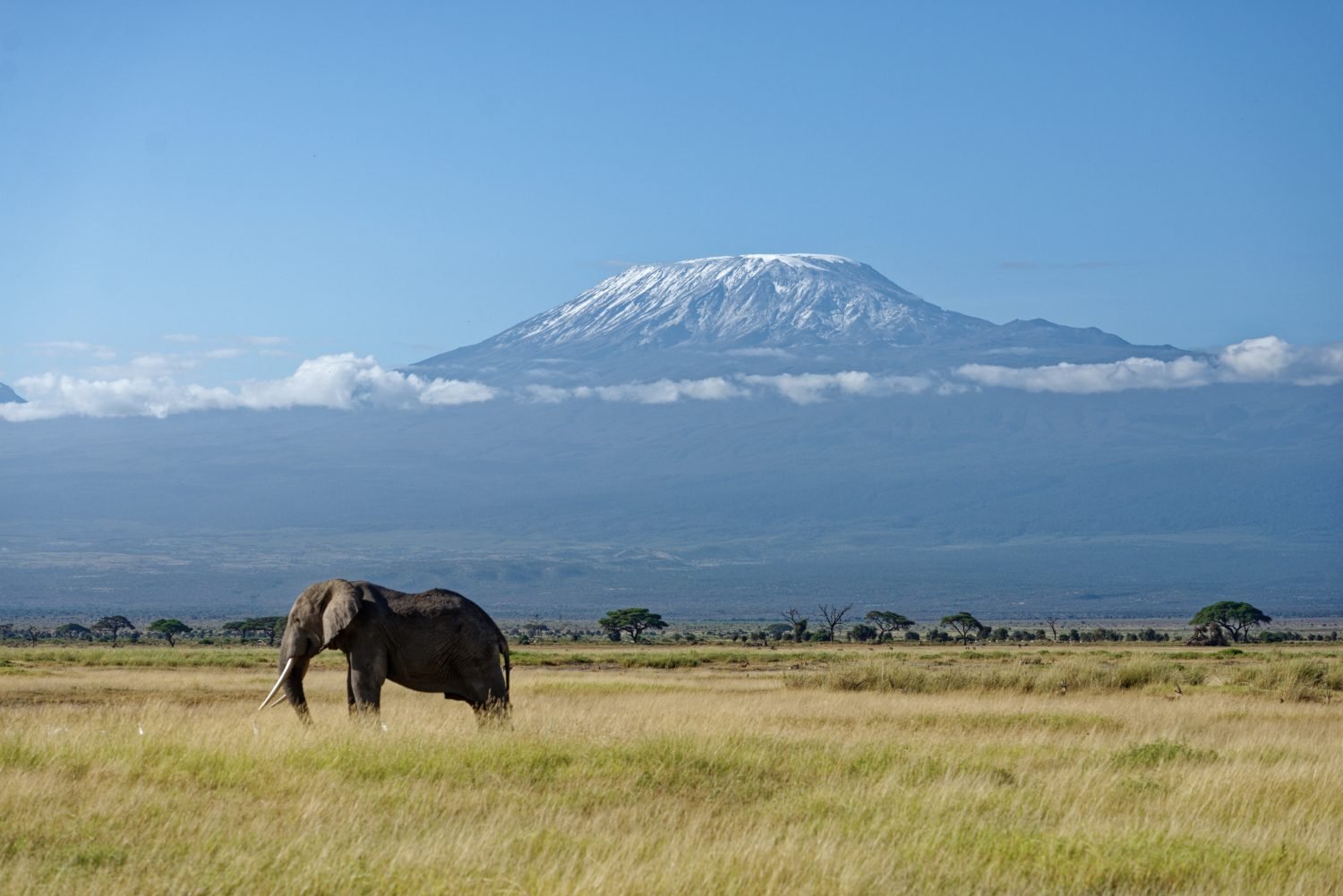
Do not leave Amboseli at dawn. The park's great asset is the mountain, and the mountain shows itself in the early morning before cloud builds on it through the day. A two-hour game drive from first light, with Kilimanjaro rising behind the elephant herds on the swamp edges, is the best photograph of the Kenyan leg and it costs you nothing in timing, because the border does not open earlier for anyone who arrives at nine. Breakfast at the lodge afterwards, then load the vehicle.
There is a pleasing symmetry in this. The mountain you spend the morning photographing from Kenya is in Tanzania, and by the afternoon you will be on its other side. Amboseli's elephants are the reason the park exists, and its position on the border is the reason it makes such a natural last stop.
Amboseli's swamps are the reason the elephants are there, and they are worth understanding for the morning drive. The park is dry country, but meltwater from Kilimanjaro rises through the ground as a chain of permanent springs and swamps in the centre of the park, and the elephant herds move between them through the day. First thing in the morning they are usually at the swamp edges, feeding, with the mountain clear behind them; by mid-morning the cloud builds on Kilimanjaro and the photograph is gone. Ask the guide to work the swamp edges from first light rather than the open plain.
Late morning: the road to Namanga
From Amboseli's gates the road runs south-west to Namanga through Maasai country — dry, open, with the mountain still on your left for the first stretch. Allow two to three hours depending on which gate you leave from and the state of the road, which varies with the season. Your Kenyan vehicle drives you to the border; it cannot go beyond it into Tanzanian parks, and this is the point of the day at which the hand-over happens.
Namanga is a one-stop border post, so Kenyan exit and Tanzanian entry take place at adjacent counters inside one building. On a normal day it takes twenty to forty-five minutes. Have your passport, your Tanzanian visa or the clean post-2009 US dollars to buy one for around 50 US dollars, and your yellow fever certificate ready, because the certificate is checked for anyone arriving overland from Kenya. Our detailed guide to the Namanga crossing covers every document; the one that catches people out is the yellow fever card.
The border in full detail is in our Namanga crossing guide, and the whole two-country journey in Kenya and Tanzania luxury safari.
The road surface between Amboseli and Namanga is the variable in the day. In the dry months it is a straightforward two hours; after heavy rain the unsurfaced sections slow to a crawl and the journey can stretch towards three. We build the timing around the wet-season figure in the months it applies, which is why the schedule below has an hour of slack in it rather than none.
The hand-over
On the Tanzanian side our vehicle and guide are waiting. This is the part of a two-country safari that goes wrong when it is left vague, and the fix is simple: an agreed arrival time at Namanga, both drivers' phone numbers exchanged in advance, and our driver on the ground before you clear immigration. We do this on every crossing. If your Kenyan leg is with a partner we recommend, we agree the time with them directly; if you have arranged it yourself, tell us the operator and we will coordinate.
Lunch is the other practical question. Namanga town is not somewhere to linger, so we either carry a packed lunch from the Amboseli lodge to eat once you are across, or stop at a restaurant on the Tanzanian side of the road to Arusha. Either works; the packed lunch is quicker.
If you have arranged the Kenyan leg yourself, three details make the hand-over work. First, agree an arrival time at Namanga with your Kenyan driver and give it to us; we plan our departure from Arusha around it. Second, exchange phone numbers both ways before the day, so that a delay on either side is a call rather than a wait. Third, ask your Kenyan driver to accompany you to the Tanzanian side of the building rather than dropping you at the Kenyan entrance — the one-stop post makes this easy, and it means you are never standing alone between two vehicles.
Afternoon: Arusha
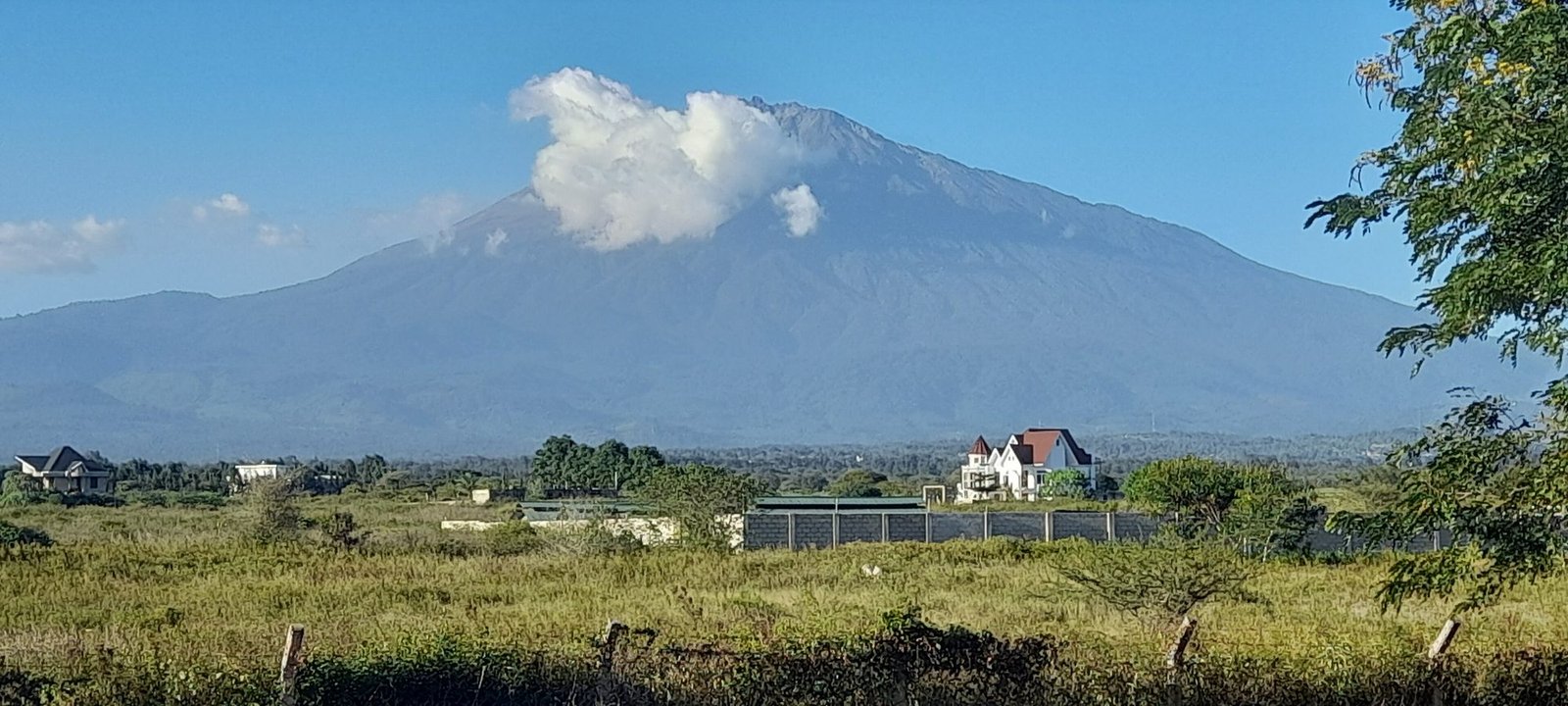
Namanga to Arusha is about two hours on a good tarmac road, with Mount Meru growing ahead of you for the last hour. You arrive in the mid-to-late afternoon with daylight left. We recommend spending this night in Arusha rather than pushing on. The northern circuit's first park, Tarangire, is another two hours beyond Arusha, and arriving at a camp after dark on a day that already contained a game drive, a border and five hours of road is a poor way to begin the Tanzanian half.
Arusha itself is a working town rather than a destination, but there are comfortable lodges on its outskirts with gardens and views of Meru, and a quiet evening there resets the trip. It is also where we store luggage — if you are heading for Kilimanjaro afterwards, or flying into the Serengeti on a light aircraft with its 15-kilogram soft-bag limit, this is where the surplus stays.
For guests with energy left, the Arusha afternoon has a couple of gentle options. The Cultural Heritage Centre on the western edge of town is a large gallery and craft market with genuinely good Tanzanian art among the tourist pieces, and it is the right place to buy anything you want to take home without having to carry it through the parks. Arusha National Park, small and green, sits on the slopes of Mount Meru under an hour away and offers a short late-afternoon drive among giraffe and colobus monkeys — a different Tanzania from the savannah that follows. Neither is essential. Both beat sitting in a hotel room.
The next morning
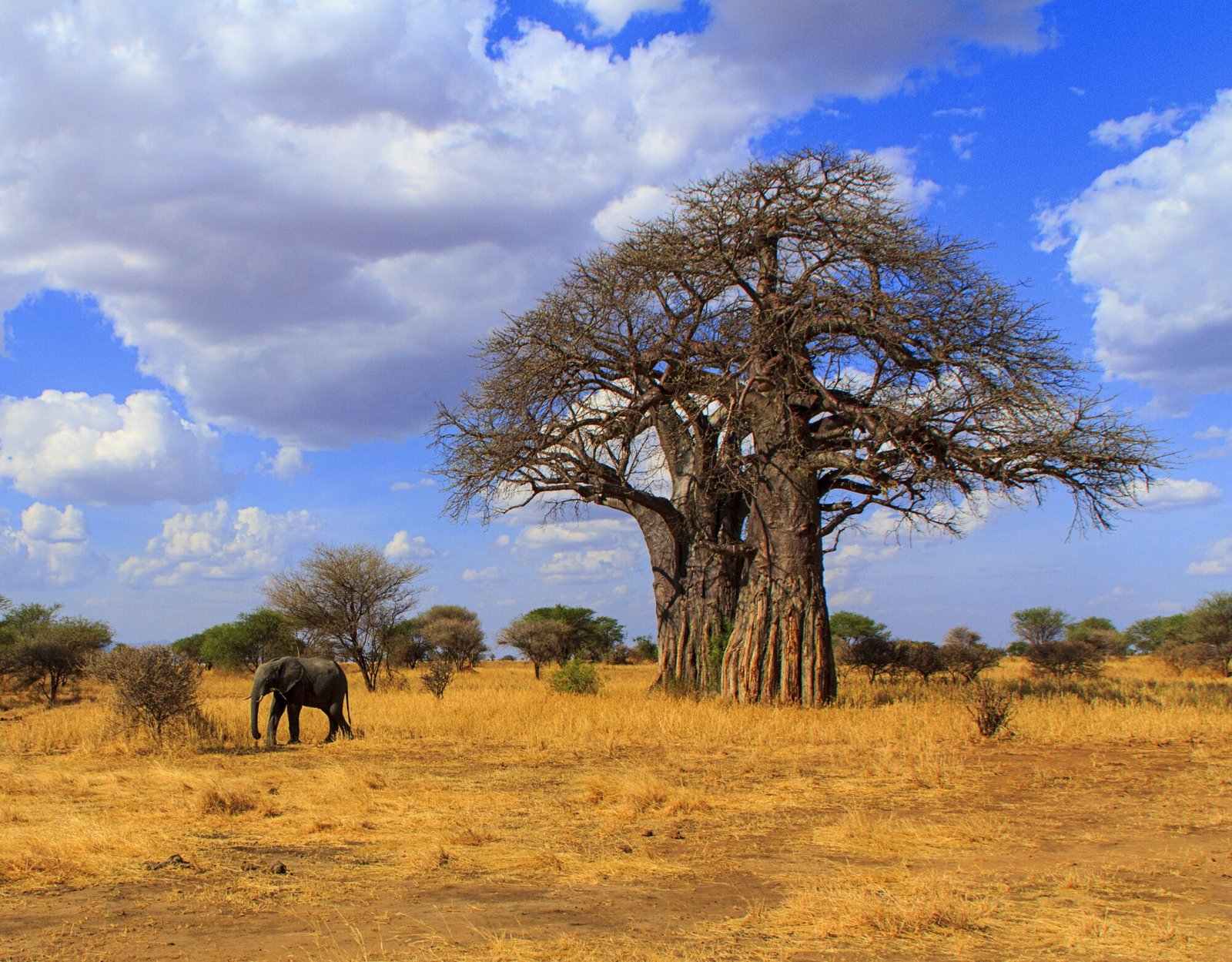
From Arusha the northern circuit opens up. Tarangire is about two hours west, and it is the ideal first Tanzanian park after Kenya: its elephant density is the highest in northern Tanzania and its baobab landscape looks nothing like Amboseli, so the change of country registers immediately. Lake Manyara is a similar distance and works as a half-day. The Ngorongoro Crater is around three hours, and the central Serengeti a full day by road or an hour by air.
Our seventeen-day Wildlife and Primates itinerary runs exactly this sequence: Amboseli on days four and five, the crossing to Arusha on day six, Tarangire on day seven, and the Serengeti and Ngorongoro after that before flying on to Uganda. The Amboseli-to-Arusha day is the hinge of the whole trip, and because it is planned to the hour it is the day guests remember least — which is the point.
Costs on the day
The crossing day itself costs little beyond the Tanzanian visa and the two transfers. What changes at the border is the park-fee regime: Kenya's fees are lower, and from Arusha onwards you are paying Tanzania's — around 70 US dollars per adult per day in the Serengeti, a similar daily fee in Ngorongoro plus about 300 dollars per vehicle for the crater descent, and about 53 dollars per adult per day in Tarangire. These are set by the parks and identical for every operator. A private safari at a good standard in either country runs roughly 350 to 550 US dollars per person per day all-inclusive, so the daily rate does not jump at the border; the fees inside it do.
The day, hour by hour
- 06:30 — game drive in Amboseli, Kilimanjaro at its clearest
- 09:00 — breakfast at the lodge, load the vehicle
- 09:30 — depart for Namanga, two to three hours
- 12:00 — Namanga: Kenyan exit and Tanzanian entry, twenty to forty-five minutes
- 12:45 — hand-over to our vehicle and guide, lunch
- 13:15 — depart for Arusha, about two hours
- 15:30 — arrive Arusha, lodge, evening at leisure
- Next morning — Tarangire, two hours west
That is the whole day, and it is the least dramatic day of a two-country safari precisely because it is the most carefully planned. Documents ready, driver waiting, night in Arusha. Done that way, the border is a line you cross before lunch and forget by dinner.
Guests sometimes ask whether the crossing can be done in the opposite direction on the same timings, from Arusha to Amboseli. It can, and the shape is the mirror image: leave Arusha after breakfast, cross at Namanga before lunch, and reach Amboseli in time for an afternoon game drive with the mountain, by then, usually in cloud. The morning is the better time for Kilimanjaro, which is one more reason the Kenya-first order is the one we prefer.
Plan the crossing with us
Tell us your Amboseli lodge and your dates, and we will coordinate the hand-over with your Kenyan operator, book the Arusha night, and have our vehicle waiting on the Tanzanian side of Namanga before you arrive. We run the Tanzanian half ourselves.
Amboseli photograph: Fernando Anuang'a, CC BY-SA 4.0, via Wikimedia Commons · Mount Meru photograph: KaizaDee, CC BY-SA 4.0, via Wikimedia Commons
Plan your Amboseli to Arusha crossing
Frequently asked questions
How long does Amboseli to Arusha take?
About five to six hours of road plus the border: two to three hours from Amboseli's gates to Namanga, twenty to forty-five minutes at the one-stop border post, and around two hours from Namanga to Arusha. With a morning game drive first you arrive mid-to-late afternoon.
Can our Kenyan vehicle drive us to Arusha?
No. Kenyan safari vehicles cannot operate in Tanzania and vice versa. Your Kenyan vehicle takes you to Namanga, and a Tanzanian vehicle and guide collect you on the other side. We arrange the hand-over time in advance.
What documents do I need at Namanga?
Passport, a Tanzanian visa in advance or around 50 US dollars in clean post-2009 notes to buy one, and a yellow fever vaccination certificate, which is checked for arrivals overland from Kenya.
Should we spend the night in Arusha or continue to Tarangire?
Arusha. Tarangire is two more hours, and arriving at camp after dark on a day that already had a game drive, a border and five hours of road is a poor start to the Tanzanian half. Tarangire the next morning is far better.
Is a morning game drive in Amboseli worth it on crossing day?
Yes. Kilimanjaro is clearest in the early morning before cloud builds, and the border does not open earlier for anyone who leaves at dawn. Two hours from first light costs you nothing in timing.
What is the first Tanzanian park after Arusha?
Tarangire, about two hours west — the highest elephant density in northern Tanzania and a baobab landscape completely unlike Amboseli, which makes the change of country register immediately.