
Why Namanga is the crossing that matters
Kenya and Tanzania share one of the great safari ecosystems, but they do not share vehicles, guides or park systems, and that single fact shapes every two-country itinerary. The Namanga border post, on the main road between Nairobi and Arusha, is where almost all overland safari traffic between the two countries passes, and it is the crossing we use for the Kenya-to-Tanzania journeys we run. It sits roughly three to four hours south of Nairobi and about two hours north of Arusha, which puts it comfortably within a single travel day from either the Masai Mara side or Amboseli.
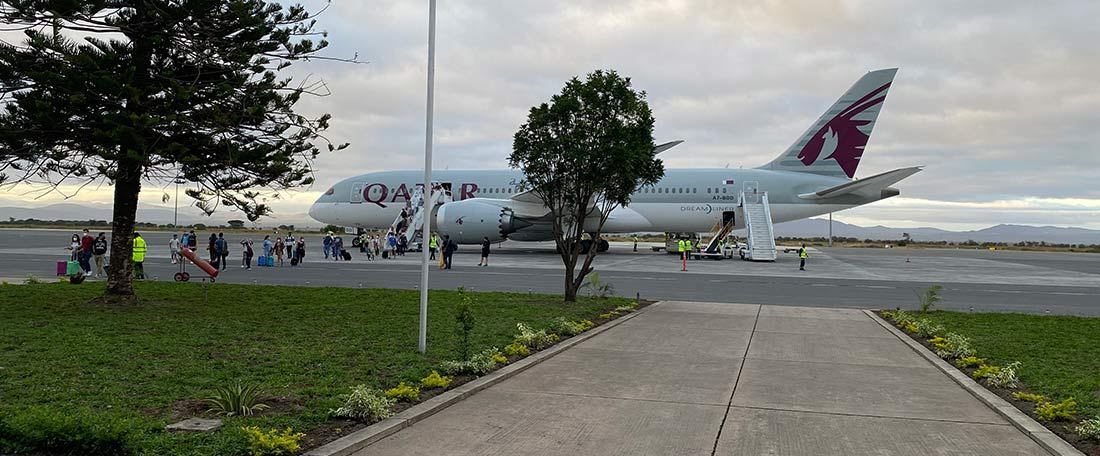
Since 2016 Namanga has operated as a one-stop border post, meaning Kenyan exit and Tanzanian entry formalities happen in the same building rather than at two separate checkpoints a kilometre apart. In practice that has cut a crossing that used to take an hour or more down to somewhere between twenty and forty-five minutes on a normal day, though a large tour bus arriving ahead of you can still add time. We plan the day around that variability rather than pretending it does not exist.
The alternative western crossing at Isebania, near the Masai Mara, is often assumed to be a shortcut into the Serengeti. It is not, for tourists. The direct road between the Mara and the Serengeti at Sand River is closed to tourist traffic, so a western crossing means a long, rough loop through Tarime and Mugumu to reach the Serengeti's Ikoma gate. For nearly every itinerary, Namanga plus the Arusha road, or a flight, is faster and far more comfortable.
What actually happens at the border
The most important thing to understand is that your Kenyan vehicle and guide cannot continue into Tanzanian parks, and a Tanzanian vehicle cannot operate in Kenya's. Each country licenses its own safari vehicles and guides, and the parks enforce it. So a two-country safari is always a hand-over: your Kenyan partner drives you to the Tanzanian side of Namanga, and our vehicle and guide are waiting there to take you on. When we run the Kenyan leg through a partner, we agree the arrival time at Namanga in advance and our driver is on the ground before you are.
The formalities themselves are straightforward if the paperwork is ready. You exit Kenya, then enter Tanzania, at adjacent counters. You will need your passport, your Tanzanian visa or the fee to buy one, and a yellow fever vaccination certificate. That last item catches people out every week. Because Kenya is listed as a yellow fever risk country, Tanzania requires the certificate from anyone arriving overland from Kenya, and the officers at Namanga do check it. Get the vaccination at least ten days before travel, and carry the original card.
On visas, the East Africa Tourist Visa that covers Kenya, Uganda and Rwanda does not include Tanzania. Tanzania issues its own visa, which most nationalities can obtain on arrival at Namanga for around 50 US dollars, or in advance online. United States citizens pay more for a multiple-entry visa. Bring clean US dollar notes printed after 2009; older series are routinely refused across Tanzania, and the border is not the place to discover that.
Sequencing the two countries
The natural order for most travellers is Kenya first, then Tanzania, because the geography lines up. A Kenyan leg through the Masai Mara, Lake Nakuru and Amboseli finishes in the south-east of the country, and Amboseli is only a couple of hours from Namanga. You cross in the morning, reach Arusha by early afternoon, and are positioned for Tarangire and the northern circuit the next day. Our seventeen-day Wildlife and Primates itinerary is built exactly this way, with the crossing on day six.
Running it the other direction works too, and it suits travellers who want to finish on the Kenyan coast or fly home from Nairobi's wider range of connections. In that case your Tanzanian safari ends in Arusha, we drive you north to Namanga, and the Kenyan partner collects you for Amboseli. Either way, we treat the crossing day as a travel day with a game drive at one end, not as a full safari day, because the honest arithmetic is five to six hours of road plus the border.
There is a third option that removes the border from the equation entirely: fly. Nairobi's Wilson Airport connects to Kilimanjaro International, and from there the charter network reaches the Serengeti's airstrips directly. It costs more and you lose the road-trip texture of the Rift Valley, but for travellers with limited days, or anyone who would rather not spend six hours in a vehicle between two safaris, it is the better answer. We will tell you honestly which suits your dates.
See how the two countries fit together in our Kenya and Tanzania luxury safari guide, or compare all four countries in Tours in East Africa.
See also our guide: Kenya or Tanzania: which is better for a safari? An honest comparison from a Tanzanian operator.
A word on the Masai Mara specifically, because it is where most Kenyan legs begin. The Mara is in the far south-west of Kenya and Amboseli in the far south-east, with Nairobi roughly between them, so a circuit that runs Mara, then Nakuru, then Amboseli, then Namanga traces a long arc around the capital and ends within reach of the border. It is the shape we use because every day of it moves in the same direction. Running Amboseli first and the Mara last leaves you in the wrong corner of the country on crossing day, with a full day's drive or a flight back before Namanga is even in sight.
For travellers arriving by air into Nairobi with only a few days in Kenya, a shorter version works well: fly to the Mara, drive or fly back to Nairobi, drive to Amboseli for two nights, and cross at Namanga. That gives Kenya four or five days and puts the crossing on day five or six, exactly where the geography wants it. The Tanzanian half can then run for as long as the calendar allows, and it has the northern circuit's parks in front of it rather than behind.
The parks either side of the line
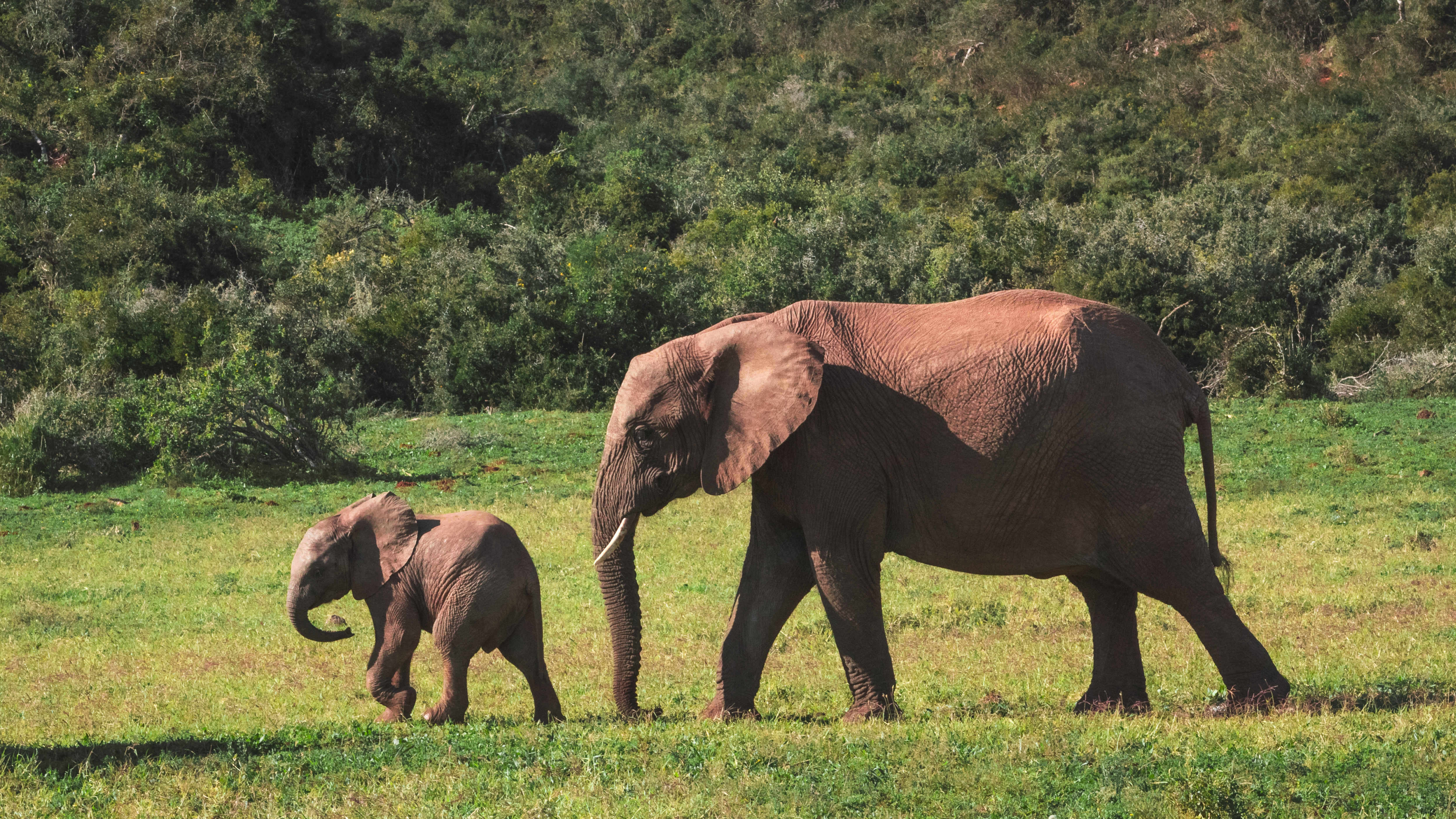
On the Kenyan side, Amboseli is the obvious last stop before Namanga. It is famous for large elephant herds framed against Kilimanjaro, and on a clear morning the mountain rises directly behind the animals in the photograph everyone has seen. The park's gates are within two to three hours of the border, which is why it sits so naturally at the end of a Kenyan circuit. Lake Nakuru and the Masai Mara come earlier, further north and west.
On the Tanzanian side, Arusha is the base town for the northern circuit, and most itineraries spend the crossing night there rather than pushing straight on. From Arusha, Tarangire is about two hours, Lake Manyara similar, the Ngorongoro Crater around three, and the central Serengeti a full day's drive or a short flight. Tarangire in particular is a strong first Tanzanian park after Kenya: its elephant density is the highest in the north, and the baobab landscape looks nothing like Amboseli, which makes the change of country feel real.
Costs, and what changes at the border
Park fees are the biggest difference. Kenya's national park fees are lower than Tanzania's, which is one reason a Kenyan safari often prices below a Tanzanian one of similar standard. On the Tanzanian side, expect the Serengeti at around 70 US dollars per adult per day, the Ngorongoro Conservation Area at a similar daily fee plus a crater descent charge of roughly 300 dollars per vehicle, and Tarangire at about 53 dollars per adult per day. These are set by the parks, not by operators, and they are paid whoever you travel with.
As a working range for the two countries combined, a good mid-to-upper standard with a private vehicle runs roughly 350 to 550 US dollars per person per day, with luxury camps from about 700. A two-week Kenya-and-Tanzania safari therefore lands in the same broad band as a single-country trip of the same length; the crossing itself adds only the visa and a long day, not a second set of costs. What it does add is a second operator, and that is where you should look closely.
Ask any operator selling a two-country safari who runs each half. If they are based in one country, the other half is subcontracted, and you should know to whom. We are a licensed Tanzanian operator based in Arusha, so the Tanzanian leg is ours directly, and we work with an established Kenyan partner for the northern half. We will tell you their name, and we will tell you exactly where the hand-over happens, because that is the part of the trip that goes wrong when it is left vague.
One more cost that changes at the line is tipping convention. Both countries tip guides and camp staff in US dollars, but the amounts and the customs differ slightly, and a two-country trip means two sets of guides to thank. As a working guide, around 20 to 30 US dollars a day from the group for a driver-guide and 10 to 15 per person per day for camp staff collectively is generous and appropriate on the Tanzanian side; the Kenyan side is broadly similar. Carry small notes for this, because the hand-over at Namanga is the moment you will want to thank the Kenyan driver, and a border town is not where you break a hundred-dollar bill.
Practical checklist for crossing day
- Passport with at least six months' validity
- Yellow fever certificate, original card
- Tanzanian visa in advance, or clean post-2009 US dollars to buy one at the border
- Kenyan exit and Tanzanian entry happen at adjacent counters in one building
- Agreed hand-over time with both operators, and both drivers' phone numbers
- A morning game drive before you leave, not an afternoon one after
- Lunch packed, because the border town is not somewhere to linger
One last honest point. Border days are the least glamorous part of any two-country safari, and no amount of planning turns six hours on the Nairobi–Arusha road into a game drive. What planning does do is remove the friction: the right documents, the right driver waiting on the right side, and a night in Arusha to reset before the Tanzanian parks begin. Done that way, the crossing becomes a line on the map you barely notice, and the trip reads as one continuous safari across two countries rather than two trips stapled together.
Plan a Kenya-and-Tanzania safari with us
Tell us your dates, your party size and which side you want to start on, and we will send a day-by-day plan with the crossing built in properly — the documents, the hand-over point and the Arusha night included. We run the Tanzanian half ourselves and work with a trusted Kenyan partner on the northern leg, and we will name them.
Plan your two-country safari with Sokwe Africa Safari
Frequently asked questions
Can my Kenyan safari vehicle continue into Tanzania?
No. Each country licenses its own safari vehicles and guides, and the parks enforce it. Every Kenya-to-Tanzania safari is a hand-over at the border — your Kenyan vehicle drops you at Namanga and a Tanzanian vehicle and guide take you on.
Do I need a yellow fever certificate to cross from Kenya into Tanzania?
Yes. Because Kenya is listed as a yellow fever risk country, Tanzania requires the certificate from anyone arriving overland from Kenya, and officers at Namanga check it. Get vaccinated at least ten days before travel and carry the original card.
Does the East Africa Tourist Visa cover Tanzania?
No. It covers Kenya, Uganda and Rwanda only. Tanzania issues a separate visa, available in advance online or on arrival at Namanga for around 50 US dollars for most nationalities.
How long does the Namanga crossing take?
Usually twenty to forty-five minutes since it became a one-stop border post, though a tour bus ahead of you can add time. Nairobi to Namanga is roughly three to four hours by road and Namanga to Arusha about two.
Is it better to cross by road or fly between Kenya and Tanzania?
Road via Namanga is cheaper and keeps the Rift Valley scenery; flying from Nairobi Wilson to Kilimanjaro saves most of a day and suits shorter trips. For itineraries of ten days or fewer we usually recommend flying at least one direction.
Which order should we do Kenya and Tanzania in?
Kenya first suits most people, because Amboseli sits two to three hours from Namanga and the crossing leads straight into Arusha and the northern circuit. The reverse works if you want to finish on the Kenyan coast or fly home from Nairobi.