Route status update: Lemosho and Londorosi (15 October 2026)
According to press reports, Tanzania National Parks (TANAPA) temporarily closed the Lemosho and Londorosi routes on Kilimanjaro on 28 September 2026 because of a fire in the Sangarini-Kamwanga area, and climbers were redirected to the Machame, Marangu and Rongai routes. We have not seen a reopening date, so the situation may already have changed by the time you read this. If you are planning a climb in the coming weeks, please ask us to confirm the current status of your route before you book or pay for anything, and we will tell you plainly if an itinerary needs to change. The route descriptions below show how each route normally runs.
What climbing Kilimanjaro really costs
Ask five operators about the climbing Kilimanjaro cost and you will get five wildly different answers, from suspicious $1,500 deals to $6,000 luxury expeditions. As a licensed operator based in Arusha, an hour from the mountain, we see where every dollar of a Kilimanjaro climb actually goes — and we would rather show you the arithmetic than hide behind a headline price. In 2026, a safe, ethical climb realistically costs between $1,800 and $4,000 or more per person depending on route, duration and service level, and this guide breaks down exactly why.
The short version is that most of the price is not profit. Government fees alone consume roughly half of a budget climb's cost before a single porter is hired or a meal is cooked. The rest goes on wages for a crew of eight to fifteen people per pair of climbers, food carried up the mountain, tents and equipment, transport, and the operator's margin. Understanding this structure is the single best defence against the too-cheap offers that fail summits and mistreat porters. This is purely the money article — for choosing between routes themselves, see our separate route guide.
The fixed floor: park, camping and rescue fees
Every climber, on every route, with every operator, pays the Tanzanian government the same non-negotiable fees. Kilimanjaro National Park charges a conservation fee of $70 per person per day, a camping fee of around $50–60 per night (or hut fees on Marangu), a rescue fee of $20 per trip, plus crew fees and 18 per cent VAT on the lot. Add it up for a typical seven-day climb and you reach roughly $800–1,000 per climber in fees alone before anyone has lifted a rucksack.
This is the fixed floor beneath every honest quote, and it is why a $1,500 climb should make you pause rather than celebrate. If fees take $900 of that, only $600 remains to pay a full mountain crew for a week, feed you three hot meals a day at altitude, provide tents and transport, and leave the operator any margin at all. Something has to give, and it is never the government's share. The fee structure works much like the safari parks — our Tanzania park fees guide explains the wider system if you are combining the mountain with a wildlife itinerary.
Crew wages: the human cost of your climb
A Kilimanjaro climb is a small expedition. Two climbers typically travel with a crew of ten or more — a lead guide, assistant guide, cook and a team of porters carrying tents, food, water, cooking gas and your kit bags. Fair pay for that crew is a significant, legitimate cost. The Kilimanjaro Porters Assistance Project (KPAP) publishes minimum standards: porters should earn at least around $10 per day, carry no more than 20kg, receive three meals a day and have proper sleeping arrangements and gear on the mountain.
Ethical porter treatment costs real money, and it is precisely what the cheapest operators quietly cut. Underpaid porters carrying 30kg loads in street shoes, sleeping in mess tents and skipping meals is the hidden subsidy behind many bargain climbs. When you compare quotes, ask directly whether the operator is a KPAP partner or follows its guidelines, how many porters are allocated per climber, and what the crew are paid. An operator who answers precisely and without irritation is usually one who treats the mountain's workforce properly — and a well-treated crew is also a safer, happier climb for you.
Route length economics: why cheap short climbs fail
The biggest lever on price after fees is simply the number of days, because every extra day adds another round of park fees, wages and food. That is why the five-day Marangu route is always the cheapest option and the seven- or eight-day Lemosho the most expensive. But this is one area where saving money works directly against you: acclimatisation takes time, and summit success rates tell the story bluntly. Five-day climbs succeed perhaps half the time, while eight-day itineraries on Lemosho or Machame push success rates towards 85–90 per cent.
Do the maths on failure. A $1,900 five-day Marangu climb that ends at Gilman's Point with altitude sickness is far worse value than a $2,800 seven-day Machame climb that puts you on the summit at sunrise. You have flown across the world for this mountain; the marginal cost of two extra days is small against the total cost of the trip, and it is the single best investment you can make in actually standing on Uhuru Peak. Route choice deserves its own discussion — see Kilimanjaro routes compared — but from a pure cost-per-summit perspective, longer wins.
Realistic 2026 price bands
So what should you actually expect to pay in 2026? Budget climbs from reputable licensed operators run roughly $1,800–2,300 per person, typically on Marangu or a six-day Machame, with simple food, basic but sound equipment and shared logistics. This is the honest bottom of the market — anything much below it is being subsidised by someone, usually the porters. At this level you should still expect a licensed guide, fair crew treatment and safety equipment including pulse oximeters and emergency oxygen, and it is reasonable to ask for proof of all three.
The mid-range, where most climbers land and where we think value peaks, is $2,400–3,500 per person for a seven- or eight-day climb on Machame or Lemosho. Here you get better food and tents, more generous crew ratios, experienced guides with hundreds of summits behind them, private toilet tents and stronger safety protocols. Premium climbs start around $4,000 and climb well past $5,000, adding walk-in sleeping tents, cots, portable showers, one-to-one guide ratios and hotel-quality service — luxurious, though the mountain itself remains identical for everyone.
- Budget: $1,800–2,300 — five to six days, honest basics, fair crew
- Mid-range: $2,400–3,500 — seven to eight days, best summit odds per dollar
- Premium: $4,000+ — maximum comfort, top guide ratios
- Below $1,700: almost always cutting fees, food, safety or porter welfare
These bands exclude international flights, visas ($50–100), tips and personal gear, so build your full tanzania trip cost accordingly: a mid-range climb plus flights, tips and incidentals usually lands between $4,000 and $5,500 all-in from Europe or North America. If those numbers sting, remember that Kilimanjaro is a heavily regulated national park with a large human crew behind every climber — it was never going to be a cheap week, but done properly it is a genuinely fair-value one.
What dangerously cheap operators cut
When a kilimanjaro climb cost dips below the arithmetic we have laid out, the savings come from somewhere specific. Food is the first casualty: fewer calories, less fresh produce, no proper resupply, which matters enormously when your body is burning 4,000 calories a day at altitude. Equipment is second — leaking tents, thin sleeping mats and worn-out gear that turns a cold night at Barafu Camp into a sleepless ordeal before your midnight summit push. Neither appears in the brochure, and both quietly wreck summit chances.
The more serious cuts are human. Cheap operators hire inexperienced freelance guides at the gate, skip the emergency oxygen and daily health checks, overload underpaid porters and disappear when things go wrong. Altitude sickness on Kilimanjaro is not a theoretical risk — climbers die on the mountain most years, almost always where monitoring and descent decisions failed. A guide who has summited four hundred times and checks your oxygen saturation every evening is a cost line worth paying for. This is the difference you are buying between $1,500 and $2,500, and it is not cosmetic.
Tipping: the norms and the numbers
Tipping is an expected and important part of Kilimanjaro economics, and you should budget for it from the start rather than discover it at the farewell ceremony. The accepted norms are roughly $20–25 per day for the lead guide, $15–20 for assistant guides, $12–15 for the cook and $8–10 per porter per day, pooled across the climbing group. For a typical climber on a seven-day trip that works out at about $250–350 in total — carried in cash, ideally US dollars, and presented to the whole crew together on the final day.
Tips supplement wages rather than replace them; be wary of any operator who suggests tips are the crew's main income, as that signals wages below KPAP standards. Reputable companies publish suggested tipping ranges openly and run a transparent ceremony where the amounts are announced to the crew, which prevents the quiet skimming that plagued the industry for years. It is also worth asking how tips are distributed — the best practice is directly to each crew member by name, not handed to the guide to divide later.
Gear: what to bring and what to rent
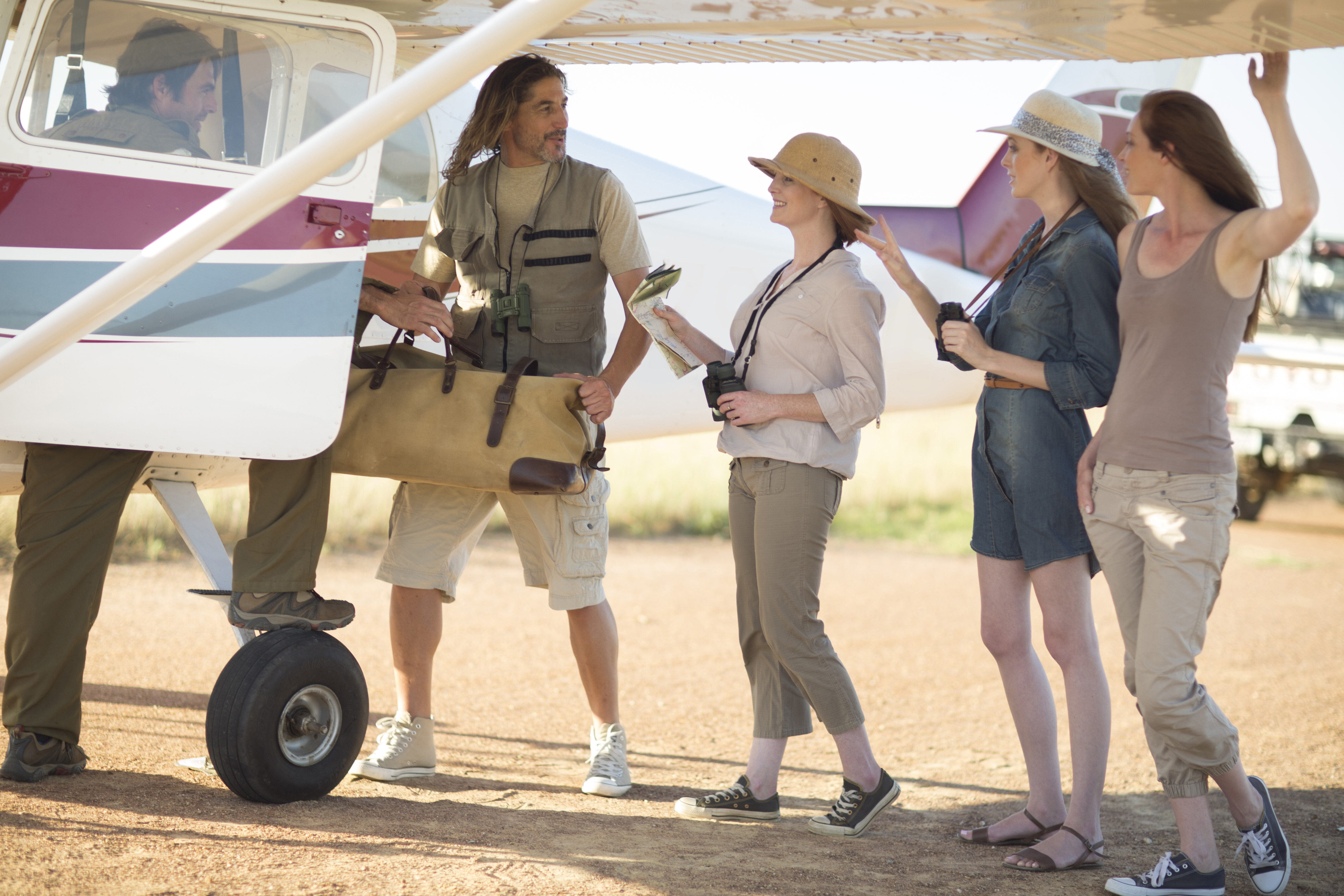
Personal gear is the last meaningful cost line, and the good news is that you do not need to buy everything. Quality rental gear is widely available in Moshi and Arusha: a four-season sleeping bag rents for around $25–40 for the trip, a down summit jacket $20–30, trekking poles $10–15, and full head-to-toe kit for a first-timer for perhaps $150–200 in total. Renting makes obvious sense for items you will never use again, and a good operator will arrange and quality-check rentals before you reach the gate.
The items worth owning are the ones where fit matters: broken-in waterproof boots, base layers and a daypack that sits well on your shoulders for seven days. Budget $300–600 if you are starting from a largely empty cupboard, far less if you already hike. Beware the false economy of cheap boots — blisters at 4,600 metres have ended more summit bids than storms have. We send every Sokwe climber a full packing list with honest notes on what to buy, what to rent and what to leave at home, so nothing is bought twice.
Save by combining your climb with a safari
Here is the one genuine saving in the whole equation: if you are ever going to see the Serengeti and Ngorongoro, do it on the same trip as your climb. The expensive parts of getting to Tanzania — long-haul flights, visas, travel days — are paid once, and a kilimanjaro climb and safari combo shares transfers, hotel nights in Arusha and operator logistics. Booking the climb and a four- or five-day northern circuit safari together typically saves $300–600 per person against booking the two separately, and spares you a second set of international flights entirely.
There is a practical bonus too: a safari after the mountain is the perfect recovery. You descend on tired legs, sleep properly, and then spend your days being driven through the Serengeti rather than walking up a volcano — many climbers tell us the crater and the plains felt like a reward earned at 5,895 metres. We have written a full guide to sequencing and pricing the combination in Kilimanjaro and safari combo, and as one Arusha-based team handling both halves, Sokwe can quote the whole trip on a single transparent invoice.
If you are planning this route, read Mount Meru: Tanzania's brilliant second mountain.
Half of every honest Kilimanjaro quote is government fees; most of the rest is people. When a price looks too good, it is the people who are paying for it.
How to compare quotes like an insider
Armed with the numbers above, comparing quotes becomes straightforward. First, check the days: a quote is only comparable to another quote on the same route and duration, and a cheap five-day climb is not a bargain version of an eight-day one — it is a different, riskier product. Second, ask what is excluded: airport transfers, hotel nights before and after, rental gear, and that 18 per cent VAT have a habit of appearing later on cheaper quotes. A price that grows $400 after booking was never the real price.
Third, ask the human questions: KPAP partnership or compliance, guide experience and wilderness first-responder training, oxygen and oximeters carried, porter loads and wages. Finally, favour operators who will show you a line-by-line breakdown without being asked twice. Any company that knows where its money goes can list it in five minutes; any company that cannot, or will not, is telling you something useful. Licensed Tanzanian operators like us live with these costs daily, and transparency is the cheapest thing we offer.
Get a transparent Kilimanjaro quote
Climbing Kilimanjaro will likely cost you between $1,800 and $3,500 for the climb itself in 2026, plus flights, tips and gear — and every dollar of it is explicable. Pay the fixed fees, pay the crew fairly, buy enough days to acclimatise, and the mountain gives you the best possible chance of standing on the roof of Africa at sunrise. Ask us for a line-by-line Kilimanjaro quote — every fee visible, nothing hidden — and we will price your route, your dates and, if you like, the safari afterwards, on one honest invoice.
Request your line-by-line Kilimanjaro quote from Sokwe Africa Safaris
Frequently asked questions
How much does it cost to climb Kilimanjaro?
In 2026 a safe, ethical climb costs between $1,800 and $4,000 or more per person, depending on route, duration and service level. Budget climbs run $1,800 to $2,300, the mid-range where value peaks is $2,400 to $3,500 for seven or eight days, and premium climbs start around $4,000. Flights, visas, tips and gear sit on top.
What are the park fees for climbing Kilimanjaro?
Every climber pays the Tanzanian government the same non-negotiable fees: a conservation fee of $70 per person per day, camping at around $50 to $60 per night or hut fees on Marangu, a rescue fee of $20 per trip, plus crew fees and 18 per cent VAT. A typical seven-day climb reaches roughly $800 to $1,000 in fees alone.
How much should you tip on Kilimanjaro?
Budget roughly $250 to $350 per climber for a seven-day trip, carried in cash and ideally US dollars. The accepted daily norms, pooled across the climbing group, are about $20 to $25 for the lead guide, $15 to $20 for assistant guides, $12 to $15 for the cook and $8 to $10 per porter.
Why are some Kilimanjaro climbs so cheap?
Because something has been cut. If government fees take $900 of a $1,500 price, only $600 remains to pay a full crew for a week, feed you at altitude, provide tents and transport and leave any margin. The savings usually come from porter wages and equipment, meal quality, guide experience, emergency oxygen and daily health checks.
Do you need to buy all your gear for Kilimanjaro?
No. Quality rental kit is widely available in Moshi and Arusha: a four-season sleeping bag costs around $25 to $40 for the trip, a down summit jacket $20 to $30 and trekking poles $10 to $15, with full head-to-toe kit for a first-timer perhaps $150 to $200. Buy the items where fit matters, above all broken-in waterproof boots.
Is it cheaper to combine Kilimanjaro with a safari?
Yes, and it is the one genuine saving in the whole equation. The long-haul flights, visas and travel days are paid once, and the two halves share transfers, Arusha hotel nights and operator logistics. Booking a climb together with a four- or five-day northern circuit safari typically saves $300 to $600 per person against booking them separately.