
Tanzania's most underrated hiking
Ask most travellers what they know of Ngorongoro and they will describe a game drive on the crater floor — wonderful, but only a fraction of the story. Rising around that famous caldera is a chain of green volcanic highlands laced with trails, and Ngorongoro highlands hiking is, for our money, the most underrated walking in East Africa. Here you can descend into Empakaai crater to a flamingo-fringed lake, climb into Olmoti crater to the source of a waterfall, walk the crater rim itself, and trek for days across Maasai grazing lands towards Lake Natron with an active volcano on the horizon.
Hiking in Tanzania is usually equated with Kilimanjaro, yet the Ngorongoro highlands offer something quite different: no summit queues, no huts, just open ridgelines, forested crater walls and trails shared with Maasai herders and their cattle rather than other tourists. This guide covers the classic hikes — Empakaai, Olmoti, the crater-rim walks and the multi-day trek to Lake Natron — along with the rules on armed rangers, the fitness required, the best months to walk and how a hiking day slots neatly alongside a Ngorongoro Crater game drive. It is written for travellers who want more from a safari than a vehicle seat.
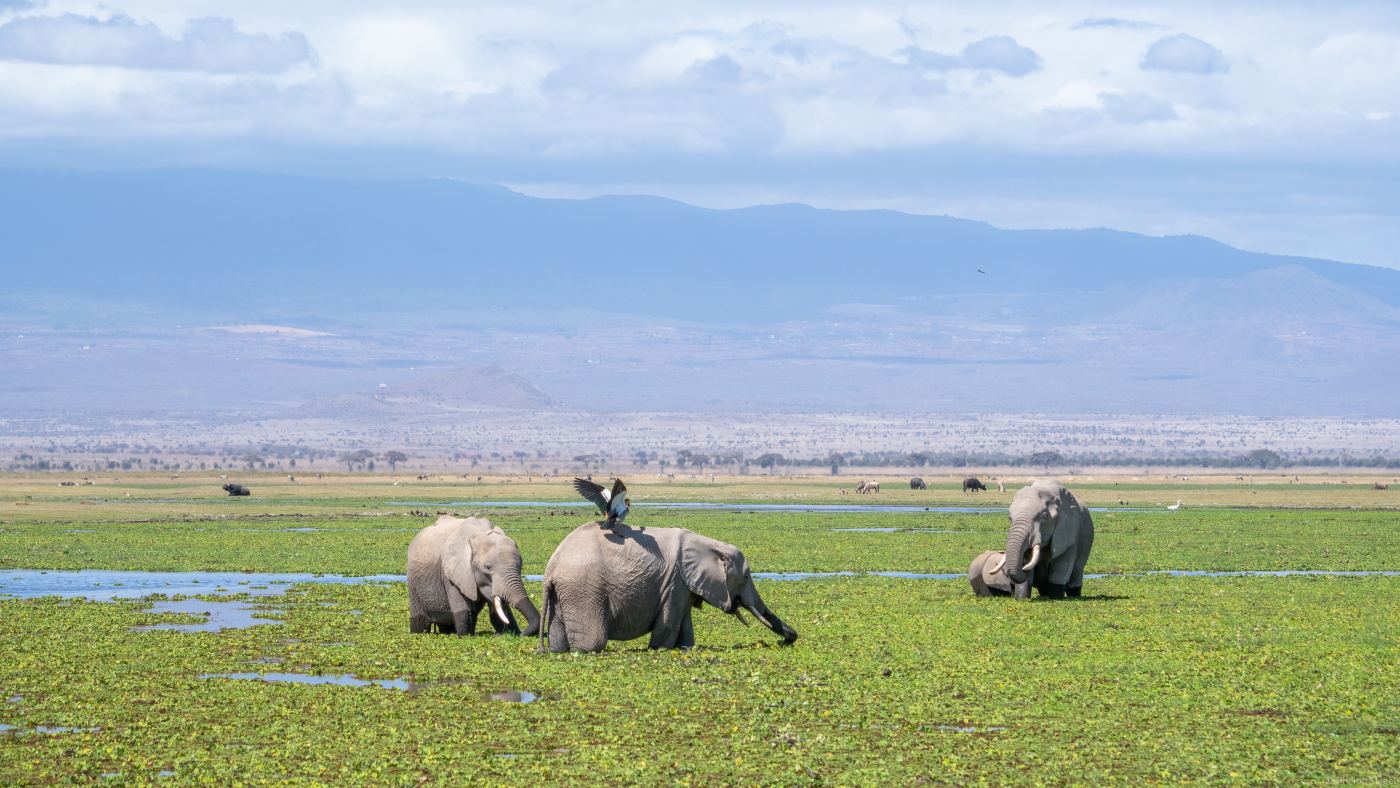
The crater highlands at a glance
The Ngorongoro highlands — often called the Crater Highlands — are a cluster of extinct and dormant volcanoes on the eastern shoulder of the Great Rift Valley, sitting mostly between 2,300 and 3,600 metres. Ngorongoro itself is merely the largest and most famous of the calderas; its neighbours Olmoti and Empakaai are quieter, greener and, crucially, open to walkers. Because the whole area lies within the Ngorongoro Conservation Area rather than a national park, Maasai communities live and graze their herds here, and hiking is not just permitted but woven into how the landscape is used.
That multiple-use status is what makes the highlands so special on foot. In Tanzania's national parks you are largely confined to a vehicle; here you can step out and walk for an hour or a week, crossing terrain no car can reach. The air is cool and often misty, the slopes are covered in montane forest and open grassland, and buffalo, eland, zebra and the occasional elephant share the trails. It is a genuinely wild walking landscape, ten minutes from one of the most visited safari sights in Africa yet almost entirely overlooked.
Empakaai crater: the descent to the flamingo lake
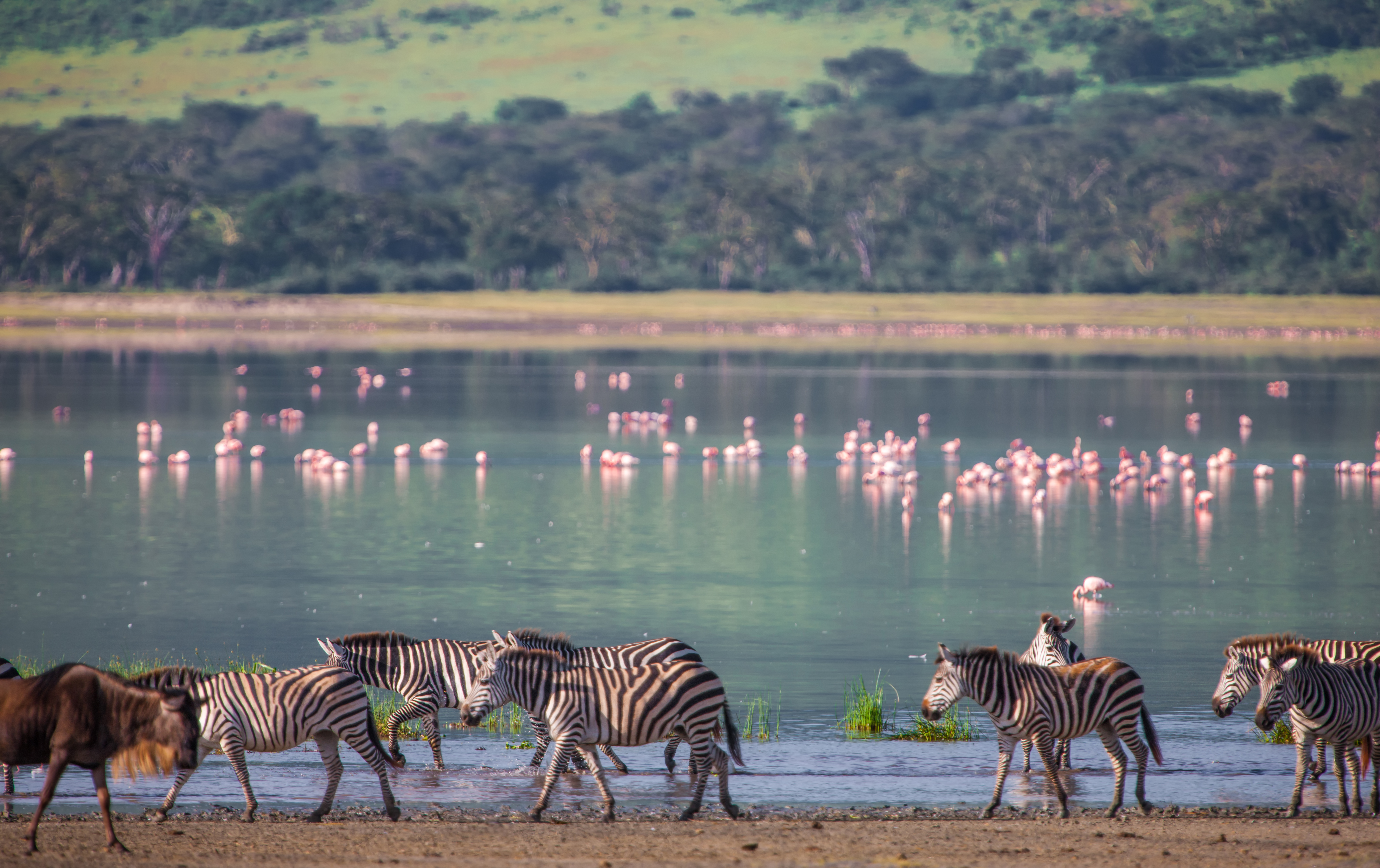
Empakaai is the jewel of the highlands and, we would argue, one of the most beautiful short hikes in Tanzania. The crater is around six kilometres across, its walls draped in dense forest, and its floor almost entirely filled by a deep soda lake that is often ringed with pink — thousands of flamingos feeding in the shallows. The hike begins on the rim at roughly 3,200 metres, where on a clear day you can see the perfect cone of Ol Doinyo Lengai and, far below in the Rift, the shimmer of Lake Natron.
The descent drops about 300 metres through mossy montane forest on a steep but well-defined path, with blue monkeys overhead and the calls of turacos in the canopy; bushbuck and buffalo are seen regularly, which is one reason an armed ranger accompanies every walk. Most walkers take forty-five minutes to an hour down, an hour or more back up, and the round trip with time at the lakeshore is a half-day. The climb back out is a solid pull at altitude — nothing technical, but you will feel your lungs — and it doubles as excellent acclimatisation for anyone going on to Kilimanjaro.
Olmoti crater and the Munge waterfall
Olmoti is Empakaai's gentler sibling and the easiest of the crater hikes. The walk starts at Nainokanoka, a Maasai village on the mountain's flank, and climbs for thirty to forty-five minutes through forest and heath to the rim. Where Empakaai holds a lake, Olmoti's shallow bowl is a sweep of grassland grazed by Maasai cattle alongside eland and buffalo, with the infant Munge River winding across the crater floor before slipping through a cleft in the wall.
Follow the rim a short way and you reach the point where the Munge plunges out of the crater as a waterfall — the same stream that eventually crosses the floor of the Ngorongoro Crater and feeds its wildlife. The full outing is an easy half-day, suitable for reasonably active travellers of almost any age, and it pairs naturally with Empakaai: many of our guests hike Olmoti one afternoon and Empakaai the next morning, sleeping high in the crisp highland air between the two.
Crater-rim walks and shorter day hikes
You do not need a full expedition to stretch your legs in the highlands. Sections of the Ngorongoro Crater rim can be walked with a ranger, and they are quietly spectacular: a grassy trail along the caldera edge with the crater floor spread out 600 metres below, its soda lake, swamps and herds reduced to a living map. Early morning is best, when the light rakes across the caldera and the rim forest is loud with birdsong before the day's vehicles have even entered the crater.
Beyond the rim there are ridge walks between Olmoti and Empakaai, strolls to overlooks above the Rift, and village-to-village trails used daily by Maasai families that make superb two- to four-hour walks. These shorter outings are ideal for travellers who want a taste of hiking in Tanzania without committing to a trek, and they slot easily into a northern circuit itinerary — an afternoon on foot between game-drive days costs you nothing in wildlife and gives you the highlands' silence, views and cool air as a bonus.
The Ngorongoro to Lake Natron trek
For committed walkers, the classic undertaking is the three- to four-day trek from the Ngorongoro highlands down to Lake Natron. The route typically runs from Nainokanoka over the shoulder of Olmoti, along ridgelines to Empakaai for a night camped on or below the rim, then north-east through Maasai grazing country to the edge of the Rift escarpment, before the long, dramatic descent to the hot alkaline flats of Natron. Donkeys carry the camp, a cook travels with you, and the walking runs to five or seven hours a day.
The scenery shifts constantly — misty crater forest, open moorland, dusty acacia country — and for much of the route the perfect volcanic cone of Ol Doinyo Lengai, the Maasai's sacred and still-active "Mountain of God", dominates the skyline ahead. Nights are spent at simple fly camps near Maasai bomas, where the evening soundtrack is cowbells and conversation rather than generators. The final day's descent off the escarpment into the Rift is unforgettable: the temperature climbs, the land turns red and silver, and Natron's soda-crusted shallows, often flushed pink with flamingos, spread out below your boots.
This trek deserves respect. Days are long, the sun at Natron is fierce, and the descent is hard on the knees, so we grade it as moderate to challenging — a sensible level of fitness and a few training walks at home are enough, but it is not a stroll. The reward is one of the great walks of Africa, and energetic trekkers can finish with a night climb of Ol Doinyo Lengai itself or a visit to Natron's flamingo colonies. Read more on the lake in our guide to the wider region below.
Walking with Maasai guides
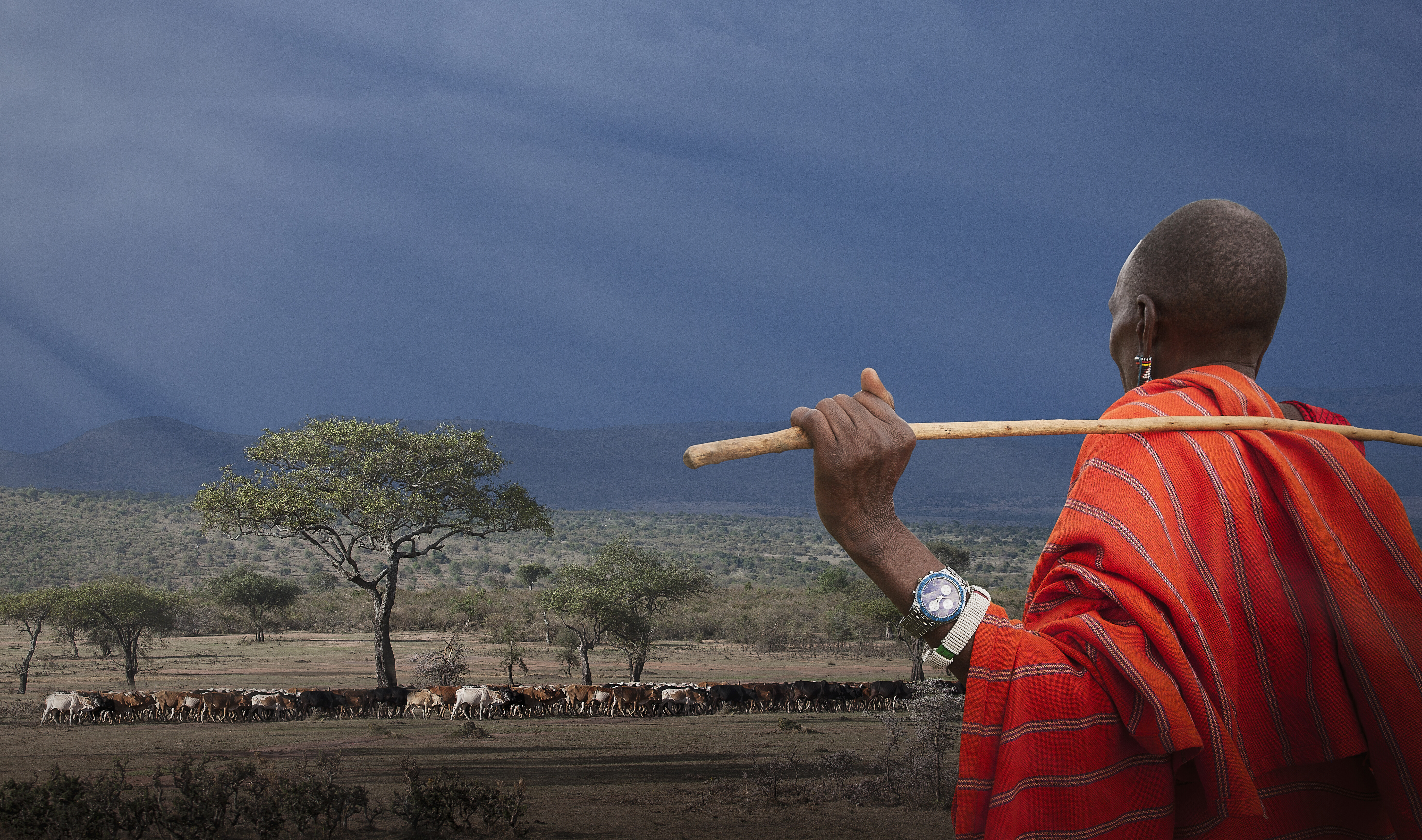
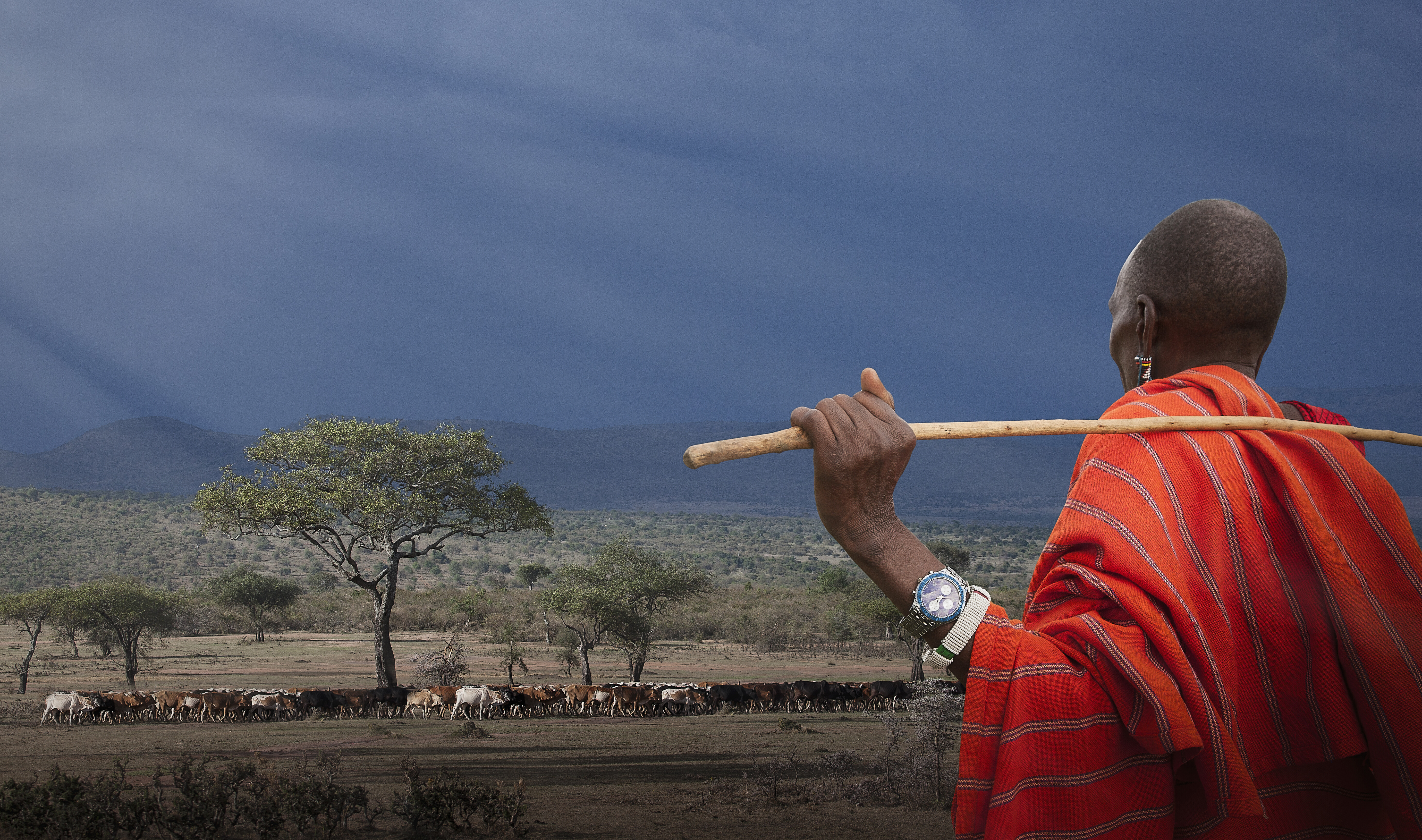
What lifts hiking here above simple scenery is the company. Walks in the highlands are led with local Maasai guides who grew up herding cattle on these exact slopes, and their knowledge is of a different order to anything learned on a course — which plants treat a fever, how to read fresh buffalo sign, why a particular ridge carries a name and a story. A walking safari Tanzania style is often sold on wildlife alone; in the highlands it is equally a walk through a living culture, on paths that have been in daily use for generations.
Along the way you pass working bomas, water points and stock routes, and there are natural, unforced opportunities to visit a homestead, share tea and see how highland Maasai life actually works — a far more genuine encounter than a staged roadside village. For many guests this becomes the heart of a cultural safari Tanzania experience: not a performance, but a day spent walking with people through their own landscape. It also matters economically, since guiding fees and camp payments flow directly into the communities whose land makes the trekking possible.
Rangers, rules and how fit you need to be
A few rules shape every hike in the Ngorongoro Conservation Area, and the first is non-negotiable: all walks, from a one-hour rim stroll to the full Natron trek, must be accompanied by an armed NCAA ranger. This is a sensible wildlife-safety measure — buffalo and elephant use the same forest paths — and the rangers are booked through the conservation authority alongside your guides. Walking fees and conservation fees apply per day, and routes such as Empakaai require the correct permits arranged in advance, which is exactly the paperwork a good operator handles for you.
In practice this means highland hiking is not something to improvise on the day; rangers, permits, camping spots and donkey teams all need arranging before you arrive. It is also worth knowing what the rules protect: walking is kept to designated areas, the crater floor of Ngorongoro itself remains vehicle-only, and group sizes stay small. Book through an operator who runs these routes regularly — Sokwe has been putting walkers into the highlands for years — and the logistics simply disappear behind a well-run camp and a confident, well-briefed team.
As for fitness, the honest answer is that you need less than you might fear, provided you choose the right route. Olmoti is an easy half-day within reach of any reasonably active traveller, including families with school-age children. Empakaai is moderate — the climb back out at 3,000-plus metres raises the heart rate, but taken slowly it is very achievable. The rim and village walks can be tailored from gentle to brisk. Only the multi-day Natron trek demands genuine preparation, with consecutive long days, heat at the finish and camping throughout.
Altitude is the factor first-timers underestimate. Most highland trailheads sit between 2,400 and 3,200 metres, high enough that you will notice it on the climbs, so build in a night or two on the crater rim before the harder walks and drink far more water than feels natural. Good boots, a warm layer for icy highland mornings, sun protection for the descent to Natron and a soft daypack complete the kit list. If you can comfortably walk for three hours at home, there is a highlands route that will suit you.
Best months for highland hiking
The highlands are walkable most of the year, but the prime windows are June to October and December to February. The long dry season brings crisp, clear mornings, firm trails and the best odds of those grandstand views of Ol Doinyo Lengai from Empakaai's rim; it is also cool at altitude, with nights on the rim dropping near freezing — wonderful walking weather. December to February is slightly warmer and greener, with superb light and fewer visitors, and it is our favourite period for the Natron trek before the Rift heats up towards the long rains.
The heavy rains of March to May are the months to avoid: trails turn greasy, the crater descents become treacherous and cloud sits on the rims for days. November's short rains are usually no more than afternoon showers and remain perfectly workable. Whatever the month, start walks early — highland weather builds through the day, and an 07:00 start means still air, active wildlife and the trail to yourself before the mist or heat arrives.
Combining hikes with a crater game drive
The neatest thing about highland hiking is how little rearranging it demands. The Empakaai and Olmoti trailheads are under two hours' drive from the Ngorongoro Crater access roads, so a classic pattern is a full crater game drive one day, a night on or near the rim, then Olmoti or Empakaai on foot the next morning before continuing to the Serengeti. You lose nothing from the traditional safari and gain a half-day of walking that most visitors never discover; many guests tell us afterwards it was the day they remember best.
For a deeper itinerary, we build the three- or four-day Natron trek between Ngorongoro and the Serengeti's north-eastern gateways, or run it as a stand-alone adventure with a flamingo-filled finale at the lake. Hiking days also pair beautifully with time in Karatu's farmland or a Maasai cultural visit, turning the middle of a northern circuit from a transit day into a highlight. However it is shaped, the principle is the same: the highlands reward anyone willing to swap the vehicle for boots, even for a single morning.
More on this in Do safari guides carry guns in Tanzania? What armed rangers do and what your guide does not.
Ten minutes from Africa's most famous crater lies its least-known hiking country — green calderas, flamingo lakes and Maasai trails with barely a boot on them.
- Empakaai — steep forest descent to a flamingo soda lake
- Olmoti — easy half-day to the Munge waterfall
- Crater-rim walks with the caldera 600 metres below
- Ngorongoro to Natron — 3–4 days past Ol Doinyo Lengai
- Armed NCAA ranger compulsory on every walk
- Best June–October and December–February
Bring your boots
The Ngorongoro highlands prove that a Tanzanian safari need not be lived entirely from a vehicle seat: within sight of the famous crater lie flamingo lakes, waterfalls, ridgelines and Maasai trails that only walkers ever see. Whether you want a single morning at Olmoti, the Empakaai descent or the full trek to Lake Natron, we will build the hiking days, rangers, permits and camps into any northern safari — tell us your dates and fitness level, and Sokwe Africa Safaris will do the rest. Bring your boots; the highlands are waiting.
Plan your Ngorongoro highlands hiking safari with Sokwe Africa Safaris