
Why the operator matters more than the mountain
Search for Kilimanjaro tours and you will find hundreds of companies selling what looks like the same week on the same mountain at wildly different prices — the same Lemosho route, the same eight days, quoted at 1,600 dollars by one company and 4,200 by another. The route does not change. What changes is who carries your kit, what they are paid, how many guides walk with you, whether there is oxygen in camp and a real plan for getting you down if you become unwell. You are not buying scenery; you are buying a team, and the difference between a good team and a cheap one is the difference between a hard, happy week and a genuinely dangerous one.
We are based in Arusha, an hour from the Kilimanjaro gate, and we see the industry from the inside — the operators who pay their porters properly and the ones who do not. This guide is written for the moment you are in: you have shortlisted three or four Kilimanjaro tour companies and cannot tell them apart from their websites. Below is what a climb includes, what the price tiers mean, the ten questions that separate serious operators from resellers, and how to read the claims honestly before you pay a deposit.
What a Kilimanjaro tour actually includes
A properly quoted climb covers park fees, a licensed lead guide and assistant guides, a cook, a porter team, all camping equipment, three cooked meals a day plus filtered drinking water, airport transfers, and two nights of hotel accommodation in Moshi or Arusha either side of the trek. The park fees alone are substantial and non-negotiable: a daily conservation fee per person, a camping or hut fee per night, a one-off rescue fee and eighteen per cent VAT. On a seven-day route those charges typically land between 900 and 1,100 US dollars per climber before a single wage is paid.
What is usually excluded is worth reading just as carefully: international flights, the Tanzania visa, travel insurance with high-altitude evacuation cover, personal trekking gear, alcohol and soft drinks, and tips for the mountain crew. Tips are no rounding error — on a seven- or eight-day climb they commonly total 250 to 350 dollars per climber, and any operator who does not say so up front is managing your expectations badly. Some also charge separately for the extra acclimatisation night, portable toilets or private tents. Ask for the exclusions list in writing, not just the inclusions.
The price tiers, and what sits behind a cheap climb
Broadly, Kilimanjaro trekking tours fall into three bands. Budget climbs run from roughly 1,400 to 1,900 dollars for a group departure on a shorter route. Mid-range climbs, the band most well-run operators occupy, run from about 2,200 to 3,000 dollars and buy you a longer route, better food, decent tents and a properly sized crew. Above 3,200 dollars you move into premium territory: private departures, walk-in tents, mountain toilets, more assistant guides. The gap between the bottom band and the middle is not a discount. It is money removed from somewhere.
Do the arithmetic yourself and the problem becomes obvious. Subtract 1,000 dollars of park fees from a 1,500 dollar climb and roughly 500 dollars remains to cover a guide, assistant guide, cook, five to seven porters, food for a week, transport, equipment, hotel nights and the company's own costs and margin. It cannot be done honestly. What happens instead is that porters are underpaid or paid for fewer days than they work, crew numbers are cut so each man carries more, food quality drops, tents leak, and the safety margin — the spare guide, the oxygen, the willingness to turn a paying client around — goes first, because it is invisible until the day you need it.
The ten questions to ask any Kilimanjaro operator
You do not need mountaineering knowledge to test a company. You need ten specific questions and the patience to insist on specific answers. Send them by email so the replies are in writing, and note not just what is said but how readily. A serious operator answers all ten without hesitation, because these are the things they organise every week. A reseller answers three, deflects on the rest and tells you not to worry. That difference is the most reliable signal you will get before you hand over a deposit.
- How many guides and assistant guides per climber, and how many walk with us on summit night?
- Do you carry bottled oxygen and a pulse oximeter, and are saturation and pulse checked twice daily?
- What exactly is your evacuation plan from each camp, and who pays for it?
- What do you pay each porter per day, and are they paid for descent days too?
- What is the maximum weight a porter carries, and who weighs the loads?
- How many climbers in a group departure, and what is the maximum?
- Which routes do you recommend for my fitness, and how many nights?
- Are your guides Wilderness First Responder certified, and when were they last retrained?
- Is your company licensed by the Tanzania Tourist Board and a member of a porter welfare programme?
- What is written in your contract about turning a client around, and about refunds if we cannot summit?
Some answers deserve benchmarks so you can judge them. On guide ratios, look for one guide or assistant guide for every two climbers, and at least that on summit night, because that is when someone may need to descend while the group continues. On monitoring, a pulse oximeter reading taken morning and evening and recorded on a health card is standard practice among good Kilimanjaro tour companies, alongside a daily conversation about headache, appetite and sleep. On oxygen, the correct answer is that bottled oxygen is carried for emergency descent, never to push an unwell client higher.
On evacuation, vague reassurance is a red flag. The honest answer names the mechanism: a stretcher or wheeled evacuation to the nearest road head, a park rescue vehicle, an ambulance to a hospital in Moshi, and helicopter evacuation where the terrain and weather allow it — with the crucial detail that helicopter rescue is paid for by your insurance, not by the park, and that your policy must cover trekking to 6,000 metres. Ask which hospital, how long it takes from Barafu camp, and whether the operator has actually done it this season.
Porter welfare is not a soft issue
Around thirty thousand people climb Kilimanjaro each year and roughly twenty thousand Tanzanians work on the mountain to make that possible. Porters carry tents, food, water and your duffel bag, sleep in worse conditions than you do, and historically have been the part of the industry where costs get cut. The Kilimanjaro Porters Assistance Project, KPAP, exists to change that, and its partner programme is the closest thing the industry has to an independent audit. It monitors wages, load weights, meals, sleeping conditions and clothing, and publishes a list of partner companies. Checking that list takes two minutes and tells you more than any number of five-star reviews.
The concrete standards are easy to remember. The national park limits a porter's load to twenty kilograms of client and camp equipment, weighed at the gate and at checkpoints, on top of his own personal kit. Porters should receive three hot meals a day, proper shelter, and adequate boots, jacket and gloves — not the flip-flops and cotton hoodies you still see on the trail. Wages should be paid for every day worked, including descent days, and tips should be additional to wages, never a substitute. An operator who cannot state its porter day rate is telling you something.
How to read a "98% success rate" claim
Almost every company selling mount Kilimanjaro tours advertises a success rate, and almost none of them define it. There is no independent body verifying these numbers, no agreed definition of success, and no requirement to publish failures. Some companies count reaching Stella Point as a summit; some count reaching Uhuru Peak; some quietly count only the clients who started summit night rather than everyone who started the climb. A company running only eight- and nine-day itineraries will legitimately report a much higher figure than one running five-day Marangu trips, without being any better at its job.
The useful question is not what your success rate is, but what it is on this route, at this number of nights, over the last twelve months, and how you define reaching the summit. Route length is the variable that actually predicts the outcome: park and industry data consistently show roughly half of five-day Marangu climbers summiting, around eighty to eighty-five per cent on seven-day routes, and ninety per cent or better on eight- and nine-day Lemosho and Northern Circuit itineraries. If an operator quotes ninety-eight per cent while selling you six days, one of those two numbers is doing dishonest work.
Local operator or foreign reseller?
A large share of the Kilimanjaro tours sold online are sold by companies that do not operate on the mountain at all. They market in Europe or North America, take your booking, and subcontract the climb to a Tanzanian operator, adding a margin of anywhere between twenty and forty per cent. That is not automatically bad — a good reseller vets its ground partners carefully — but you should know which you are dealing with, because it determines who answers when something changes at short notice, and how much of your money reaches the crew carrying your tent.
The test is simple. Ask who holds the Tanzania Tourist Board licence, who employs the guides, and whose name appears on the park permit. Ask for the ground operator's name if it differs from the company you are paying. A local operator answers instantly, because it is their own licence, their own guides, their own vehicles at the gate. Booking direct generally means the same climb for less, faster decisions when weather or health forces a change, and a much shorter line between your questions and the person who can answer them.
Booking with a licensed Tanzanian company should look unglamorous and reassuring: a licence number you can check, a written itinerary with camp names and altitudes for every night, a clear inclusions and exclusions list, a modest deposit with a stated refund policy, a pre-climb briefing at your hotel the evening before with a full gear check, and a named lead guide. Payment should go to a company account, never an individual, and your receipt should carry the company name and TIN. Anything vaguer is worth pausing over, however warm the correspondence.
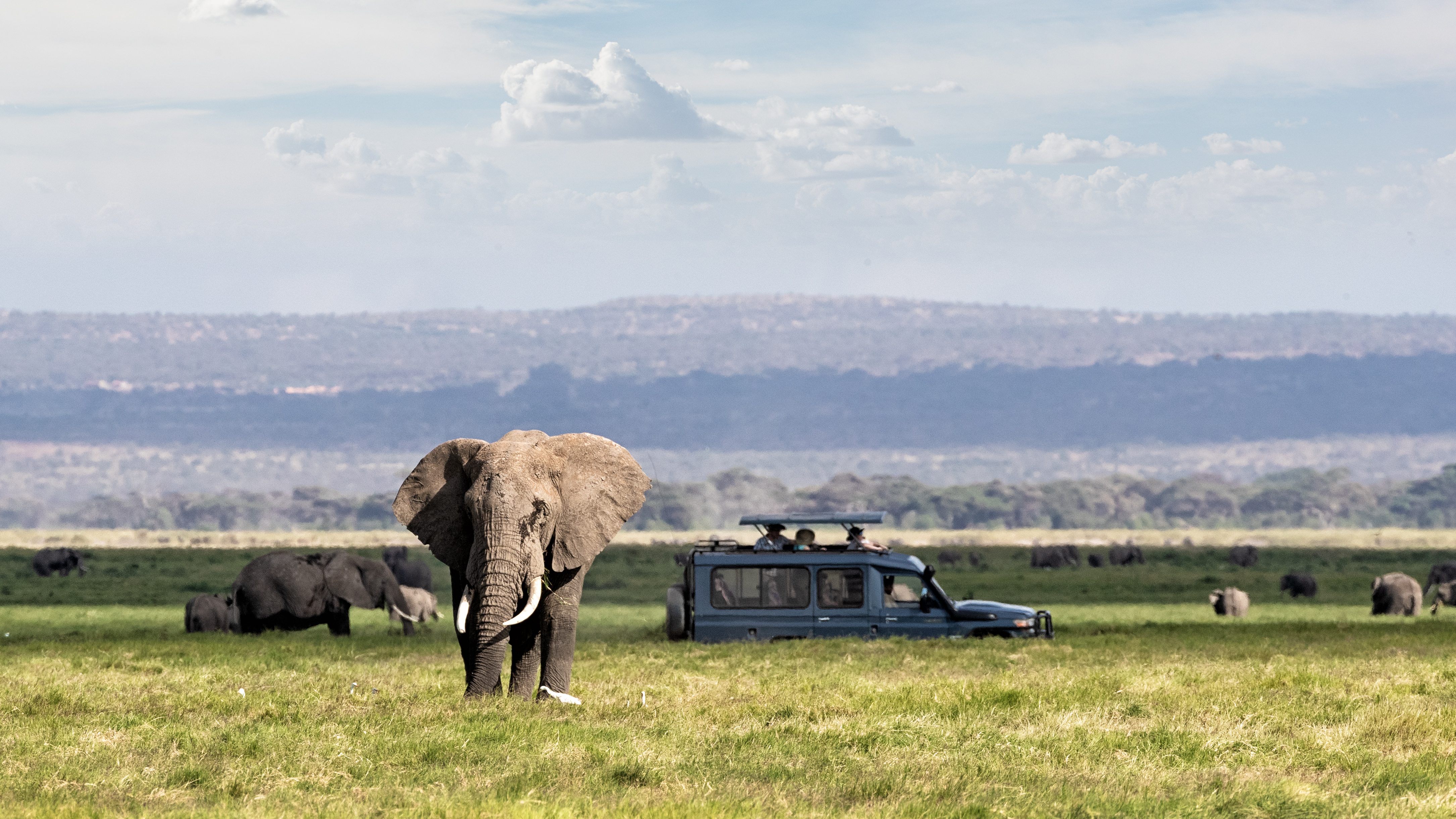
Related reading: How to choose a Tanzania safari company.
On Kilimanjaro you are not buying a mountain. You are buying a team — and the cheapest quote is always cheap because something has been taken out of it.
Tips, contracts and the details people forget
Budget for tips from the start: they are a real part of the cost, handed over in cash at the final camp. Customary rates on a seven-day climb are roughly 20 to 25 dollars a day for the lead guide, 15 per assistant guide, 12 for the cook and 8 to 10 per porter, shared across the group rather than paid per climber — usually around 300 dollars each for a couple. Bring clean, small-denomination US dollar notes printed after 2009, because older notes are frequently refused in Tanzania.
Read the contract for the two clauses that matter most. The first is the turnaround clause: it should say plainly that the lead guide has the final word on whether a climber continues, and that a client who is turned around for medical reasons is not entitled to a refund of park fees already paid. That may sound unfriendly, but a company honest about it in advance is one that will not hesitate on the mountain. The second is the insurance requirement, which should specify high-altitude trekking cover to at least 6,000 metres including helicopter evacuation and repatriation.
Ask us all ten questions
Take the list of ten questions and send it to every company on your shortlist, including us — you will learn more from the shape of the replies than from any amount of browsing. Kilimanjaro is a serious mountain that ordinary, reasonably fit people climb successfully every week, and the biggest thing within your control is who you climb with. Sokwe Africa Safaris is a licensed Tanzanian operator based in Arusha, and we run our own climbs with our own guides and crew rather than subcontracting them. Send us your dates, your fitness and any health concerns, and we will answer all ten questions in writing — guide ratios, oxygen and oximeter, evacuation plan, porter pay and load limits, group size and our real summit numbers by route — before you pay a deposit. Get in touch through our contact page and we will build an itinerary with the days you actually need — and tell you honestly if we think you should take a longer route than the one you asked for.
Frequently asked questions
Why do Kilimanjaro tours vary so much in price?
The same Lemosho route over the same eight days is quoted at 1,600 dollars by one company and 4,200 by another. Park and porter charges alone land between 900 and 1,100 US dollars per climber on a seven-day route before a single wage is paid — so a very cheap climb is being funded by someone, usually the crew.
What should a Kilimanjaro climb actually cost?
Budget climbs run roughly 1,400 to 1,900 dollars for a group departure on a shorter route. Mid-range climbs, the band most well-run operators occupy, run about 2,200 to 3,000 dollars and buy a longer route, better food, decent tents and a properly paid crew.
How much should I budget for tips on Kilimanjaro?
Around 8 to 10 dollars per porter per day, shared across the group rather than paid per climber — usually about 300 dollars each for a couple. Bring clean, small-denomination US dollar notes printed after 2009, as older notes are frequently refused in Tanzania.
What insurance do I need for Kilimanjaro?
A policy that specifies high-altitude trekking cover to at least 6,000 metres, including helicopter evacuation and repatriation. Rescue is paid for by your insurance, not by the park.
How should I read a 98 percent success rate claim?
Sceptically. Success rates depend almost entirely on route length and acclimatisation profile, so a figure quoted without naming the route and the number of days is meaningless.
Is it better to book a local operator or a foreign reseller?
A local operator runs the climb; a reseller subcontracts it and adds margin. Ask who employs the guides and porters, and you will usually find out which you are dealing with.