
Route status update: Lemosho and Londorosi (15 October 2026)
According to press reports, Tanzania National Parks (TANAPA) temporarily closed the Lemosho and Londorosi routes on Kilimanjaro on 28 September 2026 because of a fire in the Sangarini-Kamwanga area, and climbers were redirected to the Machame, Marangu and Rongai routes. We have not seen a reopening date, so the situation may already have changed by the time you read this. If you are planning a climb in the coming weeks, please ask us to confirm the current status of your route before you book or pay for anything, and we will tell you plainly if an itinerary needs to change. The route descriptions below show how each route normally runs.
Is climbing Kilimanjaro for you?
When people picture mountain climbing, Kilimanjaro confuses them, because it is both easier and harder than they imagine. Easier, because at 5,895 metres it is the highest mountain in the world you can simply walk up: no ropes, no ice axes, no technical skill required, just one foot in front of the other on a well-established trail. Harder, because the altitude is completely real, and it is the altitude — not the walking — that turns back the climbers who do not make it. This guide, written from Arusha at the foot of the mountain, covers the whole experience step by step: preparation, the daily rhythm, summit night as it honestly is, your crew, your gear and how to book.
The short answer to whether you can climb Kilimanjaro is: probably, yes. We have guided climbers in their teens and in their seventies, marathon runners and people who had never slept in a tent. What the mountain demands is not athleticism but reasonable fitness, sensible preparation, enough days on the mountain to acclimatise, and the mental willingness to keep walking slowly when you are cold and tired. If you can hike for five to seven hours a day on consecutive days, you have the physical foundation; the rest is planning, and planning is exactly what a good operator does for you.
What the climb actually involves — no ropes, real altitude
A Kilimanjaro climb is a five-to-nine-day supported trek from roughly 1,800 metres at the gate to 5,895 metres at Uhuru Peak, passing through five distinct climate zones on the way — farmland, rainforest, heath and moorland, alpine desert and finally the arctic summit zone. You walk four to seven hours most days, sleep in tents pitched by your crew (or huts on the Marangu route), and eat hot meals prepared by a mountain cook. There is nothing technical anywhere on the standard routes; the trail is rocky and steep in places, with one short scrambling section on the Barranco Wall, but it is walking, not climbing in the ropes-and-harness sense.
What makes it serious is the thin air. At the summit there is roughly half the oxygen available at sea level, and everyone — regardless of fitness — feels it. Mild altitude sickness symptoms such as headache, poor sleep and low appetite are common and manageable; the mountain becomes dangerous only when climbers ignore worsening symptoms or ascend too fast. This is why route length matters so much, why professional guides check your oxygen saturation and symptoms daily, and why the golden rule of the mountain is to go slowly. Respect the altitude and Kilimanjaro is a challenge; ignore it and it is a risk.
Fitness: how to prepare for the climb
You do not need to be an athlete, but you should arrive fit enough that the walking itself is comfortable, because the altitude will add its own load on top. The best preparation is specific: long walks of four to six hours, ideally on hills and on consecutive days, carrying a daypack of five to eight kilograms and wearing the boots you will take up the mountain. Start eight to twelve weeks out, build up gradually, and add two or three weekly sessions of general cardio — running, cycling, swimming or stair climbing. Some leg and core strength work helps enormously on the long descent, which many climbers find harder on the body than the ascent.
Just as important is what training cannot give you: there is no way to prepare for altitude at sea level, and being extremely fit does not protect you from altitude sickness — fit climbers sometimes suffer more because they push the pace. So prepare your body for the hiking, and prepare your mind for the summit push: practise walking slowly and steadily when you would rather go faster, get comfortable with early starts and imperfect sleep, and if possible do at least one multi-day trek beforehand so that consecutive days on the trail hold no surprises. See a travel doctor about vaccinations and ask about acetazolamide (Diamox), which many climbers use to aid acclimatisation.
- Start training 8–12 weeks out
- Long back-to-back hill walks with a loaded daypack
- Two or three cardio sessions a week
- Break in your boots completely before you fly
- Practise walking slowly — pace discipline wins summits
- Consult a travel doctor about altitude medication
The day-by-day rhythm on the mountain
Life on Kilimanjaro settles quickly into a rhythm that most climbers come to love. You wake around 6.30am to a bowl of washing water and hot tea brought to your tent, eat a cooked breakfast in the mess tent, and are walking by around 8am. The morning walk runs four to six hours with a picnic or hot lunch, and you reach the next camp by early-to-mid afternoon to find your tent already pitched by the porters, who have overtaken you on the trail carrying the camp on their heads and shoulders. Afternoons are for resting, short acclimatisation walks and popcorn with tea; dinner is early, and by 9pm the camp is silent.
The days themselves are varied and genuinely beautiful. You begin in dripping rainforest with colobus monkeys overhead, break out into giant heather and moorland with the summit appearing above the clouds, and spend the middle days traversing the strange, stark alpine desert between 3,800 and 4,600 metres. Good itineraries build in climb-high, sleep-low days — walking up to a high point such as Lava Tower at 4,600 metres before descending to sleep lower — which is where much of your acclimatisation quietly happens. By the time you reach base camp you have usually walked five or six days and your body has adapted remarkably.
Acclimatisation and pole pole
The first Swahili phrase every climber learns is pole pole — slowly, slowly — and it is not a slogan but the actual mechanism of success. Your body needs time to adapt to reduced oxygen, and the two things that buy it time are a gentle pace and a longer itinerary. Guides deliberately hold the group to a pace that feels almost comically slow on day one; trust them, because climbers who burn energy early and ascend fast are the ones with pounding heads at 4,600 metres. Drink three to four litres of water a day, eat even when your appetite fades, and tell your guide about every symptom — modesty helps nobody at altitude.
Professional crews actively manage acclimatisation rather than leaving it to luck. On our climbs the guides run health checks twice daily, using a pulse oximeter to track your blood oxygen and a symptom checklist to catch acute mountain sickness early, and they carry emergency oxygen and have a clear evacuation protocol for the rare cases that need it. Mild symptoms — a headache that responds to paracetamol, a restless night, a smaller appetite — are a normal part of adapting. What matters is the trend, and that is exactly what an experienced guide is watching while you simply concentrate on walking, eating and sleeping.
Summit night, honestly
Summit night deserves an honest description, because it is the hardest thing most climbers will ever do and the part no brochure prepares you for. You wake at around 11pm at base camp — typically Barafu at 4,673 metres — after a few hours of thin, broken sleep, dress in every layer you have, and start walking at midnight by headtorch. The next six to eight hours are a slow, cold, repetitive zigzag up scree in the dark, at minus 10 to minus 20 degrees with wind, on perhaps three hours of sleep, with the air thinning with every step. Almost everyone hits a low point somewhere around 5,200 to 5,500 metres where the doubt arrives.
This is where your crew earns everything. The guides pace you, watch you, sing to you, carry your daypack if you need it, and talk you through the low moments one switchback at a time. Then the sky behind Mawenzi turns red, the sun comes up over the clouds far below, and you reach the crater rim at Stella Point knowing the worst is behind you — from there it is a gentle 45-minute walk past the glaciers to the sign at Uhuru Peak. Most climbers stand on the roof of Africa somewhere between 6am and 8am, take their photographs through tears they did not expect, and begin the long descent the same day.
Nobody remembers summit night as easy. Everybody remembers the moment the sun came up over Mawenzi and they realised they were going to make it.
Your crew: guides, porters and the cook
A Kilimanjaro climb is a team effort on a scale that surprises first-timers: a typical two-person climb is supported by a crew of ten or more — a licensed lead guide, an assistant guide (a ratio of roughly one guide to every two or three climbers), a cook, and a team of porters who carry the tents, food, water and your main duffel bag, leaving you with only a daypack. The guides are the difference between success and failure: Wilderness First Responder training, hundreds of summits of accumulated judgement, and the authority to make the hard calls about health and weather. Choose your operator, and you are really choosing your guides.
Crew welfare matters, and it should influence who you book with. Porters are the backbone of the mountain and historically the most exploited people on it — underpaid, overloaded and underequipped by cut-price operators. Reputable companies follow the standards championed by the Kilimanjaro Porters Assistance Project: enforced load limits of 20 kilograms, fair wages paid promptly, proper meals, shelter and mountain clothing. Sokwe Africa Safaris treats its mountain crews as career professionals, because that is right — and because it is also why our climbers succeed: a well-treated, long-serving crew is an experienced, motivated one. Budget around 250 to 350 US dollars per climber in tips, distributed across the whole crew.
Gear essentials: what you actually need
Kilimanjaro gear is about layers, because you will walk from tropical rainforest to arctic summit in less than a week. The essentials are a layering system for the top half — base layers, a fleece, an insulated down jacket and a waterproof hard shell — plus trekking trousers, thermal leggings and waterproof overtrousers for summit night. On your feet you need properly broken-in waterproof hiking boots and good socks; for your head and hands, a warm hat, sun hat, and both liner gloves and insulated outer gloves or mittens. Add a four-season sleeping bag rated to about minus 10 degrees, a headtorch with spare batteries, sunglasses, high-factor sunscreen and a three-litre water capacity.
Two practical notes save climbers money and mistakes. First, you do not need to buy everything: quality down jackets, sleeping bags and trekking poles can be rented in Moshi or Arusha, and a good operator will check your kit the day before the climb and fill any gaps. Second, pack into the right bags — a soft duffel of 60 to 90 litres for the porters to carry (kept under the 15 kilogram limit) and a 25-to-35-litre daypack you carry yourself with water, snacks, camera and spare layers. Trekking poles are strongly recommended even if you never normally use them; on the long summit-day descent your knees will thank you.
Success rates and why route length matters
Here is the statistic that should shape your whole booking decision: summit success on Kilimanjaro tracks route length far more than fitness. Across the mountain, five-day climbs see barely half of climbers reach the summit, six-day climbs lift that to roughly two thirds, seven-day itineraries reach around 80 to 85 per cent, and eight-day climbs on routes such as Lemosho push success beyond 90 per cent. The reason is simple acclimatisation arithmetic — every extra day is more time for your body to adapt. The cheapest way to fail on Kilimanjaro is to save money by cutting days; if the budget forces a choice, choose more days over more comfort every time.
Route choice — Machame, Lemosho, Marangu, Rongai or the Northern Circuit — deserves its own discussion of scenery, traffic and acclimatisation profiles, and we have written a full comparison to help you decide. Likewise the money: a properly crewed, safely run climb has a real cost floor, and understanding what a quoted price includes (park fees alone are several hundred dollars per climber) tells you a great deal about an operator. The honest summary is this: book seven or eight days on a scenic route with a reputable crew, and you have already done most of what is in your power to reach the summit.
Related reading: Best time to climb Kilimanjaro: month-by-month verdicts.
Related reading: Mount Meru: Tanzania's brilliant second mountain.
Booking with a licensed local operator
Every climber on Kilimanjaro must be accompanied by a licensed Tanzanian guide and book through a registered operator — there is no independent trekking on the mountain — so the practical question is not whether to use an operator but which one. Booking directly with a licensed local company in Arusha or Moshi typically costs less than booking the identical climb through an overseas agent, and it puts you in direct contact with the people who actually run your mountain crew. Mount Kilimanjaro climbing tours vary enormously in quality behind similar-looking websites, so ask pointed questions: guide qualifications, guide-to-climber ratio, porter welfare policy, oxygen and evacuation procedures, and real success rates.
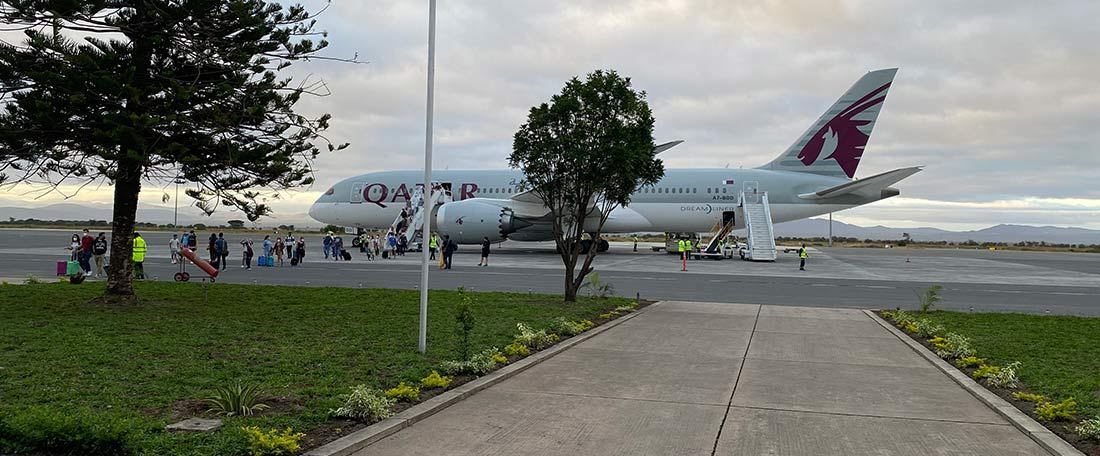
The logistics are pleasantly simple. You fly into Kilimanjaro International Airport, less than an hour from both Moshi and Arusha, spend a night in a hotel where your lead guide briefs you and checks your gear, and drive to the park gate the next morning. Most climbers book six to nine months ahead for the dry seasons — January to early March and June to October are the prime windows for a Tanzania Mt Kilimanjaro climb — and many add a few days afterwards for a northern circuit safari or Zanzibar, which pair naturally since you are already at the foot of the safari heartland. Travel insurance covering trekking to 6,000 metres is essential, and any credible operator will insist on it.
Plan your Kilimanjaro climb with Sokwe
Climbing Mount Kilimanjaro is one of the great achievable adventures — a walk to the roof of Africa that asks for preparation, patience and a good crew rather than technical skill, and repays you with sunrise above the clouds and a memory that outlasts almost any other trip. The decisions that matter are made before you fly: train specifically, pack in layers, choose enough days, and put yourself in the hands of guides who have stood on the summit hundreds of times.
Sokwe Africa Safaris is a licensed Tanzanian operator based in Arusha, and our mountain crews have hundreds of summits between them. Tell us your dates, your fitness level and how you like to travel, and we will build your climb around you — the right route, the right number of days, and the crew to get you to Uhuru Peak and safely down again, with a safari or Zanzibar to celebrate afterwards if you wish.
Plan your Kilimanjaro climb with Sokwe Africa Safaris
Frequently asked questions
How hard is it to climb Kilimanjaro?
The walking itself is manageable: four to seven hours a day on well-established trails, with no ropes and only one short scramble on the Barranco Wall. What makes it genuinely hard is the altitude. At 5,895 metres the air holds roughly half the oxygen of sea level, and summit night is six to eight hours of cold climbing from midnight.
Do you need to train for Kilimanjaro?
Yes, though you need not be an athlete. Start eight to twelve weeks out with long hill walks of four to six hours on consecutive days, carrying a five to eight kilogram daypack in the boots you will wear. Add two or three cardio sessions a week, plus leg and core work for the long descent.
Do you need oxygen on Kilimanjaro?
No. Climbers walk to Uhuru Peak breathing the mountain's own thin air, and bottled oxygen is not used for the ascent on standard routes. Reputable operators do carry emergency oxygen for the rare cases that need it, and our guides check blood oxygen with a pulse oximeter twice daily alongside a symptom checklist.
What is the success rate on Kilimanjaro?
Success tracks route length far more than fitness. Five-day climbs see barely half of climbers reach the summit, six-day climbs lift that to roughly two thirds, seven-day itineraries reach around 80 to 85 per cent, and eight-day climbs on routes such as Lemosho push success beyond 90 per cent. Extra days simply buy acclimatisation.
Do you need a guide to climb Kilimanjaro?
Yes. Tanzanian law requires every climber to be accompanied by a licensed guide booked through a registered operator, so there is no independent trekking on the mountain. A typical two-person climb is supported by a crew of ten or more, including a lead guide, assistant guide, cook and porters, leaving you to walk with only a daypack.
What gear do you need to climb Kilimanjaro?
Layers, because you walk from tropical rainforest to arctic summit in under a week: base layers, fleece, insulated down jacket and waterproof shell, plus thermal leggings and overtrousers for summit night. Add broken-in waterproof boots, warm and sun hats, liner and insulated gloves, a sleeping bag rated to about minus 10, a headtorch and three litres of water capacity.