
Route status update: Lemosho and Londorosi (15 October 2026)
According to press reports, Tanzania National Parks (TANAPA) temporarily closed the Lemosho and Londorosi routes on Kilimanjaro on 28 September 2026 because of a fire in the Sangarini-Kamwanga area, and climbers were redirected to the Machame, Marangu and Rongai routes. We have not seen a reopening date, so the situation may already have changed by the time you read this. If you are planning a climb in the coming weeks, please ask us to confirm the current status of your route before you book or pay for anything, and we will tell you plainly if an itinerary needs to change. The route descriptions below show how each route normally runs.
The short answer
The best time to climb Kilimanjaro is during one of the mountain's two dry windows: January to mid-March, or June to October. Both offer the settled, largely rain-free conditions that give you the greatest chance of reaching the summit safely and actually enjoying the journey. Between them sit the long rains of April and May, which we honestly advise almost everyone to avoid, and the short rains of November, which are a qualified maybe. That is the answer in one paragraph; the rest of this guide explains the month-by-month detail, because within those windows the character of the climb changes considerably.
We say this as a Tanzanian operator based in Arusha, in the mountain's shadow, sending climbers up Kilimanjaro throughout the year. The two dry windows are not identical: January to mid-March is warmer, quieter and famous for crystal-clear mornings, while June to October is colder but the most reliably dry, and consequently the busiest. Neither is objectively better — they suit different climbers. What follows are our honest verdicts for every month, the trade-offs between the two main windows, why the long rains are a genuinely bad idea, and how the season should shape your choice of route.
How Kilimanjaro weather actually works
Kilimanjaro sits just three degrees south of the equator, so it has no summer or winter in the European sense. Instead, Kilimanjaro weather is governed by two monsoon systems that bring two rainy seasons: the long rains from roughly mid-March to the end of May, and the short rains through November into early December. Everything between those two wet periods is comparatively dry. This is why climbers talk about windows rather than a single best month — the calendar on the mountain is a rhythm of dry and wet, and your job is simply to land inside one of the dry stretches.
The second thing to understand about Kilimanjaro seasons is altitude. The mountain rises through five climate zones, from cultivated foothills through rainforest, moorland and alpine desert to the arctic summit zone at 5,895 metres. The summit is cold all year round — summit night is always well below freezing, whatever the month — so the seasonal variable is not really temperature at the top but precipitation and cloud lower down. In the rains you walk for days through mud and mist; in the dry seasons you climb on firm trails under enormous skies. That difference shapes the entire experience.
Month-by-month verdicts
Here is the whole year in one-line verdicts, based on what we see on the mountain season after season. Treat these as honest averages rather than guarantees — the equatorial weather does not read the calendar precisely, and the start and end of the rains can shift by a couple of weeks in either direction from year to year.
- January — very good: warm, settled, clear mornings and moderate crowds
- February — excellent: usually the warmest, most settled month of all
- March — good until mid-month; the long rains normally arrive in the second half
- April — poor: the heart of the long rains, wet, muddy and clouded in
- May — poor: rain persists most of the month, though late May begins to dry
- June — good: dry and pleasingly quiet, with cold nights as the season starts
- July — very good: reliably dry and clear, though cold and increasingly busy
- August — excellent: the driest, most settled month, and the busiest
- September — excellent: dry and slightly milder, marginally quieter than August
- October — good: mostly dry and warmer, with crowds thinning as the month ends
- November — fair: short rains bring afternoon showers; the drier Rongai route helps
- December — good: showers fade early on, then clear, cold and festive-season busy
A word of caution on the shoulder weeks. Late March and early June, late October and early December are gambles: some years they deliver dry-season conditions at bargain quietness, other years the rains linger or arrive early. If your dates are fixed and happen to fall in a shoulder period, do not despair — climbs succeed in every month of the year — but choose your route carefully and pack on the assumption that you will see some rain. If your dates are flexible, aim for the heart of a window rather than its edges.
January to mid-March: the warm, quiet window
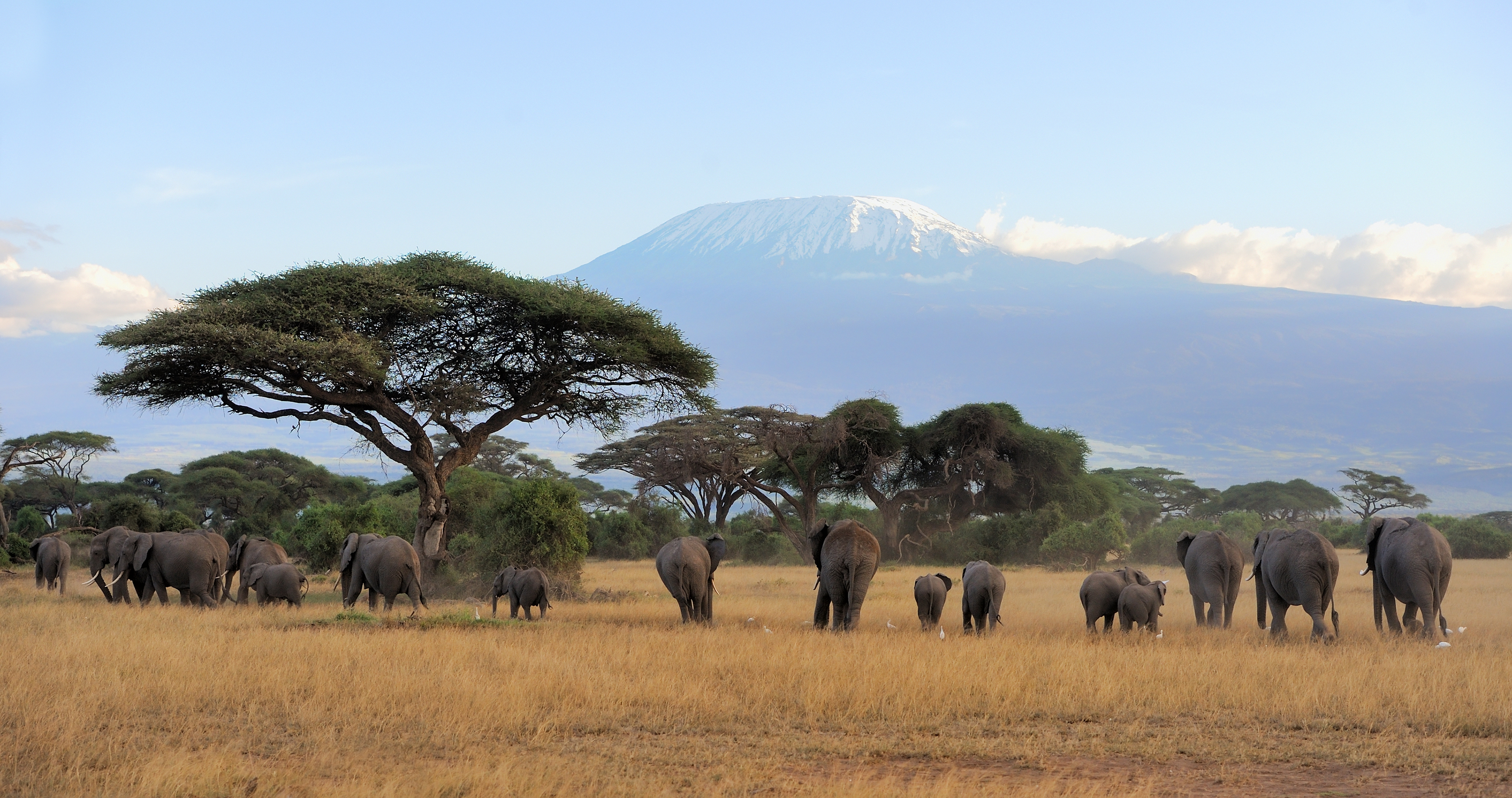
The first dry window, from January to mid-March, is our favourite to recommend to climbers who want the best all-round balance. Daytime temperatures on the lower slopes are the warmest of the year, the air is famously clear — this is the season of those postcard dawn views with the summit glaciers glowing above a sea of cloud — and afternoon cloud build-up tends to burn off overnight. There is often fresh snow high on the mountain from brief passing showers, which makes the crater rim spectacularly beautiful without making the climbing appreciably harder.
The other great virtue of this window is that it is noticeably quieter than the July to September peak. You will still meet other climbers — Kilimanjaro is never deserted in a dry season — but camps are calmer, trails less congested and summit night less of a procession. February is the pick of the window: statistically the warmest and most settled month on the mountain. January is nearly as good, and early March remains reliable, but from mid-March onwards you are betting against the arrival of the long rains, so we advise finishing your climb by the middle of the month.
June to October: the classic dry season
The second window, June to October, is the classic Kilimanjaro season and the driest part of the year. June is the transition month: the long rains have gone, the mountain is green and freshly washed, visitor numbers are still low, and the main cost is cold — the clear, dry air lets night-time temperatures plummet, and June and July nights above 4,000 metres are bitter. July through September delivers the most dependable weather of the entire year, with day after day of dry trails and huge visibility, which is precisely why this is when most of the world chooses to climb.
The consequence is crowds. August and September coincide with northern-hemisphere holidays, and the popular routes — Machame above all — are at their busiest, with large camps and queues of headtorches on summit night. If that bothers you, September is marginally quieter than August, early October quieter still, and quieter routes such as Lemosho or the Northern Circuit sidestep the worst of it. October is the tail of the season: mostly dry and pleasantly warmer, but with the short rains approaching, we suggest summiting by the last week of the month rather than pushing into November.
Why April and May are a bad idea
We will be blunt, because plenty of sellers are not: April and May are the worst months to climb Kilimanjaro, and we actively advise against them. These are the long rains, when the mountain takes the full force of the monsoon. The rainforest zone becomes a mudbath, trails higher up turn to slick rock and running water, kit gets soaked and rarely dries, and the summit views that reward all the effort are frequently swallowed by cloud. Rain lower down falls as heavy snow higher up, and summit success rates drop measurably compared with the dry windows.
There are two honest exceptions. If your dates are utterly fixed, the Rongai route approaches from the drier northern side of the mountain and suffers less, and Marangu offers hut accommodation that at least keeps you out of a wet tent. And a small number of experienced trekkers deliberately choose the long rains for solitude and lower prices, with eyes open. But for the vast majority — especially first-time climbers investing serious money and holiday time — shifting your climb even a few weeks into June or back into early March transforms the experience. This is one decision worth moving a holiday for.
November, December and the short rains
November is the short rains, and it earns a fair rather than poor verdict. Unlike the long rains, November's weather typically means afternoon showers rather than all-day soakings: mornings are often bright, the rain arrives in the afternoon, and evenings frequently clear again. The mountain is very quiet, prices soften, and a well-organised climb — early starts, good tents, sensible expectations — can succeed happily. The key is route choice: Rongai, on the sheltered northern side, is markedly drier in November and is the route we recommend almost by default in this month.
December is a month of two halves. The short rains usually fade in the first week or two, leaving the mountain washed, green and increasingly clear, and by mid-December conditions are genuinely good — cold and occasionally showery, but with fine visibility. The complication is people: the Christmas and New Year period is one of the busiest fortnights of the whole year, as climbers chase a summit for the holidays or the turn of the year. If you want December, early to mid-month offers the better balance of weather and space; the festive rush is for those who want the occasion itself.
Full-moon summit nights
One date worth knowing about in any month is the full moon. Summit night begins around midnight, and under a full moon the final ascent is transformed: the scree slopes and glaciers are lit silver, the crater rim stands out against the sky, and many climbers barely need their headtorches. It is a genuinely magical way to arrive on the roof of Africa, and itineraries timed so that summit night falls on or just before the full moon are deservedly popular. In the dry seasons, the moonlight also tends to coincide with the clearest skies of the month.
The trade-offs are two. First, full moon departures are the most sought-after dates on the calendar, so the popular routes are at their fullest and the best crews and camps are booked many months ahead — if you want a full moon summit in August or February, book early. Second, moonlight washes out the stars, so if your dream is the Milky Way blazing over the summit slopes, aim instead for a new moon. Neither choice is wrong; they are simply different nights on the same mountain. Tell us which appeals and we will time the itinerary to the lunar calendar.
Matching the season to your route
Season and route should be chosen together, because the mountain's sides get different weather. The southern approaches — Machame, Umbwe and the Lemosho–Shira traverse — climb through the lushest forest and catch the most rain, which makes them glorious in the dry windows and hard work in the wet. Rongai, from the north, sits in the mountain's rain shadow and is the sensible pick for November or any shoulder date. Marangu's huts are a real advantage if rain threatens. The longer Lemosho and Northern Circuit itineraries add quieter camps and better acclimatisation in any season.
Duration matters as much as the calendar, too. Whatever month you choose, a seven- to nine-day itinerary dramatically improves both your acclimatisation and your odds of standing on Uhuru Peak, and in colder or wetter months the extra margin is worth even more. If you are weighing all this up, our guides below cover the route decision, the full climb experience and what a climb genuinely costs — read alongside this page, they should give you everything you need to plan with confidence.
See also our guide: The cheapest time to visit Tanzania (without ruining the safari).
See also our guide: Is a Tanzania safari good in December and January? Weather, wildlife, crowds and prices.
See also our guide: Best month for a Tanzania safari: a month-by-month guide to weather, wildlife and prices.
There is no secret month on Kilimanjaro — only honest trade-offs between warmth, dryness, crowds and cost. Pick the trade-off that suits you, and the mountain will do the rest.
So when should you book?
If we had to compress this whole guide into a recommendation: choose February or September if you want the best conditions the mountain offers, January or early March if you value warmth and quieter trails, and July or August if only the driest, most settled weather will do and you can live with company. June, early October and mid-December are excellent-value near-misses. November works with the Rongai route and realistic expectations. April and May we will happily talk you out of — and if we cannot, we will at least equip you properly for what they bring.
Remember also that the best time to climb Kilimanjaro is ultimately the time you can actually go. Every month of the year, climbers stand on Uhuru Peak at sunrise; the season simply loads the dice for or against you, and good planning — the right route, enough days, proper kit and an experienced crew — loads them back in your favour. Our job as a local operator is to be straight with you about what your dates will really be like, then build the climb that gives you the best possible mountain within them.
Tell us your month
This is the conversation we have with climbers every week at Sokwe Africa Safaris, from our base in Arusha with the mountain on the horizon. Tell us your month, and we will tell you honestly what the mountain will be like — the weather you should expect, how busy the trails will be, which route makes the most of your dates and whether a full moon or new moon summit is within reach. No sales gloss, just the local knowledge that turns a good climb into a great one. Send us your dates and let us start planning your Kilimanjaro.
Plan your Kilimanjaro climb with Sokwe Africa Safaris
Frequently asked questions
When is the best time to climb Kilimanjaro?
During one of the mountain's two dry windows: January to mid-March, or June to October. The first is warmer, quieter and famous for crystal-clear mornings, with February the pick; the second is colder but the most reliably dry, and busiest in August and September. For the best all-round conditions we would choose February or September.
Can you climb Kilimanjaro all year round?
Yes. Climbers stand on Uhuru Peak at sunrise in every month of the year, and the summit is well below freezing whatever the season. What changes with the calendar is rain and cloud lower down. The season loads the dice for or against you, so with the right route, enough days and proper kit, any month can work.
Can you climb Kilimanjaro in April?
We honestly advise against it. April and May are the long rains: the rainforest becomes a mudbath, higher trails turn to slick rock and running water, kit rarely dries and the summit views vanish into cloud, while success rates drop measurably. If your dates cannot move, Rongai sits on the drier northern side and Marangu offers huts.
What is the driest month on Kilimanjaro?
August is the driest and most settled month, followed closely by September, which is dry and slightly milder. February is the standout in the first window, usually the warmest and most settled month of the whole year. August's trade-off is company: it coincides with northern-hemisphere holidays, so camps are large and summit night busy.
Is November a good month to climb Kilimanjaro?
November brings the short rains and earns a fair verdict rather than a poor one. Expect bright mornings, afternoon showers and evenings that frequently clear again, with very quiet trails and softer prices. Route choice is the key: Rongai, sheltered on the northern side, is markedly drier in November and the route we recommend almost by default.
What is a full-moon summit on Kilimanjaro?
Summit night begins around midnight, and under a full moon the scree slopes and glaciers are lit silver, the crater rim stands out against the sky and many climbers barely need their headtorches. These are the most sought-after dates on the calendar, so book many months ahead. For a starlit Milky Way, aim for a new moon instead.