
What Lake Nakuru is
Lake Nakuru National Park sits in the floor of the Great Rift Valley, about 160 kilometres north-west of Nairobi, around a shallow soda lake ringed by acacia woodland, grassland and rocky escarpment. It is small by East African standards — under 200 square kilometres — and that is part of its value: a compact, fenced park where the wildlife is dense and a single day delivers a great deal. It is on the road between Nairobi and the Masai Mara, which is why it appears in so many Kenyan itineraries as the stop between the two, and on ours as day three between the Mara and Amboseli.
It is also one of the few East African parks where a traveller in a hurry can be genuinely satisfied. The distances are short, the roads inside the park are good, the escarpment viewpoints are reachable in a saloon car, and the wildlife does not need to be tracked so much as driven past. For a first-time visitor whose Mara days may be spent searching, Nakuru is the day the animals come to you.
The rhinos: the reason to come
Lake Nakuru is the most reliable place in Kenya to see rhino, and one of the most reliable in East Africa. The park is a fenced sanctuary holding both black and white rhino, and sightings of white rhino grazing on the lakeshore grassland are close to routine. Black rhino are shyer, browsing in the thicker bush, and take a little more looking for, but a full day in the park usually produces both. For travellers whose safari otherwise runs through the Mara and the Serengeti, where rhino are scarce and hard-won, Nakuru is often the day the fifth of the Big Five gets ticked.
The park also holds Rothschild's giraffe, a subspecies that was translocated here and has thrived, along with buffalo, waterbuck, impala, both zebra species' cousins in the plains game, and a healthy population of leopard in the woodland along the escarpment. Lions are present and occasionally seen resting in the acacias, though Nakuru's tree-climbing lions are less reliable than the brochures imply. The bird list runs past 450 species.
The story of Nakuru's rhinos is worth knowing, because it explains why they are so visible. The park was fenced in the 1980s specifically to create a sanctuary where rhino could be protected and bred, and black rhino were brought in from Solio and elsewhere. White rhino, which are not native to Kenya, were introduced later and have prospered on the lakeshore grassland. Because the population is managed and the park is small, the animals are habituated to vehicles in a way that rhino in the open Mara or Serengeti never are. That is why a Nakuru sighting is often close, calm and photographable, rather than a distant shape moving away.
The flamingos: an honest account
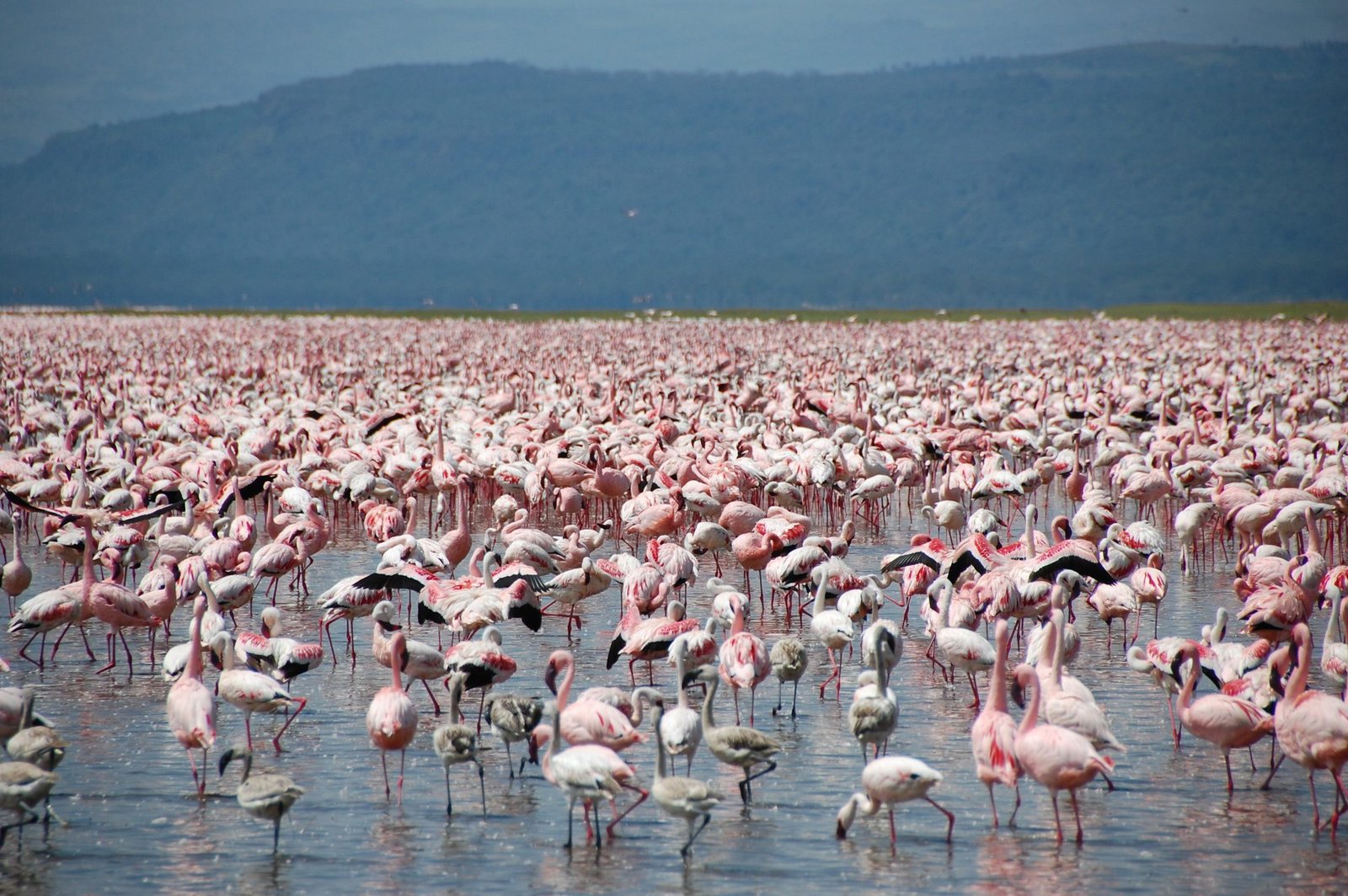
Lake Nakuru's fame rests on photographs of a shoreline turned pink by a million flamingos, and for decades that was the daily reality. It is not, reliably, any more. From around 2013 the lake's water level rose sharply, flooding the shallow alkaline margins the lesser flamingos fed in, and the great flocks moved north to Lake Bogoria and elsewhere along the Rift. Numbers at Nakuru have fluctuated since, sometimes substantial, sometimes sparse, and they depend on the water level in a given season rather than on the calendar.
We say this plainly because operators who promise the pink shoreline set up disappointment. What we will say is that Nakuru still holds flamingos in most seasons, sometimes in impressive numbers, and that the rhinos and the giraffe are the guaranteed part. If the flamingos are the point for you, tell us, and we can build in Lake Bogoria, two hours north, where the flocks have been more consistent — a worthwhile detour for a serious birder and an unnecessary one for most.
Nakuru sits between the two halves of our Kenya and Tanzania luxury safari, and the Mara it pairs with is covered in our Masai Mara safari guide.
Two species are involved, and they behave differently. The lesser flamingo, the smaller and pinker of the two, feeds on blue-green algae in shallow alkaline water and is the bird of the great flocks; it is the one that left when the lake rose. The greater flamingo, larger and paler, feeds on invertebrates in deeper water and has coped better with the change. So even when the lesser flamingos are absent, Nakuru usually holds greater flamingos along with pelicans, cormorants and a great many other waterbirds. The shoreline is rarely empty. It is simply not, reliably, pink.
Where it fits
Nakuru's location is its logic. Coming from Nairobi, it is about three hours by road and makes a natural first or second night on the way to the Mara. Coming from the Mara, it is a long half-day's drive back east and works as the recovery stop before Amboseli or Nairobi. On our seventeen-day Wildlife and Primates itinerary it is day three: two nights in the Mara, then Nakuru with game drives on arrival, then a morning drive before the road to Amboseli. That gives the park about a day, which is what it needs.
One night is the right length. Nakuru is compact enough that a late-afternoon drive on arrival and a full morning the next day cover the lakeshore, the woodland and the viewpoints, and a second night adds little unless you are a birder working the list. It is a park that rewards a focused day rather than a slow week — the opposite of the Serengeti.
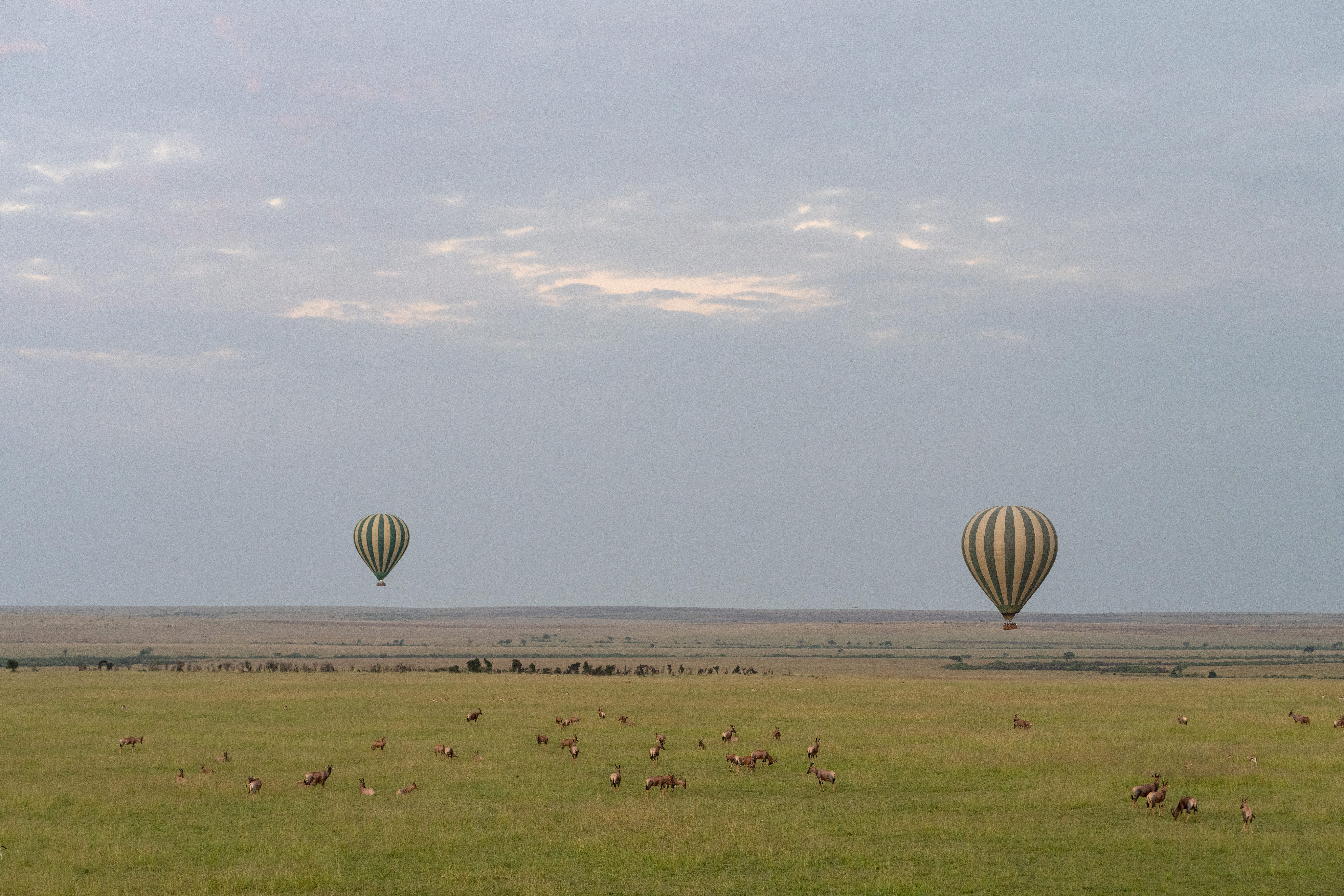
The Mara-to-Nakuru drive itself deserves a mention. It climbs out of the Mara's lowland, crosses the Mau escarpment and descends into the Rift Valley, with the lake appearing below you on the last stretch. It is long — allow five to six hours with a stop — and mostly on tarmac after the first hour. Leaving the Mara after an early game drive and breakfast puts you at Nakuru by mid-afternoon with time for a drive along the lakeshore before dark, which is exactly how our itinerary runs it.
The viewpoints and the waterfall
Two features are worth building the day around. Baboon Cliff, on the western escarpment, looks down over the whole lake and is the place for the wide photograph, with the water, the shoreline and the woodland laid out below and, on a good day, flamingos as a pink line along the edge. Makalia Falls, at the southern end, is a small waterfall in the woodland that makes a pleasant stop and is where leopard are most often reported. The lakeshore track between them is where the rhino and giraffe concentrate.
The lake itself is alkaline and not for swimming, and the park is fenced, which means the wildlife is resident rather than migratory. What you see in June you will broadly see in January, which makes Nakuru one of the more predictable stops on a Kenyan circuit — useful for a traveller whose Mara or Serengeti days carry the timing gamble of the migration.
Baboon Cliff earns its name, and the baboons there have learned that vehicles mean food. Keep windows up when parked, do not eat at the viewpoint, and do not leave a bag on a seat with the door open. It is a small thing, but the troop is large and confident, and the cliff is the one place in the park where the wildlife is a nuisance rather than the point.
Costs and practicalities
Kenya's national park fees are lower than Tanzania's, and Nakuru's daily fee for non-resident adults is in the range of 60 US dollars, paid through the Kenya Wildlife Service, against roughly 70 in the Serengeti. Accommodation runs from lodges inside the park on the escarpment to properties in and around Nakuru town; the in-park lodges cost more and put you on the ground at first light, which on a one-night stay is worth the difference. A private Kenyan safari at a good standard sits in the same broad 350 to 550 US dollars per person per day range as Tanzania, with the lower park fees being one reason Kenyan trips often price slightly below.
The road from Nairobi is tarmac and busy; the road from the Mara is longer and partly rough. Both are fine in a proper safari vehicle. Nakuru town is large enough to have everything you might have forgotten, which is not true of most safari stops.
Kenya's park fees are paid electronically through the Kenya Wildlife Service system rather than in cash at the gate, so your operator handles them in advance — another small argument for booking the Kenyan leg through someone who does this weekly rather than arranging it yourself at the barrier.
In one paragraph
Come to Lake Nakuru for rhino, both species, and for Rothschild's giraffe; enjoy the flamingos if the water is right and do not build the trip around them; give it one night and a full morning; see the lake from Baboon Cliff and the woodland at Makalia Falls; and use it as the hinge between the Mara and whatever comes next. It is a small park that does one thing better than anywhere else in Kenya, and that is enough.
If you are choosing between Nakuru and a second night somewhere else, the honest comparison is this: a second night in the Mara gives you more of what you already have; a night at Nakuru gives you rhino, which the Mara rarely does. For most first-time visitors that settles it, and it is why the park has stayed on our itineraries through every change in the flamingos.
Add Nakuru to your Kenya-and-Tanzania safari
Tell us your dates and whether the Mara, Amboseli or both are in the plan, and we will slot Nakuru in where it belongs and be straight with you about the flamingos on your dates. We run the Tanzanian side ourselves and arrange the Kenyan leg through a partner we will name.
Lake Nakuru photograph: Syllabub, CC BY-SA 3.0, via Wikimedia Commons
Plan your Kenya safari with Sokwe Africa Safari
Frequently asked questions
Are there still flamingos at Lake Nakuru?
In most seasons, sometimes in impressive numbers, but not reliably the million-bird shoreline of old. Since the lake rose from around 2013 the great flocks have moved north to Lake Bogoria and elsewhere, and Nakuru's numbers depend on the water level in a given season.
Is Lake Nakuru good for rhino?
It is the most reliable rhino park in Kenya. A fenced sanctuary holding both black and white rhino, with white rhino sightings on the lakeshore close to routine and black rhino usually found in a full day.
How long should I spend at Lake Nakuru?
One night: a late-afternoon game drive on arrival and a full morning the next day cover the park. A second night adds little unless you are a birder working the list.
How far is Lake Nakuru from Nairobi and the Masai Mara?
About 160 kilometres and three hours from Nairobi on tarmac. From the Mara it is a long half-day's drive back east, which is why it works as the stop between the Mara and Amboseli or Nairobi.
What does Lake Nakuru cost?
The park fee for non-resident adults is around 60 US dollars a day through the Kenya Wildlife Service — lower than Tanzania's Serengeti at roughly 70. Lodges inside the park cost more than those in town but put you on the ground at first light.
Where are the best viewpoints in Lake Nakuru?
Baboon Cliff on the western escarpment for the wide view over the whole lake, and Makalia Falls at the southern end in the woodland, where leopard are most often reported. The lakeshore track between them is where rhino and giraffe concentrate.