
Can you book a Tanzania safari last minute?
Yes — but the honest answer depends entirely on when you want to travel. A last minute safari tanzania enquiry in mid-February, for travel three weeks later, is very often straightforward: camps have space, rates are soft and we can build a genuinely good trip in a couple of days. The same enquiry in mid-May for travel in early August is a different conversation, because the best camps in the Serengeti sold out months ago. Tanzania does not have one booking window; it has two very different ones, and knowing which you are in changes everything.
We are asked this constantly at Sokwe, usually by people who have just been given leave at short notice, had a trip fall through elsewhere, or simply decided on impulse that this is the year. This guide sets out the real lead times by season, what is realistically still bookable at three or four weeks' notice and what is not, why the green season creates genuine last-minute value rather than marketing-brochure value, and the practical checklist — visa, vaccination certificate, flights — that decides whether a fast booking actually works.
The honest lead times, season by season
Peak season is June to October, plus the Christmas and New Year fortnight. For these dates the good camps genuinely book six to twelve months ahead, and the small, well-located ones in the northern Serengeti book a year out for the July and August river-crossing period. This is not scarcity marketing. A twelve-tent camp in the Kogatende area has roughly 24 beds for the busiest six weeks of the African safari calendar, and agents worldwide hold space on it from the previous September. At four weeks' notice for August, you are working with what nobody else wanted.
The green season, roughly November to April, is the opposite. Lead times of two to four months are comfortable, and two to four weeks is very often workable — we regularly confirm good itineraries inside a fortnight in February and March. Occupancy across the northern circuit drops sharply once the peak crowd goes home, so camps that were impossible in August have several tents free in March. January to early March is the strongest window of all, because the calving herds are on the southern plains and the rain, when it comes, tends to fall in short afternoon bursts rather than all day.
The two shoulder periods deserve a word of their own. Early June and early November sit between the two regimes: availability is patchy rather than absent, and a flexible traveller can often find something excellent at six to eight weeks. Long rains in April and May are the easiest time of all to book late, because demand is genuinely low, but that is also when a number of camps close entirely. Late booking is easiest precisely where the trade-offs are largest, which is the honest tension running through this whole subject.
- June to October — book 6 to 12 months ahead
- Christmas and New Year — book 9 to 12 months ahead
- November to April green season — 2 to 4 months comfortable, 2 to 4 weeks often workable
- Early June and early November — 6 to 8 weeks, patchy but possible
- April and May long rains — bookable at days' notice, but some camps closed
What is still realistically bookable at short notice
A great deal, in the green season. The Ngorongoro Crater rim lodges usually have space, Tarangire is rarely full outside the July to October peak, and the central Serengeti around Seronera holds a large number of beds that can absorb late bookings. Mid-range tented camps and permanent lodges are the most reliable of all, because they have more rooms and less rigid inventory than tiny luxury properties. A seven-night northern circuit — Tarangire, the Crater and the Serengeti, private vehicle and guide — is a genuinely realistic build at three weeks' notice from November to March.
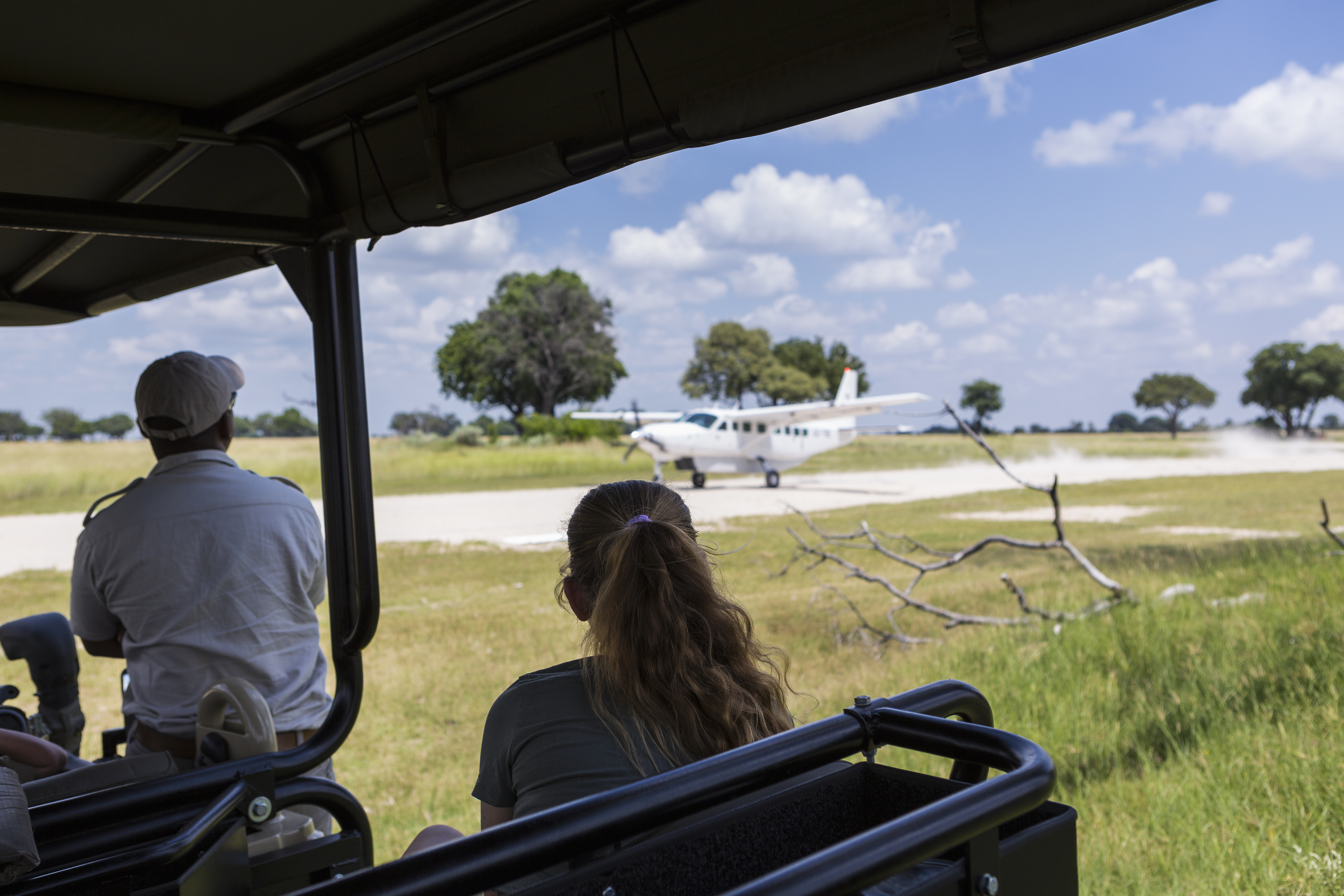
Park permits are not a constraint in Tanzania, which surprises people who have researched gorilla trekking in Uganda or Rwanda. There is no permit lottery here and no daily cap on Serengeti entries; park fees are paid as part of your booking and no advance quota applies. The Ngorongoro Crater descent requires a permit tied to your booking, but it is issued on confirmation rather than rationed months ahead. Domestic flights between Arusha, the Serengeti airstrips and Zanzibar have frequent daily departures and usually take late bookings without difficulty.
What is not bookable late — and why
A handful of specific things genuinely do not open up at short notice. The famous small camps in the northern Serengeti during the July and August crossings are the clearest example; so are the eight or ten most sought-after luxury properties countrywide, at any point in peak season. Hot-air balloon flights over the Serengeti carry a fixed number of baskets and sell out days to weeks ahead in high season, though in February or March we can often secure a slot with a week's notice. Christmas and New Year at any good camp is effectively closed by the previous spring.
Kilimanjaro adds one specific catch worth flagging. The Marangu route uses fixed mountain huts with a hard bed limit, so during peak trekking months it can be full when the tented routes are not. Machame, Lemosho and the other camping routes are far more elastic at short notice because they carry their own accommodation. If you are combining a late-booked safari with a trek, we will usually steer you towards a camping route for exactly this reason. It is also worth saying plainly that a good guide and a good vehicle matter more than a famous camp name, and those we can almost always arrange.
Why the green season creates real last-minute value
This is where a late booking stops being a compromise and becomes a genuinely smart decision. Green season lodge and camp rates fall by roughly 20 to 50 per cent against peak-season tariffs, and the drop is steepest at the properties that are most expensive in August. A tent that costs 900 US dollars per person per night in the migration months can sit at 450 to 600 in March. On a seven-night trip for two people that difference runs to several thousand dollars — the same guiding, the same vehicle, the same park, at close to half the accommodation cost.
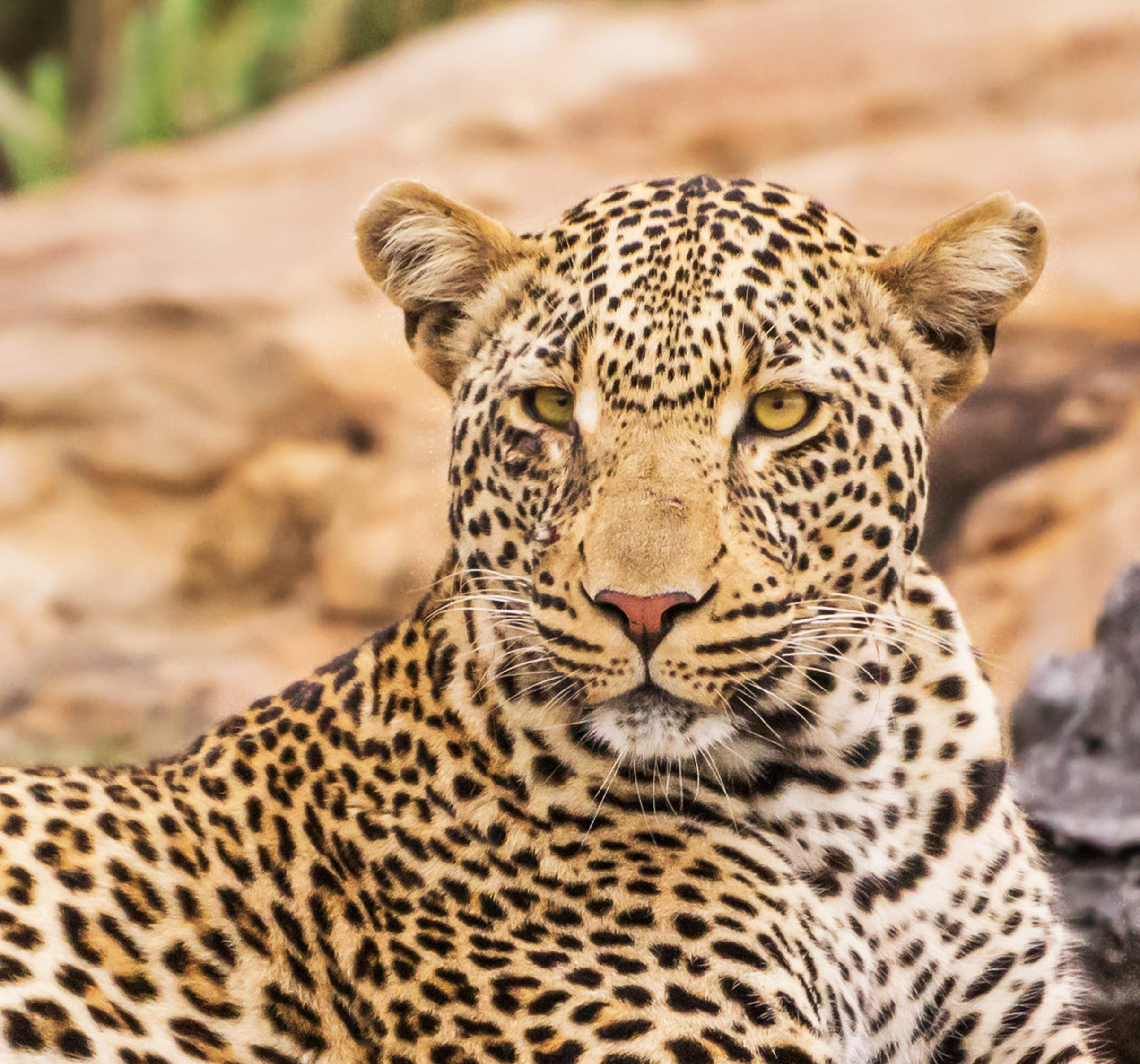
The experience itself changes too, mostly for the better. The plains turn green after the short rains, the light for photography is far better than the dusty haze of late dry season, and the vehicle count at a sighting drops dramatically. In August a good leopard sighting in Seronera can draw a dozen vehicles; in March it is often yours alone, or shared with one other. Resident game — elephant in Tarangire, the Crater's lions, the Serengeti's cats — does not migrate anywhere, so the wildlife you came for is still there.
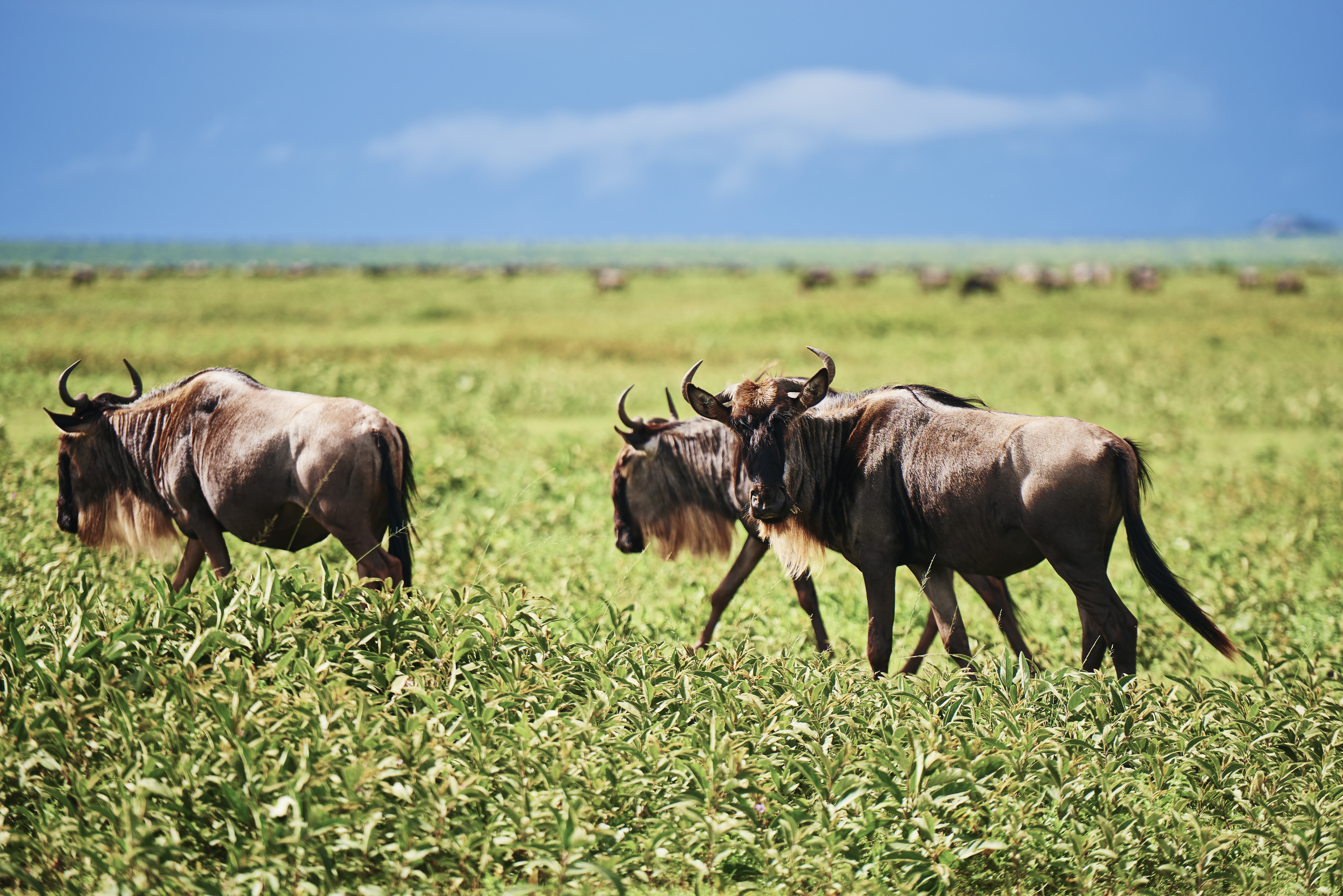
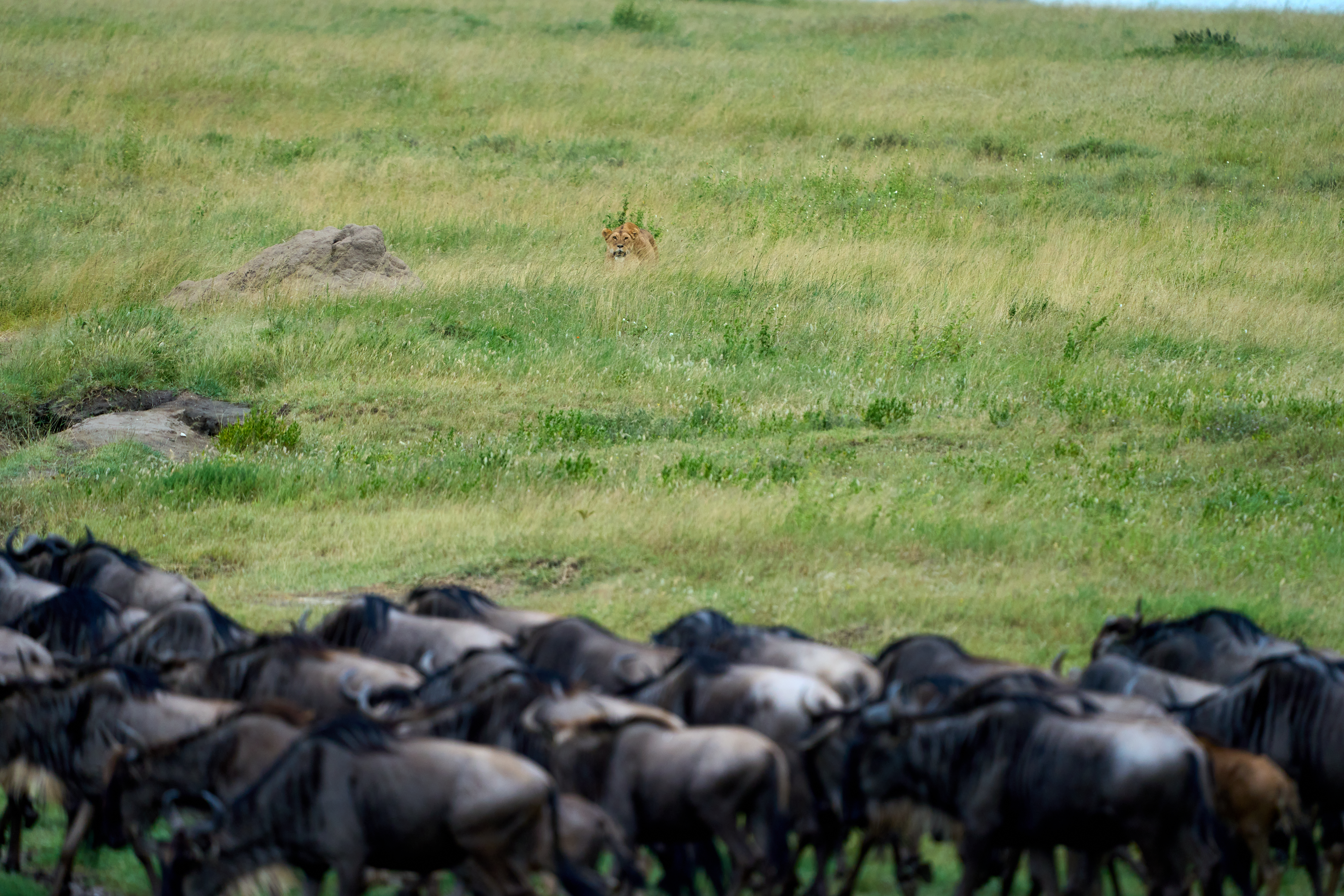
February is the standout month. The wildebeest herds are on the short-grass plains around Ndutu and the southern Serengeti for calving, with roughly half a million calves born in a concentrated few weeks, and the predator activity that follows is as dramatic as anything at a river crossing. Camps in that area do fill, but two to four weeks' notice is frequently enough, and the mobile camps that follow the herds hold more flexible inventory than fixed lodges. If you are booking late and want a spectacle, this is the one to aim for.
Flights are usually the real constraint
In practice, the thing that stops most late bookings is not the safari at all — it is the international flight. Ground arrangements in the green season are flexible; long-haul economy fares to Kilimanjaro International are not. Fares to JRO rise steeply inside three weeks, and the convenient routings through Doha, Amsterdam, Istanbul and Nairobi fill first. We routinely quote a reasonable land package only for the client to find the flight has doubled. Check flights before you fall in love with an itinerary.
Two practical workarounds help. First, look at Dar es Salaam as an alternative arrival point, then connect onward by domestic flight; the combined fare is sometimes lower than flying into Kilimanjaro directly. Second, be flexible by two or three days at each end, which on most routes moves the fare more than anything else you can control. If you are flying from the United States or Australia, add a recovery day in Arusha before the safari starts — arriving jet-lagged into a 6am game drive wastes the most expensive part of your trip.
The checklist for booking fast
If you want to book a safari last minute, five things need to line up, and none of them takes long if you start today. The Tanzanian e-visa is applied for online and is usually approved within a few working days, though the official guidance allows up to ten, so apply the moment your dates are firm rather than after the safari is paid. Visa on arrival remains available to most nationalities at Kilimanjaro and Dar es Salaam, which is a useful safety net, but the queue at 8pm after a long-haul flight is not where you want to be.
Yellow fever vaccination is required only if you are arriving from, or transiting for twelve hours or more through, a country with yellow fever risk — which includes Kenya and Ethiopia, so a Nairobi or Addis routing matters. The certificate is valid ten days after vaccination, so it needs booking straight away if it applies to you. Malaria prophylaxis should be started before departure according to your doctor's advice. Travel insurance with medical evacuation cover is non-negotiable and can be bought the same day. Finally, most camps want full payment rather than a deposit inside 30 days.
- Apply for the e-visa as soon as dates are firm — allow up to 10 working days
- Check yellow fever requirements against your transit route, not just your home country
- Start malaria prophylaxis before departure per medical advice
- Buy travel insurance with medical evacuation cover
- Expect full payment, not a deposit, inside 30 days
- Confirm the international flight before confirming the safari
If you are planning this route, read Ndutu in the green season: the best predator viewing in Africa.
The trade-offs, stated honestly
A short notice safari tanzania trip in the green season is excellent value, but it is not identical to a peak-season one and we would rather you knew that before you booked. It rains. In the short rains of November and December this usually means an afternoon downpour of an hour or two, which is easily worked around; in the long rains of late March through May it can mean genuinely wet days, muddy tracks and occasional lost hours. Black cotton soil in the western and southern Serengeti becomes difficult after heavy rain, and some off-road routes close.
The grass is longer, which makes small cats harder to spot, and game is more dispersed because water is everywhere rather than concentrated at a few rivers. There are no Mara River crossings between roughly November and June — the herds are simply elsewhere. Some camps close entirely in April and May for refurbishment, so the choice narrows exactly when the discounts are deepest. And a genuinely late booking means taking what is available rather than choosing freely, which is a real limitation even when the result is very good.
The right question is not how late you can book, but which month you are willing to travel in — get that right and three weeks is plenty of notice.
Set against that, the case for going anyway is strong. Fewer vehicles, better light, lower cost, greener country, calving in February and the resident wildlife entirely undiminished. Most of our green-season clients arrive braced for compromise and leave saying it was the better trip. The travellers who are genuinely poorly served by a last-minute booking are those with one fixed August fortnight and their heart set on a specific famous camp — and for them the honest advice is not to rush, but to book properly for next year.
Travelling soon? Talk to us today
We are based in Arusha, we speak to the camps directly rather than through a booking engine, and we know which properties actually have space this month rather than which ones show green on a website. Tell us your dates, your budget and how much flexibility you have, and we will tell you honestly what is achievable — including when the honest answer is that you should shift by a month or wait for next season. If your dates are close, message us today and we will come back quickly with what is genuinely available.