
The cats nobody puts on the list
Every safari brochure sells three cats: lion, leopard and cheetah. Tanzania in fact holds at least six wild cat species, and the three that go unmentioned are in many ways the more interesting find. A serval hunting rodents in long grass or a caracal crossing a track at dusk is a sighting that experienced guides get genuinely excited about, and that many visitors to East Africa never manage in a lifetime of trips.
Part of the reason they are overlooked is simple marketing — the Big Five was a hunting term, not an ecological one, and the industry has been repeating it ever since. Part of it is genuine difficulty. The small cats are nocturnal or crepuscular, they are solitary, they occupy dense cover, and they are small enough that a vehicle passing at thirty kilometres an hour will simply not register them. Finding one requires a guide who is looking, and a pace that allows looking.
If you have already done a Tanzanian safari and are wondering what a second trip offers, this is a large part of the answer. Once you stop treating a safari as a checklist of five animals and start treating it as a landscape full of things to find, the country becomes considerably richer, and the small cats sit right at the centre of that shift.
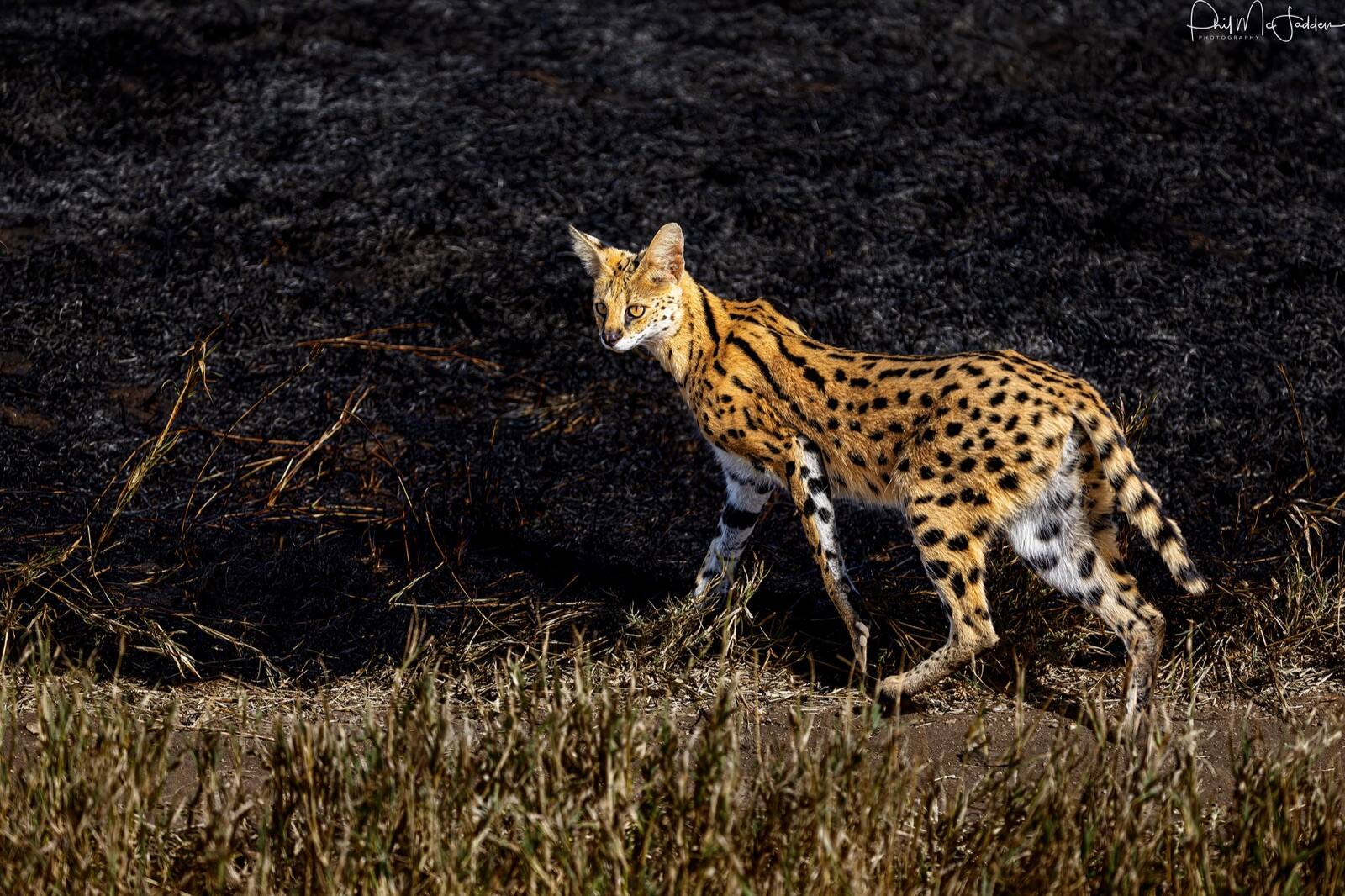
The serval: built for one job
The serval is the most likely of the small cats to be seen, and it is a remarkable-looking animal — tall, slender, tawny with bold black spots, and carrying the largest ears relative to body size of any cat in the world. Those ears are the whole design. A serval hunts primarily by sound, standing motionless in grass taller than itself, rotating its ears independently until it locates a rodent moving beneath the vegetation, and then launching a near-vertical pounce onto a target it has never seen.
The pounce is extraordinary and worth waiting for. A serval can leap over two metres vertically and more than three metres forward, coming down with both front feet on the spot where the sound came from. Its success rate is around fifty per cent, which is roughly double that of a lion pride and among the highest of any predator on earth. A serval catches something in about every other attempt, which is why it can afford to hunt small prey.
Look for them in long grass near water, particularly on the margins of marshy ground and along drainage lines. Early morning and the last hour before dark are the productive times. The Serengeti's Sametu and Moru areas, the marsh edges in the Ngorongoro Crater, and the grassland fringes of Arusha National Park are all reasonable places to look. What you are looking for is a pair of ears above the grass, nothing else.
The caracal: the one that gets away
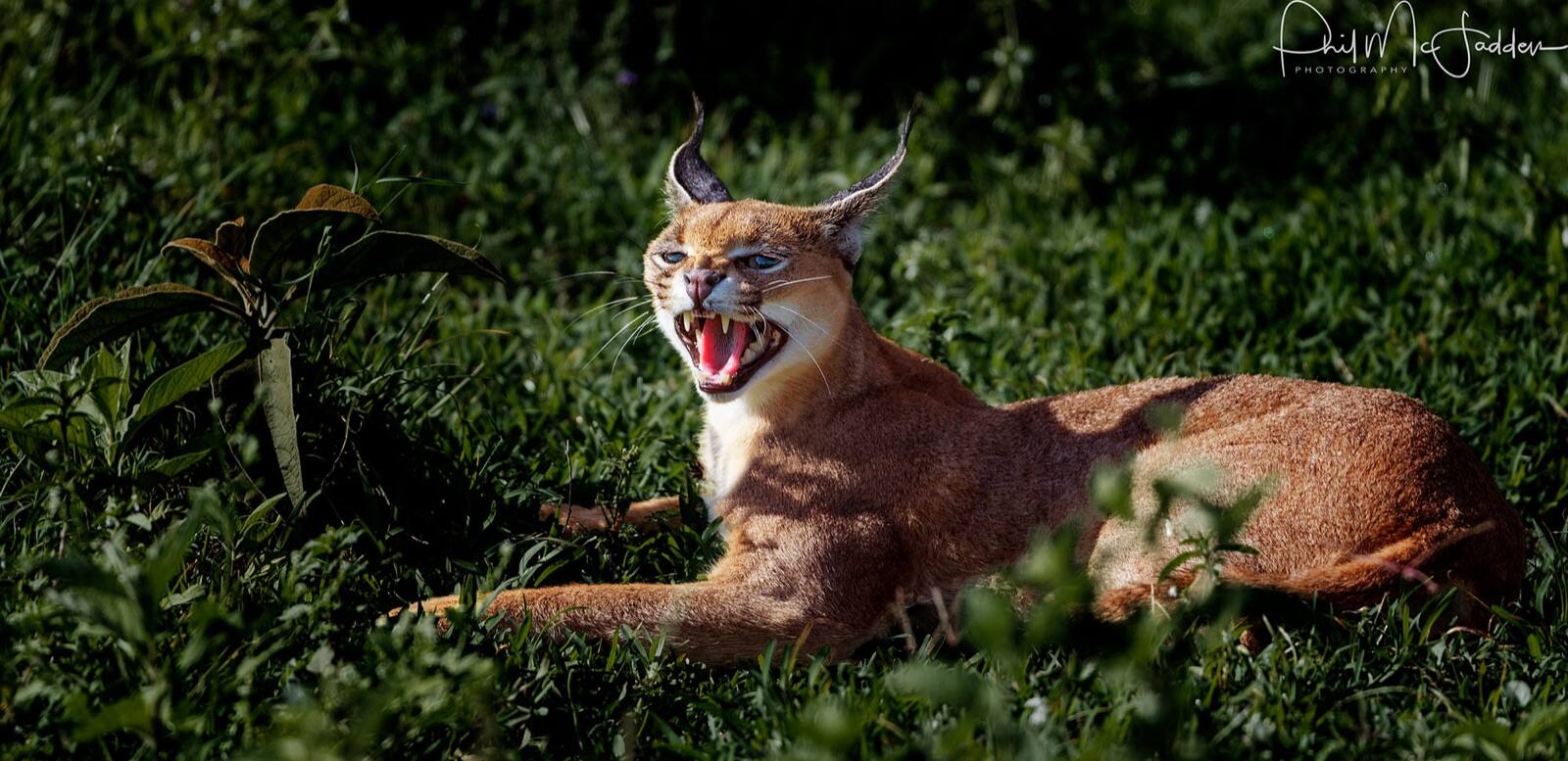
The caracal is heavier-built, uniform reddish-tan without spots, and carries the long black ear tufts that make it unmistakable when you finally see one. It is a considerably more powerful animal than the serval, capable of taking prey as large as a small antelope, and it is famous among guides for its ability to take birds out of the air — a caracal can leap and swat flying birds down with a forepaw, and there are old records of them killing several from a rising flock in a single jump.
They are also, frankly, very hard to see. Caracal are strictly nocturnal in most of their range, they favour drier scrubby country, and they are exceptionally wary of vehicles. The Ngorongoro Crater produces the most reliable sightings in northern Tanzania, usually in the early morning on the crater floor before the animal retreats. Tarangire and the drier eastern Serengeti also hold them.
When guests ask us to guarantee a caracal, we tell them we cannot, and we would be suspicious of any operator who claimed otherwise. What we can do is take you into the right country at the right hour with a guide who is actively looking, which meaningfully improves odds that are honestly low to begin with. Some of our guides have seen a handful in twenty years of working these parks.
African wildcat, and the ancestor in your kitchen
The African wildcat is the least dramatic of the three and by far the most historically significant, because it is the direct ancestor of every domestic cat alive. Genetic work traces the domestication to wildcats in the Near East around ten thousand years ago, as grain storage in early agricultural settlements drew rodents and the cats followed. The animal you may see crossing a track in the Serengeti is essentially the same species curled up on a sofa in London.
They look strikingly like a large, leggy tabby, and that similarity causes a real conservation problem. African wildcats interbreed readily with feral domestic cats, and genetically pure wildcat populations are being diluted wherever human settlement encroaches. Tanzania's large protected areas are among the more important remaining strongholds for the pure form, which is a quiet piece of conservation value that almost nobody visiting is aware of.
To distinguish a true African wildcat from a feral tabby, look at the legs and the ears. The wildcat is longer-legged, sits more upright, has a distinctly reddish-brown backing to the ears, and has faint but consistent banding on the legs. Ask your guide to talk you through it if you see one, because the identification is genuinely interesting and most guests assume they are looking at somebody's escaped pet.
The other small predators worth knowing
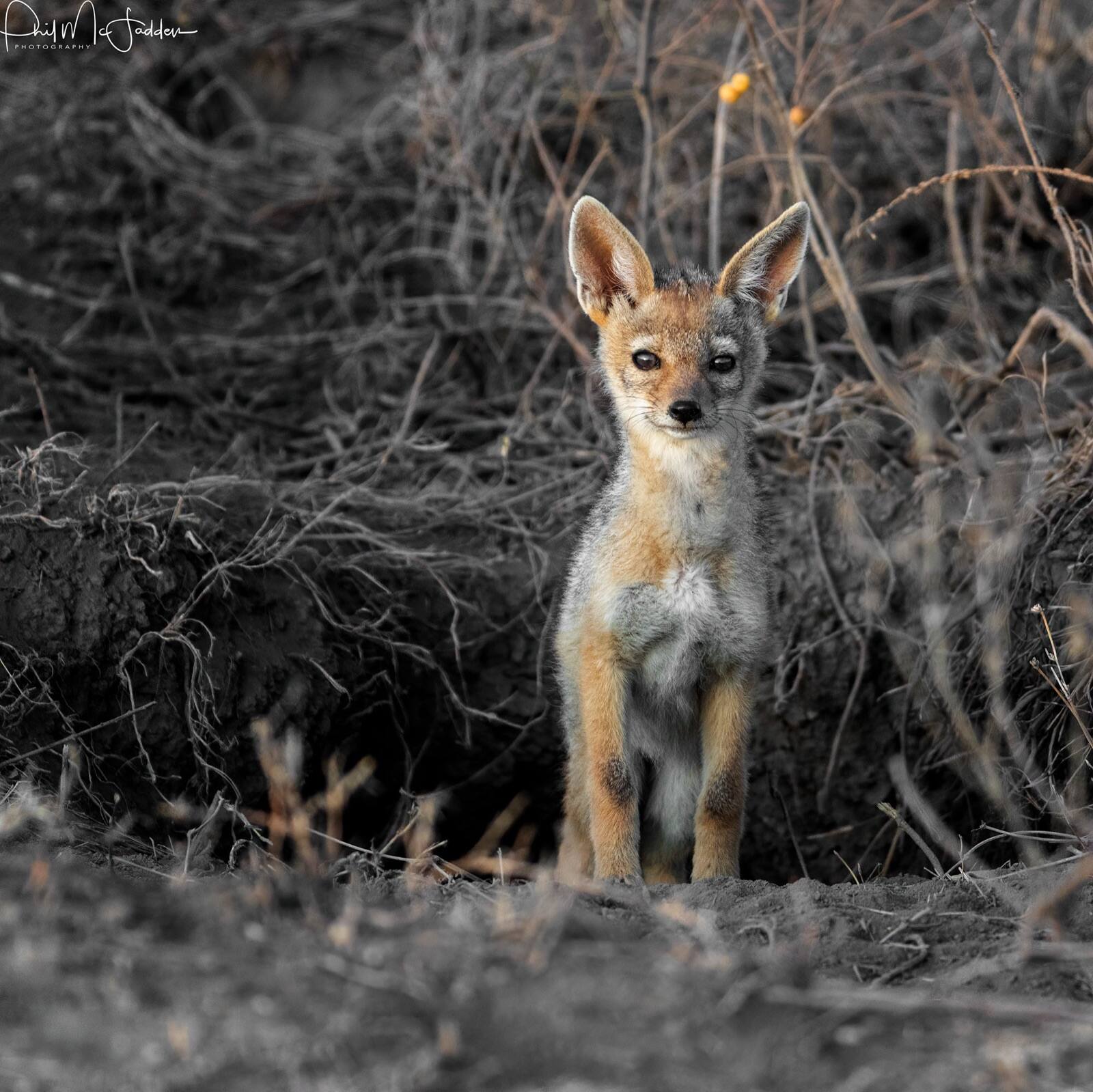
The cats are not the only small carnivores on the plains, and once you start looking the supporting cast turns out to be large. Black-backed and golden jackals are common across the northern circuit and are far more interesting than their reputation suggests — they pair for life, both parents raise the pups, and older siblings frequently stay on to help with the next litter, which is genuinely unusual among carnivores. A den with pups outside it in the early morning is one of the most entertaining sightings available.
Bat-eared foxes, with their enormous ears and delicate build, hunt harvester termites by sound in much the same way a serval hunts rodents, and they are frequently visible in family groups on the short-grass plains at dawn. Banded mongoose move in troops of twenty or more and are constantly busy. Genets, which look like a cross between a cat and a squirrel, come into camps at night with some regularity and are often seen in the rafters of dining tents.
Honey badgers deserve a mention because everyone asks. They exist in Tanzania, they are as fearless as their reputation, and they are almost entirely nocturnal and thinly distributed. Seeing one is genuinely uncommon. Our guides tend to remember individual sightings by year, which tells you most of what you need to know about the odds.
How to actually improve your chances
Night drives are the single biggest factor, and they are only permitted in certain areas. Night drives are not allowed inside Serengeti National Park or the Ngorongoro Crater, but they are permitted in some private and community conservancies bordering the parks, and in a few other reserves. If small cats matter to you, building one or two nights in a conservancy into the itinerary transforms your odds — this is the one recommendation that makes a real numerical difference.
The second factor is pace. A vehicle covering two hundred kilometres a day sees the animals that stand in the open; a vehicle covering forty sees considerably more. We build small-cat-focused itineraries with fewer parks, shorter transfers and long slow drives along drainage lines and grassland margins in the first and last hours of light.
The third is simply telling your guide. A guide who knows you would rather find a serval than photograph another lion will drive completely differently. Most guides default to the Big Five because that is what most guests want, and they will happily change approach if asked. It costs nothing and it is the most frequently missed opportunity on a Tanzanian safari.
See our guide to the Big Five safari animals and to night safaris in Tanzania.
Related reading: Where to see cheetah in Tanzania: a guide from the plains.
A note on what you will not see
Tanzania also holds the African golden cat, in forest habitat in the far west of the country, and it is effectively unseeable on a normal safari — it is one of the least photographed cats in Africa and most researchers working on it have never had a direct sighting. We mention it only so the list is complete. Nobody should build an itinerary around it, and any operator who suggests otherwise is not being straight with you.
Why a second trip should look different
We say this to returning guests often. A first safari should probably be a classic northern circuit — Serengeti, Ngorongoro, Tarangire, the big animals, the famous landscapes. It is famous for good reason and there is no sense being contrarian about it. But a second trip built the same way tends to disappoint, because the novelty of a lion has gone and the itinerary has not changed to reflect that.
There is also a practical argument for it. Small-cat and small-predator country is generally quieter country, which means fewer vehicles at every sighting, not just at the rare ones. A morning spent working drainage lines in the Sametu area or the Ngorongoro marsh margins is frequently a morning without meeting anyone else at all, and that solitude changes the character of a safari as much as the animals do.
A second trip built around the small cats, the smaller predators, birds and behaviour is a completely different experience in the same country. Slower, quieter, more time in fewer places, more conversation with your guide about what you are actually watching. Guests who make that shift almost always describe the second safari as better than the first, which is not what they expected when they booked it.
Plan a different kind of safari
If you have been to Tanzania before, or you simply want a safari that is about finding things rather than ticking them off, tell us. We will slow the itinerary down, build in the conservancy nights that make night driving possible, and put you with a guide who enjoys the search as much as you do.
Plan your safari with Sokwe Africa Safari
Frequently asked questions
What small cats live in Tanzania?
Serval, caracal and African wildcat are the three most likely to be encountered, alongside lion, leopard and cheetah. The African golden cat occurs in forest habitat in the far west. All three small cats are nocturnal or crepuscular and rarely seen.
Where can I see a serval in Tanzania?
Long grass near water and along drainage lines, in early morning or the last hour of light. The Sametu and Moru areas of the Serengeti, the marsh edges in the Ngorongoro Crater, and the grasslands of Arusha National Park are all reasonable places to look.
How rare is it to see a caracal?
Genuinely rare. Caracal are strictly nocturnal, wary of vehicles and favour dry scrub. The Ngorongoro Crater floor at first light offers the best chance in northern Tanzania, but some experienced guides have seen only a handful in twenty years.
Is the African wildcat the ancestor of domestic cats?
Yes. Every domestic cat descends from African wildcats domesticated in the Near East around ten thousand years ago. Interbreeding with feral domestic cats now threatens genetically pure wildcat populations, making Tanzania's large protected areas important strongholds.
Can I do a night drive in the Serengeti?
Not inside Serengeti National Park or the Ngorongoro Crater, where night driving is prohibited. Night drives are permitted in some bordering conservancies and other reserves, and adding one or two nights there is the single best way to improve small-cat sightings.
How do I improve my chances of seeing small cats?
Add a conservancy with night driving, slow the itinerary down to fewer parks and shorter transfers, and tell your guide it is a priority. A guide who knows you want a serval more than another lion will drive entirely differently.