
Why cheetah are the hardest of the big cats to find
Of all the animals guests ask us about, the cheetah is the one that most often goes unticked. Lion are abundant across the northern circuit and leopard, though secretive, are reliably found in the right riverine woodland. The cheetah sits differently. Tanzania holds perhaps a thousand of them across its whole protected network, and they live at low density by necessity — a cheetah cannot defend a kill against lion or hyena, so it survives by staying away from both. That single fact shapes everything about where you will find one.
A cheetah safari in Tanzania is therefore not a matter of luck alone. It is a matter of being in open, short-grass country at the right time of year, with a guide who understands that a cheetah is looking for two things at once: a clear line of sight to prey, and a clear line of escape from competitors. Once you understand that, the map of where to see cheetah in Tanzania becomes surprisingly specific.
Cheetah also hunt on a different schedule from the other cats. Lion and leopard are largely nocturnal and crepuscular; cheetah are diurnal, hunting through the middle of the morning and again in late afternoon, precisely because that is when lion and hyena are least active. This is the one big cat genuinely built for daylight, which is a gift to anyone hoping to watch a hunt rather than a sleeping animal under a bush.
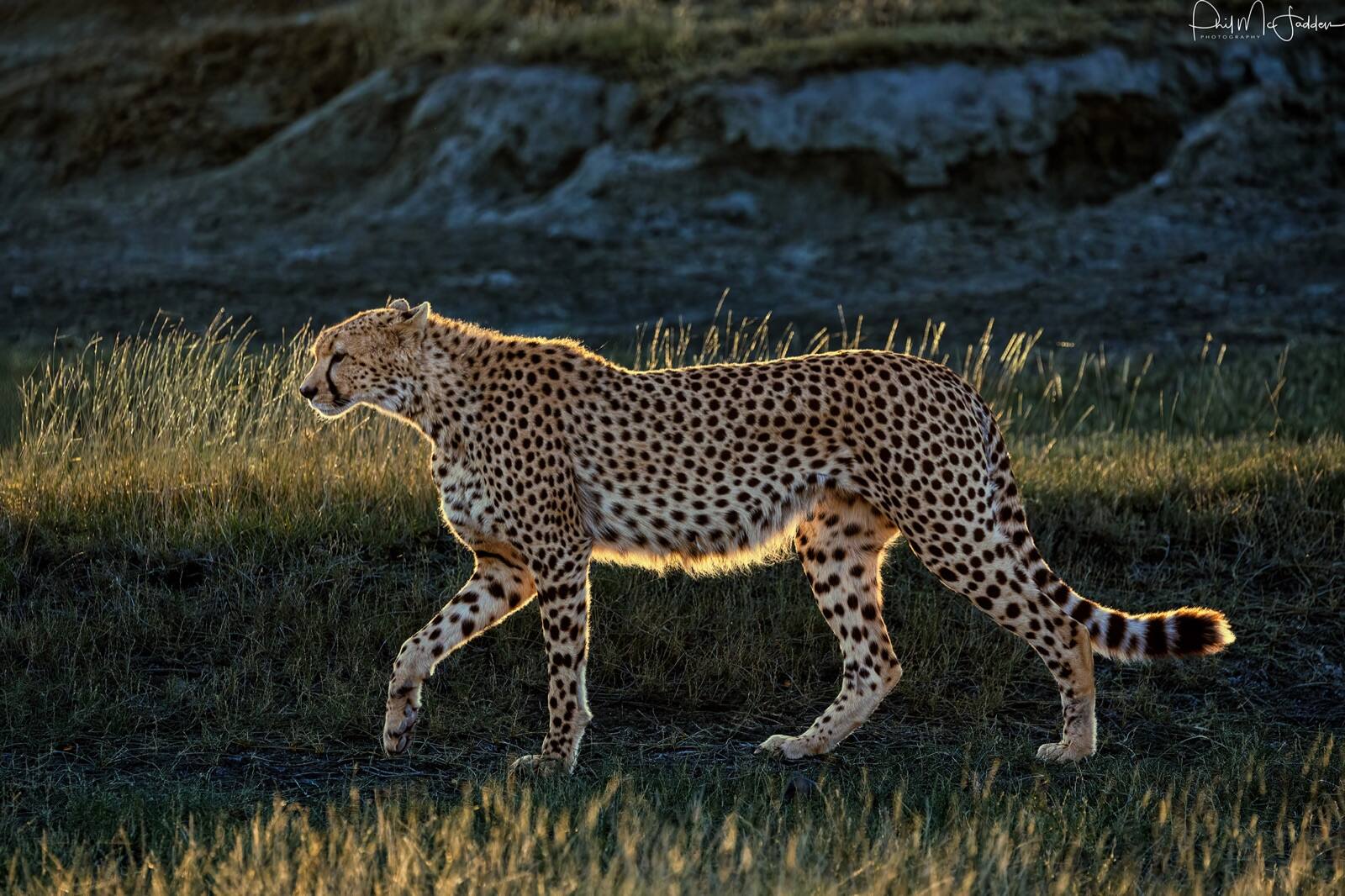
The short-grass plains: Ndutu and the southern Serengeti
If we had to send you to one place in Tanzania to find cheetah, it would be the short-grass plains of the southern Serengeti and the Ndutu area on the Ngorongoro Conservation Area boundary. Between roughly December and March, the wildebeest and zebra herds move onto these plains to calve, and the grass is cropped low and even. For a cheetah this is close to ideal country: visibility for hundreds of metres in every direction, abundant Thomson's gazelle, and enough space to see a lion coming long before it arrives.
The Ndutu area rewards patience in a particular way. Cheetah here often use the low termite mounds and the occasional fallen tree as vantage points, sitting up on them in the first hours of light to scan the plain. A guide who knows the area will work the mounds methodically rather than driving the tracks at speed, and that difference in method is usually the difference between seeing a cheetah and driving past one lying flat in the grass a hundred metres away.
Male cheetah frequently form coalitions, usually of brothers from the same litter, and these coalitions hold territory more successfully than a lone male could. A coalition of two or three is a wonderful thing to watch — they hunt cooperatively, take larger prey than a single cheetah manages, and are noticeably more confident in the open. Females, by contrast, are solitary except when raising cubs, and range far more widely, which makes them harder to locate but often more rewarding when you do.
Central Serengeti, Seronera and the Moru Kopjes
The Seronera valley in the central Serengeti holds cheetah year-round, and it is the most reliable place to look outside the calving months. The country here is a mix of open grassland and scattered acacia, with the Seronera river running through it. Cheetah use the open ground between the woodland fingers, and because the central Serengeti is accessible from most camps, it is often where guests get their first sighting.
The Moru Kopjes area to the south-west deserves a mention of its own. The granite outcrops that rise from the plain create a landscape of open grazing broken by high ground, and cheetah use the lower aprons of the kopjes as lookouts. It is quieter than Seronera in terms of vehicle traffic, and on a good morning you can have a cheetah entirely to yourself, which is increasingly rare in the Serengeti's busier corners.
One honest caveat about the central Serengeti: it is also where lion density is highest, and where cheetah are consequently under most pressure. Cheetah lose a substantial share of their kills to lion and hyena, and cheetah cubs suffer very high mortality in lion country. You may well find a cheetah here, but you are more likely to find her thin, alert and moving than settled and relaxed.
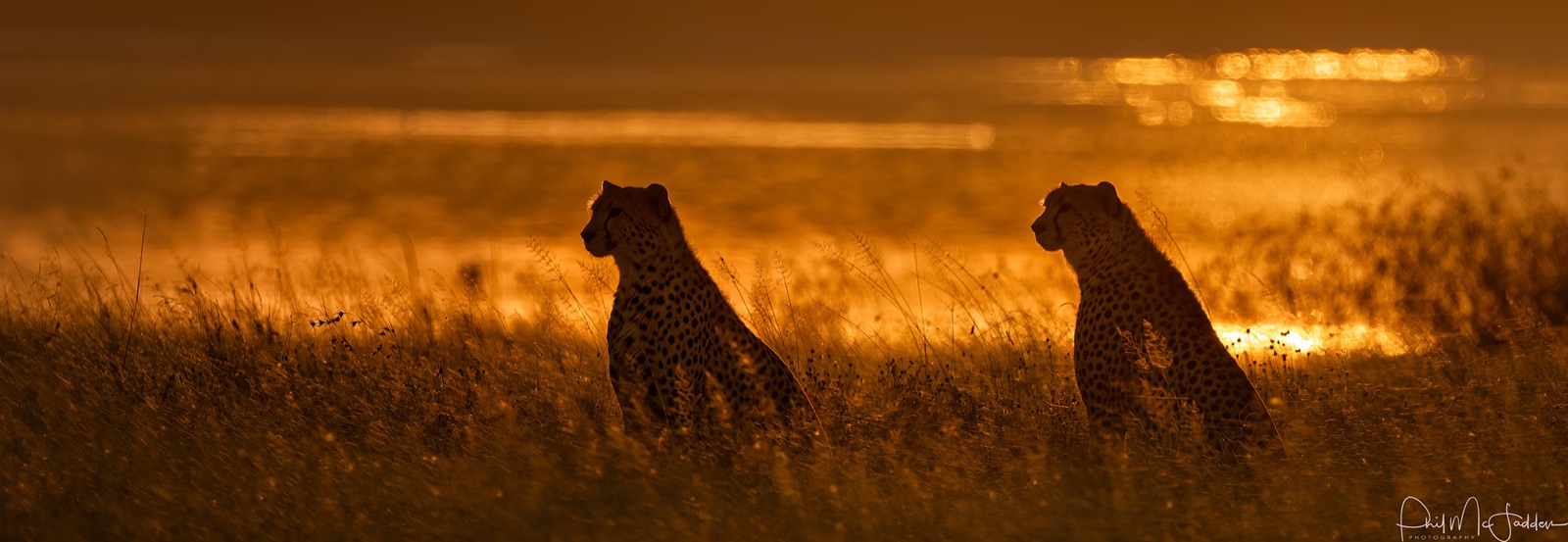
The best time of year for cheetah in Tanzania
The strongest window is December to March, when the herds are on the southern plains and the grass is short. Cheetah concentrate where the gazelle concentrate, and the visibility during these months is the best of the year. This is also the calving season, which means an enormous quantity of vulnerable young prey and a correspondingly high level of predator activity across the whole southern Serengeti.
June to October, the long dry season, is the classic Tanzania safari window and it remains good for cheetah in the central and western Serengeti, though the grass in the south has grown long and the herds have moved north. Sightings are steadier rather than spectacular. If your priority is the Mara River crossings, you will be in the north, where cheetah are genuinely scarce — the country there is rolling and long-grassed, and it suits lion far better than it suits cheetah.
April and May, the long rains, are the least predictable months and many camps in the south close. We are honest with guests about this: the green season has real advantages in price and solitude, but if a cheetah is at the top of your list, it is not the season to gamble on. Better to move your dates than to spend a week hoping.
How to actually find one: what your guide is doing
Finding cheetah is largely a matter of reading terrain rather than following tracks. Our guides work the high points — termite mounds, fallen trees, the low shoulders of kopjes — and they look for a silhouette that sits too upright to be a rock. Cheetah have a very particular posture when scanning, chest raised and head still, and once you have learned it you begin to pick them out yourself at distance.
The second technique is reading the prey. A herd of Thomson's gazelle that has stopped feeding and turned to face one direction in unison is telling you something is there. Gazelle alarm-snort at cheetah, and that sound carries. A good guide will stop the vehicle and simply listen, which is a skill that has quietly disappeared from a lot of modern safari driving.
Finally, there is restraint. A cheetah that is preparing to hunt needs space, and vehicles crowding the animal will cause her to abandon the attempt — which, for a mother with cubs who may not have eaten in two days, is a real cost, not an inconvenience. We keep our distance, position so as never to sit between a cheetah and her prey, and turn the engine off. It makes for better photographs and, more importantly, it does not damage the animal you came to see.
Cheetah are best combined with the calving season — see our guide to the Ndutu calving season, or read about the Big Five and where to find them.
Photographing cheetah: what the light asks of you
Because cheetah hunt in daylight, they present a photographic problem the other cats do not: hard overhead light and heat shimmer. The plains at Ndutu in February can produce shimmer strong enough to soften any image taken at distance after about nine in the morning. The practical answer is to work early and to work close to the ground — a low angle cuts through far less hot air than a shot taken down from a raised roof hatch.
The other consideration is anticipation. A cheetah hunt is over in under a minute and covers ground faster than you can react, so the picture is made in the moments before. Watch for the drop of the head, the slow crouch and the shortening stride. If you are still adjusting settings when she starts to run, the sequence is already gone. We set exposure while the animal is still sitting, and then leave the camera alone.
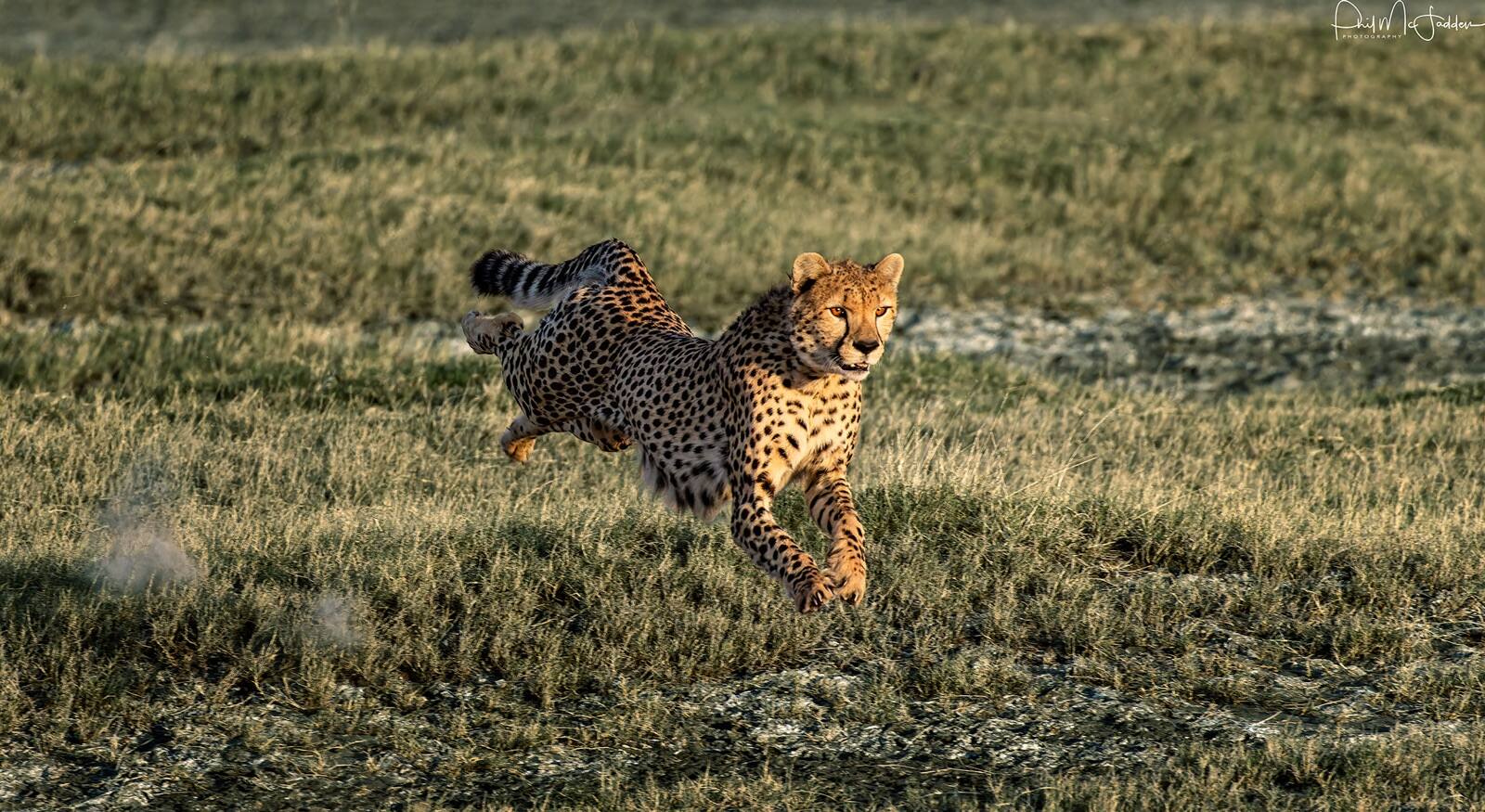
Cheetah conservation and what a safari contributes
Cheetah are classed as Vulnerable, and the Tanzanian population is among the most significant remaining in East Africa. The pressures are habitat loss and fragmentation outside the parks, conflict with livestock keepers on community land, and the high cub mortality that comes from sharing ground with lion and hyena. Inside the protected areas the picture is more stable, which is precisely why park and conservation fees matter.
A meaningful proportion of what you pay for a Tanzania safari goes directly to the Tanzania National Parks Authority and the Ngorongoro Conservation Area Authority as daily per-person fees. That money is the operating budget for anti-poaching, road maintenance and ranger salaries across the areas cheetah depend on. It is worth knowing that the least glamorous line on your invoice is the one doing the most conservation work.
Planning a cheetah-focused safari with Sokwe
If cheetah are your priority, we will build the itinerary around the southern plains between December and March, give you long unbroken days in the Ndutu area rather than moving camp every second night, and put you with a guide who has spent seasons on that specific ground. Cheetah reward time in one place far more than they reward covering distance, and the single most common mistake we see in other operators' itineraries is too many parks in too few days.
Every Sokwe safari runs with a private 4x4 and your own guide, which matters more for cheetah than for almost any other animal. It means you can stay with a hunting female for three hours if that is what the morning asks for, rather than leaving because someone else in a shared vehicle wants lunch. Tell us what you want to see and we will tell you honestly whether your dates can deliver it.
Plan your cheetah safari
If you would like a safari built around finding cheetah rather than one that hopes to stumble on them, tell us your travel window and we will be straight with you about what it can deliver. We are based in Arusha, we run our own vehicles and guides, and we would rather move your dates than sell you a week in the wrong place.
Ready to make it real? Explore luxury Tanzania safari or talk to us about dates and prices.
Plan your safari with Sokwe Africa Safari
Frequently asked questions
Where is the best place to see cheetah in Tanzania?
The short-grass plains of the southern Serengeti and the Ndutu area, particularly between December and March when the herds are calving and the grass is low. The Seronera valley and Moru Kopjes in the central Serengeti hold cheetah year-round and are the most reliable option outside those months.
What is the best time of year to see cheetah in Tanzania?
December to March is strongest, when short grass and calving herds concentrate cheetah on the southern plains. June to October is steadier but less spectacular, and cheetah are scarce in the northern Serengeti where the Mara River crossings happen.
How rare are cheetah in Tanzania?
Tanzania holds roughly a thousand cheetah across its protected areas, and they live at naturally low density because they must avoid lion and hyena. They are classed as Vulnerable. Seeing one is realistic on a well-planned itinerary but should never be treated as guaranteed.
Are cheetah easier to see than leopard?
In the right habitat, yes. Cheetah hunt in daylight and use open country, so they are visible at times of day when leopard are resting in cover. Leopard are more numerous but far more secretive, so the two even out in practice.
Can you see a cheetah hunt on safari?
It is possible and cheetah are the most likely of the big cats to hunt in front of you, because they are active in daylight. A hunt lasts under a minute, so it depends on being present at the right moment with an unhurried guide who will wait.
Do I need a private vehicle to look for cheetah?
It makes a substantial difference. Cheetah reward patience — staying with one animal for hours rather than moving on — and that is only possible when the vehicle is yours and the day is not shared with other guests' priorities.