
The migration's greatest secret
Ask most travellers about the great migration and they will describe the river crossings — wildebeest plunging into the Mara River in a chaos of dust and crocodiles. Yet those of us who guide in Tanzania year-round know that the migration's most extraordinary chapter happens months earlier and far to the south. A Ndutu calving season safari, from January to March on the short-grass plains where the Serengeti meets the Ngorongoro Conservation Area, delivers the greatest concentration of wildlife on earth, the most intense predator action of the entire year, and a fraction of the crowds — the migration's greatest secret, hiding in plain sight.
This is the season when the entire wildebeest population — some 1.5 million animals, along with hundreds of thousands of zebra and gazelle — gathers on the southern plains to give birth. In the space of a few short weeks around February, roughly half a million calves are born, at the astonishing peak rate of around 8,000 every single day. The plains turn into an immense nursery, the predators that shadow the herds go into overdrive, and the game viewing becomes as good as Africa ever offers. This guide explains what happens, why photographers in particular treasure it, and how to plan a calving season safari in Tanzania with Sokwe.
Why the herds come south: the short-grass plains
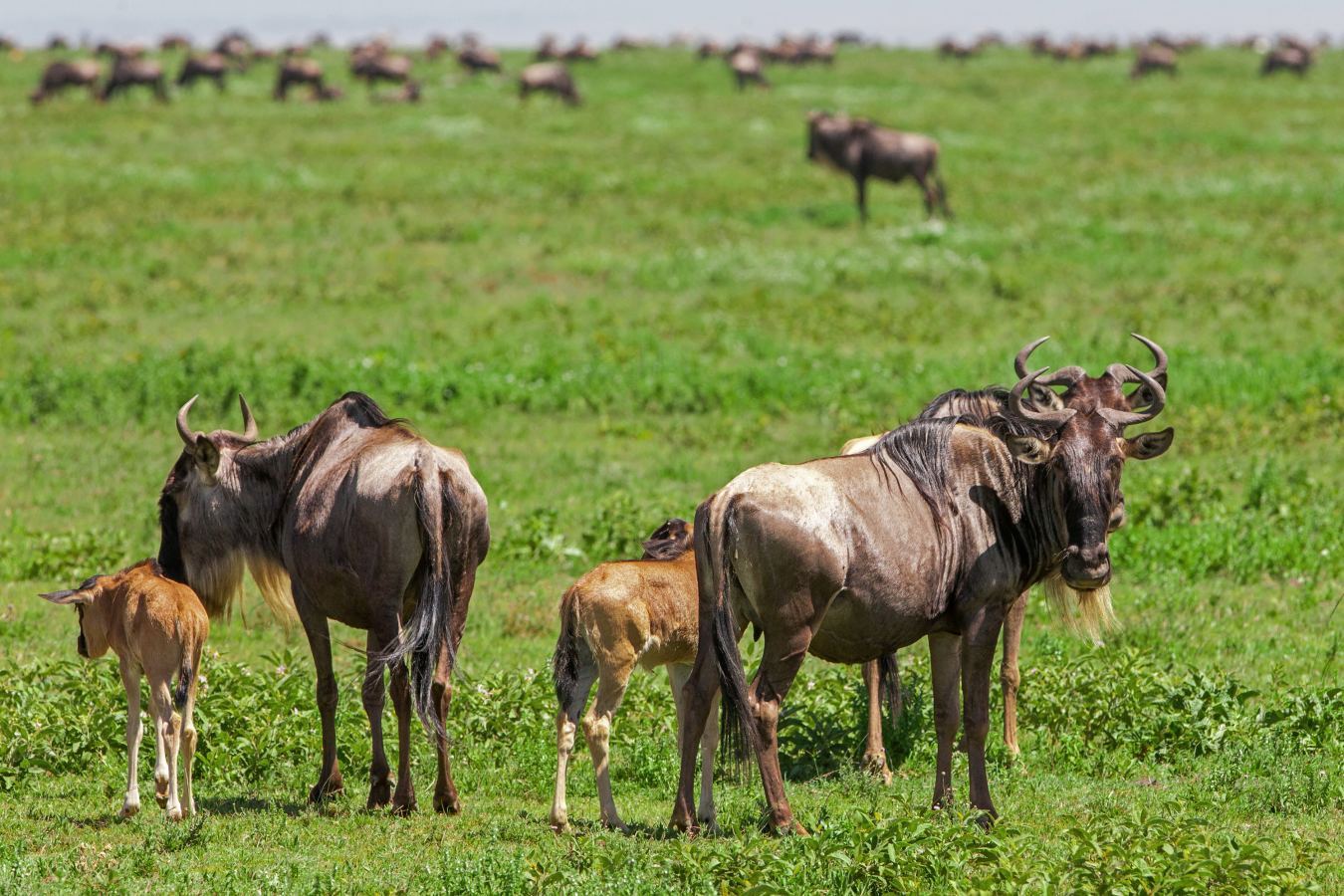
The migration is not a wandering circle so much as an ancient appointment with geography. Each year, when the short rains fall from November into December, the herds pour south out of the northern woodlands onto the open plains around Lake Ndutu and the southern Serengeti. They come for the grass — but not just any grass. These plains sit on ash soils laid down by the volcanoes of the Ngorongoro highlands, and the short grass that springs up here is exceptionally rich in phosphorus and calcium, precisely the minerals a pregnant wildebeest needs to build a calf and produce milk.
The result is that the herds time their entire breeding cycle to this landscape. They arrive heavily pregnant in December and January, drop their calves on the nutritious short grass through February, and stay until the plains begin to dry in late March or April, when the columns swing north-west again. For the visitor this means something remarkable: for around three months the greatest wildlife gathering on the planet is concentrated in one relatively compact, wonderfully open area — flat, short-grazed plains where you can see herds stretching to the horizon and nothing stays hidden for long.
Calving season: 8,000 births a day
The birthing itself is one of nature's great synchronised events. Rather than spreading births across the year, wildebeest compress roughly eighty per cent of them into a window of two to three weeks, usually in February. At the peak, around 8,000 calves are born each day — a deliberate strategy of swamping the predators, since even the best-fed lions and hyenas can only eat so much, and the vast majority of calves survive simply by arriving all at once. Most births happen in the morning, often in plain view, and watching one from a few metres away is quietly overwhelming.
What follows the birth is even more astonishing. A wildebeest calf is on its feet within minutes — faster than any other ungulate — and within two or three days it can run with the herd at full speed. Guests regularly watch a calf take its first wobbling steps and then, an hour later, see it trotting confidently beside its mother. Around them the plains hum with life: zebra foals, gazelle fawns, columns of wildebeest lowing to their newborns, and above it all the towering February skies of the green season, stacked with dramatic cloud.
Predator action at its peak
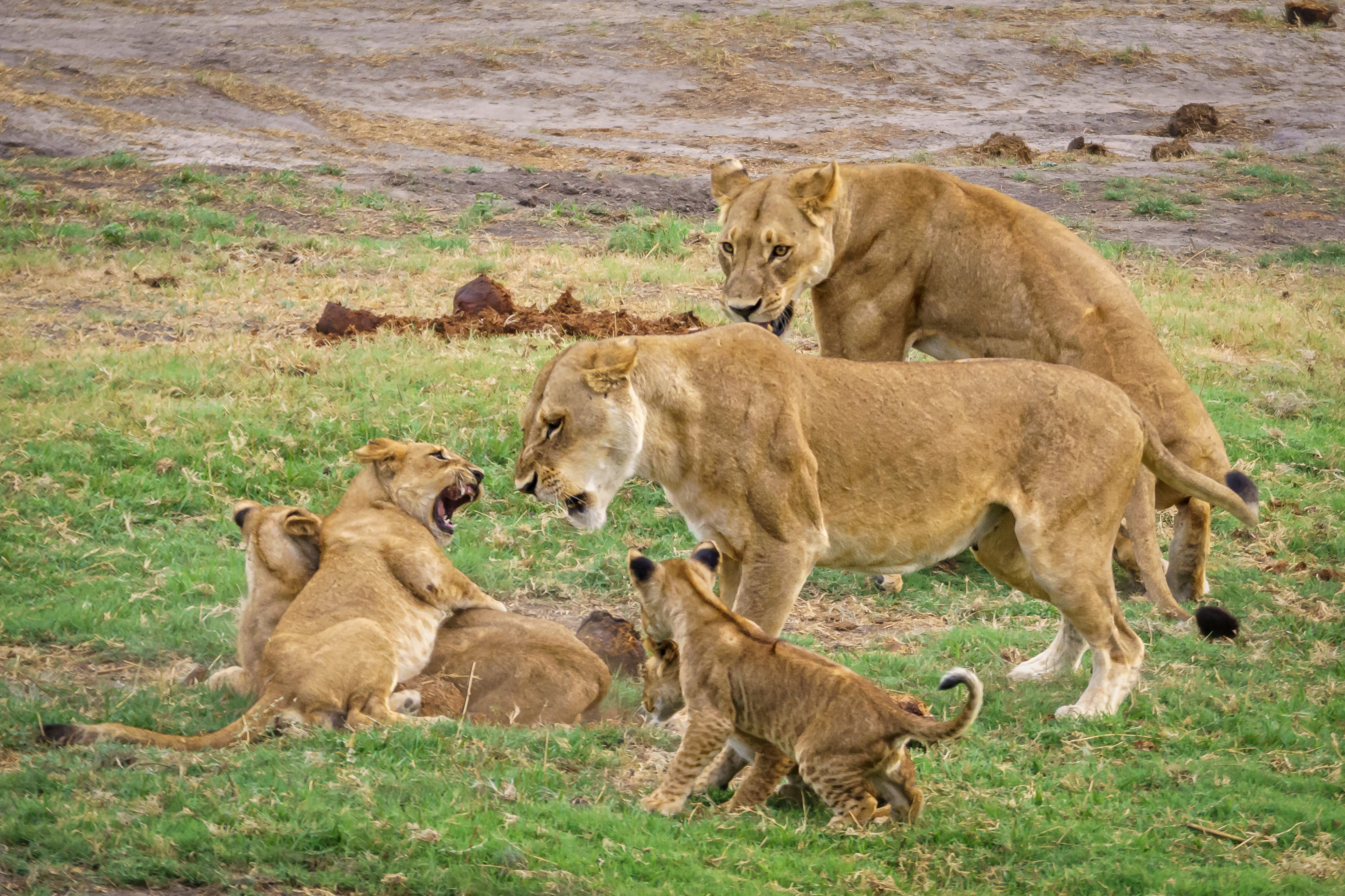
Where there are half a million vulnerable calves, there are predators, and Ndutu in calving season is simply the best big-cat viewing of the Tanzanian year. The resident lion prides of the Ndutu marsh and woodland areas grow fat and bold, hunting in daylight far more often than in leaner months. Spotted hyenas work the herds constantly, and this corner of the ecosystem holds one of the densest cheetah populations in Africa — the flat short grass is perfect hunting ground, and full-speed cheetah chases are seen almost daily rather than once in a lucky week.
Leopards haunt the acacia woodland around Lake Ndutu and Lake Masek, serval and caracal hunt the grass margins, and both golden and black-backed jackals patrol for the smallest and weakest. It sounds brutal, and at times it is, but it is also the whole drama of the ecosystem playing out in open view — hunts, escapes, standoffs and kills that in thicker country you would never witness. Guests who have done several safaris consistently tell us that a week in Ndutu in February showed them more predator interaction than every previous trip combined.
Why calving season beats the crossings for photographers
The Mara River crossings are spectacular, but as a photographic experience they have real drawbacks: the action is unpredictable, you may wait days at a crossing point, and when a crossing finally happens you are often shoulder-to-shoulder with dozens of other vehicles jostling for the same angle. Ndutu in calving season is the opposite. The subjects are everywhere, all day, every day — newborn calves, courting lions, hunting cheetahs — and vehicle numbers are a fraction of the July peak, so you work sightings quietly and on your own terms.
The conditions are better too. Because much of the Ndutu area lies within the Ngorongoro Conservation Area rather than the national park proper, off-road driving is permitted, which means your guide can position the vehicle precisely for light and background rather than being pinned to a track. Add the green season's gift of low golden grass, dust-free air, dramatic storm skies and soft morning light, and you have the finest natural studio in East Africa. If you are considering a dedicated photographic safari, this is the season we recommend before any other.
Green season value: world-class safari at a kinder price
Here is the part that surprises people: the migration's most spectacular season is also one of its better-value windows. January and February sit below the July-to-October peak in most camps' rate sheets, and March — when the herds are still on the plains and the crowds have thinned further — often carries genuine green season pricing, with savings of twenty to forty per cent over peak season. As a working range, a quality mobile-camp safari in Ndutu runs roughly $450 to $750 per person per night all-in, with top-tier camps from about $1,000, against considerably more for the equivalent in August.
The trade-off is the weather, and it is a smaller trade than the word "rains" suggests. January to March sits between the short and long rains: most days are sunny and warm, interrupted by short, dramatic afternoon showers that settle the dust, feed the grass and produce the best skies of the year. The proper long rains, which can genuinely disrupt travel, do not arrive until April. For a fuller picture of travelling in these months, our guide to the green season safari covers the weather month by month — but in short, February in Ndutu is not a compromise; it is the connoisseur's choice.
Where to stay: the case for mobile camps
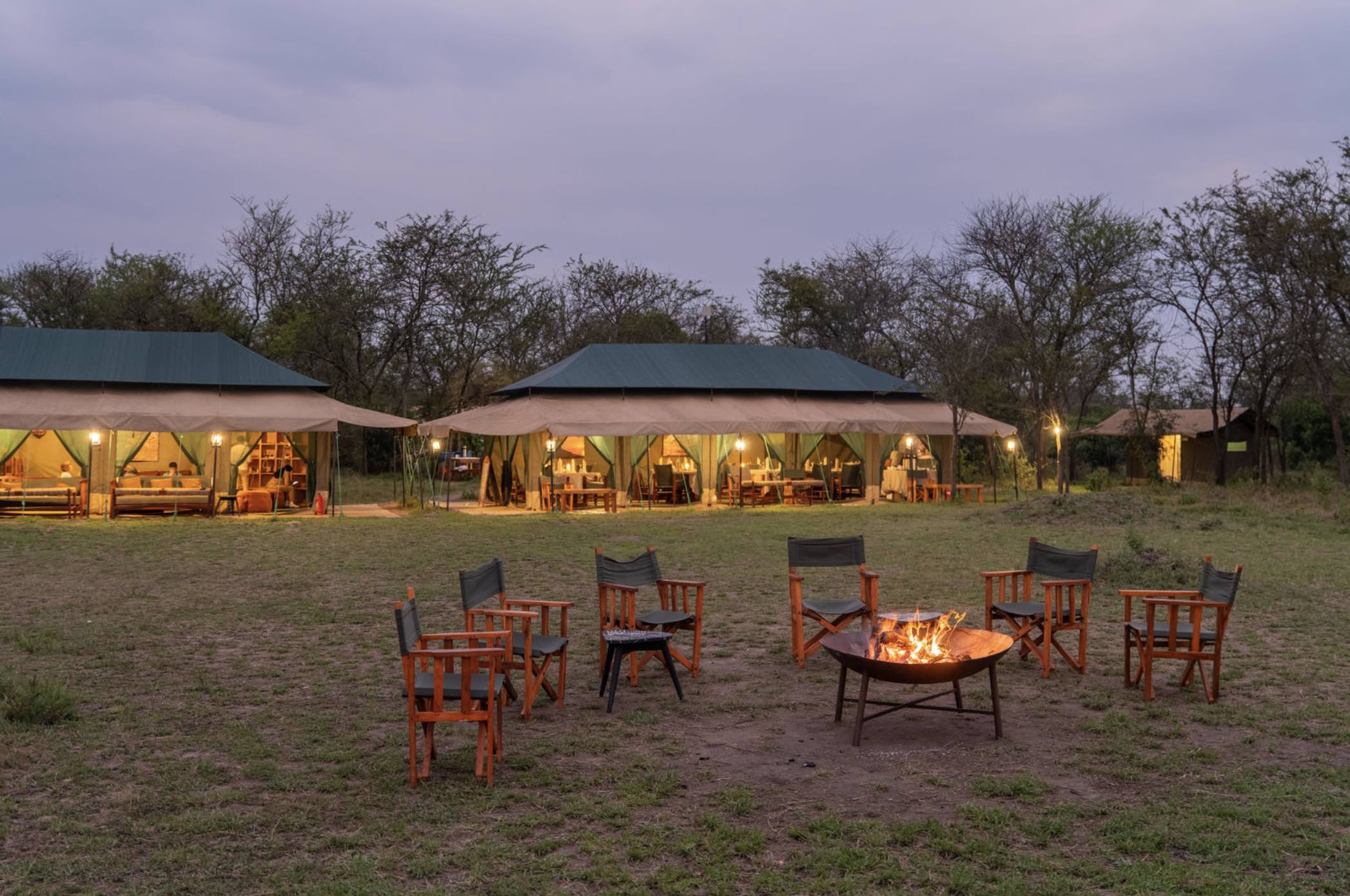
Because the herds shift with the rain, the best accommodation in Ndutu is the seasonal mobile camp — comfortable tented camps that set up on the southern plains from December to March, precisely for the calving, then strike and follow the migration north. Staying mobile puts you inside the event rather than commuting to it: you fall asleep to lions calling and the endless lowing of wildebeest, and you are among the herds within minutes of leaving your tent at dawn, while guests lodging outside the area are still an hour or more away.
These camps are far from basic. A good mobile camp gives you a proper bed, en-suite bathroom with hot bucket shower, excellent cooking and that romantic, expeditionary atmosphere that big permanent lodges cannot match. There are also a handful of small permanent lodges around Lake Ndutu and the nearby woodland for those who prefer solid walls. Sokwe works with a shortlist of mobile camps we know and trust, chosen each season for their position relative to the herds — because in calving season, location is everything, and it changes year to year.
A day on safari in Ndutu
The rhythm of a Ndutu day is one of its pleasures. You leave camp at first light, around six, coffee in hand, when the plains are cool and golden and the night's stories are written in the grass — perhaps a kill to find, hyenas still squabbling over the remains. Mid-morning is prime time for births and for cheetah, who hunt in the cooler hours; your guide reads the herds and the horizon, and with off-road access you settle in close to whatever unfolds. Many guests take a picnic breakfast out and stay with a single cheetah family for hours.
You can return to camp for lunch and a siesta through the hot midday lull, or carry a full picnic and stay out all day — in calving season we usually recommend the latter, because the plains never really go quiet. The afternoon brings storm light and massed herds moving to water, the marsh lions rousing for the evening hunt, and finally sundowners on the open grass with wildebeest to every horizon. Dinner is under canvas and lantern light, and the last sound you hear before sleep is the herd, half a million strong, murmuring in the dark.
- December–January — herds arrive, plains turn green, superb cats
- February — peak calving, around 8,000 births a day, predator action at maximum
- March — herds still massed, fewer visitors, best green season value
- Off-road driving permitted on the Ndutu side
- Mobile camps from roughly $450 pp per night
- Book 10–12 months ahead for February
Planning your calving season safari in Tanzania
A calving season safari in Tanzania works best with unhurried time on the plains: we recommend three to four nights in Ndutu as the heart of the trip, which gives you the statistical luck you need for births, hunts and cheetah chases rather than a hurried drive-through. The classic route pairs Ndutu with the Ngorongoro Crater — barely two hours away and magnificent in the green months — plus Tarangire or Lake Manyara en route from Arusha, making a superb seven-to-nine-day circuit. Fly-in options from Arusha shorten the journey for those with less time.
Sokwe runs a dedicated Ndutu calving season itinerary each January to March, built around well-positioned mobile camps and guides who have worked these plains for years, and it can be tailored for photographers, families or first-time safari-goers alike. The season slots neatly into the wider migration calendar too — if you want to understand how calving connects to the crossings and everything between, our guide to the Serengeti migration maps the full year, and comparing the two seasons is the best way to decide which great migration safari suits you.
See also our guide: Ndutu in the green season: the best predator viewing in Africa.
Related reading: Ndutu Safari Lodge: the calving-season classic.
The crossings made the migration famous, but the calving is where the migration begins — 8,000 new lives a day on the plains, and every predator in the south watching.
When to book — and why February fills first
The one hard truth about the Ndutu calving season is capacity. The area holds only a limited number of mobile camps and small lodges, the peak calving window is barely three weeks long, and photographers and repeat safari-goers — the people who know — book the same February weeks year after year. The best camps for the 2027 season are already taking bookings now, and by the time the northern hemisphere winter arrives, prime February dates are largely gone. Serengeti safari tours for the dry season can often be arranged at shorter notice; calving season cannot.
Our honest advice is simple: if the idea of the calving season has caught you, secure the dates first and refine the details later. We hold provisional space at our preferred camps where we can, we know which sites sit closest to the traditional calving grounds, and we will tell you frankly whether your dates fall in the sweet spot. A year feels a long way out until you are watching a calf take its first steps thirty metres from your vehicle in perfect morning light — and then it feels like the best forward planning you ever did.
Book your Ndutu calving season safari
The Ndutu calving season is the migration at its most alive — half a million births, the densest predator action of the year, glorious green season light and prices, and a fraction of the peak season crowds. February in Ndutu books out a year ahead, so tell us your dates before someone else takes your camp: share the season you have in mind and who is travelling, and we will design a calving season safari — mobile camps, expert guides, crater and beyond — around the greatest secret the migration keeps.
Plan your Ndutu calving season safari with Sokwe Africa Safaris