
Why one small lodge matters so much
Ask any Tanzanian guide where they would sleep during calving season and Ndutu Safari Lodge comes up within the first breath. It is not the newest property in the area, nor the most luxurious, and it has never pretended to be either. What it has is something no amount of investment can build from scratch: a position at the very centre of the December to March calving grounds, on the wooded edge of Lake Ndutu, where the wildebeest herds gather in their hundreds of thousands to drop their calves on the short-grass plains.
We should say at the outset that Sokwe Africa Safaris is an independent operator based in Arusha. We have no stake in Ndutu Safari Lodge and no arrangement beyond booking beds there for our own clients, as we do with dozens of camps and lodges across Tanzania. We recommend it for one reason only: for a certain kind of traveller, in a certain window of the year, it is simply the most sensible place to stay. This guide explains what the lodge is, why its location matters so much, and whether it is right for you.
What Ndutu Safari Lodge actually is
Ndutu Safari Lodge is one of the originals of the southern Serengeti ecosystem, with roots reaching back to the 1960s, when the Ndutu area was known only to hunters, researchers and the hardiest early safari-goers. Long before the calving season reached the glossy brochures, the lodge was already there, hosting the film crews, scientists and old Africa hands who first understood what happens on these plains. That long history shows in the best way: the staff know the area intimately, and the whole place runs with the unhurried confidence of somewhere that has seen it all before.
Physically, it is a modest and honest place: a string of simple stone-and-thatch cottages set among the acacia woodland near the shore of Lake Ndutu, with a central mess, bar and famous open fireplace. Nobody books it for plunge pools or spa menus, because there are none. You book it for the setting, the atmosphere and the guiding knowledge concentrated around its dinner tables. In an era when much new safari accommodation chases ever-higher price points, the lodge has stayed true to a classic idea of what a bush lodge should be — comfortable, characterful and entirely focused on what is happening outside.
The geography: why location is everything in Ndutu
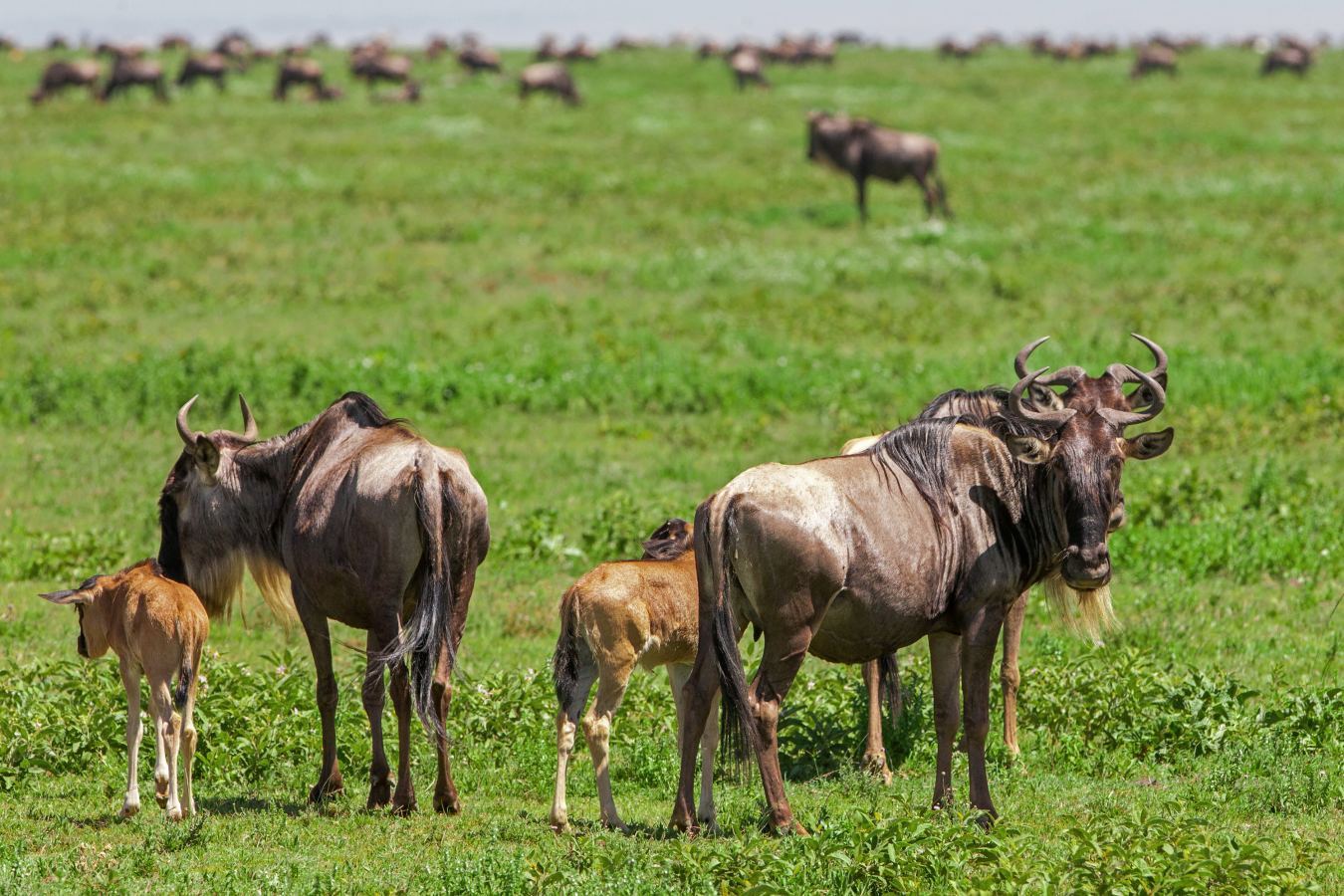
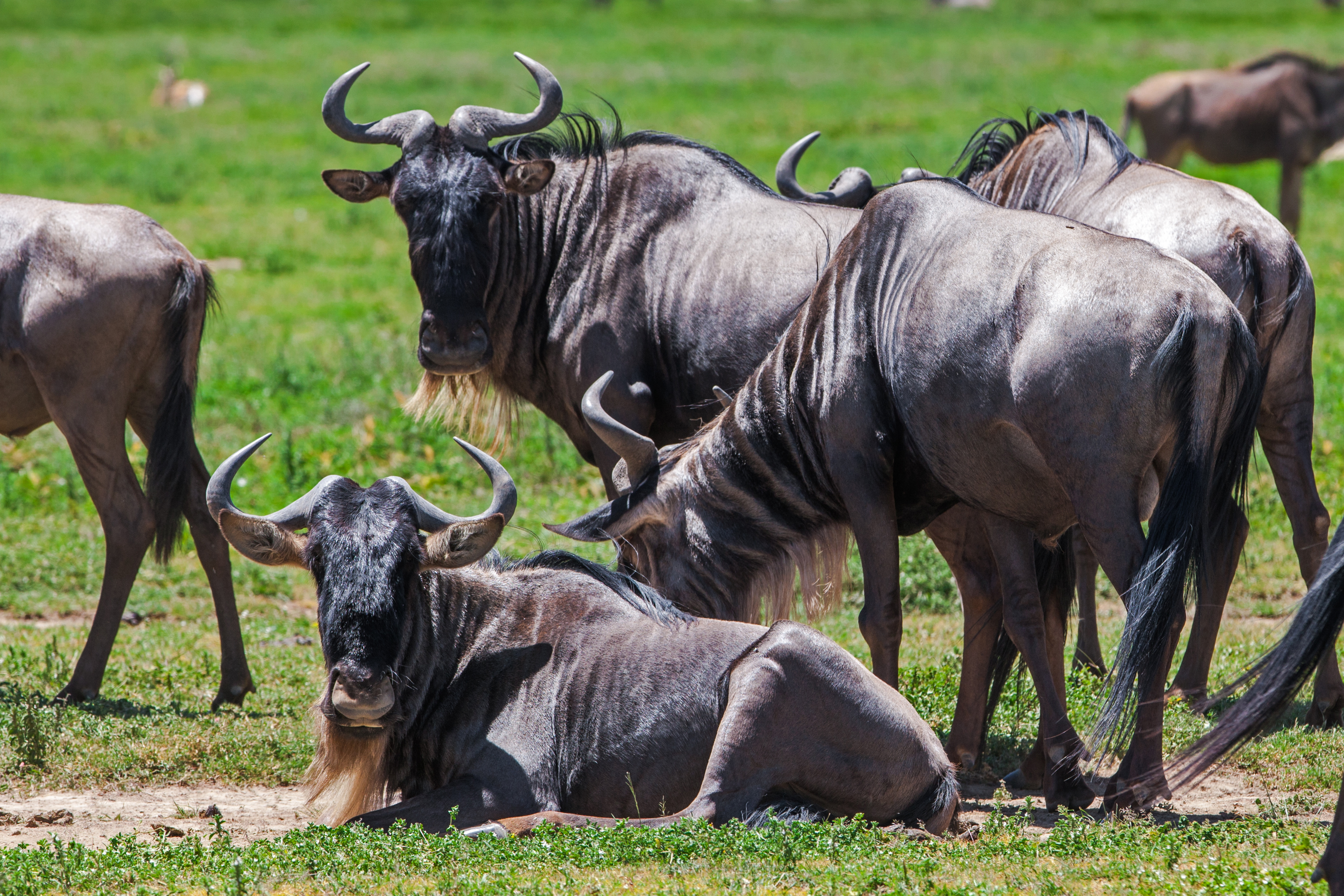
To understand why the lodge matters, you need to understand the geography of calving season. Between roughly December and March, the wildebeest migration masses on the short-grass plains of the southern Serengeti and the western Ngorongoro Conservation Area, drawn by mineral-rich grazing that is perfect for lactating mothers. The epicentre of this gathering, year after year, is the Ndutu area — the lakes, marshes and open plains around Lake Ndutu and Lake Masek. In February especially, several hundred thousand calves are born here in a matter of weeks, and the predators, from big cats to hyenas, converge accordingly.
Ndutu Safari Lodge sits in the middle of all of it. When the herds are on the plains, guests can be among them within minutes of finishing breakfast, while travellers staying in central Serengeti lodges face a long commute each way before the day's viewing even begins. In wildlife terms those first and last hours of daylight are the whole game: that is when the cats hunt and when the light is at its best. A bed at Ndutu converts commuting time into viewing time, morning and evening, every day of your stay. That is the priceless part, and no marketing can replicate it.
Calving season: December to March on the doorstep
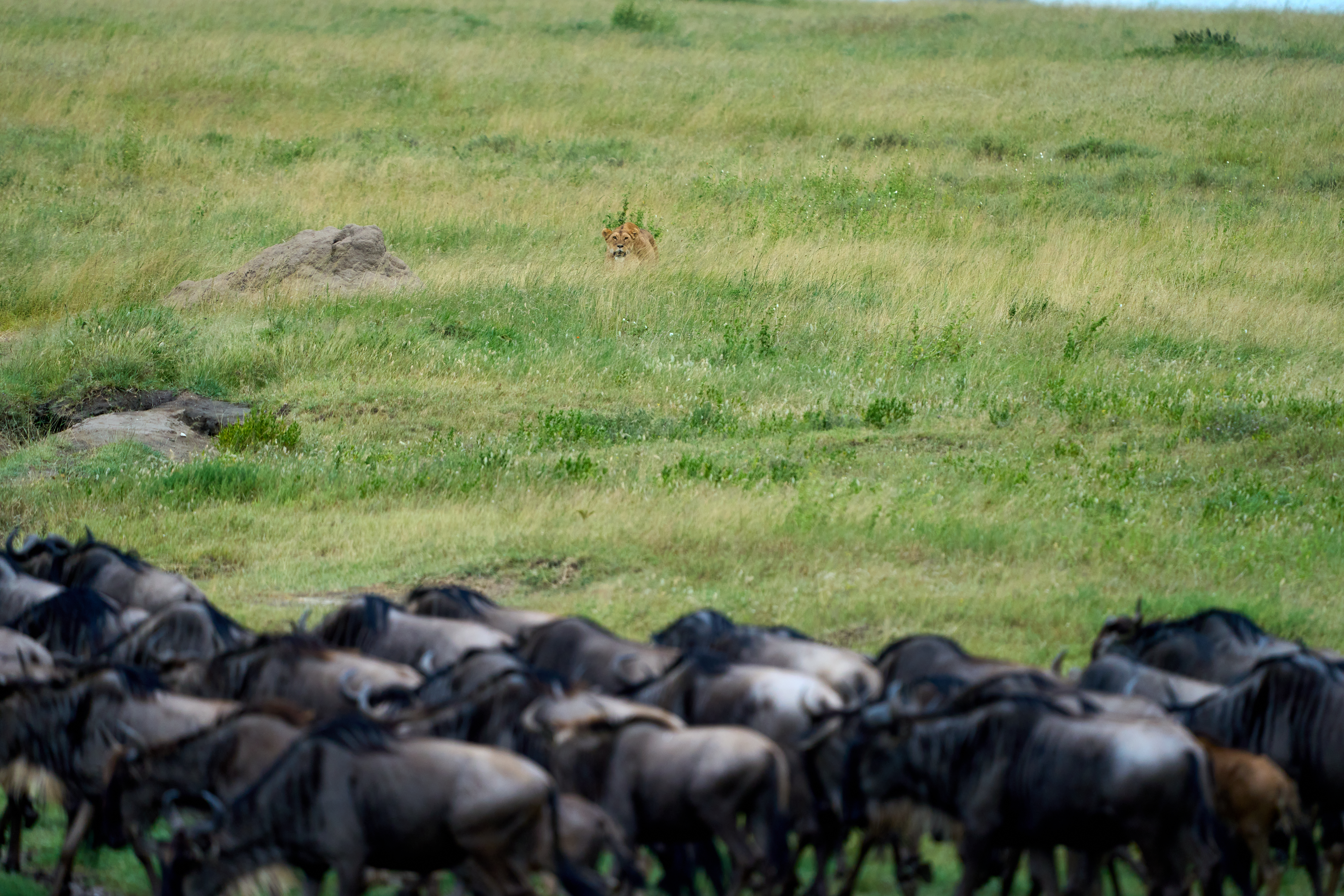
The rhythm of the season is worth knowing when you plan. December usually sees the herds arriving on the southern plains as the short rains green the grass. January brings the great gathering, huge columns of animals spread across the plains, and the first pulses of births. February is the peak of the calving itself, the densest concentration of wildebeest, newborns and predators anywhere in Africa at that moment, and the single most requested month. March sees the herds lingering, the calves strengthening, and superb predator action as the migration prepares to push north and west.
What this means in practice is that a stay at Ndutu in this window delivers an intensity of game viewing that is hard to overstate. Cheetah do particularly well on these open plains, lions are abundant around the marshes and woodland edges, and the daily drama of vulnerable newborns among so many predators is raw, moving and unforgettable. If you have read our full guide to the Ndutu calving season, you will know we consider it one of the greatest wildlife events on earth; the point of this article is narrower — that where you sleep during it shapes how much of it you actually see.
The genets, the fireplace and the character of the place
Every long-running safari lodge accumulates its legends, and at Ndutu the most beloved involves the genets. For decades, these beautiful spotted, cat-like creatures have been famously associated with the lodge, appearing in the evenings around the fireplace and the rafters of the main mess as guests gather for dinner. They are wild animals, entirely free to come and go, and no one can promise you a sighting on any given night — but the association is so well known that for many returning guests, an evening by that fire watching for genets is as much a part of the Ndutu ritual as the game drives themselves.
That small detail says a great deal about the character of the place. This is a lodge where the wildlife experience does not stop when the vehicle parks; giraffe and elephant wander the surrounding woodland, the lake draws flamingos in season, and the night sounds come straight through the cottage walls. Guests tend to be a knowledgeable, wildlife-first crowd — photographers, repeat safari-goers, guides on their own holidays — and the conversation at dinner reflects it. If your ideal evening is comparing sightings over a drink by the fire rather than choosing from a pillow menu, you will understand the appeal immediately.
A bed at Ndutu converts commuting time into viewing time, morning and evening, every single day — and in calving season that is everything.
Classic simplicity or luxury mobile camp?
Honesty matters here, because Ndutu Safari Lodge is not for everyone. The cottages are simple and the comforts are of the classic, practical kind; travellers expecting contemporary luxury-lodge polish will find it dated, and they would be better served by one of the seasonal luxury mobile camps that set up in the Ndutu area each calving season. Those camps offer beautiful tents, excellent food and high-end service in a similar location, at a substantially higher price. Both choices put you in the right place; they simply serve different budgets and different tastes, and we book both regularly depending on the client.
Our honest framing is this: the mobile camps sell you the location plus luxury, while the lodge sells you the location plus history and character, generally at a friendlier price point. For photographers and serious wildlife travellers who spend every daylight hour out on the plains, the case for paying more for a fancier tent weakens considerably. For honeymooners or travellers for whom the accommodation is half the holiday, the luxury camps earn their premium. When we plan calving-season trips at Sokwe, this is usually the first fork in the road we talk through, and there is no wrong answer — only a wrong match.
Practicalities: the Ngorongoro side, permits and game drives
One practical detail catches many first-time planners out: the Ndutu area lies on the Ngorongoro Conservation Area side of the boundary, not inside Serengeti National Park itself, even though the plains and the herds flow seamlessly across the line. This affects the fees you pay and the rules that govern your game drives, and it is one of the reasons itineraries in this region need assembling with care. The area is also famous for the flexibility of its game viewing, with off-road driving historically permitted in ways the national park does not allow — though rules and their enforcement evolve, so always work from your operator's current information rather than an old blog post.
The driving here rewards local knowledge. The big marsh, the woodlands and the lake shores each hold different residents: cheetah out on the open short grass, lion prides anchored around the marsh edges, leopard in the taller trees, and everything shifting week by week with the rain and the herds. Guides who work the Ndutu area season after season carry an accumulated map of territories and tendencies that no first-time visitor could improvise. It is one more way this corner of the ecosystem repays those who commit to staying in it rather than dashing through.
Booking reality: why calving season sells out
Now for the arithmetic that catches people out every year. The Ndutu area has a limited number of beds — the lodge itself plus a shifting cast of seasonal camps — and the calving season has a global audience that grows annually. February reliably sells out far in advance, with the best-located properties often committed around a year ahead, and January and early March not far behind. Travellers who start planning a February trip in the preceding October routinely find their first-choice ndutu area accommodation long gone, and end up compromising on location or paying premium rates for the beds that remain.
Our standing advice at Sokwe is therefore simple: if the calving season is the point of your trip, book the beds before you book anything else. Ten to twelve months ahead is comfortable for February; eight months is already cutting it fine for the most requested properties. Flights, Zanzibar extensions and the rest of the itinerary can all be arranged later, but a bed in the right place during the peak weeks cannot be conjured after the fact. This is one of the few corners of Tanzanian safari planning where procrastination carries a genuine, unfixable cost.
See also our guide: Tanzania luxury tours: beyond the game drive.
More on this in Ngorongoro Serena Safari Lodge: the crater-rim classic explained.
Ndutu beyond the calving season
A fair question is what happens to the area for the rest of the year. The honest answer is that Ndutu quietens dramatically once the migration pushes north from around April, becoming a very different proposition: resident game rather than the great herds, far fewer vehicles, and a wilder, emptier feel. Some travellers love it precisely for that solitude, and birders will find the lakes and woodland rewarding in any month. But if you are travelling between June and November, your itinerary is usually better weighted towards the central and northern Serengeti, where the migration and the dry-season action will be.
This seasonality is exactly why we treat Ndutu as a component to be timed, not a default to be included. In a well-built December to March itinerary, three or four nights in the Ndutu area is often the anchor of the whole trip, paired with the Ngorongoro Crater and perhaps Tarangire or central Serengeti. Outside that window, the same nights are better spent elsewhere. Understanding how the wildebeest migration moves through the year is the key to getting this right, which is why we always start planning conversations with dates before we ever talk about properties.
- Location: edge of Lake Ndutu, Ngorongoro Conservation Area side, heart of the calving grounds
- Best months: December to March, with February the peak
- Style: classic, simple, characterful — not contemporary luxury
- Famous for: its history, its guides' knowledge and the genets by the fireplace
- Alternatives: seasonal luxury mobile camps in the same area at higher cost
- Booking: peak weeks sell out up to a year ahead
Plan your calving season with Sokwe
Ndutu Safari Lodge endures because it got the only unmovable thing right: location. Everything else about a safari can be upgraded or negotiated, but you cannot move a lodge closer to the calving grounds, and you cannot manufacture six decades of history and hard-won local knowledge. Whether the classic lodge or a luxury mobile camp fits you better comes down to taste and budget — our job as an independent operator is to match you to the right beds, not to push any particular property.
What we would urge you not to do is wait. Calving season books out early, every year, without exception. If February — or any part of the December to March window — is calling you, tell us your dates now and we will check availability across the lodge and the seasonal camps, hold the right beds while you decide, and build the rest of the itinerary around them. A short conversation today is the difference between watching the greatest birth spectacle in Africa from the middle of it, and watching it from a long commute away.