
Why these two belong together
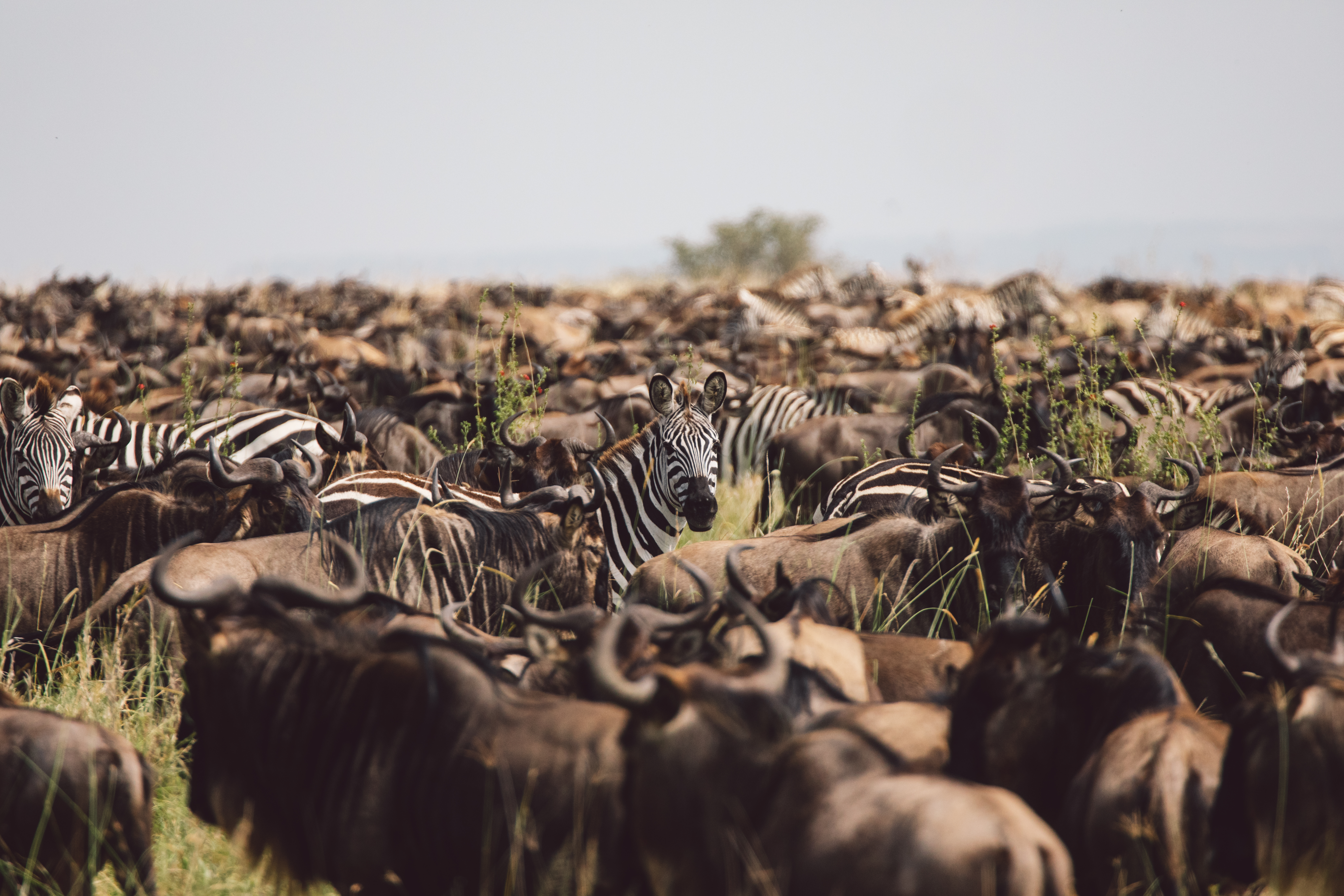
A Tanzanian safari and a gorilla trek are the two great wildlife experiences of East Africa, and they are almost perfect opposites. One is vast, open and golden — a thousand square kilometres of plain with a horizon in every direction and animals visible at distance. The other is enclosed, green and intimate — an hour spent seven metres from a family of animals that share ninety-eight per cent of your DNA, in a forest so dense you cannot see thirty feet. Doing both in one trip gives you a range that neither delivers alone.
They also sit close together geographically, which surprises people. Kilimanjaro International Airport connects to both Kigali and Entebbe on short regional flights, and the whole combination fits comfortably inside a two-week holiday. Given the cost and effort of reaching East Africa from Europe, North America or Australia, adding three or four days for gorillas is a far better use of the journey than most alternatives.
For Sokwe this is a genuine specialism rather than an upsell. We are a Tanzanian ground operator — the safari half we run ourselves, with our own vehicles and guides — and we arrange the gorilla half through established partners in Rwanda and Uganda. We are straightforward about which is which, because you should know who is actually responsible for each part of your trip.
The sequencing mistake that ruins these trips
Here is the single most important thing on this page. **Book the gorilla permit first, then build the safari around it.** A gorilla permit is issued for one specific date and one specific gorilla family. It is not transferable, availability is genuinely finite at eight visitors per family per day, and in peak season the good dates are gone months ahead.
What goes wrong is predictable. A traveller designs a beautiful fourteen-day Tanzanian itinerary, locks in camps, then goes looking for a gorilla permit for the specific Tuesday the plan requires — and it does not exist. Now either the whole safari shifts, at a cost, or the gorilla trek is dropped. We have seen both, and both are avoidable by reversing the order.
So the first question we ask anyone planning this combination is not which parks they want. It is which fortnight they can travel, so we can check live permit availability before designing anything. Once the permit date is fixed, the Tanzanian itinerary is entirely flexible around it — our camps and vehicles can be arranged in either direction from that anchor.
How many days you need
The realistic minimum is twelve days, and fourteen is considerably more comfortable. A workable fourteen-day shape is seven nights on the Tanzanian northern circuit, one travel day, three nights for gorillas, and the remainder for arrival, departure and buffer. Anything under twelve starts cutting the safari to the point where you are moving camp constantly, which is the fastest way to make an expensive holiday exhausting.
The Tanzanian week does not need to be rushed. Three nights in the Serengeti, one or two in the Ngorongoro area and two in Tarangire gives a proper northern circuit with time to sit at sightings rather than drive between them. If you want the Mara River crossings, that pushes the Serengeti nights north and requires July to October dates, which then constrains your permit search — another reason to settle dates early.
For the gorilla portion, three nights is the working minimum in Rwanda and four is safer in Uganda because of the driving. That allows a rest day before the trek, which matters more than people expect: anyone showing symptoms of a cold on the morning is turned back without refund, and arriving straight off a long travel day is how people get ill.
Routing and flights
The clean version runs: international arrival into Kilimanjaro, safari, then a regional flight from Kilimanjaro to Kigali, gorillas, then home from Kigali. RwandAir operates this connection and Kigali has good onward links to Europe and the Middle East. Doing it in this order means you finish on the gorillas, which most guests prefer — it is the more emotionally memorable of the two and makes a better ending.
The Uganda version substitutes Entebbe for Kigali, usually with a domestic hop or a long drive to Bwindi at the far end. Kenya Airways via Nairobi is the common routing. It works, but the extra internal leg is why we generally recommend Rwanda to guests doing this as a combination rather than as a Uganda-focused trip in its own right.
One practical warning. Regional baggage limits are tighter than international ones — often 20kg on the smaller aircraft, sometimes 15kg on light aircraft transfers within Tanzania, and soft bags only. Guests arriving with two large hard suitcases discover this at the worst moment. We flag it in every combination itinerary, and most lodges will store an excess bag while you trek.
Read our gorilla permit cost guide and our Rwanda vs Uganda comparison before fixing dates.
If you are planning this route, read Tanzania safari from Germany: flights, costs and planning.
Timing: making both halves work
Gorilla trekking is possible year-round, but the drier months — roughly June to September and December to February — mean firmer trails and easier walking. Those windows overlap conveniently with Tanzania's classic dry season, so a June-to-September trip serves both halves well and also puts you in the northern Serengeti for the Mara River crossings.
The green season combination is underrated and considerably cheaper. February in Tanzania means the wildebeest calving on the southern plains, which many guides consider the best wildlife weeks of the year, and gorilla trekking in February is entirely workable if you accept muddier trails. Permits are easier to secure and lodge rates on both sides are lower.
We would avoid the long rains of April and May for a combination trip. Tanzania's tracks deteriorate, many southern-plains camps close, and Ugandan roads to Bwindi become genuinely difficult. The saving is real but the experience is compromised on both halves at once, which is not a trade we recommend to anyone travelling this far.
Visas, vaccinations and the paperwork nobody mentions
A combination trip crosses borders, and the paperwork catches people out more often than any other part of the planning. Tanzania requires its own visa, obtainable online in advance or on arrival, and for most nationalities it is a straightforward single-entry tourist visa. Rwanda and Uganda each require their own. The East Africa Tourist Visa is a useful ninety-day multiple-entry document covering Rwanda, Uganda and Kenya on one application — but **it does not include Tanzania**, which is the detail that surprises almost everyone planning this route.
Yellow fever vaccination certificates are required for entry to Rwanda and Uganda, and Tanzania requires one if you are arriving from a country with risk of transmission — which, on a combination trip, you will be. Get the certificate before you travel rather than assuming your Tanzanian entry will be waved through, because on the return leg it will not be. Malaria prophylaxis is recommended for all three countries and should be discussed with a travel clinic well before departure.
One further practical point specific to gorillas: several operators and lodges now ask for proof of a negative test or a health declaration before a trek, and rangers will turn back anyone with visible cold or flu symptoms without refund. Gorillas share enough of our physiology to catch human respiratory illness, and a habituated family has no immunity to it. Build a rest day before the trek and treat any developing cold seriously rather than hoping to push through.
Budget
As a working figure, a fourteen-day combination with a good mid-to-upper-range standard throughout tends to land somewhere between 8,000 and 14,000 US dollars per person, excluding international flights. The spread is driven almost entirely by accommodation choices and by whether you take one gorilla permit or two.
Where guests most often find savings is in the middle of the trip rather than at either end. Cutting one Serengeti night and adding it to Tarangire, or choosing a mid-range camp for two nights and a premium one for the rest, moves the total meaningfully without changing the experience much. Cutting the gorilla portion, by contrast, rarely works — the permit is fixed and the lodging near both parks has a genuine floor.
Within that, roughly 1,500 to 4,000 per person is the gorilla portion depending on country and lodge, and the balance is Tanzania. Park and conservation fees in Tanzania are fixed by government at around seventy to ninety dollars per person per day and cannot be discounted by anyone, which is worth knowing when comparing quotes — a materially cheaper quote is cutting something else.
Packing for two very different halves
This is the practical problem unique to a combination trip: you are packing for open savannah and montane rainforest in the same suitcase, and they want opposite things. Safari calls for neutral lightweight cottons, a warm layer for cold Ngorongoro mornings, and a hat. Gorilla trekking calls for long sleeves and long trousers you do not mind ruining, waterproofs, gardening-weight gloves for grabbing thorny vegetation, and boots with genuine ankle support and aggressive tread.
Gaiters are the item most people skip and most wish they had — Bwindi and the Virunga slopes are deep mud and stinging nettles, and gaiters keep both out of your boots. Bring a dry bag or heavy-duty plastic sack for camera equipment; afternoon rain arrives fast in the forest and a soaked body is an expensive lesson. None of this is needed on safari, which is why we send a two-column packing list for combination trips rather than the standard one.
Remember the regional baggage limits mentioned above when you total it up. The workable answer for most guests is one soft main bag at or under 20kg plus a daypack, with the trekking boots worn on travel days rather than packed. Lodges on both sides will happily store anything you do not need for the other half.
Let us sequence it properly
Tell us the fortnight you can travel and we will check live gorilla permit availability before we design anything else. Once the permit is anchored, we build the Tanzanian half around it with our own vehicles and guides. It is the one order that works, and getting it right at the enquiry stage saves the trip.
Plan your safari with Sokwe Africa Safari
Frequently asked questions
Can you combine a Tanzania safari with gorilla trekking?
Yes, and the two pair well. Kilimanjaro International Airport connects to both Kigali and Entebbe on short regional flights, so the combination fits comfortably in a two-week trip.
How many days do I need for Tanzania and gorilla trekking?
Twelve days minimum, fourteen for comfort. A typical shape is seven nights on the Tanzanian northern circuit, a travel day, and three nights for gorillas in Rwanda, plus arrival and departure.
Should I book the safari or the gorilla permit first?
The permit, always. It is issued for a specific date and family, only eight people per family per day, and non-transferable. Designing a safari first and then hunting for a permit on that exact date is the mistake that breaks these trips.
Is Rwanda or Uganda better for combining with Tanzania?
Rwanda, generally. Volcanoes National Park is two to three hours from Kigali airport on good roads, so three nights is enough. Uganda needs four or five because of the drive to Bwindi, which eats into the safari half.
What does a Tanzania and gorilla trekking trip cost?
Roughly 8,000 to 14,000 US dollars per person for fourteen days at a good mid-to-upper standard, excluding international flights. The gorilla portion is typically 1,500 to 4,000 of that, depending on country, lodging and number of permits.
What is the best time of year for both?
June to September suits both halves — drier gorilla trails and Tanzania's dry season with Mara River crossings. February is a strong cheaper alternative, pairing the wildebeest calving with workable if muddier trekking. Avoid April and May.