
Tanzania safari from Germany: the short version
A Tanzania safari from Germany is a straightforward trip once you understand three things: there is no non-stop flight, so you will connect somewhere; the journey from Frankfurt or Munich to Kilimanjaro takes about thirteen to sixteen hours door to door, less than most people expect; and the months when German schools close do not always line up with the months when Tanzania is at its best. This guide sets out the honest picture from our side, in Arusha.
We are Sokwe Africa Safaris and we meet German travellers at Kilimanjaro Airport most weeks of the year, so the patterns are familiar: families in the Sommerferien, couples at Christmas, and experienced travellers who deliberately choose October or February when the parks are quieter and the rates softer. If you have been searching in German — safari Tansania, or Tanzania safari Deutschland — this is the same ground covered in English, which is the language your guides and camps will work in. What follows is the realistic routings, euro price ranges, the e-visa process and a frank answer on German-speaking guides.
Getting there: no non-stop, but plenty of good connections
No airline flies non-stop from Germany to Kilimanjaro International Airport, and none is likely to soon — the market is not big enough for a daily widebody. What Germany does have is excellent onward connectivity. Frankfurt and Munich feed several carriers that serve northern Tanzania directly, and Düsseldorf, Hamburg, Berlin and Stuttgart reach the same hubs with one short extra leg. You change once, at a European or Gulf hub, and land late evening or early morning.
Kilimanjaro Airport, code JRO, sits between Arusha and Moshi and is the right arrival point for the northern circuit — Tarangire, Lake Manyara, the Ngorongoro Crater and the Serengeti — about fifty minutes from Arusha, where most first nights are spent. Dar es Salaam and Zanzibar are the other international gateways, but both are a domestic flight away from the northern parks, so unless your trip starts on the coast, JRO is the airport you want on your ticket.
Comparing the routings from Frankfurt, Munich and Düsseldorf
KLM via Amsterdam is the routing we see most often, and for good reason. Almost every German airport has multiple daily hops to Schiphol, the Amsterdam–Kilimanjaro leg has run for years, and it lands in the evening, which means a proper night's sleep in Arusha before the first game drive. Turkish Airlines via Istanbul is the other regular, with strong coverage from Frankfurt, Munich, Düsseldorf, Hamburg, Berlin and Stuttgart, and often the sharpest economy fares.
Qatar Airways via Doha is the comfortable option and the best cabin product for the money, though its northern Tanzania schedule has come and gone over the years while Zanzibar and Dar es Salaam have stayed constant — worth checking rather than assuming. Ethiopian Airlines via Addis Ababa is the workhorse: daily from Frankfurt onward to Kilimanjaro, frequently the cheapest way there, with the trade-off of a busy hub and connections that are sometimes uncomfortably tight. Brussels Airlines is the newer name, seasonal rather than daily, and genuinely useful if you live in the west of the country — for anyone in Cologne, Düsseldorf or the Ruhr, Brussels is drivable, which removes a flight from the equation entirely.
- KLM via Amsterdam — most reliable, evening arrival at JRO
- Turkish via Istanbul — widest German airport coverage, often cheapest
- Qatar via Doha — best comfort, check current JRO schedule
- Ethiopian via Addis — good value from Frankfurt, watch connection times
- Brussels Airlines — handy for western Germany, seasonal frequencies
What flights cost in euros and when to book
For economy return flights from Germany to Kilimanjaro, budget roughly 650 to 950 euros in the shoulder months, 900 to 1,300 euros in the school holidays, and above that over Christmas and New Year, when fares can pass 1,500 euros if you leave the booking late. Business class runs 2,400 to 4,000 euros return depending on carrier and season. These are ranges German clients actually report to us, not promotional fares that exist for three seats on a Tuesday in May.
Book six to nine months ahead for July, August and the festive season. That is not a sales line — the camps and the flights fill in the same order, and the gap between booking in November for the following August and booking in April is regularly three or four hundred euros a head. For April, May, October and November you can often book three months out without penalty.
German holiday dates against Tanzania's seasons
The Sommerferien, falling between late June and early September depending on your Bundesland, land squarely in Tanzania's peak dry season. This is genuinely the best game viewing of the year — thin vegetation, animals concentrated at water, and the Mara River crossings in the northern Serengeti through July and August. It is also the most expensive and busiest time in the parks, with popular camps sold out a year ahead. With school-age children, accept that trade-off and book early rather than fight it.
Christmas and New Year is the second German peak, and Tanzania is in good shape then: the short rains have usually eased, the country is green, and the herds are moving south towards the Ndutu plains. Camps charge festive supplements from roughly 20 December to 3 January, and minimum-stay rules are common. Easter is the honest problem — it often falls in the long rains of April and May, when roads soften, some camps close and game viewing is harder. The compensation is that it is the cheapest and emptiest time of year.
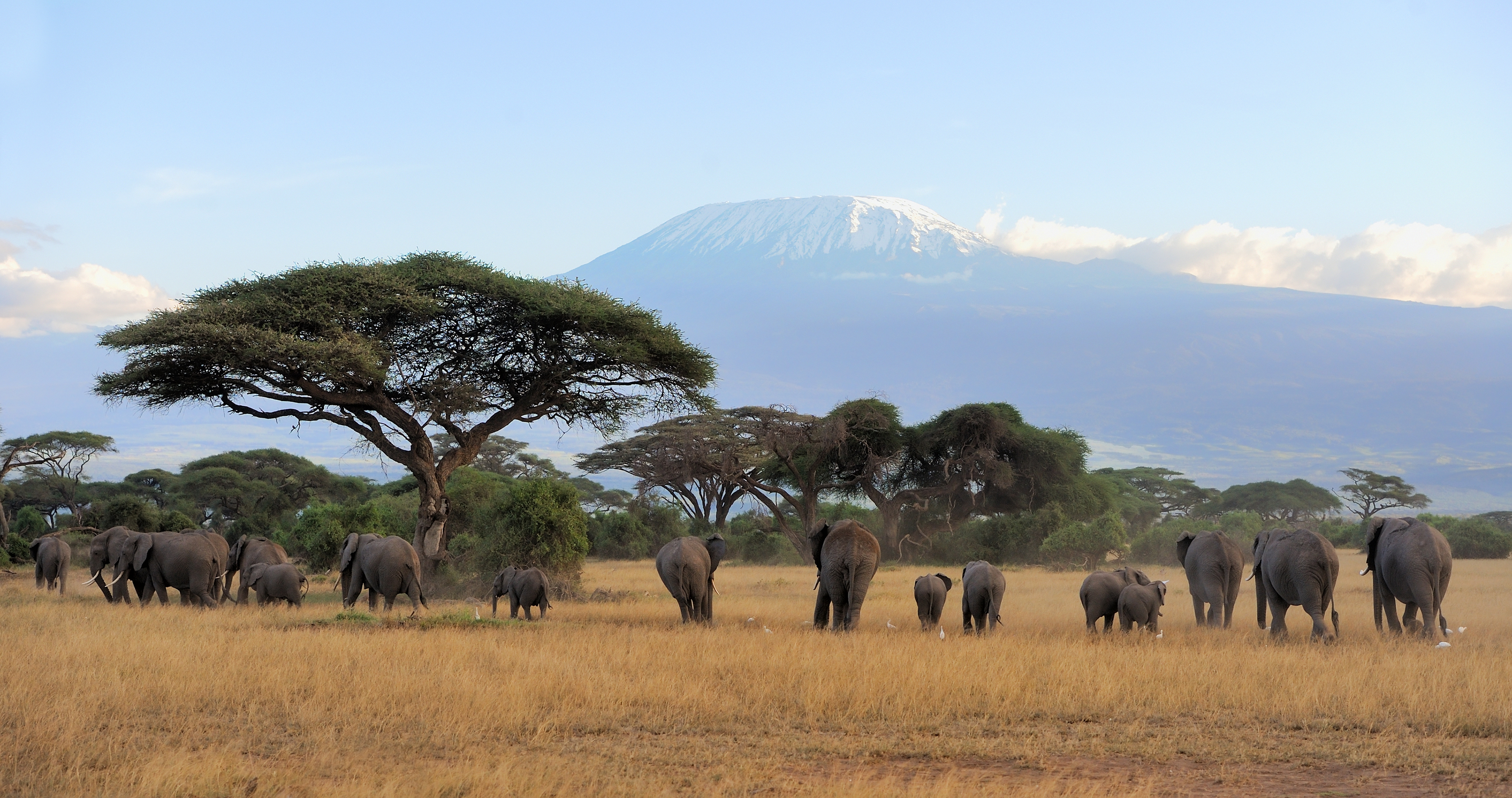
If your dates are flexible, two windows deserve thought. October is the tail of the dry season: excellent game viewing, thinner crowds than August, rates not yet climbed for the festive period, and it lines up with the Herbstferien in several federal states. February is the calving season on the southern Serengeti plains, when tens of thousands of wildebeest give birth within a few weeks and predator activity peaks. Neither is a compromise; both are quietly better value than the obvious choices.
Visas and entry for German passport holders
German passport holders need a visa for Tanzania. The ordinary single-entry tourist visa costs 50 US dollars, is valid for 90 days, and is applied for online through Tanzania's immigration e-visa portal. You need a passport valid six months beyond arrival with a blank page, a photo, your flight details and the name of your first night's accommodation, which we provide on your confirmation. Pay by card, then print the approval PDF and save it to your phone — the airline may ask for it at check-in in Germany.
Apply three to four weeks ahead. The portal advertises around ten working days but the queue lengthens before peak season, and there is no fast-track worth paying for. Visas on arrival are still issued at Kilimanjaro Airport, a genuine fallback, but it means queuing after a long flight with 50 dollars cash on you. A yellow fever certificate is not required if you fly straight from Europe, but it is if you spend time in an endemic country beforehand — which catches out some travellers routing through Addis Ababa or Nairobi.
What a safari costs in euros at three levels
Safari pricing is quoted per person per day, inclusive of park fees, vehicle, guide, accommodation and meals, and it separates into three levels. A comfortable mid-range trip — solid tented camps, private vehicle, good guide — sits around 350 to 500 euros a day. Below that, roughly 200 to 280 euros, is the entry level: simpler lodges, sometimes a shared vehicle, camps further from the gates. Above it, 700 to 1,200 euros buys the well-known luxury camps inside the parks.
A large share of that daily figure never reaches the operator. Tanzania's park fees are high and paid to the government: Serengeti entry, Ngorongoro Crater access and concession fees can account for 150 euros or more per person per day. That is why a Tanzanian safari costs more than a comparable trip in southern Africa, and why quotes far below the ranges above are usually cutting the vehicle, the guide or the park time.
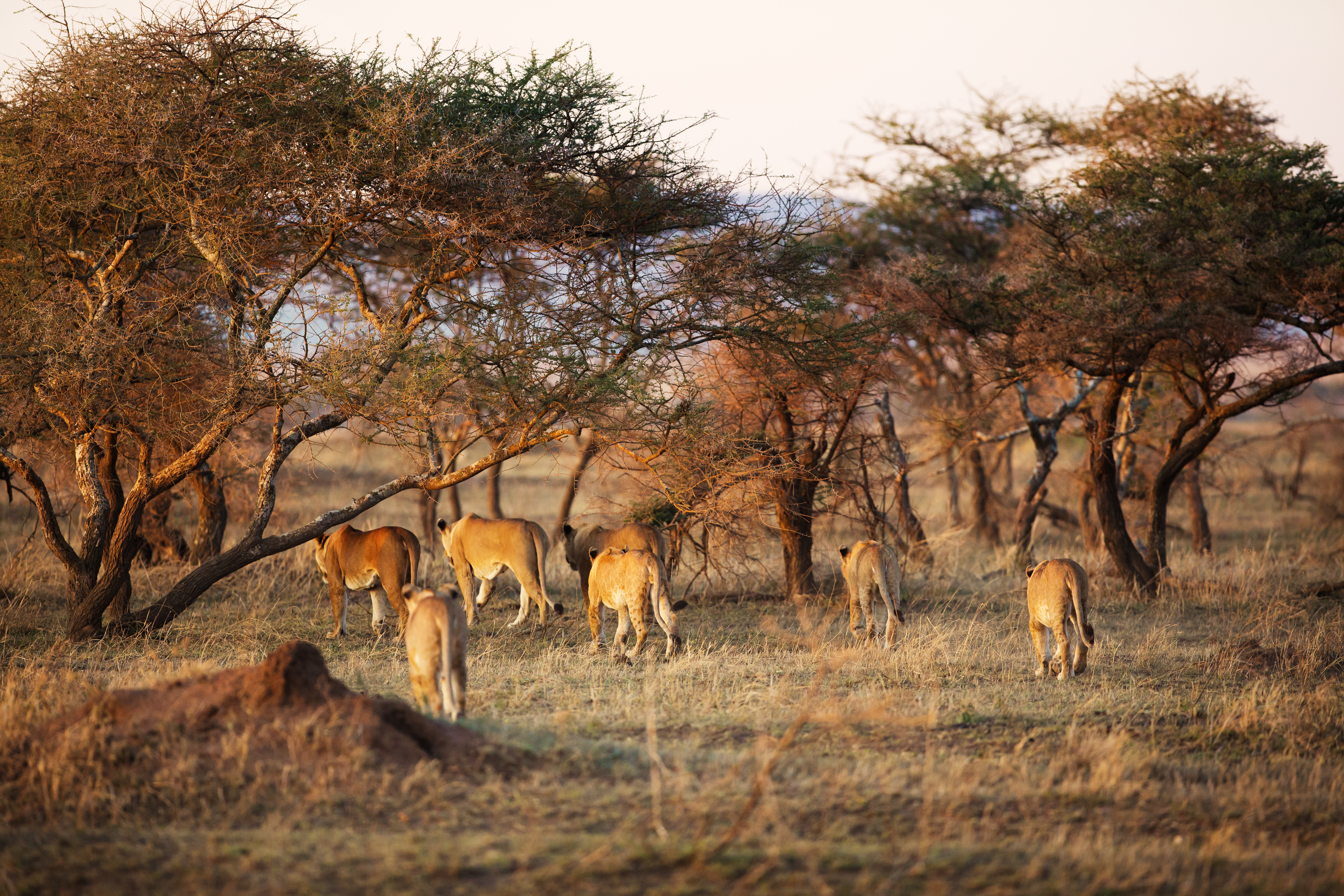
In real numbers, a seven-night northern circuit for two at mid-range level lands between 5,000 and 7,000 euros before flights; the same itinerary in luxury camps runs 10,000 to 17,000 euros, and the entry-level version 3,000 to 4,000. Add flights, tips of roughly 20 to 25 dollars a day for the guide, and a little for drinks. We quote in euros and hold the rate, so exchange movement between booking and travel is our problem rather than yours.
German-speaking guides: what can and cannot be arranged
Here is the honest answer, because it matters and it is often fudged. Tanzanian driver-guides work in English and Swahili; their training and licensing are in English, and the best guides in the country — the ones who read a lion's behaviour and put you in the right place an hour before anything happens — are almost never German speakers. Fluent German-speaking guides do exist here, but there are very few, they are booked months ahead, and they command a supplement of roughly 60 to 120 euros a day.
So the choice is real: an outstanding English-speaking guide, or a German-speaking one who is likely to be a less experienced naturalist. Most German travellers we host choose the former and are glad they did. If someone in the group has little English, tell us at the enquiry stage rather than a fortnight before departure — with enough notice we can usually secure a German-speaking guide, and some lodges have German-speaking hosts, but we will not promise one at short notice in August.
We would rather give you the guide who finds the leopard and explain it in English than the one who speaks perfect German and drives past it.
Safari and Zanzibar: the classic two-week shape
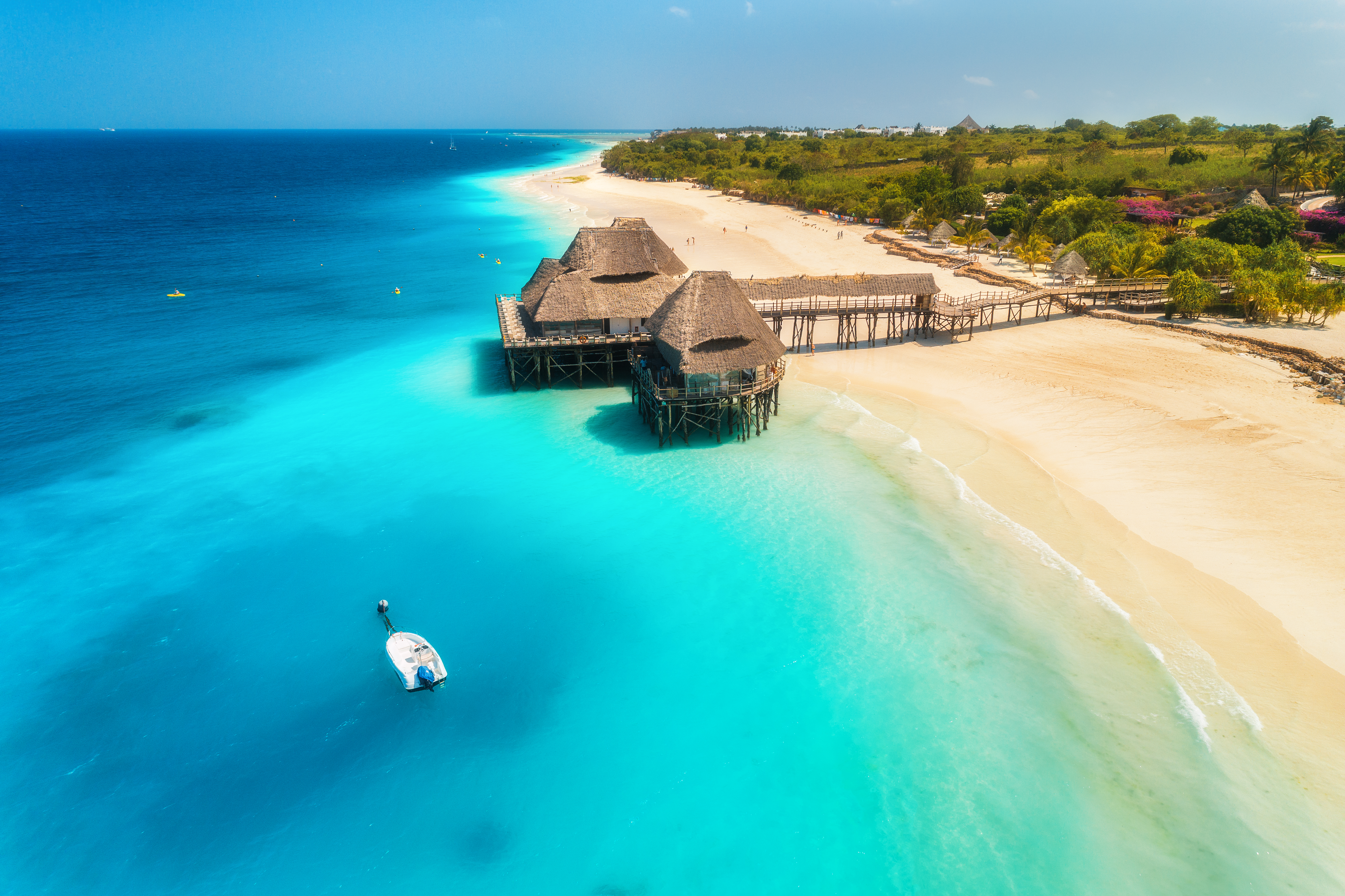
The trip most German travellers book is two weeks split between the northern circuit and Zanzibar, and it works because the halves complement each other. Seven or eight nights on safari — Tarangire, the Ngorongoro Crater and the Serengeti — is enough to see the country properly without the fatigue of longer game-viewing stretches. Then a short flight to the coast and five nights on the beach before the overnight flight home. Two weeks is the standard German holiday block, so the shape fits the calendar as well as the traveller.
The logistics are easy. Domestic flights run daily from the Serengeti airstrips and from Arusha to Zanzibar, one to two and a half hours depending on the routing, with a strict soft-bag allowance of around fifteen kilos. Fly home from Zanzibar rather than doubling back — several of the airlines serving JRO also serve Zanzibar, so the return leg usually costs nothing extra. Put the safari first and the beach second: arriving jet-lagged for a 6am game drive is a poor start.
See also our guide to German, French and Spanish-speaking guides.
See also our guide: Tanzania safari from Italy: routes, seasons and costs.
Practical details that catch German travellers out
A few things come up again and again. Tanzania uses UK-style three-pin plugs, so bring an adapter — the European two-pin will not fit. There is one hour of time difference in summer and two in winter, the great advantage of Africa over long-haul Asia or America: you arrive without jet lag. Malaria prophylaxis is recommended countrywide and worth discussing with a travel doctor, though the northern circuit sits high enough that mosquito risk is low.
- US dollars in cash for tips and extras — notes printed before 2009 are refused
- A card for everything else; ATMs are reliable in Arusha, not in the parks
- Travel insurance that names safari activities, and altitude evacuation if you climb Kilimanjaro
- A soft bag, not a hard case, if any domestic flight is involved
- Neutral clothing, a warm layer for early crater mornings, and no new boots
Plan your Tanzania safari from Germany
Planning a Tanzania safari from Germany comes down to matching your fixed dates to the right season, picking a routing that lands you in Arusha in reasonable shape, and being realistic about what the budget buys once park fees are counted. None of it is complicated, but all of it is easier with someone on the ground checking live schedules and camp availability.
Planning from Germany? Send us your dates, the airport you fly from and the level you have in mind, and we will quote the whole trip in euros — flights, safari, Zanzibar if you want it, visas explained and transfers included. We will say honestly if your dates fall in a difficult month and what we would do instead. Sokwe Africa Safaris is based in Arusha, fifty minutes from the airport where your trip begins.
Plan your Tanzania safari from Germany with Sokwe Africa Safaris