
Getting your flights to Tanzania right
Booking flights to Tanzania is the first real decision of your safari, and it is one that shapes everything that follows — which airport you land at determines how quickly you reach the parks, how much driving you face on day one, and even how your itinerary flows. Tanzania has three international gateways, each serving a different kind of trip, and choosing the wrong one is the single most common flight mistake we see travellers make. Get it right, and you step off the plane an hour or two from the Serengeti circuit; get it wrong, and you begin your holiday with an extra domestic flight or a very long drive.
As a safari operator based in Arusha, we meet clients at the airport several times a week, and we have watched every routing, airline and arrival scenario play out for years. This guide distils that experience into a practical flight-planning handbook: which airport to choose, which airlines fly from the USA, the UK, Europe and the Gulf, what realistic 2026 fares look like, how internal flights and bush planes work, and the small booking tricks — open-jaw tickets above all — that save real money and real time. Read it before you open a booking site and you will book smarter than most.
The three international gateways compared
Tanzania's three international airports serve very different purposes. Kilimanjaro International Airport, code JRO, sits between Arusha and Moshi in the north and is the natural gateway for the northern safari circuit — Serengeti, Ngorongoro, Tarangire, Lake Manyara — and for Kilimanjaro climbs. Julius Nyerere International in Dar es Salaam, code DAR, is the country's largest airport with the widest choice of airlines, but it lies on the coast, a full domestic flight away from the northern parks. Abeid Amani Karume International on Zanzibar, code ZNZ, serves the islands and is the obvious finish line for a bush-and-beach trip.
The rule of thumb is simple: fly into the airport nearest the start of your itinerary, and out of the airport nearest its end. For the classic northern safari that means arriving at JRO; for a southern safari into Nyerere or Ruaha, Dar es Salaam makes sense; for a beach-only holiday, fly straight to Zanzibar. Fares into Dar are sometimes fifty to one hundred dollars cheaper than into JRO, but the saving evaporates the moment you add the domestic connection north — typically two hundred dollars or more per person plus half a day of travel — so cheaper is very often not cheaper at all.
Kilimanjaro airport: why JRO beats Dar for safari
If your trip centres on the northern circuit, Kilimanjaro airport should be your default answer, and it is worth being firm about this because booking engines love to steer travellers to Dar es Salaam on price. JRO is roughly forty-five minutes from Arusha, the safari capital, which means you can land in the evening, sleep at a lodge, and be inside Tarangire or on the road to the Ngorongoro highlands by mid-morning. Land at Dar instead and you face either an onward flight to JRO or Arusha — with the risk of missed connections — or a drive of ten hours plus that no one enjoys at the start of a holiday.
JRO is also a far gentler arrival experience. It is a small, single-terminal airport where immigration rarely takes more than thirty to forty-five minutes even when two widebodies land together, your driver is waiting with a name board a few steps from the baggage hall, and on a clear day you may see the summit of Kilimanjaro itself from the apron. It is served daily by genuine long-haul carriers, so choosing JRO no longer means compromising on airline quality — the connections from Europe and the Gulf are excellent, as the next sections show.
Flying from the USA
There are no non-stop flights from the United States to Tanzania, so every American traveller connects once, and the good news is that several one-stop routings work beautifully. The most popular is KLM via Amsterdam, which flies daily to Kilimanjaro and connects seamlessly with Delta from most major US cities on a single ticket. Ethiopian Airlines flies from Washington, New York and Chicago via Addis Ababa to both JRO and Zanzibar, often at the sharpest fares. Qatar Airways connects a dozen US cities through Doha, and Turkish Airlines routes through Istanbul — both consistently excellent for comfort and schedule.
For 2026 departures, realistic return economy fares from the US east coast run from around nine hundred to one thousand four hundred dollars in the shoulder months, rising to one thousand three hundred to two thousand dollars in the July to September peak and over Christmas; west coast fares add two to four hundred dollars. Business class typically runs four to seven thousand dollars return. Total journey time is eighteen to twenty-four hours including the connection. Our guide to planning a Tanzania safari from the USA covers the full trip — flights, timing and tanzania safari cost — in more detail.
Flying from the UK and Europe
From the UK there is likewise no non-stop, but the one-stop options are strong. KLM via Amsterdam is the classic choice, feeding from London and the UK regions onto its daily Kilimanjaro service — often the fastest door-to-door routing at around twelve to thirteen hours. Qatar Airways via Doha and Turkish Airlines via Istanbul serve JRO, Dar and Zanzibar with superb aircraft, while Ethiopian via Addis Ababa and Kenya Airways via Nairobi frequently undercut them on price. Realistic 2026 return fares from London run five hundred fifty to nine hundred pounds in economy, climbing towards seven hundred to one thousand one hundred pounds in the summer peak.
From continental Europe, Amsterdam is the great hub for Tanzania thanks to KLM, and Condor flies seasonally from Frankfurt to both Kilimanjaro and Zanzibar at charter-style fares that are well worth checking. Travellers from Paris, Madrid, Rome or the Nordics generally route via Amsterdam, Doha, Istanbul or Addis Ababa, with return economy fares typically in the six hundred fifty to one thousand euro band. Whatever your city, compare the fare into JRO against Dar before assuming Dar is cheaper — for a northern safari the JRO ticket almost always wins once connections are counted, as our Tanzania safari from the UK guide explains.
Flying via the Gulf: Qatar, Emirates and Turkish
The Gulf and Turkish hubs have transformed flights to Tanzania over the past decade, and for many travellers they are now the most comfortable way in. Qatar Airways flies daily from Doha to Kilimanjaro, Dar es Salaam and Zanzibar, which makes it uniquely flexible for open-jaw itineraries on one ticket. Emirates serves Dar es Salaam daily from Dubai with widebody aircraft, and its sister carrier flydubai covers Zanzibar, so travellers connecting through Dubai from the Americas, Asia or Australia are well looked after. Turkish Airlines links Istanbul with Dar and Zanzibar, and its network breadth means one-stop connections from almost anywhere.
The trade-off with the Gulf routings is geography: from Europe they are less direct than Amsterdam, adding a few hours, but the schedules are built for overnight connections, the service is consistently excellent, and the fares — especially in premium cabins — are often significantly better than the European carriers. From Australia, Asia and the US west coast, the Gulf hubs are usually the natural routing rather than a detour. If you are flying Emirates or flydubai into Dar or Zanzibar for a northern safari, we simply build the short connecting flight to Kilimanjaro or Arusha into your itinerary so the handover is seamless.
Internal flights: Coastal, Auric and Precision
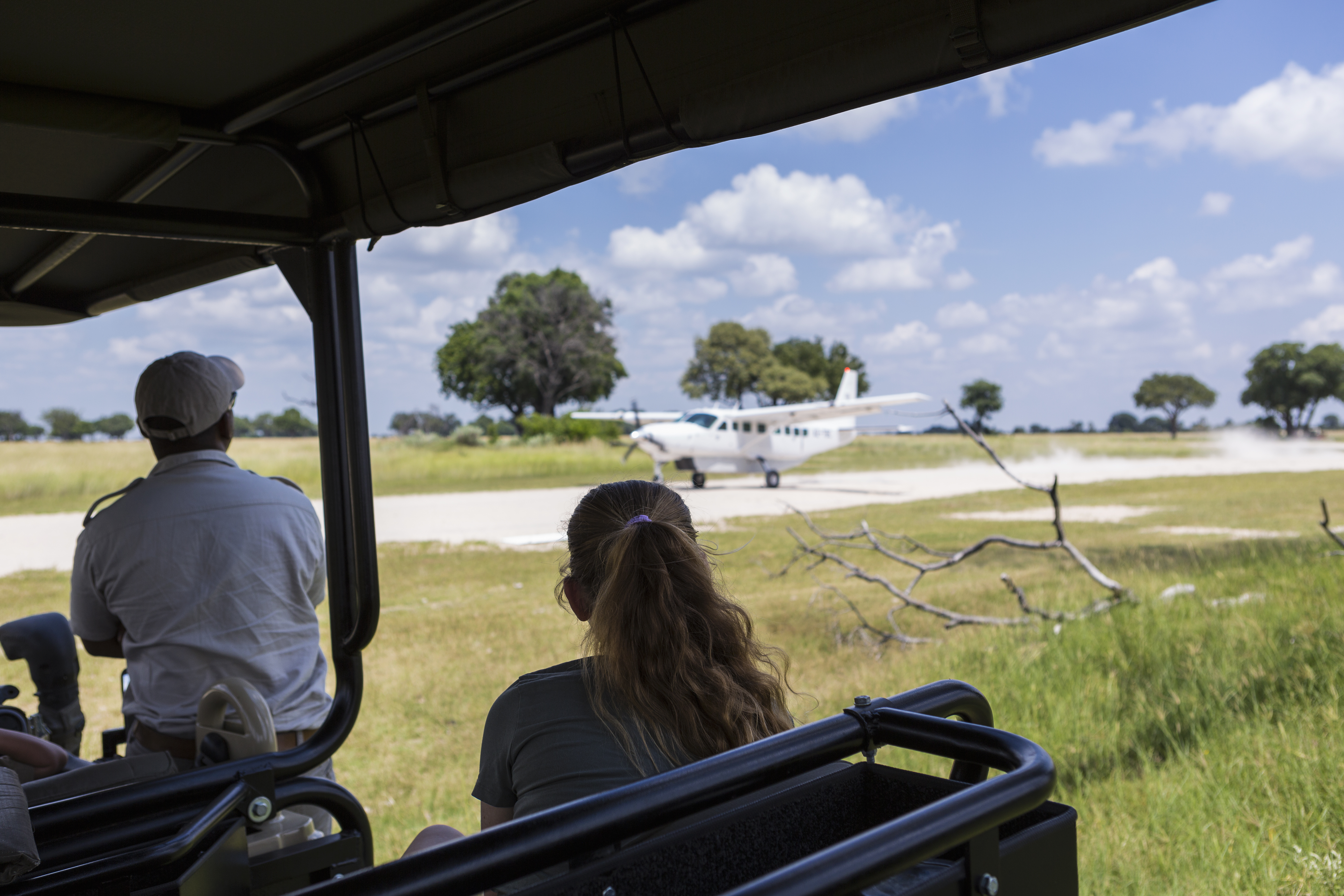
Once inside Tanzania, a network of scheduled light aircraft knits the country together and saves days of driving. Coastal Aviation and Auric Air operate daily Cessna Caravan services from Arusha and Zanzibar into the Serengeti's airstrips — Seronera in the centre, Kogatende in the north for the river crossings — as well as to Tarangire, Lake Manyara, and the southern parks. Precision Air and Air Tanzania fly larger aircraft on the trunk routes between Dar es Salaam, Kilimanjaro, Zanzibar and Mwanza. Typical one-way fares run from around one hundred sixty to four hundred fifty dollars depending on route and season.
These bush flights are one of the great joys of a Tanzanian trip — twenty minutes over the crater highlands and the endless Serengeti plains instead of a full day on the road — and they are the backbone of our fly-in safaris. But they come with rules that catch travellers out. Seats are limited and peak-season flights sell out weeks ahead, schedules are circular routings that may touch several airstrips, and the luggage limits are strict and genuinely enforced. Book them as part of your safari package rather than separately, so that any schedule change is our problem to solve, not yours.
Luggage limits on bush planes: pack soft, pack light
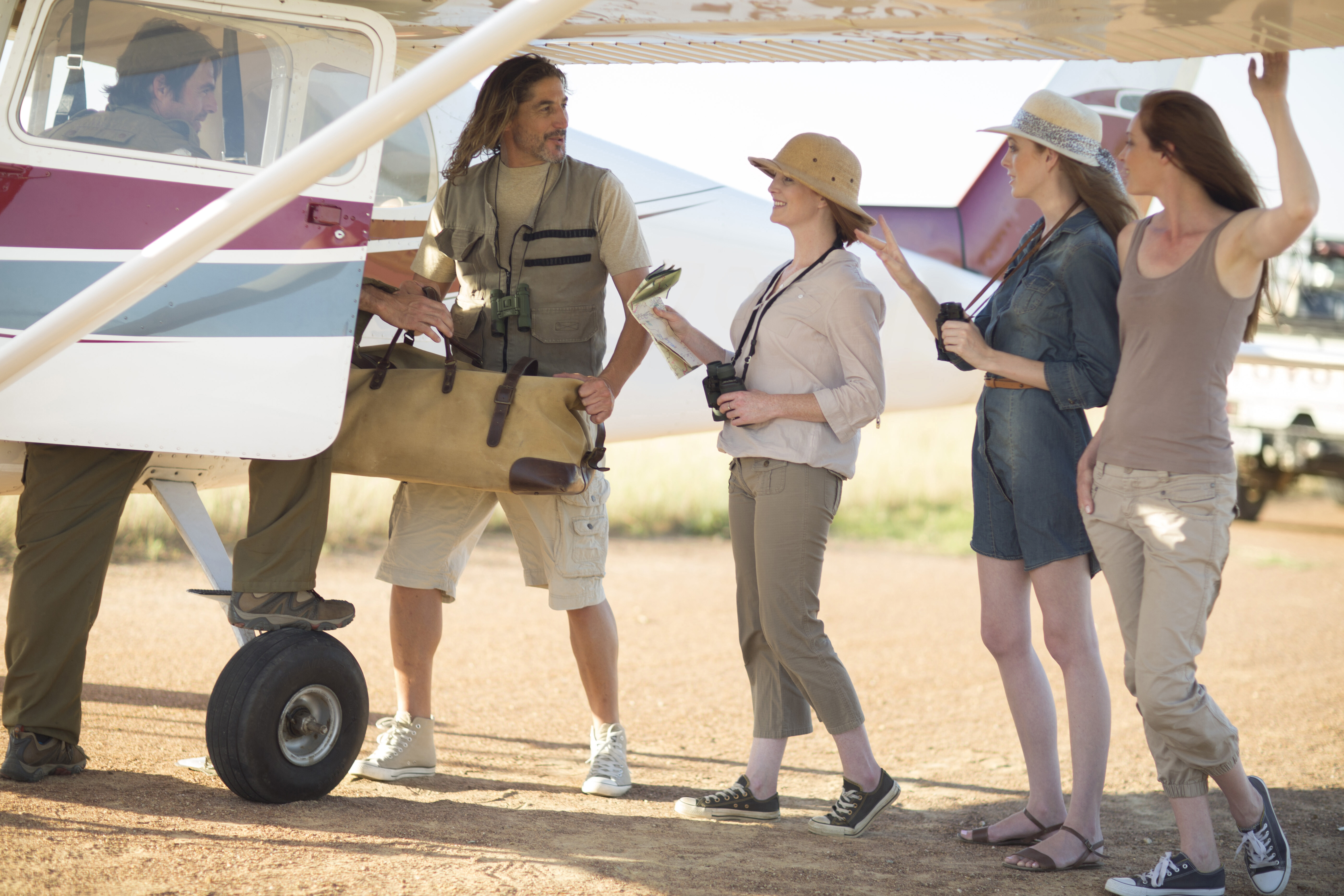
The single most important packing fact for a fly-in safari is this: the light aircraft limit is fifteen kilograms per person, soft-sided bags only, and that figure includes your hand luggage and camera gear. Hard suitcases physically do not fit through the Cessna's hold door, and the weight limit is a genuine safety calculation on a small aircraft at hot, high-altitude airstrips, so it is applied firmly. Excess is sometimes carried for a fee if space allows, but you cannot rely on it, and travellers who arrive with thirty-kilogram wheeled cases face repacking on the tarmac.
The practical solution is easy. Pack a soft duffel with safari clothing in neutral colours — laundry is available at almost every lodge, so a week's trip needs only three or four changes — and leave a bag of city clothes in storage at your Arusha hotel or with us, to be reclaimed before you fly home. Wear your heaviest boots on the plane, carry cameras and binoculars as your hand baggage within the allowance, and weigh everything at home. It sounds spartan; in practice fifteen kilograms is comfortably enough, and nobody has ever wished they had brought more luggage on safari.
- JRO for the northern circuit and Kilimanjaro climbs
- DAR for southern parks and the widest airline choice
- ZNZ for beach stays and bush-and-beach finales
- 15kg soft bags only on internal light aircraft
- Book international flights 4–6 months ahead for peak season
Book smart: open-jaw tickets and when to buy
The single smartest trick in Tanzanian flight booking is the open-jaw ticket: fly into Kilimanjaro and home from Zanzibar. Almost every bush-and-beach itinerary ends on the islands, and flying back from Zanzibar rather than retracing your steps to JRO saves a domestic flight, a spare night, and most of a day of your holiday. Multi-city search tools price this easily, and carriers such as KLM, Qatar Airways, Ethiopian and Turkish all serve both airports, so an open-jaw usually costs little or nothing more than a simple return. It is the routing we recommend for the majority of our guests.
On timing: for the July to September peak and the Christmas holidays, book international flights four to six months ahead — fares only climb as safari season approaches, and the best-timed departures sell through first. For shoulder seasons, two to four months is usually enough, and genuine bargains appear for the green season months. Book flights and safari in parallel rather than flights first: a day's flexibility either side can save hundreds of dollars, and we would rather shape your itinerary around a well-priced flight than force an expensive one around fixed lodge dates.
Fly into the airport nearest the start of your safari and out of the one nearest its end — the open-jaw ticket is the cheapest upgrade in Tanzanian travel.
Arrival: visas, queues and your transfer
A little preparation makes arrival painless. Most nationalities need a visa — fifty dollars for the majority, one hundred dollars for US citizens — and while visas are issued on arrival, the queue after a full widebody can take an hour or more, so we strongly recommend applying online for the e-visa two to four weeks before travel and sailing past the payment line. Have your passport valid for six months, your e-visa printout and first hotel name to hand, and yellow fever certificate only if you are arriving via an endemic country such as Kenya. Our Tanzania visa and entry guide walks through every step.
Once you clear the baggage hall, the safari begins. Every Sokwe itinerary includes a private airport transfer: our driver-guide will be waiting at arrivals with a name board, cold water and a vehicle ready for the drive to your Arusha lodge, however delayed your flight may be — we track every arrival. If you land at Dar or Zanzibar with an onward connection, we book generous connection times and our team monitors the whole chain. It is a small thing, but stepping off a long-haul flight straight into the hands of the people running your safari is the moment the trip truly starts.
See also our guide to Kilimanjaro, the Serengeti and Zanzibar in 14 days.
Related reading: Tanzania safari from Italy: routes, seasons and costs.
If you are planning this route, read Does Tanzania require travel insurance? The new mandatory inbound policy explained (from 1 October 2026).
More on this in Which airport should you fly into for a Serengeti safari? Kilimanjaro, Arusha, Dar es Salaam and the airstrips.
Common flight questions answered
A few questions come up constantly. Can you fly direct to the Serengeti from abroad? No — you connect at JRO, Arusha or Zanzibar onto a light aircraft, which is precisely what makes an open-jaw ticket so useful. Is it worth paying more to arrive in daylight? Not necessarily: many long-haul services land at JRO in the evening, and an overnight in Arusha before driving to the parks is actually the ideal rhythm. Should you buy internal flights yourself online? We advise against it — schedules shift, and when we hold the booking we absorb every change without you noticing.
And the question behind all the others: how much should flights add to your tanzania safari cost? As a planning figure, allow nine hundred to one thousand five hundred dollars per person return from North America, six hundred to one thousand dollars from the UK and Europe, plus two hundred to four hundred fifty dollars for each internal leg you fly rather than drive. Flights are usually the second-largest line in a safari budget after the safari itself, which is exactly why booking them intelligently — right airport, open-jaw, early for peak season — pays for itself several times over. Any good tanzania travel guide starts with the flights, because everything else hangs on them.
Tell us your departure city
This is, honestly, the easiest part of safari planning to delegate. Tell us your departure city and your rough dates, and we will tell you the best routing, the realistic fare band, whether an open-jaw makes sense for your itinerary, and how to time your safari around the flights rather than against them — then build the internal flights, transfers and lodges into one seamless plan. Sokwe Africa Safaris has been meeting flights at Kilimanjaro airport for years; let us make sure yours is the right one. Get in touch today and start your Tanzania trip the smart way.
Plan your flights and safari with Sokwe Africa Safaris
Frequently asked questions
How long is the flight to Tanzania?
There are no non-stop services, so everyone connects once. From London the fastest routing, usually KLM via Amsterdam, takes around twelve to thirteen hours door to door. From the US east coast allow eighteen to twenty-four hours including the connection through Amsterdam, Doha, Istanbul or Addis Ababa; west coast departures add several hours more.
Which airport should I fly into for a Tanzania safari?
For the northern circuit of Serengeti, Ngorongoro, Tarangire and Lake Manyara, fly into Kilimanjaro International (JRO), forty-five minutes from Arusha. Dar es Salaam (DAR) suits the southern parks of Nyerere and Ruaha, and Zanzibar (ZNZ) suits the beaches. Fares into Dar can look cheaper, but the domestic connection north costs two hundred dollars and half a day.
Where is Arusha, Tanzania?
Arusha sits in northern Tanzania beneath Mount Meru, about forty-five minutes by road from Kilimanjaro International Airport and roughly an hour from Moshi. It is the country's safari capital and our home base, the launch point for the northern circuit and for Kilimanjaro climbs, and most guests spend their first night in a lodge here before driving to the parks.
Where is Dar es Salaam, Tanzania?
Dar es Salaam lies on Tanzania's Indian Ocean coast in the east, and its Julius Nyerere International Airport (DAR) is the country's largest, with the widest choice of airlines. It serves the southern parks of Nyerere and Ruaha, but sits a full domestic flight from the northern circuit, or a drive of ten hours plus that nobody enjoys on day one.
Can you fly direct to Tanzania from the USA?
No. Every American traveller connects once, and several one-stop routings work beautifully: KLM via Amsterdam to Kilimanjaro on a single ticket with Delta, Ethiopian via Addis Ababa from Washington, New York or Chicago, Qatar Airways via Doha, and Turkish via Istanbul. Return economy fares from the east coast run roughly nine hundred to one thousand four hundred dollars in the shoulder months.
How much do flights to Tanzania cost in 2026?
As a planning figure, allow nine hundred to one thousand five hundred dollars per person return from North America, and six hundred to one thousand dollars from the UK and Europe, with the July to September peak and Christmas at the top of those bands. Add two hundred to four hundred and fifty dollars for each internal light-aircraft leg you fly rather than drive.