
If you are travelling to Tanzania, there is a new rule you need to know about, and a lot of visitors have not heard of it yet. Under regulations published in September 2026, foreign visitors entering mainland Tanzania are required to hold a government-backed inbound travel insurance policy from 1 October 2026. Zanzibar has had its own version of the requirement since October 2024. This is separate from the travel insurance you buy at home, and it is easy to get wrong, because there are two official portals and a rule about which to use. This guide sets out what we have been able to verify and how to avoid the common mistakes.
The short answer
Yes. From 1 October 2026, foreign visitors entering mainland Tanzania are expected to buy a mandatory inbound travel insurance policy, which at the time of writing costs US$44 for an adult, with lower prices for children and infants free. You buy it from the official portal for your first point of entry, the National Insurance Corporation portal for the mainland or the Zanzibar Insurance Corporation portal for Zanzibar, and you carry the certificate with you. It does not replace your own comprehensive travel insurance, which you should still arrange, and it does not replace your visa.
We want to be careful about how we describe this. The information below comes from published reports of the regulations and from travel industry sources, as of 13 October 2026, and rules of this kind can change quickly or be applied in ways that differ from the written summary. Please check the official portals, linked at the end of this guide, before you travel, and treat anything that differs from them as out of date, including this page.
What the rule is
The requirement is set out in the Insurance (Inbound Travel Insurance) Regulations, 2026, published as Government Notice No. 256 of 2026, and it applies to eligible foreign visitors entering mainland Tanzania, including through airports, seaports and land borders. It creates a basic policy covering emergencies, bought for a fixed price by every eligible traveller. Zanzibar's scheme, which began in October 2024, works in a similar way, with its own insurer and its own portal, and the mainland scheme was introduced to align with it.
According to the sources we reviewed, the policy is valid for up to 92 days from arrival and allows multiple entries during that period. If your trip combines the mainland and Zanzibar, you need only one policy, bought for your first point of entry. So if you land on the mainland first and fly to Zanzibar later, you buy the mainland policy, and if you land in Zanzibar first, you buy the Zanzibar one. Getting this wrong is the commonest mistake, and a policy bought from the wrong portal may not be accepted.
What it costs
At the time of writing, the published price is US$44 for an adult aged 18 or over. Children aged 3 to 17 are reported to pay US$22, and infants under 3 are free. Groups of ten or more adults are reported to receive a ten per cent discount on the adult premium. Prices may be quoted in dollars or the equivalent in Tanzanian shillings. Each traveller needs their own policy, including children old enough to be charged, so a family of four with two children over three would buy four policies, with the children at the lower rate.
Be aware that some details differ slightly between sources, particularly on child pricing for the Zanzibar scheme, and that fees can change. Use the official portal for the exact amount you will pay. If a website asks for more than the published price, or adds unexplained fees, stop and check that you are on the official site. Look-alike websites exist, and we would not want you to pay a middleman for something you can buy directly.
Who must buy it, and who is exempt
The rule is aimed at foreign visitors, and the sources we reviewed describe a list of people who are not required to buy it. These are reported to include Tanzanian residents, holders of valid work or residence permits, Tanzanians living abroad, diplomats, transit passengers and residents of East African Community and Southern African Development Community partner states. Infants are free. We cannot confirm the detail or how the exemptions are applied at the border, and the list may change, so check the official guidance for your situation.
If you are a tourist from the United States, the United Kingdom, Europe, Australia, Canada or most other countries, you should assume that the requirement applies to you. If you are unsure, buy the policy before you travel, since the cost is modest compared with the risk of a delay at the border. If you think you may be exempt, carry the evidence, such as a residence permit, and ask the portal's support team in advance.
More on preparing for Tanzania: visa and entry guide, health and safety, is Tanzania safe for tourists and malaria prevention. See our private Tanzania safari options.

Where to buy it
There are two official portals, and you use the one for your first point of entry. For mainland Tanzania, the policy is issued through the National Insurance Corporation's inbound portal, and for Zanzibar through the Zanzibar Insurance Corporation's portal. Both are linked at the end of this page. You pay online by card, and the certificate is typically issued within minutes. You can buy before you travel, which we strongly recommend, or reportedly at the point of entry, though that risks queues and delays when several flights arrive together.
When you buy, enter your name exactly as it appears in your passport, with the correct passport number and dates, because the certificate will be checked against your documents. Save a copy on your phone and print one to carry with your passport and visa, since mobile signal at the airport is not guaranteed. If you are travelling as a group or a family, you can usually buy several policies in one session, but check that each certificate has the right person's details.
What it covers, and what it does not
The mandatory policy is a basic safety net. According to the published summaries, it covers emergency medical treatment, emergency medical evacuation, emergency repatriation and, on the mainland policy, loss of luggage, all subject to the policy terms and limits. Read the certificate and terms when you buy, because the limits, exclusions and claims procedure matter. It is designed to make sure that visitors who have an emergency can be treated and moved, and that the cost does not fall on the public health system.
It is not a substitute for comprehensive travel insurance. It does not, as far as we can see, cover trip cancellation or interruption, delayed or missed flights, high-value medical costs beyond its limits, pre-existing conditions, adventure activities or a Kilimanjaro climb. Your own insurer's policy remains important, and the government states that private insurance does not replace the mandatory one, so you need both. Check that your own policy has proper medical evacuation cover, and tell the insurer about any activities such as trekking, walking safaris or balloon flights.

At the airport: what to expect
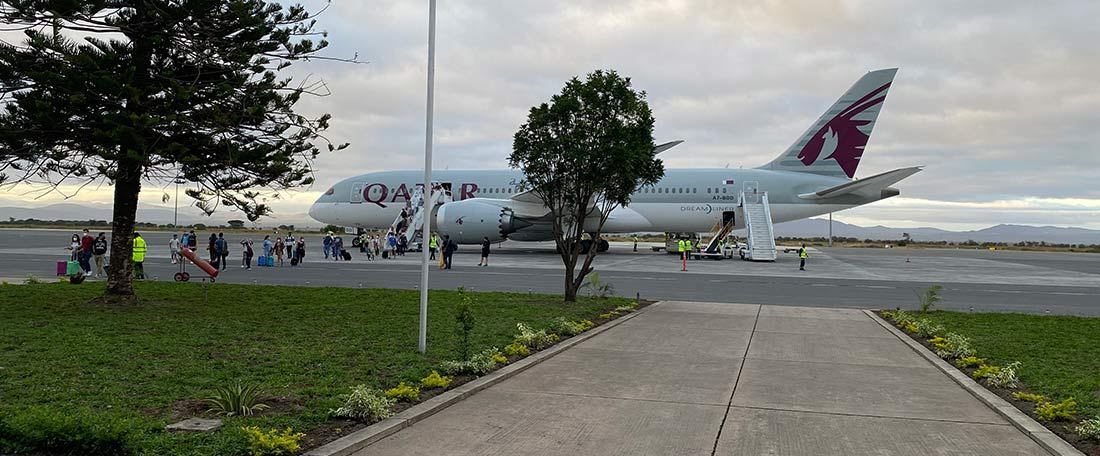
Have your passport, visa, return ticket and insurance certificate ready, and expect an officer to ask for the certificate at immigration. If you have not bought it, reports suggest you can buy it on the spot, but that can be slow, and we would not want you to start your safari with a long delay. Allow extra time at arrival, particularly if you land in the evening when several international flights arrive together. Your operator's driver will wait, but a long queue is a poor start to a trip.
If something goes wrong, for example if the portal rejects your card or you cannot find your certificate, keep calm, ask an official for help and contact your operator, who can often assist. Do not hand money to anyone who is not an official at a counter. If your travel plans change, for example if you arrive by land at a border post, the rule still applies, and the purchase process is the same. Land crossings, such as Namanga from Kenya, are covered, so combined Kenya and Tanzania trips need to plan for it.
Special cases
If you are climbing Kilimanjaro or Mount Meru, you need the mandatory policy as a visitor, and you should also check that your own insurance covers trekking to the altitude you plan, because standard policies often exclude it. If you are travelling with children, remember that they need their own policies from the age of three. If you are only transiting through a Tanzanian airport, the sources we reviewed say transit passengers are exempt, but check your own case. And if you are making repeat visits within 92 days, the policy should cover them, though the period starts at your first entry.
If you are a diplomat, a resident or a citizen of an exempt country, do not assume the exemption will be applied automatically. Carry proof, and if in doubt ask in advance. If you have already bought a policy and your plans change so that you enter through a different point, check whether the certificate remains valid or whether you need a new one. The confusion that comes with any new rule is mostly about these details, so asking early saves trouble.
What we recommend
Buy the mandatory policy online from the official portal before you travel, for the correct first point of entry, and keep a digital and a printed copy. Arrange comprehensive travel insurance at home with medical evacuation cover, and check that it does not exclude your activities. Read both sets of terms. Check your visa requirements separately. And ask your operator what it knows about the new rule and how it will help you, since a good one will have thought about it and will be able to answer your questions.
For our own guests, we are happy to answer questions about the requirement and to help you check that you have everything you need before you fly. We also keep an eye on how it is applied in practice, and if we learn anything that affects your arrival, we will tell you. If you are comparing operators, it is a useful test: ask how they are handling the new insurance rule, and treat a blank look or a confident answer that contradicts the official portals as a warning sign.
Check and buy through the official portals: the National Insurance Corporation inbound portal (mainland) and the Zanzibar Insurance Corporation portal. Questions about your own trip? Talk to Sokwe Africa Safaris.
Frequently asked questions
Does Tanzania require travel insurance?
From 1 October 2026, foreign visitors entering mainland Tanzania are required to hold a government inbound policy, at US$44 for an adult. Zanzibar has had its own scheme since October 2024. Check the official portals before you travel.
How much is the mandatory Tanzania travel insurance?
The published price is US$44 for adults, reportedly US$22 for children aged 3 to 17 and free for infants under 3, with a ten per cent discount for groups of ten or more adults. Confirm the exact fee on the official portal.
Does the mandatory policy replace my own travel insurance?
No. The government policy is a basic safety net for medical emergencies, evacuation, repatriation and luggage. You still need comprehensive insurance for cancellation, delays, pre-existing conditions and high-value medical costs.
Where do I buy the Tanzania inbound insurance?
From the official portal for your first point of entry: the National Insurance Corporation portal for the mainland or the Zanzibar Insurance Corporation portal for Zanzibar. Buy online before you travel and avoid look-alike sites.
Do I need two policies if I visit the mainland and Zanzibar?
No. According to the published guidance, you need one policy, bought for your first point of entry, valid for up to 92 days.
Do children need the Tanzania travel insurance?
Reportedly yes, from age 3, at a lower price, and infants under 3 are free. Each traveller needs their own certificate with the correct passport details.