
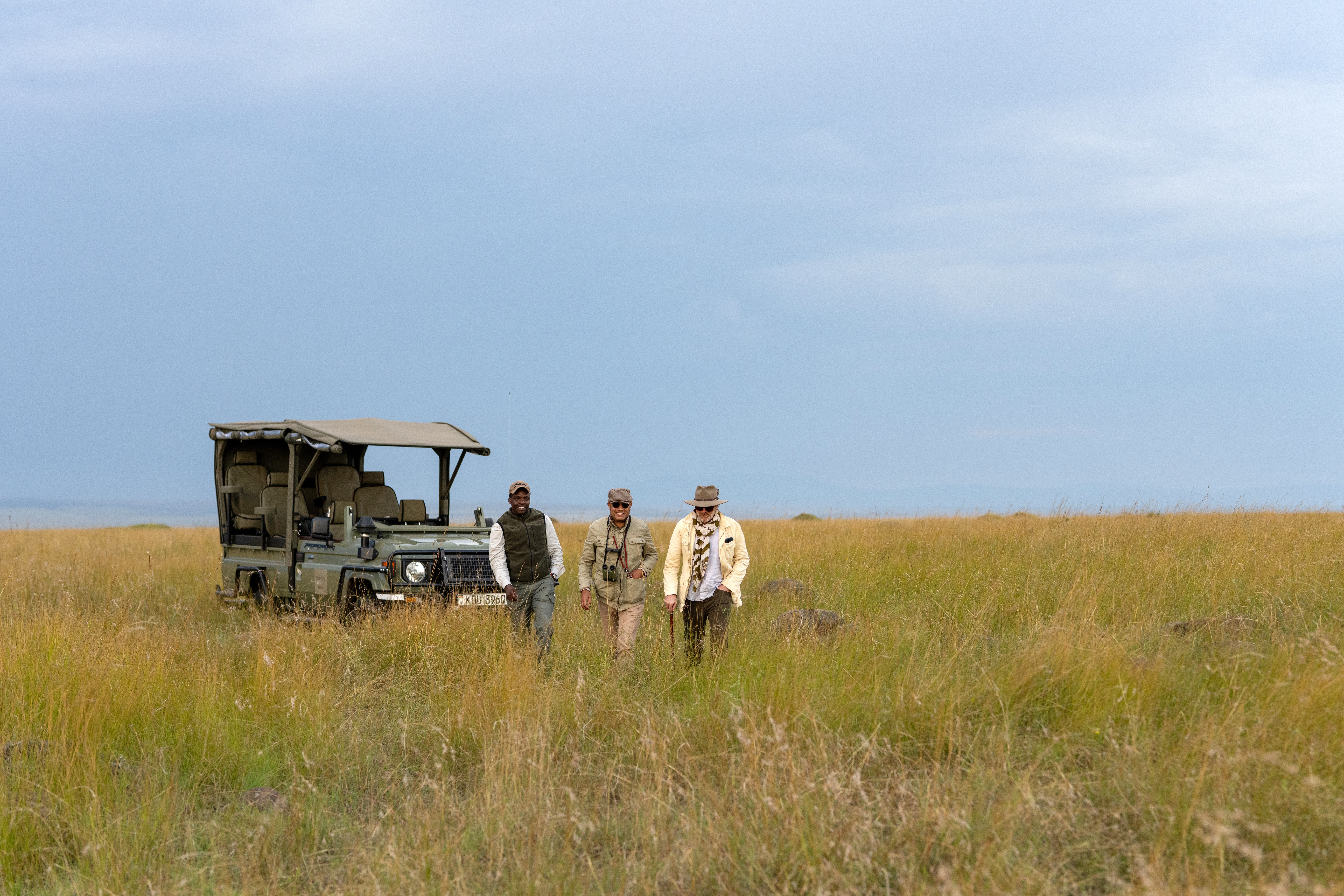
Shorts are one of the most common questions we get about packing, and it is easy to see why. Tanzania is hot, many people are unsure about local customs, and women in particular often worry about causing offence. The good news is that the answer is simple: yes, you can wear shorts on safari, for men and women, and nobody in a park or a safari camp will think twice about it. The details matter at the edges, in towns, in Zanzibar, at cultural visits and on cold mornings, so this guide covers what works where, and a few rules you might not expect.
The short answer
In the parks and at safari camps, shorts are perfectly normal and practical for both men and women, particularly in the middle of the day. In towns such as Arusha, and especially in Zanzibar, local dress is more conservative, and covering your shoulders and knees is courteous and wise, particularly for women. Early mornings and evenings on safari are often cold, so you will want long trousers and a warm layer, and long sleeves help against insects and sun. There is also an important rule about camouflage patterns, which you should know before you pack.
On safari in the parks
Inside the parks, you are in a vehicle with your own guide and moving between camps, and the dress code is purely practical. Shorts are comfortable in the heat of the day, and many guests wear them for midday drives, or for lounging at camp. Women are as welcome in shorts as men, and guides and camp staff are used to international guests of every kind. The things that matter are sun protection, comfort in a bumpy vehicle and avoiding the colours that attract insects.
That said, many experienced travellers choose lightweight long trousers for much of the day, because they protect against sun, dust, scratches from vegetation and insects at dusk, and they are cooler than many people expect when made of a thin, breathable fabric. A common approach is zip-off trousers or a pair of shorts and a pair of lightweight trousers, and changing as the day requires. Whichever you choose, remember sunscreen on the exposed skin of your legs, since the sun is strong even through a vehicle window.
Colours: what to wear and what to avoid
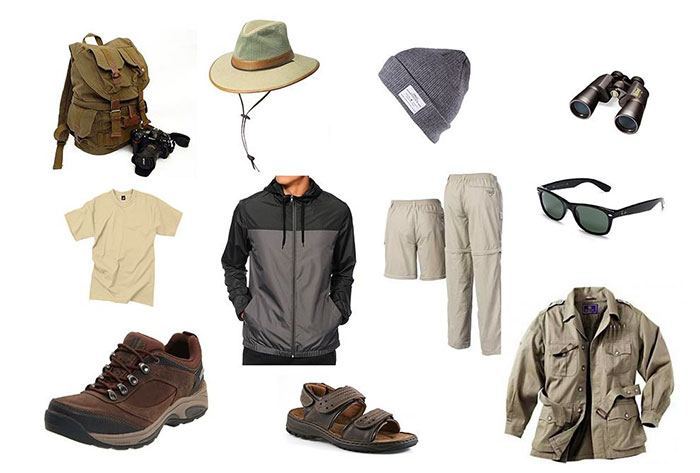
Neutral colours such as khaki, beige, olive and soft greens are the traditional choice, and they have practical benefits: they hide dust, they do not startle animals and they are less likely to attract tsetse flies. Dark blue and black are best avoided, because tsetse flies are strongly drawn to them and their bite is painful, and bright white shows the dust and may stand out in the bush. Bright colours are not dangerous, but muted tones are more comfortable and tend to look better in photographs of wildlife.
Fabric matters as much as colour. Lightweight cotton or technical fabrics that dry quickly are ideal, and loose cuts are more comfortable than tight ones. Avoid heavy denim, which is hot and slow to dry, and avoid noisy fabrics, since quiet clothing helps when you are watching animals. Bring a hat with a brim, sunglasses and a scarf or buff for dust, and good closed shoes or light boots for walking at camp or on short walks, with sandals for relaxing.
More on packing: what to wear on safari, Tanzania safari packing list, what to pack and malaria prevention. See our private Tanzania safari options.
The camouflage rule
One rule catches visitors out: it is widely reported that wearing camouflage clothing is not allowed in Tanzania for civilians, and that items in military-style patterns can be confiscated or lead to trouble. Travellers have been warned about this in official advice, and it applies to clothing, bags and accessories. Leave anything in a camouflage pattern at home, and avoid military-style gear that could be mistaken for it. Rules can change, so check the current advice from your government's travel pages, but the safe course is simply not to bring any.
Towns and cities
Arusha, Moshi and Dar es Salaam are busy, mixed places, and you will see a range of dress, from business wear to shorts on visitors. Local people generally dress modestly, and while no one will object to shorts on a tourist, more covered clothing attracts less attention and is more comfortable in crowded markets. For women, a knee-length skirt or lightweight trousers and a top that covers the shoulders is easy and respectful, and a light scarf is useful. Men are usually fine in shorts, though long trousers are more usual in town for local men.
If you are visiting a mosque, a church or a government office, dress more formally and cover shoulders and knees, and women may be asked to cover their hair at some religious sites. Take your shoes off where asked. Beachwear is for the beach and the resort pool: do not walk through towns in swimwear or very short clothing. These are not strict rules for visitors, but following them shows respect and tends to be returned with warmth.
Zanzibar and the coast
Zanzibar is predominantly Muslim, and the culture is more conservative than on the mainland, especially in Stone Town and in villages. Outside resorts, both men and women are expected to dress modestly, with shoulders and knees covered. Swimwear and bikinis are for the beach in front of your resort and for boat trips, and topless sunbathing is not acceptable. During Ramadan, in particular, be especially sensitive: avoid eating, drinking or smoking openly in public during the day in local areas, and dress conservatively.
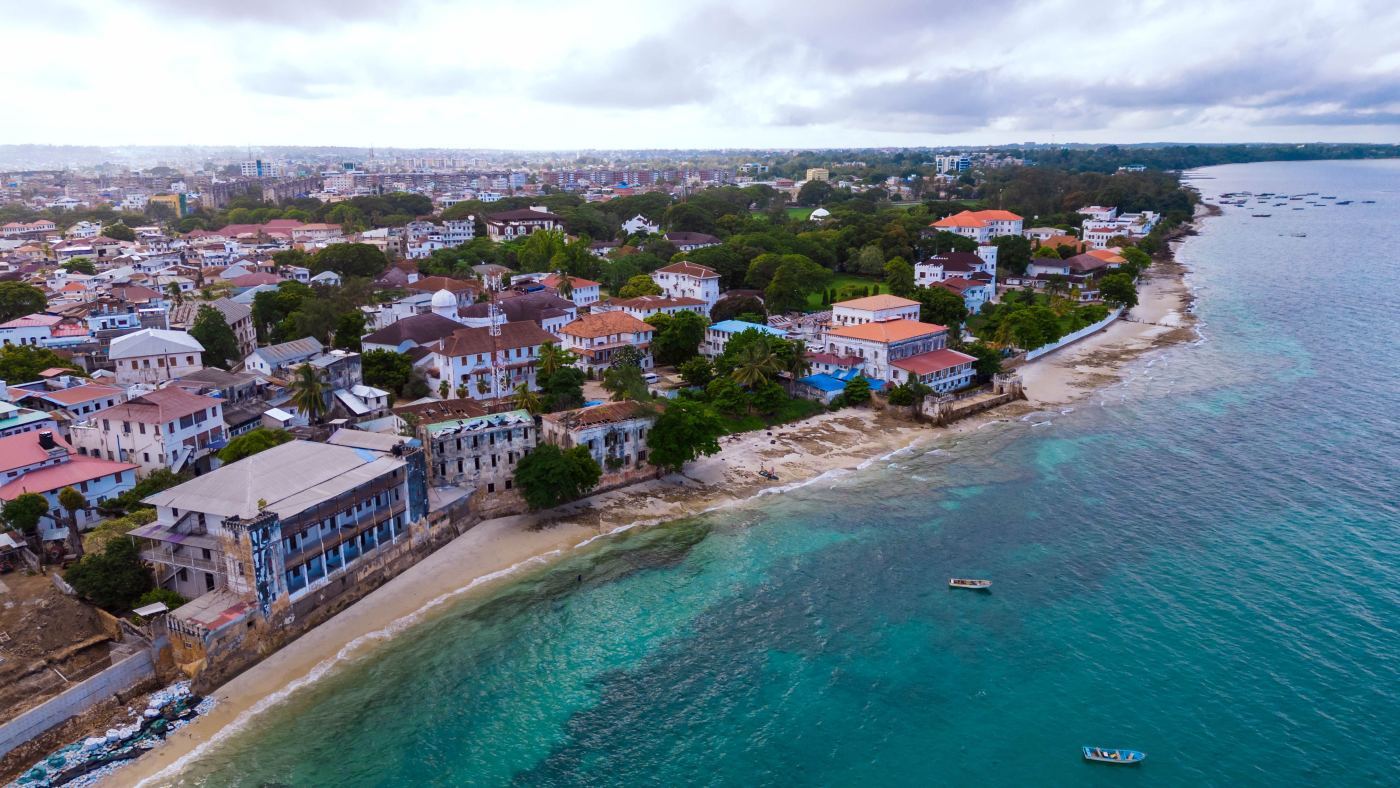
A lightweight long skirt or trousers, a loose shirt and a scarf are comfortable in the heat and fit in well. Local women often wear a kanga or a colourful wrap, and you may enjoy buying one. Resorts on the north and east coasts are used to international guests and are more relaxed within their grounds, but when you go into villages or towns, dress modestly. This is a matter of courtesy, and visitors who do so are often met with extra friendliness.
Cold mornings and layers
People are surprised by how cold safari mornings can be, particularly in the Serengeti and around Ngorongoro, where early drives start before sunrise in open vehicles and the rim sits above 2,000 metres. You will want a fleece or warm jacket, long trousers, a hat and sometimes gloves for the first hour or two, then peel layers off as the day warms. This is where shorts come into their own: a layered system with long trousers for the cold, shorts for the heat and a light waterproof for rain gives you flexibility.
Evenings at camp can be cool too, and many camps are relaxed about dress, with smart casual being the norm. You do not need formal clothes, although some people like to change for dinner. Bring something warm for after dark, since tents and open-sided lodges can get chilly, and wear long sleeves and trousers to protect against mosquitoes. A light jacket and a scarf do double duty for warmth and for insects.
Footwear, hats and sun protection
Footwear is simpler than people expect. Comfortable closed shoes or light walking shoes are enough for most days, with sandals for the evenings and for relaxing at camp. You will not need heavy boots unless you plan a hike or a climb. Socks are worth wearing in the evening as part of your mosquito protection. Choose shoes that are broken in, because new ones can rub when your feet swell in the heat, and bring a spare pair in case one gets wet or dusty.
A wide-brimmed hat that stays on in a moving vehicle is one of the most useful items you can bring, along with polarised sunglasses and a high-factor sunscreen. The sun is strong, the air is thin in the highlands and a vehicle's open roof offers little shade. Apply sunscreen to the backs of your hands, your neck and the tops of your feet, which burn easily, and reapply during the day. A lightweight long-sleeved shirt is often a better answer than more cream, and a scarf or buff protects the neck and keeps dust out of your mouth.
A simple packing list for a week
For a week on safari, you can manage with three or four lightweight tops, including at least two long-sleeved, two pairs of lightweight long trousers, one pair of shorts, a fleece or warm jacket, a light waterproof, a hat, sunglasses, sleepwear, underwear and socks for the week, a swimsuit for camp pools and comfortable shoes. Add insect repellent, sunscreen and any medication, and a small day bag for binoculars and a camera. Resist the urge to pack for every eventuality; camps offer laundry, and you will wear the same favourites repeatedly.
If you are unsure about a particular outfit, ask your guide, who will tell you straightforwardly what is practical and appropriate for the day. They have seen what works and what does not, from the guest who arrived in white trousers to the one who froze in a thin shirt on a dawn drive. A short conversation on the first morning, before you set off, is worth more than any list, and guides are always glad to be asked.
Special situations
For hot air balloon flights, wear comfortable layers and closed shoes, avoid loose scarves and tie back long hair, as the early morning is cold. For walking safaris, wear sturdy, closed shoes, long trousers and muted colours, since you are closer to animals and vegetation. On Kilimanjaro and Meru, technical layers are essential, and shorts are only for the lower sections. For visits to local communities, dress modestly and ask your guide what is appropriate, since customs vary.
Laundry is available at most camps and lodges, usually quickly and at modest cost, though many do not wash underwear for cultural reasons and rains can slow drying, so pack accordingly. Small charter flights have strict weight limits, so pack light, soft bags and fewer, versatile items. You do not need a large wardrobe: three or four tops, two pairs of trousers, a pair of shorts, a warm layer and a hat will carry you through a week.
Not sure what to pack for your dates? Talk to Sokwe Africa Safaris and we will send a packing list tailored to your route and season.
Frequently asked questions
Can women wear shorts on safari in Tanzania?
Yes. In parks and camps, shorts are normal for men and women. In towns and especially Zanzibar, covering shoulders and knees is more respectful, so bring a skirt or lightweight trousers for those times.
Can you wear shorts in Tanzania?
Yes, especially on safari and at resorts. In towns and in Zanzibar outside the resorts, local dress is conservative, so lightweight long trousers or a knee-length skirt are more courteous.
What colours should I avoid on safari?
Avoid dark blue and black, which attract tsetse flies, and avoid camouflage patterns entirely, since they are widely reported to be prohibited for civilians in Tanzania. Neutral khaki, beige and olive are best.
Is camouflage clothing illegal in Tanzania?
It is widely reported that civilians may not wear camouflage clothing, and items can be confiscated. Leave camouflage at home and check your government's current travel advice.
What should I wear in Zanzibar?
Cover shoulders and knees in Stone Town and villages, and keep swimwear for the beach and resort pool. Dress especially modestly during Ramadan. Resorts are more relaxed within their grounds.
Is it cold on safari in Tanzania?
Early mornings and evenings can be cold, especially in the Serengeti and at Ngorongoro, so bring a fleece or warm jacket, long trousers and a hat. Middays are hot, so layers work best.