
The migration's best-kept secret
Ask most travellers about migration river crossings and they will tell you about the Mara River in the northern Serengeti — the famous plunges of August and September that fill documentaries and, increasingly, riverbanks lined with vehicles. Far fewer have heard of the Grumeti River, the tree-lined waterway that cuts across the Serengeti's western corridor, where the same herds face some of the largest crocodiles in Africa every year between May and July. A western Serengeti safari puts you in front of genuine crossing drama months before the northern season begins, and very often you will watch it with no other vehicle in sight.
We say this as a Tanzanian operator who guides in both regions: the western corridor is the most underrated stretch of the entire migration circuit. The herds must pass through it — the geography gives them no choice — yet the area receives a small fraction of the visitors the north does. This guide covers how the western corridor works, exactly when the wildebeest pass, how a Grumeti crossing honestly compares with a Mara crossing, where to stay around Kirawira, and how to combine the west with the central Serengeti for a complete safari.
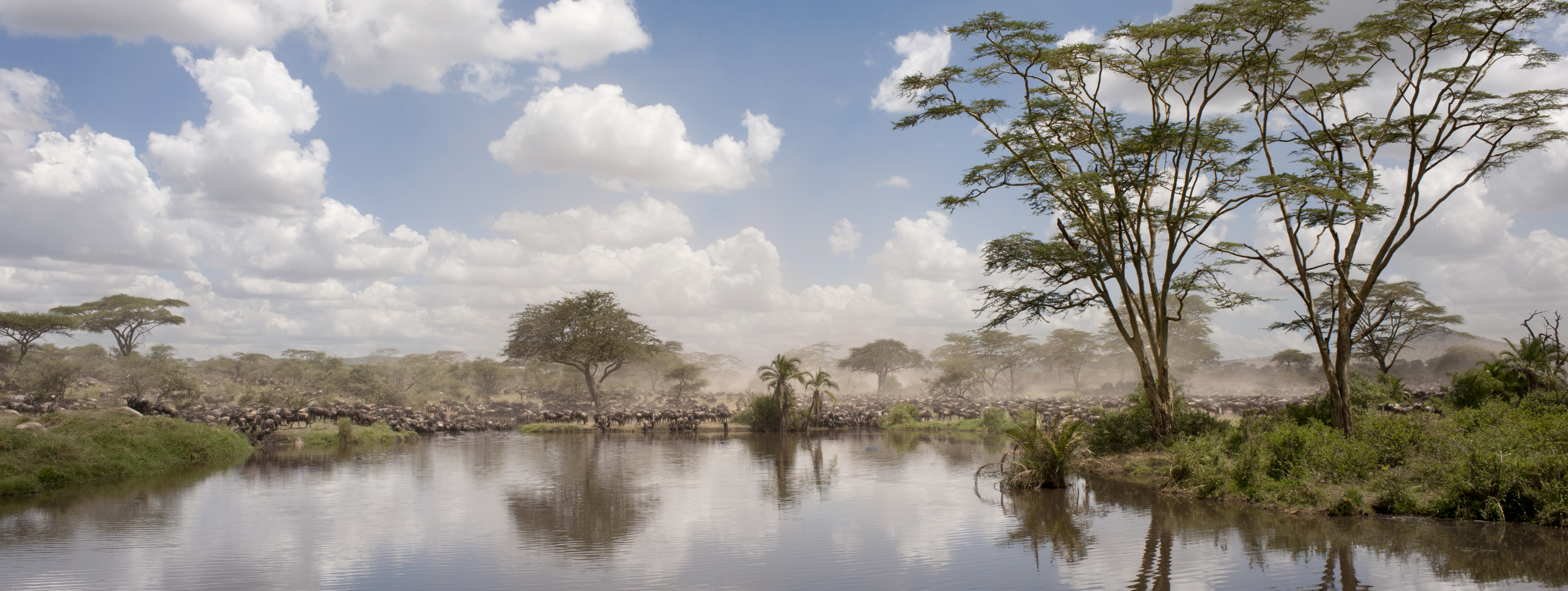
The geography of the western corridor
The western corridor is a long arm of the Serengeti that stretches roughly 80 kilometres westwards from the central Seronera area towards Lake Victoria, narrowing between two rivers — the Grumeti to the north and the Mbalageti to the south. It is a very different landscape from the open short-grass plains most people picture when they think of the Serengeti: here you find wooded savannah, black-cotton floodplains, ranges of low hills and dense ribbons of riverine forest along the watercourses, home to black-and-white colobus monkeys found almost nowhere else in the park.
The corridor's shape is precisely what makes it so good for the migration. As the herds leave the exhausted southern plains and push north-west after the long rains, the wedge of land between the two rivers funnels hundreds of thousands of animals into a comparatively narrow channel. Resident game is strong here year-round too — big buffalo herds, elephant, plentiful lion, spotted hyena and some of the park's best chances of patas monkey and colobus — so even outside the crossing window the west rewards a visit with rich, uncrowded game viewing.
When the herds pass: May, June and July
Timing is everything in the west, and the May, June and July migration window is the reason to come. In a typical year the columns begin arriving from the south in May, sometimes strung out over tens of kilometres, and mass in the corridor through June. This is also the rutting season, when half a million wildebeest bulls bellow, clash and herd females in one of the loudest, most energetic phases of the entire migration cycle — a spectacle that gets far less attention than the crossings but is every bit as memorable.
The Grumeti crossings themselves usually peak from late May through June and can continue into early July, after which the herds drift north towards the Ikorongo area and, eventually, the Mara River. The honest caveat every good operator should give you: the migration is driven by rainfall, not by calendars, so in a dry year the herds move through earlier and faster, and in a wet year they linger. We track herd positions weekly through our guides and camp contacts, and we build itineraries with enough nights in the west to ride out the natural unpredictability.
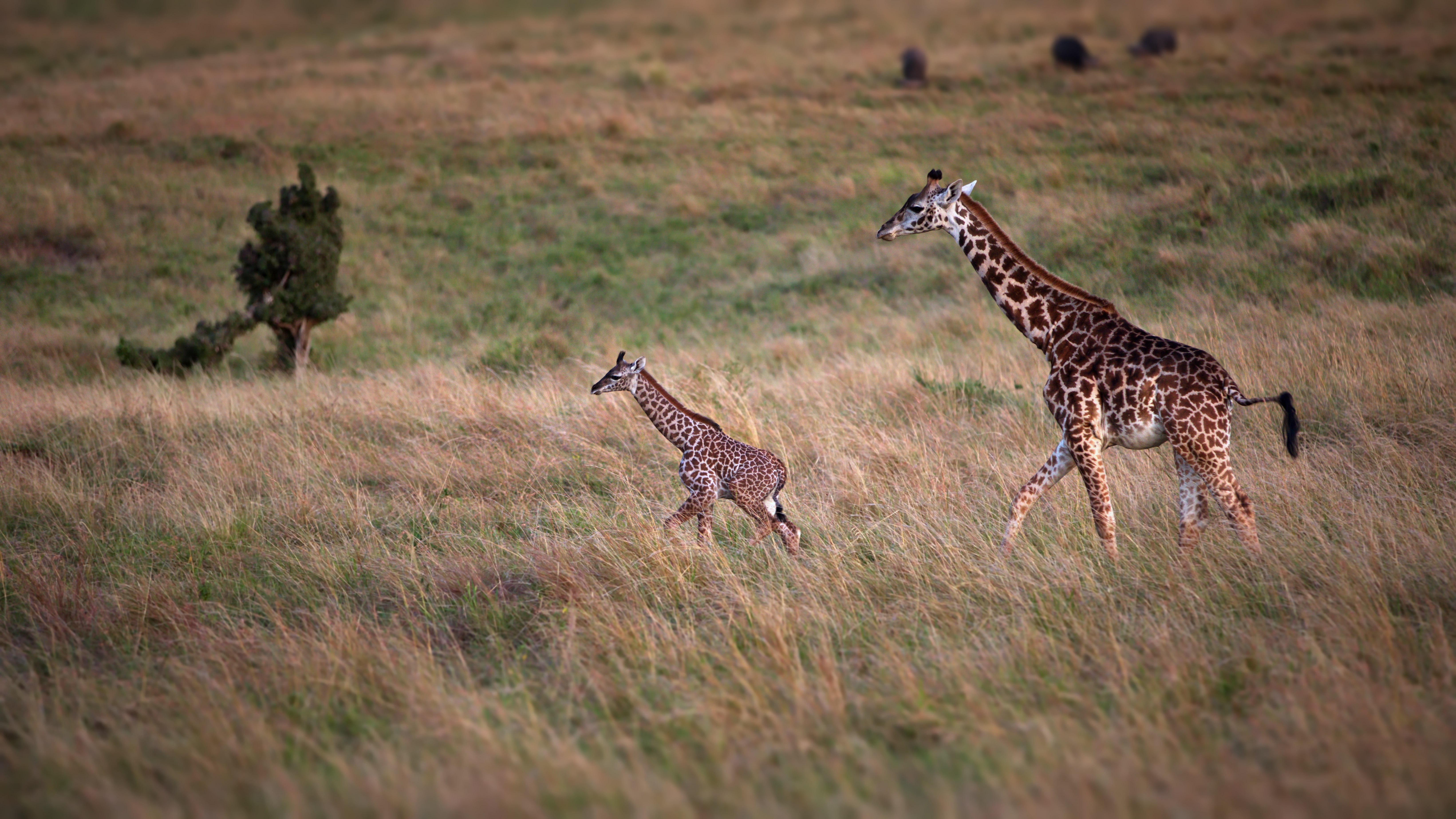
Grumeti crossings and the giant crocodiles
The Grumeti is a smaller river than the Mara — in many stretches a chain of deep pools rather than a broad torrent — but what it lacks in width it makes up for in menace. Its permanent pools support some of the largest Nile crocodiles in Africa, ancient animals of five metres and more that feed heavily during a few short weeks each year and spend the rest of it waiting. When the wildebeest bunch at the banks, hesitate, and finally commit, the explosive ambushes that follow are as raw a piece of natural drama as anything the continent offers.
Grumeti crossings are typically smaller and quicker than Mara crossings — hundreds or a few thousand animals at a time rather than tens of thousands — and because the river is narrower, the action happens close and fast. The forest galleries along the banks add atmosphere the open north cannot match: you wait in dappled shade, listening to the herds build, with colobus overhead and hippos grunting in the pools. Patience matters, as it does at any crossing, but in the west you wait in peace rather than in a queue of engines.
Grumeti vs Mara: an honest comparison
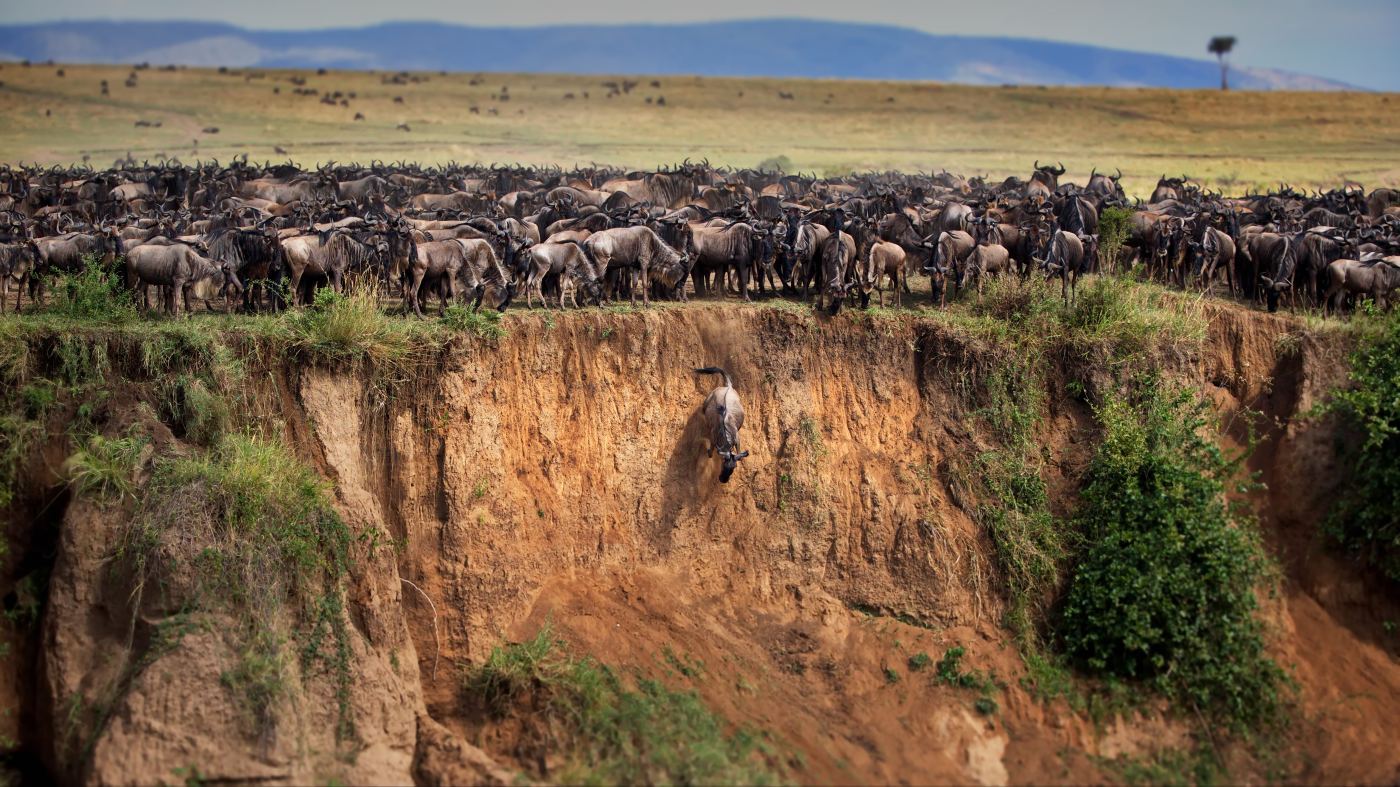
We would be doing you a disservice to pretend the Grumeti matches the Mara for sheer scale. The Mara crossings of July to September are bigger, on a wider river with steeper banks, and if a single image of ten thousand animals pouring down a cliff face is your dream, the north is where it lives — we cover that season fully in our guide to the Mara River and the northern Serengeti. The northern crossings also repeat over a longer window, as herds cross and re-cross between Tanzania and Kenya for weeks on end.
What the west offers instead is intimacy and exclusivity. At a popular Mara crossing point in August you may share the moment with twenty, forty, sometimes more vehicles; at the Grumeti in June, two or three is a crowd and none at all is common. The western crossings arrive earlier in the year, when overall Serengeti prices are lower than the August peak, and the rut running alongside them adds a second spectacle the north cannot offer. Many of our returning guests, having done both, tell us the Grumeti felt wilder precisely because nobody else was there.
Camps and access: the Kirawira area
Accommodation in the western corridor is refreshingly limited — a handful of permanent lodges and tented camps rather than the dozens found around Seronera. The Kirawira area, on high ground above the Grumeti towards the corridor's western end, is the classic base: camps here sit within short driving distance of the main crossing pools and enjoy sweeping views over the river's forest line. Options run from comfortable permanent tented camps in the mid range to genuinely luxurious lodges, and along the corridor's edge sit exclusive concessions where night drives and walks are possible.
Because beds are few and the season is short, the good western camps book out well ahead for June — we advise confirming six to twelve months in advance for the best sites. Seasonal mobile camps also follow the herds into the corridor in May and June, offering an authentic under-canvas experience at a friendlier price than the permanent lodges. Whichever style suits you, the small total bed count is the west's quiet advantage: even in the height of the crossing season, the corridor never feels busy.
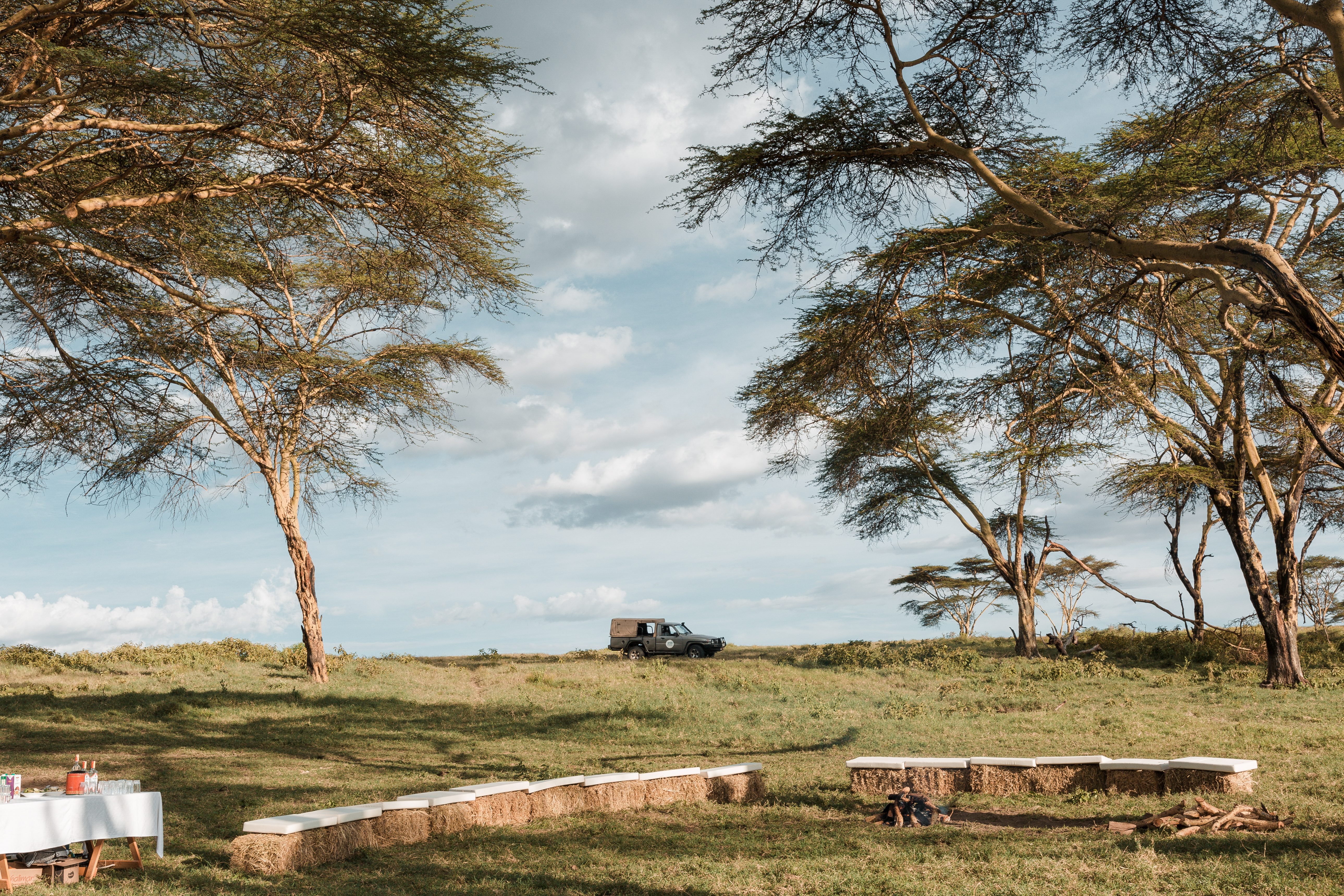
Fly-in or drive: getting to the west
The western corridor lies a long way from the Serengeti's eastern gates — around four to five hours' driving from Seronera and a full day from the Ngorongoro side — so how you get there shapes the trip. The simplest answer is to fly: daily scheduled light aircraft connect Arusha and the other Serengeti airstrips with Grumeti and Kirawira, putting you at camp within about ninety minutes of leaving town. For travellers short on time, a fly-in western safari of three or four nights is a wonderfully efficient way to reach the crossings.
Driving in has its own logic, though, and we build many itineraries that way. Coming overland from the central Serengeti turns the transfer into a full game-viewing day, tracking the tail of the migration as you go, and it keeps your own vehicle and guide with you throughout — valuable in a region where camps' shared vehicles may be the alternative. The practical compromise many guests choose is to drive in with the herds and fly out from Grumeti airstrip, gaining the best of both without repeating the long road.
Combining the west with the central Serengeti
The western corridor rarely stands alone; it shines brightest as the climax of a wider northern circuit. A classic June itinerary runs from Arusha to Tarangire or Ngorongoro, into the central Serengeti around Seronera for two nights of superb resident big-cat viewing, then west for three nights on the Grumeti for the crossings and the rut. Seronera's leopard-draped river lines and lion prides are outstanding in any month, so the combination gives you both guaranteed classic Serengeti scenery and the seasonal drama of the west.
Three nights in the corridor is the sensible minimum during crossing season — crossings cannot be scheduled, and giving yourself consecutive mornings at the river transforms your chances from hopeful to likely. With seven to ten days in total you can add Ngorongoro Crater or a Zanzibar beach finale and still keep the western stay unhurried. For a broader view of how the west fits into the full annual cycle, our great migration safari guide walks through every season; the short version is that May to July belongs to the west.
Why fewer crowds mean better photography
Photographers have particular reasons to love the Grumeti. At crowded northern crossings, vehicle etiquette — and sometimes the lack of it — dictates your angle: you shoot over roofs and around bonnets, and repositioning is a negotiation. In the west your guide can place the vehicle purely for the light and the background, move as the action moves, and hold a riverbank position for hours without pressure. Clean sightlines, no metal in the frame and the freedom to work a scene properly are luxuries the famous crossing points can no longer promise.
The corridor's landscape helps too. The gallery forest gives shade, texture and dark backgrounds that make dust-lit crossing images far more dramatic than open-plain shots, while June's dry-season light is crisp from dawn. Beyond the river there is the rut — fighting bulls at sunrise, columns moving through whistling thorn, aerial masses if you add a balloon flight from the central Serengeti beforehand. Several of the most striking migration photographs our guests have taken were made on the Grumeti with not a single other vehicle in the frame.
Costs and practical planning
A western corridor safari in crossing season is genuinely good value by Serengeti standards. June sits just below the August price peak, so expect mid-range fly-in itineraries combining the centre and the west from roughly 550 to 750 US dollars per person per night all-in, with the luxury lodges and private concessions running from around 1,000 dollars upwards and mobile camps sometimes less. Park fees, flights and full-board camps are normally bundled into one price; as ever in Tanzania, the quality of your guide matters more than the thread count.
Practicalities are straightforward. May can still see rain showers and heavy black-cotton mud early in the month, so we favour late May onwards for reliable road conditions; June and early July are dry, sunny and cool in the mornings, so pack a warm layer for dawn starts. Tsetse flies occur in the wooded areas, as they do across western Serengeti woodland — long sleeves in neutral colours deal with them. Malaria precautions apply as everywhere in northern Tanzania, and the region is safe, well-run and long established.
More on this in crossing from Kenya into Tanzania at Namanga.
If you are planning the route, read the Amboseli to Arusha crossing day.
Related reading: The Mara River crossing: when, where and how to see it.
At the Mara in August you queue for the spectacle; at the Grumeti in June, the spectacle is yours alone.
- Crossings late May to early July — months before the Mara
- Giant Nile crocodiles in the Grumeti's permanent pools
- The rut: half a million bellowing bulls in June
- A handful of camps around Kirawira, so it never feels busy
- Fly in from Arusha in ninety minutes, or drive in with the herds
- Combine with the central Serengeti for big cats plus crossings
Is the western Serengeti right for you?
Choose the west if you value wildness over fame: if the idea of watching a crossing alone appeals more than watching a bigger one in company, if your dates fall in May, June or July, or if you are a photographer who wants to work a sighting properly. It also suits returning safari-goers who have done the classic circuit and want the migration from a fresh angle. Serengeti safari tours that ignore the corridor in June are, in our honest view, leaving the best of that month on the table.
The north remains the right answer for August and September travellers, and first-timers with flexible dates can genuinely choose either — a great migration safari in Tanzania succeeds in both regions when it is timed to where the herds actually are. That is the real skill: matching your dates to the migration's position, and the west simply happens to be the answer nobody talks about. Sokwe Africa Safaris has been putting guests on the Grumeti in June for years, quietly, while the crowds wait for August in the north.
Plan your western Serengeti safari
Want a crossing without the crowd? May to July is the west's moment, and it rewards travellers who plan early — the corridor's few camps fill fast for June. Tell us your dates, your budget and how you like to travel, and we will design a western Serengeti safari around the Grumeti crossings — fly-in or overland, mid-range mobile camp or luxury lodge, on its own or woven into a full northern circuit. You will stand on a quiet riverbank, hear the herds build, and understand why we think this is the migration's finest secret.
Plan your Grumeti crossing safari with Sokwe Africa Safaris