
Tanzania's national animal, and the largest of them all
The Maasai giraffe is the national animal of Tanzania, and it is the giraffe most visitors to the northern circuit will see. It is also the largest of all giraffe subspecies — bulls reach five and a half metres and weigh well over a tonne — which makes it the tallest land animal alive. Standing beside one in an open vehicle is a genuinely disorientating experience, because the scale does not translate through photographs and most people are simply not prepared for how far up the head is.
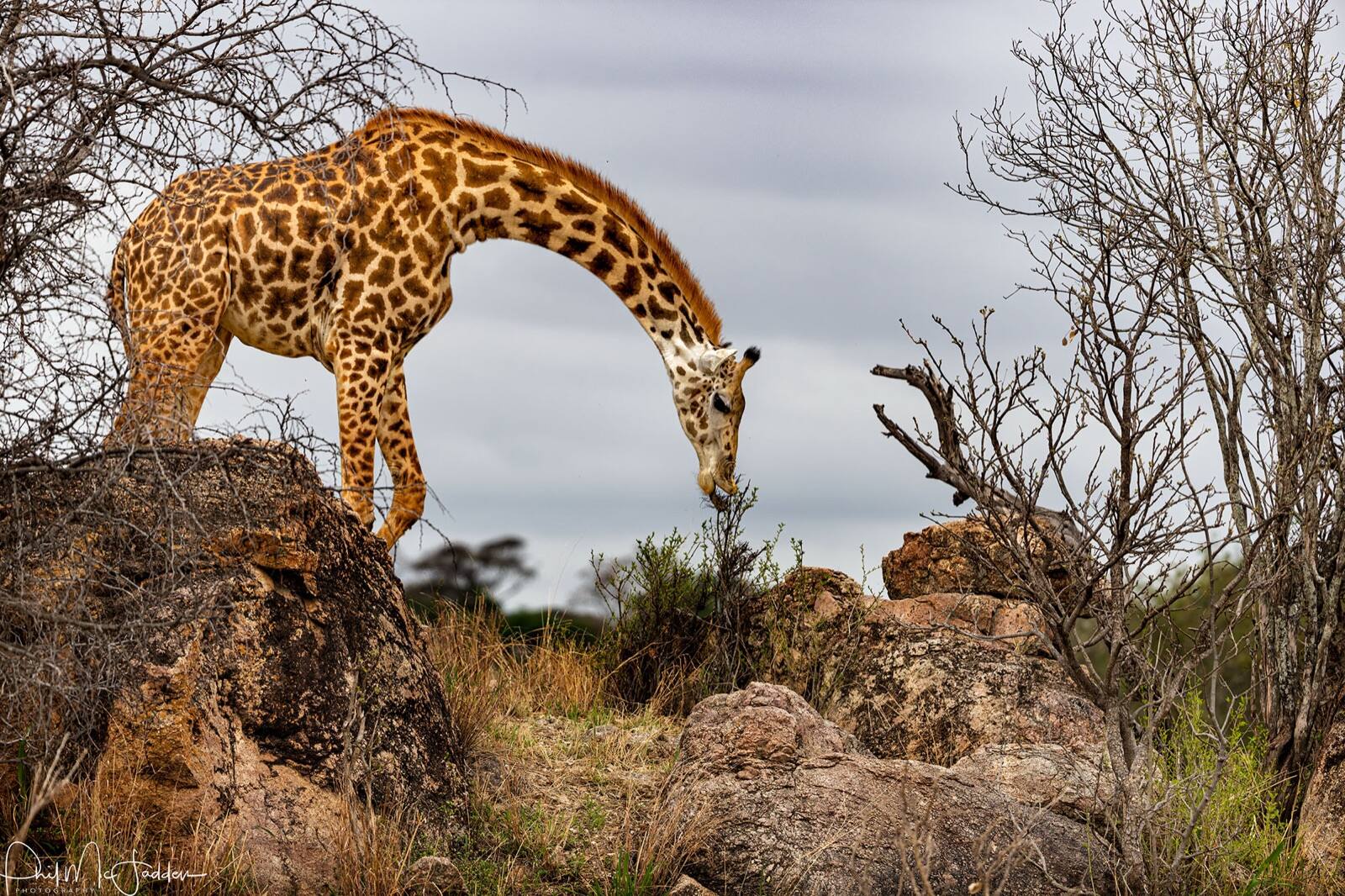
What distinguishes the Maasai giraffe visually is the coat pattern. Where the reticulated giraffe of northern Kenya carries clean geometric polygons separated by sharp white lines, the Maasai giraffe has irregular, jagged patches often described as oak-leaf or star-shaped, with softer and more broken margins. Once you have seen the two side by side the difference is unmistakable, and it is one of the easiest field identifications in East Africa. The pattern is also individually unique, in the way a fingerprint is, and researchers across Tanzania identify individual animals from photographs of their flanks.
There is a good chance you will be told on safari that the giraffe is Tanzania's national animal by law. In practice it is the national animal by long custom and universal recognition rather than by a specific statute, and it is protected under Tanzanian wildlife legislation. Killing one carries serious penalties. Either way, it occupies a place in Tanzanian national identity comparable to the lion in England or the eagle in the United States.
Where to see them
Giraffe are widespread across the northern circuit and you are very unlikely to miss them, but the quality of the sighting varies a great deal with the country you are in. Tarangire is arguably the finest place in Tanzania to watch giraffe, because the combination of acacia woodland and open ground means you see them browsing in their preferred habitat rather than crossing an empty plain. The baobab-dotted ridges also give you the elevation changes that make for far better photographs than flat grassland.
Arusha National Park, an hour from town and frequently skipped entirely, holds a dense giraffe population in beautiful montane country beneath Mount Meru. It is one of the few Tanzanian parks where walking safaris are permitted, and approaching giraffe on foot with an armed ranger changes your relationship with the animal entirely. From a vehicle a giraffe is a spectacle; on foot, at ground level, it is something else. We recommend Arusha NP to guests far more often than most operators do.
In the Serengeti giraffe concentrate along the riverine woodland and the acacia country rather than on the open short-grass plains, for the simple reason that giraffe eat trees. The northern Serengeti around Kogatende and Lobo holds them in excellent numbers. Lake Manyara's groundwater forest edge is another reliable spot, and the giraffe there are often exceptionally relaxed around vehicles.
How a giraffe actually works
The anatomy is more remarkable than the height alone. A giraffe's heart weighs around eleven kilograms and generates roughly double the blood pressure of any other mammal, because it has to push blood two metres upwards to the brain. To stop that pressure destroying the brain when the animal lowers its head to drink, giraffe have a network of pressure-regulating vessels at the base of the skull and unusually thick-walled arteries in the neck. The skin of the lower legs is tight enough to function like a compression stocking, preventing blood pooling in the feet.
The neck contains seven vertebrae, exactly as ours does, but each is enormously elongated. The tongue is dark purple-black, prehensile and around forty-five centimetres long, and the darkness is thought to be pigmentation protecting against sunburn during the hours it spends extended while browsing. Giraffe feed principally on acacia, working around the thorns with a combination of tongue and hardened lips, and a large bull can consume upwards of thirty kilograms of foliage a day.
The legs carry their own defence. A giraffe kick delivered with the front feet is powerful enough to kill an adult lion outright, and lion consequently prefer to take giraffe from behind or to target calves. A healthy adult giraffe standing its ground with a calf behind it is a genuinely formidable proposition, and prides will often assess one and decline the attempt entirely.
They sleep very little — often less than two hours in twenty-four, taken in short episodes, frequently standing. Lying fully down with the head resting back on the flank leaves an animal that size dangerously slow to rise, so it happens rarely and briefly. Seeing a wild adult giraffe fully recumbent and asleep is genuinely uncommon and worth pointing out to your guide when it happens.
Necking, and the fighting that surprises people
Male giraffe establish dominance through a behaviour called necking, and it is nothing like the gentle swaying that documentaries often show. Bulls stand shoulder to shoulder and swing their heads into one another's bodies with the full weight of the neck behind the blow. The skull is heavily reinforced and males develop additional bone deposits on the head throughout life, so that an old bull's skull can weigh three times that of a female's. Blows can be heard several hundred metres away and have been known to knock an opponent unconscious.
These contests are not common and most guests will not see one, but the low-level version — two young bulls leaning and sparring gently — is fairly regular and is how the skill is learned. If your guide spots two males standing unusually close and parallel, it is worth stopping the engine and waiting, because the escalation from idle sparring to serious fighting can happen within a minute or two.
Calves, towers and how a herd is organised
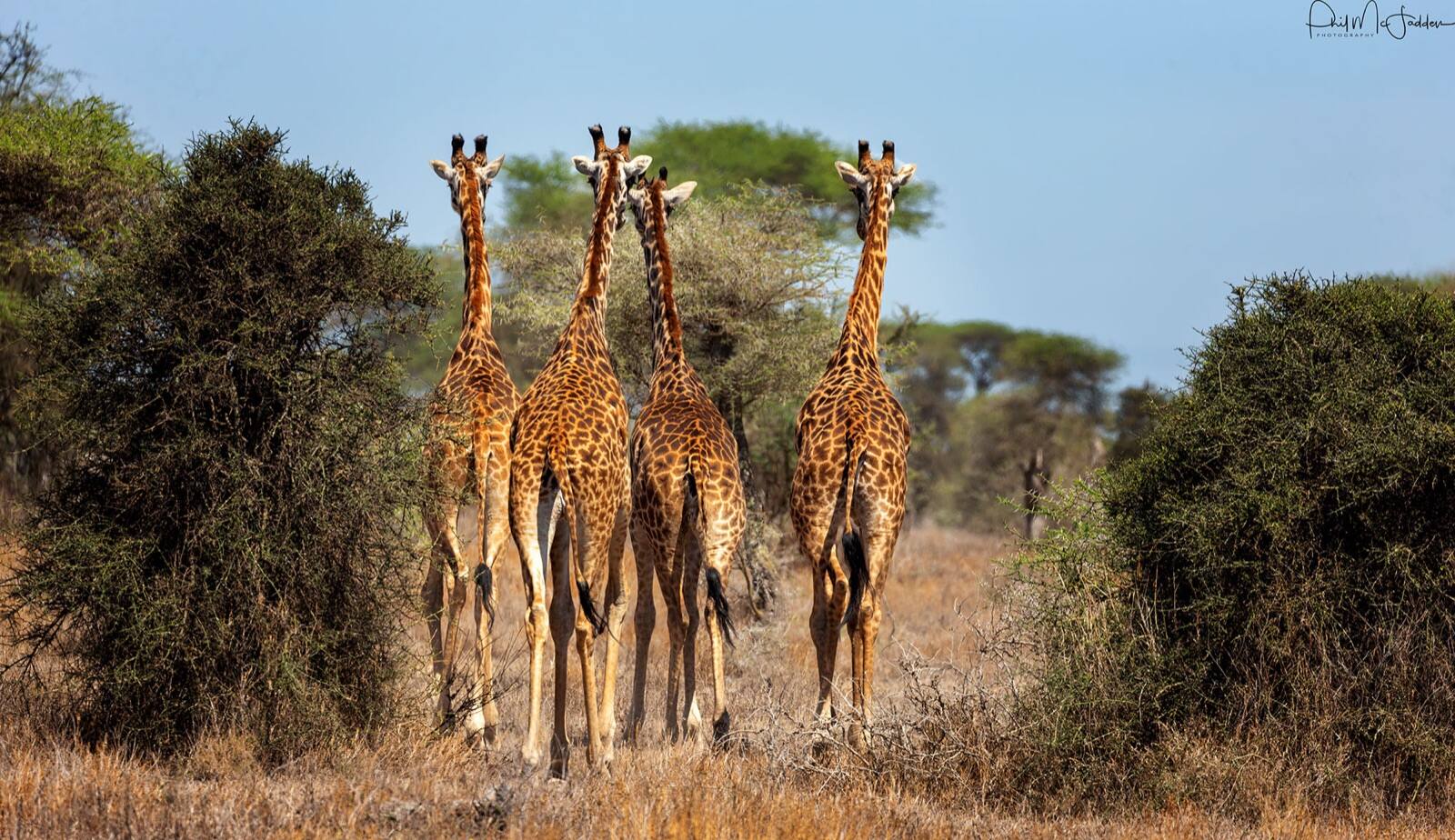
Giraffe social structure was misunderstood for decades. They were long described as forming loose, meaningless aggregations with no lasting bonds, largely because the groups a researcher saw on any given day rarely contained the same animals. More recent work using individual coat identification has overturned that completely. Female giraffe maintain stable social relationships lasting years, associating preferentially with particular other females, and the apparent randomness was simply the enormous area over which those relationships play out.
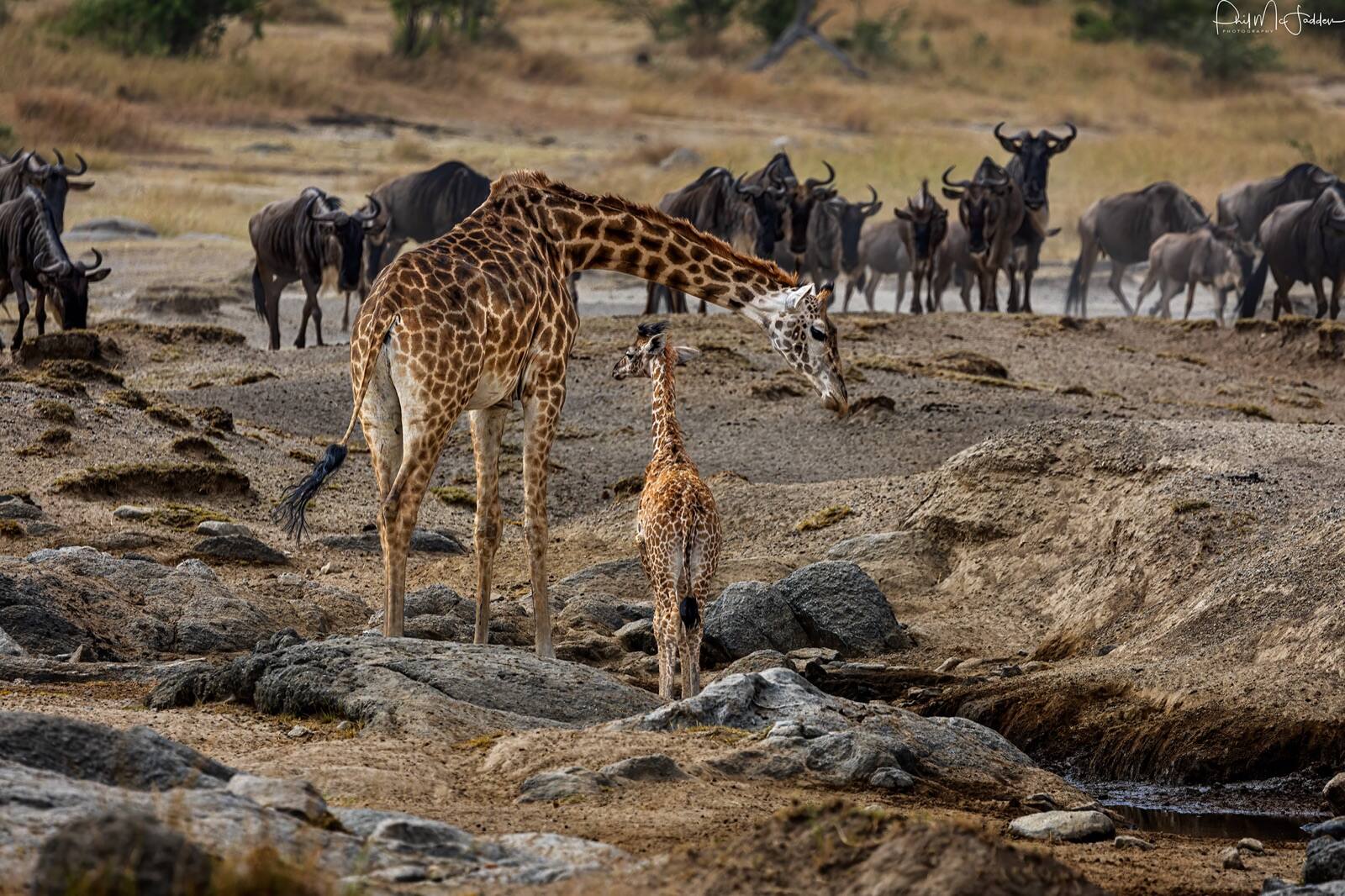
Calves are born after a gestation of around fifteen months, and the birth itself is startling to witness: the mother remains standing, and the calf drops nearly two metres to the ground. The fall breaks the umbilical cord and the shock of landing appears to help start breathing. Within an hour the calf is standing and nursing, which it needs to be, because a newborn giraffe is roughly the size of a large antelope and every predator on the plain is interested.
Females with calves of similar age form what are called crèches, leaving their young together under the supervision of one or two adults while the others move off to browse. It is genuine cooperative care rather than coincidence, and it allows a mother to feed properly without abandoning her calf. Even so, mortality in the first year is severe — commonly more than half — with lion and hyena taking the great majority.
Why they are now endangered
This is the part of the story most visitors do not know. Giraffe numbers across Africa have fallen by around forty per cent in three decades, and the decline went largely unremarked while attention focused on elephant and rhino. Conservationists have called it a silent extinction. The Maasai giraffe specifically is now listed as Endangered by the IUCN, with a population decline estimated at close to fifty per cent since the late 1980s.
The causes are habitat loss and fragmentation as land is converted to agriculture, and poaching for bushmeat — giraffe are large, relatively slow and predictable in their movements, which makes them a target. Snaring is a particular problem on the fringes of protected areas. Within Tanzania's national parks the population is comparatively stable, which is again the pattern across most of the country's wildlife: the parks are holding, the land between them is not.
The practical implication for a visitor is worth stating plainly. Park and conservation fees, which form a large and unavoidable portion of any Tanzanian safari price, fund the anti-poaching and ranger operations that keep these populations intact. It is the least interesting line on your invoice and the one doing the most work.
Tarangire is the best park for giraffe — see our Tarangire National Park guide and our overview of Tanzania's wildlife.
Photographing giraffe
Giraffe present an awkward compositional problem: they are tall and thin, which suits a vertical frame, but they live in wide landscapes that ask for a horizontal one. The usual solution is to stop trying to fit the whole animal in. A tight portrait of the head and upper neck against clean sky, or a shot that deliberately crops the legs and uses the pattern as texture, will almost always beat a full-body record shot taken from fifty metres.
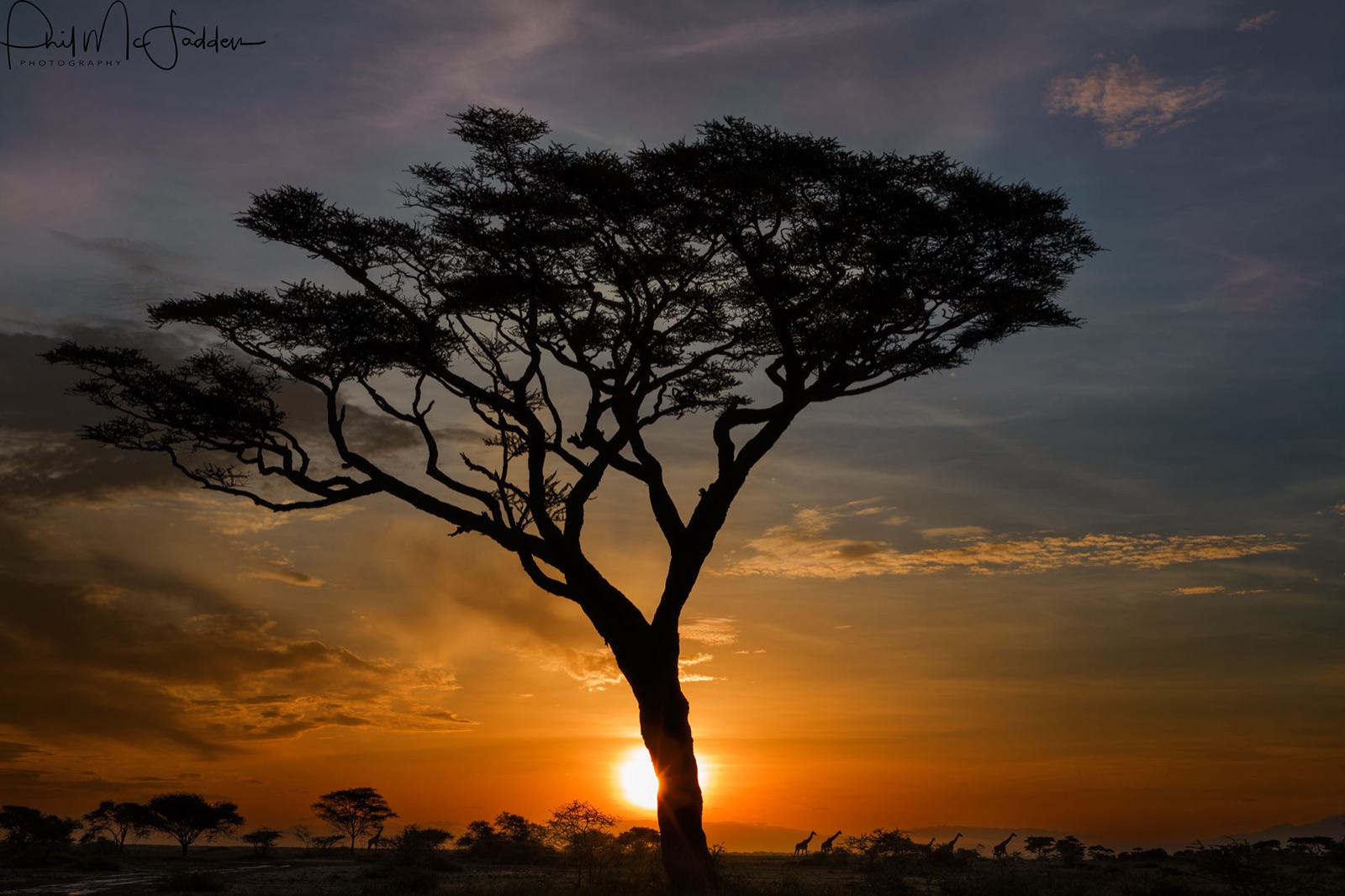
The other reliable approach is silhouette. Giraffe at dawn or dusk against a coloured sky, particularly on the ridgelines in Tarangire or with an acacia in frame, is one of the defining images of East Africa for good reason. Ask your guide to position the vehicle so the animal is between you and the light rather than lit from behind you, and expose for the sky rather than the animal.
See them with us
If giraffe interest you beyond a passing photograph, ask us about Arusha National Park and about walking there. It adds a day to a northern circuit itinerary, costs relatively little, and gives you an encounter on foot that no amount of time in a vehicle will replicate. It is one of the recommendations we make most often and one that guests thank us for most consistently afterwards.
Plan your safari
Tell us what you most want to see and we will build the route around it. We are based in Arusha, we run our own vehicles and guides, and we would rather add a day in the right park than move you through five in a week.
Plan your safari with Sokwe Africa Safari
Frequently asked questions
What is Tanzania's national animal?
The Maasai giraffe. It is recognised as the national animal by long-standing custom and is protected under Tanzanian wildlife law, with serious penalties for killing one.
How is a Maasai giraffe different from other giraffe?
It is the largest subspecies, with bulls reaching five and a half metres. Its coat has irregular, jagged, oak-leaf-shaped patches with broken margins, unlike the clean geometric polygons of the reticulated giraffe found in northern Kenya.
Where is the best place to see giraffe in Tanzania?
Tarangire is the finest, combining acacia woodland with open ground and elevation changes. Arusha National Park holds a dense population and permits walking safaris. Lake Manyara and the northern Serengeti are also reliable.
Are giraffe endangered?
Yes. The Maasai giraffe is listed as Endangered by the IUCN, with numbers down close to fifty per cent since the late 1980s. Continent-wide giraffe numbers have fallen around forty per cent in three decades, largely unnoticed.
Why do giraffe fight with their necks?
Bulls establish dominance by swinging their heads into each other's bodies using the full weight of the neck. Their skulls thicken with bone through life, and blows are powerful enough to be heard hundreds of metres away.
How much do giraffe sleep?
Very little — often under two hours a day, taken in short episodes and frequently while standing. Lying fully down is risky for an animal that size, so seeing a wild adult fully recumbent and asleep is uncommon.