
The short answer
If you are wondering what language is spoken in Tanzania, here is the direct answer: Swahili — known locally as Kiswahili — is the national language, spoken and understood by virtually everyone across the country. English is the second official language, used in higher education, business and throughout the tourism industry, so every guide, lodge manager and camp host you meet on safari will speak it well. Beneath those two sit more than 120 ethnic community languages, from Maa spoken by the Maasai to Sukuma, Chagga and Hadzabe. As travellers quickly discover, the Tanzania language story is one of remarkable unity rather than confusion.
For practical planning purposes, that means you need nothing beyond English to travel comfortably in Tanzania, and we will be honest about that below rather than pretending otherwise. But it also means that a handful of Swahili words — and it truly takes only a handful — opens doors that English never will. This guide covers how Swahili came to unite a nation of 120-plus tribes, exactly where English does and does not work, twenty phrases genuinely worth learning with pronunciation, and the greeting etiquette that shapes every interaction from the airport arrivals hall to a Maasai boma.
Swahili: the language that unites a nation
Tanzania is home to over 120 distinct ethnic groups, each with its own language, and yet it is one of the most linguistically unified countries in Africa. That is no accident. After independence in 1961, President Julius Nyerere made a deliberate choice to promote Swahili as the language of national identity — of schools, parliament, newspapers and daily life — so that no single tribe's tongue dominated the others. He famously translated Shakespeare into Swahili to prove the language could carry anything. The result is a country where a Chagga trader from Moshi and a Sukuma farmer from Mwanza meet as equals in a shared language.
Where Swahili came from
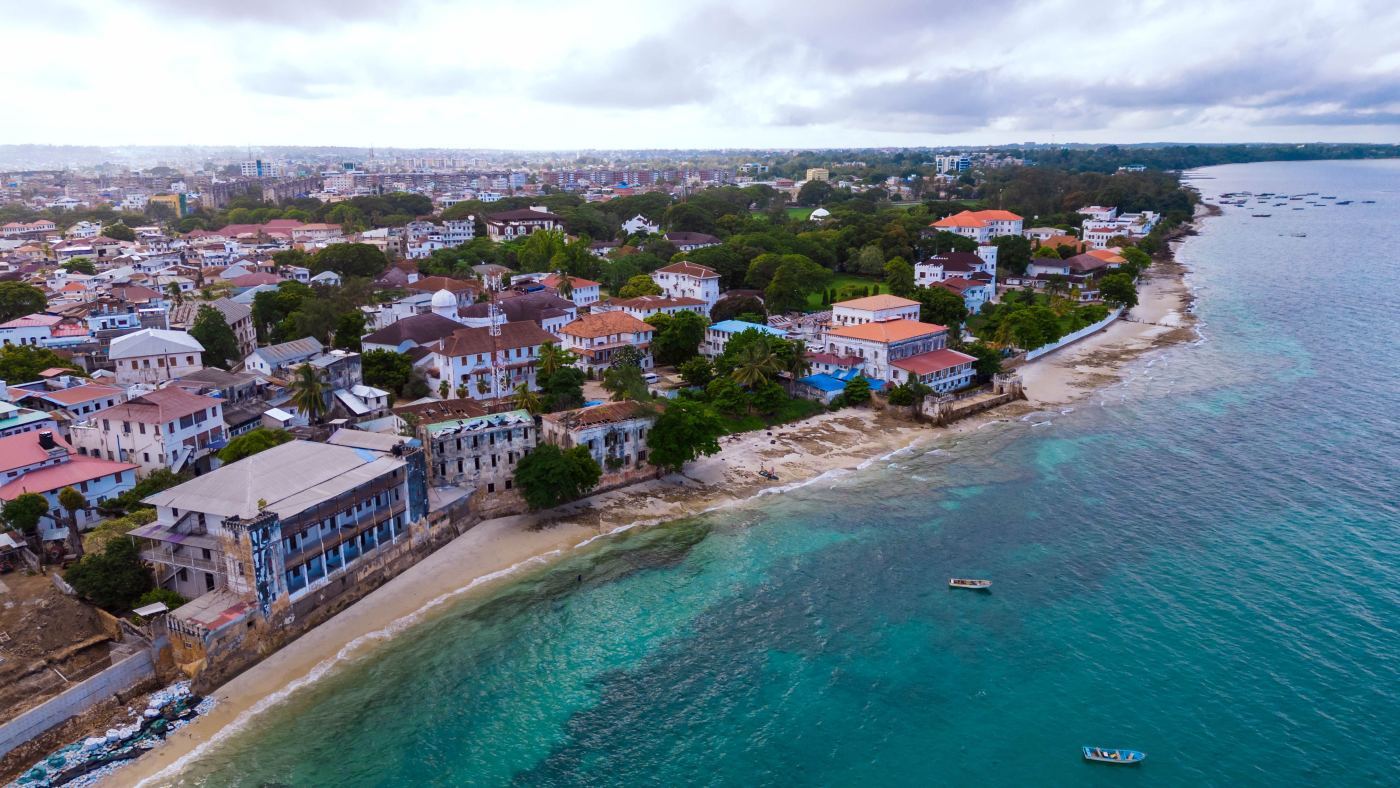
Swahili was born on the East African coast well over a thousand years ago, a Bantu language that absorbed vocabulary from Arabic, Persian, Portuguese, Hindi and later German and English through centuries of Indian Ocean trade. The very name comes from the Arabic sawahil, meaning coasts. From trading towns such as Kilwa, Bagamoyo and Zanzibar's Stone Town, the language travelled inland along the caravan routes, and today it is spoken by an estimated 200 million people across East and Central Africa — the most widely spoken indigenous language on the continent, and an official language of the African Union.
Do you need anything other than English? Honestly, no
Let us be completely straightforward, because some travel articles oversell this: you do not need a word of Swahili to travel in Tanzania. English is an official language, it is the medium of instruction in secondary schools and universities, and the entire safari industry runs in it. Your Sokwe guide will brief you in fluent English, your camp staff will chat with you over dinner in English, and airport, bank and hotel staff in Arusha, Moshi and Zanzibar all speak it. On an organised safari you could go two weeks without needing a single Swahili word.
The honest nuance is that English fluency thins out the further you get from tourism and towns. In village markets, remote fuel stops or a Maasai community visit, you will meet people whose English is limited or absent — which is precisely where your guide earns his keep as interpreter, and where your three or four Swahili words suddenly do real work. So the practical position is this: English is entirely sufficient, Swahili is entirely optional, and yet the travellers who learn a dozen phrases consistently have a warmer, funnier, more connected trip. It is the best-value preparation you can do, and it costs nothing.
Twenty Swahili phrases worth learning
Here is the fun part. You do not need grammar, and nobody expects sentences — Tanzanians are delighted by any attempt at all and will forgive every mistake with a grin. Swahili pronunciation is mercifully simple: every letter is spoken, and the stress almost always falls on the second-to-last syllable, so karibu is kah-REE-boo and asante is ah-SAHN-teh. Learn the greetings first, because greetings are the currency of Tanzanian life, then add the courtesies, then the safari words that will make your game drives richer. Twenty phrases, grouped below, will cover ninety per cent of what you will ever want to say.
- Jambo (JAHM-boh) — hello, the classic tourist greeting
- Hujambo? (hoo-JAHM-boh) — how are you? Reply: sijambo, I'm fine
- Habari? (hah-BAH-ree) — what news? Reply: nzuri, good
- Mambo? (MAHM-boh) — casual hi. Reply: poa, cool
- Shikamoo (shee-kah-MOH) — respectful greeting to elders. Reply: marahaba
- Karibu (kah-REE-boo) — welcome; karibuni to a group
- Kwaheri (kwah-HEH-ree) — goodbye
- Asante (ah-SAHN-teh) — thank you
- Asante sana (ah-SAHN-teh SAH-nah) — thank you very much
- Tafadhali (tah-fah-DHAH-lee) — please
- Samahani (sah-mah-HAH-nee) — excuse me, sorry
- Ndiyo / hapana (n-DEE-yoh / hah-PAH-nah) — yes / no
- Pole (POH-leh) — sorry, sympathy for someone's trouble
- Hakuna matata — no worries (locals more often say hamna shida)
- Pole pole (POH-leh POH-leh) — slowly, slowly; the unofficial motto of Kilimanjaro and of Tanzanian life
- Safari njema (sah-FAH-ree n-JEH-mah) — have a good journey
- Simba — lion
- Tembo — elephant
- Twiga — giraffe
- Chui (CHOO-ee) — leopard
- Maji (MAH-jee) — water
- Lala salama (LAH-lah sah-LAH-mah) — sleep well, goodnight
A few of these deserve a note. Pole pole — slowly, slowly — is the phrase you will hear most, whether a Kilimanjaro guide is pacing your climb or a waiter is telling you lunch is coming; it is a philosophy as much as an instruction, and saying it back with a smile always lands well. Pole on its own, said to someone who has stumbled or had bad news, is a small kindness English lacks. And shikamoo, the respect greeting for anyone older than you, is the single most impressive word a visitor can deploy — use it on a village elder and watch the reaction.
Greetings matter: the etiquette of hello
Here is the piece of cultural knowledge that changes everything: in Tanzania, greetings are not optional pleasantries, they are the essential opening of every interaction. Walking up to someone and launching straight into a question — where is the bathroom, how much is this — reads as brusque, even rude. The rhythm is greet first, always: a jambo or habari, a handshake, often a genuine enquiry after family or the journey, and only then business. Conversations between Tanzanians can spend a full minute on greetings alone. Match that rhythm even slightly and you will be treated noticeably differently.
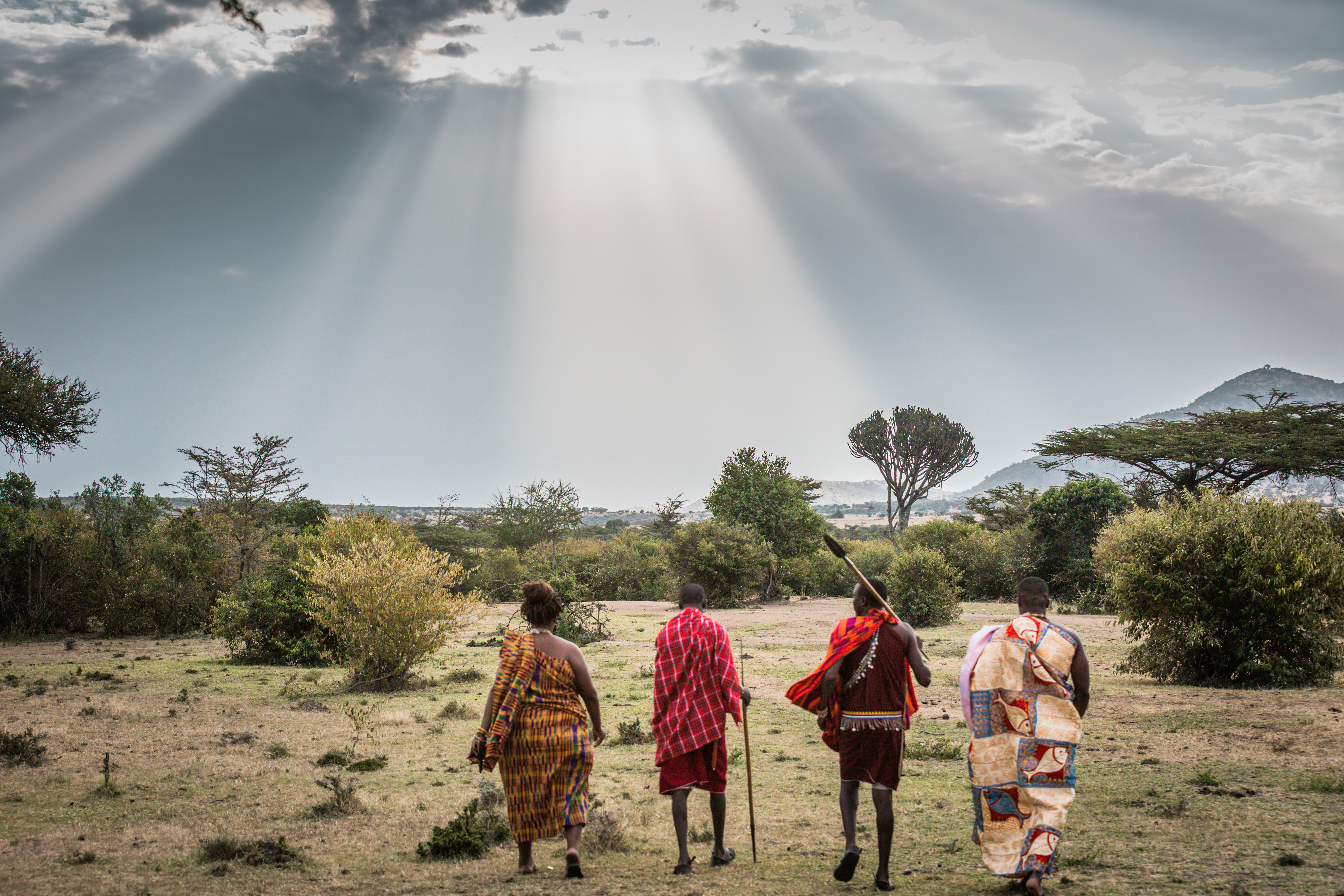
The mechanics are easy. Handshakes are warm and often lingering — sometimes a Tanzanian will hold your hand while talking, which is simple friendliness. Use your right hand for greeting, giving and receiving. With elders, lead with shikamoo; with children, expect a chorus of jambo and waving. In Maasai communities, children may bow their heads towards you — the traditional greeting to be acknowledged with a light touch on the head. Your guide will coach you through the specifics on any village or cultural visit, but arriving with greetings-first instincts already in place marks you out as a guest who gets it.
Safari means journey: Swahili you already know
You arrive in Tanzania knowing more Swahili than you think. The word safari itself is simply the Swahili word for journey — any journey; a Tanzanian catching a bus to Dodoma is on a safari too — which is a rather lovely thing to know as you set out on yours. Simba means lion, which explains a certain Disney character's name, as do rafiki (friend) and pumbaa (careless, foolish). Jenga, the tower game, is the Swahili verb to build. Even hakuna matata was everyday Swahili long before the film borrowed it.
On the subject of hakuna matata: yes, it is real Swahili and everyone will understand you, but you should know that locals themselves more often say hamna shida or hakuna shida — no problem. Drop hamna shida into conversation and you will earn the double-take reserved for visitors who have learned the language people actually speak rather than the phrase on the T-shirts. Out on game drives, using the animal names pays off quickly too; when your guide radios another vehicle and you catch the word chui, you will know a leopard is on the cards before the translation comes.
The other 120 languages
Swahili unites the country, but it is worth understanding what it unites. Tanzania's 120-plus ethnic languages remain very much alive as the languages of home, village and heritage. Most Tanzanians grow up trilingual to some degree: a home language such as Maa, Chagga or Sukuma, Swahili for national life, and English from secondary school. The Maasai communities you may visit around Ngorongoro and the northern parks speak Maa among themselves; the Hadzabe near Lake Eyasi speak a click language unrelated to almost any other on earth; the Chagga on Kilimanjaro's slopes have their own rich Bantu tongue.
For travellers, this layered identity is one of the quiet pleasures of a cultural safari. Ask your guide about his home language and you will usually unlock family stories, a few phrases, and a window into how Tanzanians move between identities in a single conversation. On a visit to the Maasai, learning that hello in Maa is sopa — quite different from anything in Swahili — makes the point better than any lecture: Swahili is the bridge, not the whole story. It is a genuinely useful thing to understand about the country you are travelling through, and it makes every roadside interaction more interesting.
How three words change your welcome
If you take one thing from this guide, take this: jambo, asante and karibu — hello, thank you, welcome — are enough to change the temperature of almost every encounter you have in Tanzania. We see it constantly with Sokwe guests. The traveller who greets the camp staff with a cheerful jambo on the first evening, thanks the waiter with asante sana, and answers the ubiquitous karibu Tanzania with asante gets remembered by name, gets the extra stories around the fire, gets the warmer goodbye. It is a small effort with an outsized return, and it works everywhere from Arusha coffee shops to Serengeti airstrips.
There is a simple reason it works. Tourism can be a transactional business anywhere in the world, and English is its transactional language. A visitor who reaches for Swahili — even three words of it, even badly pronounced — signals that they see a country and a culture, not just a service. Tanzanians, who are proud of their language in a way that is rare and rather moving, respond to that signal instantly. Nobody expects fluency. The attempt is the gift. And unlike most travel preparation, this one weighs nothing, costs nothing and cannot be left at home.
Your next step
Planning your first trip to Tanzania? Start here:
- What an all-inclusive Tanzania safari covers
- The best luxury safari lodges in the Serengeti and Ngorongoro
Or tell us your dates and what you want from the trip and our Arusha team will reply with a tailored proposal, usually within 24 hours — contact Sokwe Africa Safaris.
More on this in Italian-speaking safari guides.
Quick answers for travellers
A few rapid-fire answers to the questions we hear most. Is Swahili hard to learn? The basics are genuinely easy — phonetic spelling, no tones, and pronunciation rules you can master on the flight over. Will people laugh at my attempts? They will smile, help you, and like you more for trying; mockery is simply not part of the culture. Should children learn some phrases? Absolutely — Tanzanian adults adore children who greet them in Swahili, and it is a wonderful travelling-family project. Do I need a phrasebook? A saved note on your phone with the twenty phrases above is honestly sufficient.
Nobody expects fluency. The attempt is the gift — three Swahili words change your welcome everywhere in Tanzania.
Travel with guides who translate more than language
Every Sokwe guide was born and raised in Tanzania, moves daily between Swahili, English and usually a home language, and does far more than translate words — they translate the country: the greetings etiquette at a Maasai boma, the joke the market trader just made, the story behind a place name, the moment when hamna shida is the only sensible response to a change of plan. That is the difference between visiting Tanzania and being welcomed into it, and it is not something a phrasebook can supply.
So learn your jambo, your asante sana and your pole pole, and let us handle the rest. Tell us your dates, your interests and whether a cultural visit or a Zanzibar Stone Town extension appeals, and we will build a safari where the language of the country becomes part of the experience rather than a barrier. Karibu Tanzania — welcome — and when you are ready to plan the journey the word safari was made for, contact us and we will start the conversation in whichever language you like.
Plan your Tanzania safari with Sokwe Africa Safaris
Frequently asked questions
What language is spoken in Tanzania?
Swahili, known locally as Kiswahili, is the national language and is spoken and understood by virtually everyone. English is the second official language, used in higher education, business and throughout the tourism industry, so every guide, lodge manager and camp host speaks it well. Beneath the two sit more than 120 community languages, including Maa, Sukuma, Chagga and Hadzabe.
Do they speak English in Tanzania?
Yes, widely enough that you need no Swahili at all. English is an official language and the medium of instruction in secondary schools and universities, and airport, bank, hotel and safari staff across Arusha, Moshi and Zanzibar use it daily. Fluency thins out in village markets and remote areas, which is precisely where your guide interprets for you.
How do you say hello in Swahili?
Jambo (JAHM-boh) is the greeting every visitor learns, alongside habari, meaning what news, answered with nzuri, and the casual mambo, answered with poa. For anyone older than you, use shikamoo (shee-kah-MOH), the respect greeting, and expect marahaba in reply. Greetings come first in Tanzania, so never open with a question, and asante means thank you.
What does safari mean in Swahili?
Safari simply means journey, any journey, so a Tanzanian catching the bus to Dodoma is on safari too. You already know more Swahili than you think: simba is lion, twiga giraffe, tembo elephant, chui leopard, rafiki friend and jenga the verb to build. Hakuna matata is genuine Swahili, though locals more often say hamna shida.
Is Swahili hard to learn?
The basics are genuinely easy. Spelling is phonetic, there are no tones, every letter is pronounced, and stress almost always falls on the second-to-last syllable, so karibu is kah-REE-boo and asante is ah-SAHN-teh. You can master the twenty most useful phrases on the flight over, and nobody expects sentences; Tanzanians are delighted by any attempt.
How many languages are spoken in Tanzania?
More than 120 ethnic community languages survive alongside Swahili and English, and most Tanzanians are trilingual to some degree. The Maasai around Ngorongoro speak Maa, in which hello is sopa; the Chagga on Kilimanjaro's slopes have their own rich Bantu tongue; and the Hadzabe near Lake Eyasi speak a click language unrelated to almost any other on earth.