
Quick answer
The Zanzibar leopard (Panthera pardus adersi) was a small leopard that lived only on Unguja, the main island of Zanzibar. It is officially regarded as extinct. People hunted it because they believed witches kept leopards, and surveys in the mid-1990s found no living animals.
In 2018 a camera trap filmed a spotted cat at night, but scientists say this does not prove the leopard survives. There are no confirmed leopards on Zanzibar today. To see wild leopards in Tanzania, go to the Serengeti.
An island cat that shouldn't exist
The Zanzibar leopard is one of the strangest and saddest stories in East African wildlife, a tale that sits somewhere between natural history, folklore and tragedy. For thousands of years a distinct leopard prowled the forests of Unguja, the main island of the Zanzibar archipelago, cut off from the mainland and slowly becoming something all its own. Smaller than its cousins on the plains, marked with unusual broken rosettes, it was a true island endemic. Today it is officially regarded as extinct, yet every few years a blurred photograph or a whispered sighting revives the question that will not quite die: is it truly gone?
It is a story worth telling properly, because it is about far more than one vanished cat. It is about how islands quietly manufacture new species, about a persecution driven not by trophy hunters but by deep-rooted belief, and about the fragile line between extinction and survival. As a Tanzanian operator based in Arusha, we field this question often from guests bound for the coast, so this guide sets out what the Zanzibar leopard actually was, what happened to it, what the famous 2018 footage really showed, and — importantly — what wildlife you genuinely can see on Zanzibar and where leopards still thrive today.
What was the Zanzibar leopard?
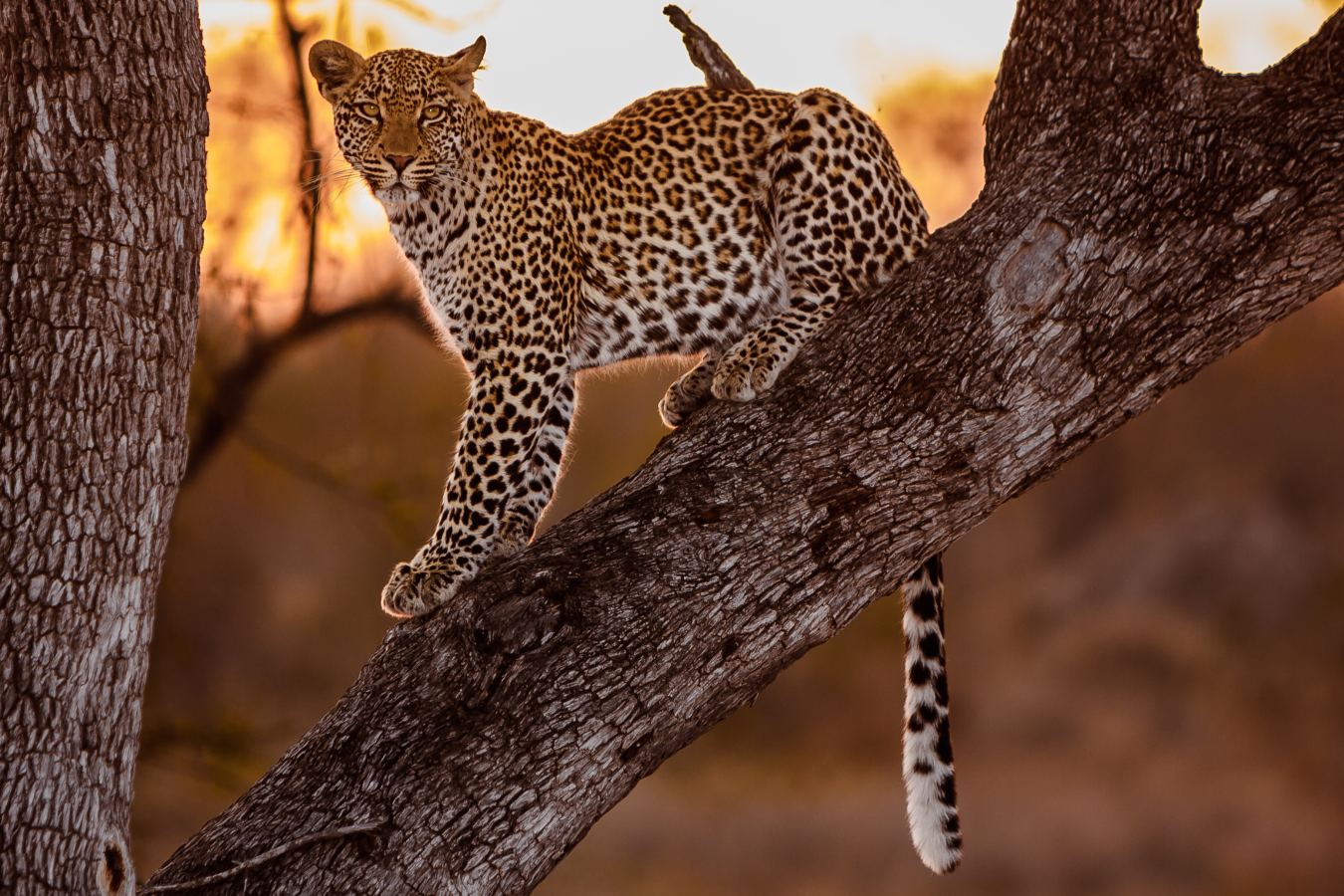
The Zanzibar leopard was a recognised subspecies, Panthera pardus adersi, found nowhere on earth but the island of Unguja. To the untrained eye it was unmistakably a leopard, yet it carried the tell-tale signatures of island life. It was noticeably smaller than the leopards of the Serengeti or Ruaha, and its coat pattern had changed: the classic rosettes had partly dissolved into smaller, denser spots, giving it a subtly different look. These were not random quirks but the visible result of a population sealed off from the mainland gene pool for a very long time, adapting to a smaller world.
Size shrinkage of this kind is a well-documented phenomenon among large animals marooned on islands, where limited space and prey tend to favour smaller bodies over the generations. The Zanzibar leopard fed on the island's smaller game — duikers, hyrax, small antelope, birds and domestic animals — a menu very different from the buffalo and zebra that sustain mainland leopards. Everything about it, from its stature to its markings to its diet, told the same story: an animal moulded by isolation into something genuinely unique, a leopard that could have existed only here.
How an island made a new cat
To understand the Zanzibar leopard you have to understand the island itself. Unguja was joined to the African mainland during the ice ages, when lower sea levels exposed a land bridge, allowing leopards and other animals to walk across. When the seas rose again, perhaps around ten to twelve thousand years ago, that bridge drowned and the island's leopards were stranded, their gene flow to the mainland severed at a stroke. From that moment they were on their own evolutionary path, breeding only among themselves and drifting, generation by generation, away from their mainland relatives.
This is precisely how islands become engines of evolution, the same process that gave the world Galapagos finches and Madagascar's lemurs. Isolation, a distinct set of prey and pressures, and the slow reshuffling of genes over millennia turned Unguja's stranded leopards into Panthera pardus adersi. It is a reminder that Zanzibar wildlife has always been quietly special, shaped by the same forces that make island life so fascinating to naturalists. The tragedy is that this remarkable, slow-made creature was undone in a matter of decades — not by nature, but by people and the beliefs they held.
The witchcraft persecution that doomed it
The Zanzibar leopard's decline is inseparable from local belief, and it deserves to be told with respect rather than mockery. On Unguja, leopards came to be widely regarded not as ordinary wild animals but as creatures kept and controlled by witches. In this understanding, a leopard was believed to be sent by a sorcerer to harm rivals, steal, or spread fear — a familiar of the malevolent, rather than a natural predator. Kept leopards, spoken of in local accounts by names such as kachunda, were thought to be raised and dispatched by their human keepers, blurring the line between the animal and the supernatural.
These beliefs were sincere and deeply held, part of a wider worldview in which misfortune had human and spiritual causes. But they had lethal consequences for the cat. Because a leopard was seen as an agent of harm, killing one was a public good, and anyone keeping or protecting leopards could be accused of witchcraft themselves. After the 1964 revolution, waves of anti-witchcraft campaigning gave this persecution official momentum, and organised efforts sought to hunt down leopards and their supposed keepers alike. What had been a scattered folk belief hardened into a systematic drive that pushed an already small island population towards oblivion.
Officially declared extinct
By the second half of the twentieth century the pressures had become overwhelming. Zanzibar's human population was growing quickly, forest was being cleared for farmland, and the leopard's habitat was shrinking even as it was being actively hunted as a supposed instrument of witchcraft. For a small, isolated island population with nowhere to retreat and no mainland reinforcements, this combination proved fatal. Sightings grew rarer through the 1980s, and the animals that remained were increasingly ghosts, spoken of more than seen.
In the mid-1990s researchers conducted careful surveys to establish whether any Zanzibar leopards survived, interviewing islanders and searching for hard evidence. Their sobering conclusion was that the subspecies was probably already extinct, or so close to it as to be beyond saving, with no confirmed living animals and no functioning conservation programme to protect one. The Zanzibar leopard duly took its place on the roll of the officially extinct — a distinct form of one of the world's most adaptable predators, wiped out on a single island within living memory. It remains one of the few big cats to have vanished in modern times.
The 2018 camera-trap mystery
And yet the story refused to end there. In 2018 the Zanzibar leopard leapt back into the headlines when a camera trap set for an episode of the Animal Planet series Extinct or Alive, fronted by biologist Forrest Galante, captured footage of a spotted cat moving through the island's bush at night. To a hopeful eye it looked tantalisingly like a leopard, in a place where leopards were supposed to be long gone. The clip travelled around the world, reviving an old dream: that somewhere in the island's remaining thickets, a remnant population had quietly clung on, unseen and unrecorded, all these years.
The footage was genuinely intriguing, and it tapped into something powerful — our deep reluctance to believe that a creature is truly, finally gone. Zanzibar is not large, but it still holds pockets of dense vegetation, and islanders have long reported occasional big-cat encounters. If any place could hide a last leopard, the argument went, it might be here. For a brief moment the question flipped from mourning to hope: not "how did we lose it?" but "did we lose it at all?" It was a reminder of how much emotional weight a single grainy night-vision clip can carry.
What scientists actually say
The scientific response, however, was and remains cautious. A single, low-resolution camera-trap clip is a long way from proof of a surviving subspecies. Sceptical researchers pointed out that the footage could not, on its own, confirm the animal was a leopard at all, let alone specifically the extinct Panthera pardus adersi rather than an escaped or introduced cat. Genuine confirmation would require far stronger evidence: clear repeated images, physical traces such as hair or droppings for DNA analysis, or ideally a living animal. None of that has materialised in the years since.
This is not cynicism so much as scientific rigour, the same standard we should want applied to any extraordinary claim. The honest position today is that the Zanzibar leopard remains officially extinct, the 2018 footage is an unresolved curiosity rather than a rediscovery, and the burden of proof still sits firmly with those who hope. It is entirely possible the animal filmed was simply a feral cat. It is just conceivable it was something more. Until better evidence appears, the mystery stays exactly that — open, unproven, and quietly haunting.
The Zanzibar wildlife you genuinely can see today
If the leopard is a ghost, the good news is that Zanzibar wildlife is far from dead. The island's star attraction is the Zanzibar red colobus, a strikingly beautiful monkey with a reddish-brown coat, pale underparts and an expressive dark face, found nowhere else on earth. The best place to meet them is Jozani Chwaka Bay National Park, where habituated troops move through the canopy at close range and are wonderfully easy to watch and photograph. Seeing these endemic primates is one of the most reliable and rewarding among Jozani forest animals, and a genuine highlight of any island stay.
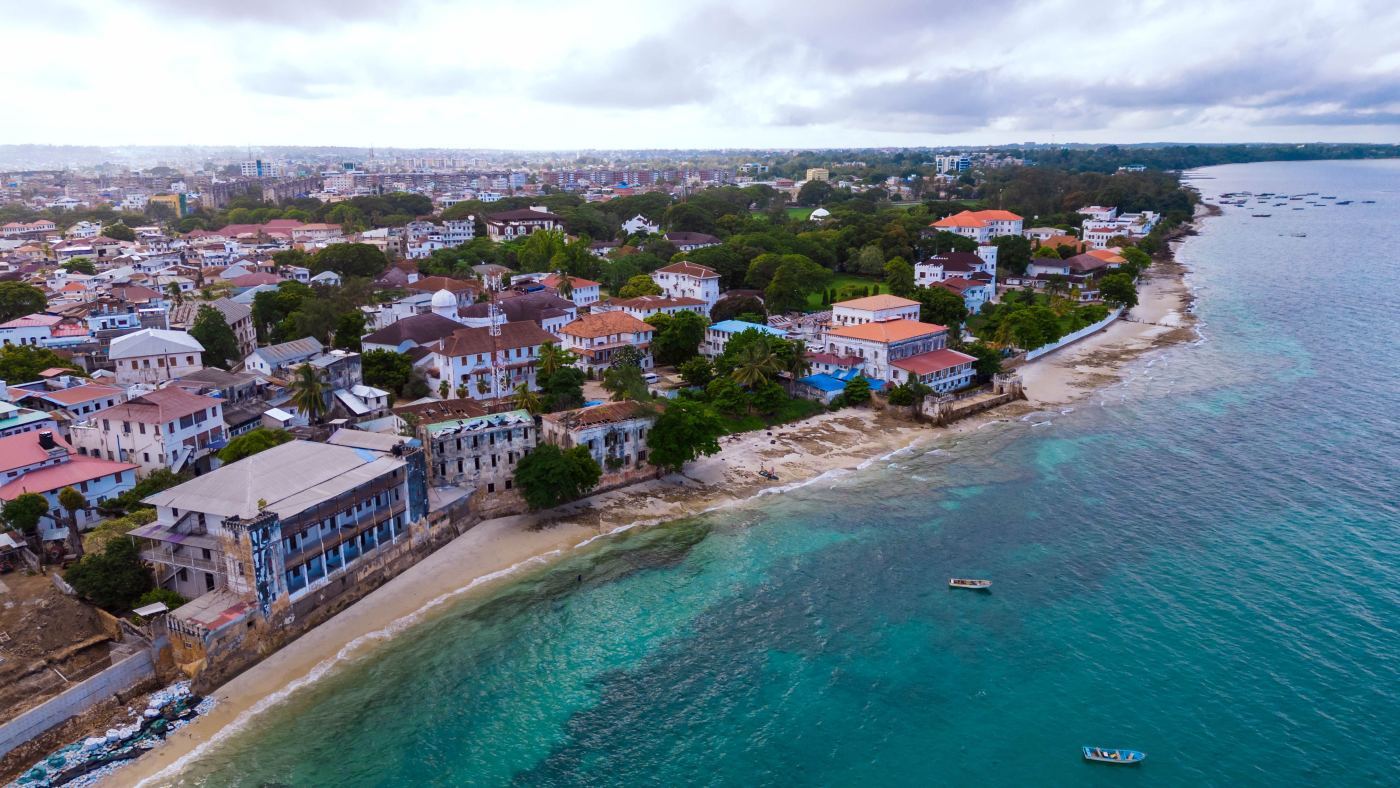
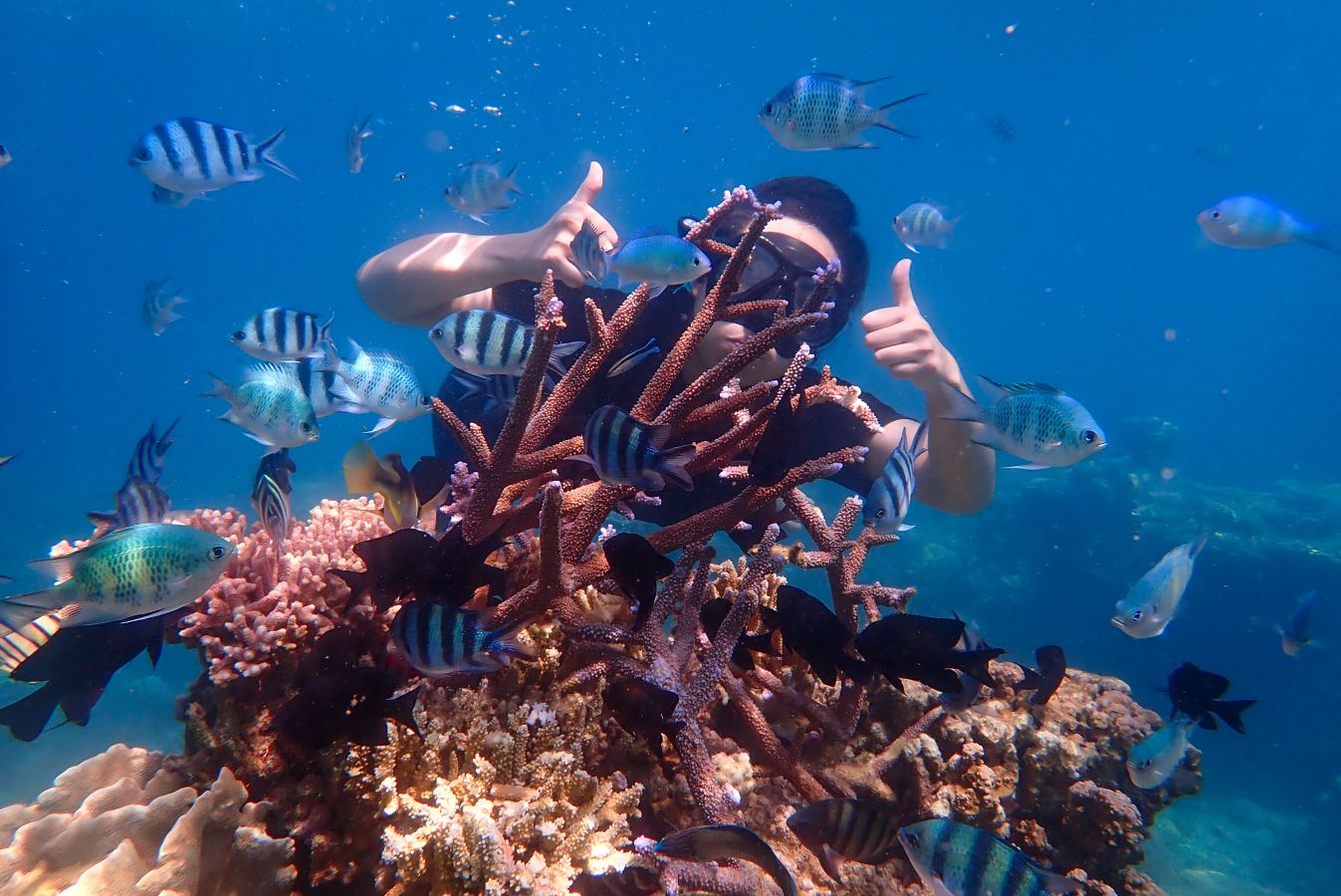
Jozani offers more than colobus. Its trails and mangrove boardwalk reveal Sykes' monkeys, bush babies, bushbuck, tiny Ader's duiker, chameleons and a rich birdlife, while the surrounding waters and coral reefs teem with fish, turtles and dolphins for those who snorkel or dive. Between the forest, the reef and the historic lanes of Stone Town, the island rewards curious travellers handsomely — just not with leopards. Recognising honestly what Zanzibar can and cannot offer is the key to enjoying it for what it truly is: a superb cultural and marine destination with one remarkable, and very much living, endemic primate.
See a leopard in the wild
The Serengeti's Seronera Valley is one of the best places in Tanzania to find leopards resting in sausage trees and acacias. Our Serengeti safaris are private, with your own vehicle and guide, and many guests finish on Zanzibar: see Serengeti and Zanzibar.
Wild animals are never guaranteed, but a guide who knows the area gives you a much better chance. Tell us your dates.
Related reading: Is Tanzania safe right now? What the travel advisories say (October 2026).
Where you can still see leopards: the Serengeti
For travellers who fall in love with the idea of the leopard and want to see one in the flesh, the answer lies not on the coast but on the mainland, a short flight away. Tanzania's northern parks hold thriving populations of the mainland leopard, and few places on earth offer better sightings than the Serengeti. Here leopards drape themselves along the horizontal boughs of great sausage trees and riverine acacias, often in the Seronera Valley, resting through the heat of the day within easy view of a patient game-drive vehicle. This is the living, breathing leopard that its island cousin once mirrored.
Finding leopards reliably is a matter of knowing where to look, and this is where local expertise earns its keep. Our Sokwe guides know the specific trees and drainage lines the Serengeti's leopards favour, the times of day they are most active, and how to read the alarm calls of monkeys and impala that so often betray a hidden cat. Pair a few days on the plains, where leopard, lion and cheetah are all in play, with a beach and forest finale on Zanzibar, and you get the best of both — some of Africa's best big-cat country followed by the island's culture, reefs and endemic colobus.
Plan your Tanzania safari and Zanzibar escape with Sokwe
The Zanzibar leopard may be lost, an island original undone by isolation, belief and time, but its story leads naturally to a wonderful journey — the great cats of the Serengeti followed by the beaches, spice lanes and living wildlife of Zanzibar. That is exactly the kind of trip we love to build: some of Tanzania's best leopard country among the Serengeti's trees, then the island for its red colobus, its reefs and, if you like a good mystery, the lingering ghost of the cat that may or may not still be out there. Tell us your dates and what draws you, and Sokwe Africa Safaris will design a Tanzania wildlife safari and Zanzibar escape that gives you both the best odds and the wonder.
Frequently asked questions
Are there leopards in Zanzibar?
None confirmed. The Zanzibar leopard is officially regarded as extinct, and a 2018 camera-trap clip is unproven: it may have shown a feral or wild cat rather than a leopard.
Is the Zanzibar leopard extinct?
Officially, yes. Surveys in the mid-1990s found no living animals, and no clear photographs, hair or droppings have been confirmed since.
Why was the Zanzibar leopard hunted?
Many islanders believed witches kept leopards and sent them to cause harm, so the cats were persecuted as dangerous and evil. Campaigns to eradicate them, together with habitat loss, pushed the population to collapse.
Where can I see leopards in Tanzania?
In the Serengeti, especially the Seronera Valley, where leopards rest in sausage trees and acacias. Tarangire and the Ngorongoro area also have leopards, though sightings are less frequent.