
Many travellers who have done self-drive trips in southern Africa ask whether they can do the same in Tanzania. It is a fair question, since a self-drive safari can feel more independent and appeal to people who like to plan their own route. The honest answer is that it is possible in some places and with conditions, but it is much less common than in countries like Namibia or South Africa, and most visitors who try to compare it end up choosing a driver-guide. This guide explains the reasons, with the caveat that rules and fees change, so you should verify the current position with the authorities before you commit.
The short answer
Self-driving in Tanzania is not the straightforward option it is elsewhere. Some national parks allow private vehicles, but costs for self-drive visitors can be higher, navigation is difficult, roads are rough and help is far away. In Ngorongoro Crater, sources agree that visitors who drive themselves must be accompanied by a guide, usually a ranger, inside the crater. Most visitors, including most experienced travellers, find that a private vehicle with a professional driver-guide is safer, less stressful and gives a much better wildlife experience.
What the rules say, and what we cannot confirm
We want to be careful about this section, because the rules are set by the park authorities and they change. We could not find a single current official statement of the self-drive rules for all parks, and much of what is written online comes from travel blogs and forums. What the sources we checked agree on is this: private vehicles can enter some Tanzanian parks, fees can be higher for self-drive visitors than for visitors on an organised tour, and the Ngorongoro Conservation Area has specific requirements for the crater.
For Ngorongoro, the reports we found say that a self-driving visitor must take a ranger-guide inside the crater, that the guide is not allowed to drive your vehicle but only to accompany you, that the guide has a separate fee paid in cash, and that permits for the conservation area and the crater cannot simply be bought at the gate but need to be arranged beforehand, often through a licensed operator. For the Serengeti and the other TANAPA parks, we found no reliable source on whether a guide is mandatory. Please do not rely on a blog, including this one; check with TANAPA and the Ngorongoro Conservation Area Authority, or ask a licensed operator, before you plan anything around it.
Why most visitors do not self-drive
The first reason is finding the animals. Wildlife is not spread evenly or visible from the road, and much of the skill of a safari lies in knowing where to look and how to read the signs: a flick of a tail, alarm calls from birds, a line of vultures, a gathering of vehicles. A professional guide has years of local knowledge and is in constant radio contact with other guides about sightings. Without that, self-drive visitors tend to see far less, and to spend long hours driving empty tracks.
The second is navigation. In big parks like the Serengeti, tracks are numerous, signage is limited, mobile signal is patchy or absent and it is genuinely easy to get lost. Park maps help, but they do not replace local knowledge, and getting lost at dusk in a park with lions and elephants is something you want to avoid. The third is the roads: surfaces can be rough, corrugated, muddy after rain and occasionally impassable, and a breakdown or puncture in a remote area can mean a long wait for help.
The practical problems
Costs are a surprise to many. Self-drive involves vehicle hire, fuel, insurance, park fees that may be higher than for tour vehicles and often a guide fee in places like the crater. Four-wheel-drive vehicles suitable for park roads are not cheap to hire, and companies set conditions on where you may take them. By the time all this is added up, the self-drive option is often not cheaper than a private safari with a driver-guide, which includes the vehicle, fuel, the guide and the logistics.
Insurance and licensing also need care. Check what your travel insurance covers if you drive yourself in remote areas, and what the rental company's insurance excludes, such as damage from river crossings, tyres and underbody damage. Check the driving licence requirements with the rental company, since many require an international driving permit and the rules on foreign licences can change. Tanzanians drive on the left, and traffic on the roads between towns can be fast and unpredictable, with overtaking, trucks, livestock and pedestrians.
Related guides: is Tanzania safe for tourists, private safari in Tanzania, safari costs and park fees. Or see our private Tanzania safari options.
See also our guide: Do safari guides carry guns in Tanzania? What armed rangers do and what your guide does not.
Safety and wildlife etiquette
Driving in a park carries responsibilities that guides learn over years. You must stay on designated tracks, keep to the speed limit, never approach animals closely and never get out of the vehicle except at designated places. Elephants and lions can react if vehicles crowd them or cut off their path, and a misjudgement can be dangerous for you and for the animal. Guides know how to position a vehicle, how to read an elephant's mood and when to move away, and they are trained in what to do if something goes wrong.
There are also the everyday risks: heat, dehydration, punctures, getting stuck in mud or sand, running out of fuel and being out of contact. In a self-drive situation these fall entirely on you. In addition, the general advice about Tanzania's roads applies: avoid driving at night, avoid long road legs when tired and avoid travelling alone in remote areas. If you want to understand the wider safety picture, our guide on whether Tanzania is safe for tourists covers it.
What a driver-guide gives you
A good driver-guide does several jobs at once. They drive safely on difficult roads, find the wildlife, interpret what you are seeing, handle the paperwork at park gates, manage the logistics of lodges and meals and look after you if something goes wrong. They know where the cats are likely to be at different times of day, which tracks are passable after rain, which waterholes are active and when to arrive at a sighting to avoid the crowds. You are free to look, photograph and enjoy.
In practice this is the main reason most experienced safari-goers, including people who have self-driven elsewhere in Africa, choose a guide in Tanzania. The wildlife is more spread out, the parks are larger and the tracks are less clear, so the benefit is greater than in smaller, more structured parks. A private vehicle also gives you control, which is what many self-drive enthusiasts are really after: you decide when to leave, how long to stay and what to skip.
How Tanzania differs from the self-drive countries you may know
Travellers who have self-driven in Namibia, South Africa or Botswana often assume Tanzania works the same way, and the differences matter. Those countries have extensive self-drive infrastructure: well-signed parks, campsites that are easy to book and a culture of independent travel. Tanzania's northern circuit is built around operator-led travel, with fewer places set up for self-drive visitors, a booking system that favours organised tours and parks of enormous size where help can be hours away. This is not a criticism, simply a description of how the destination has developed.
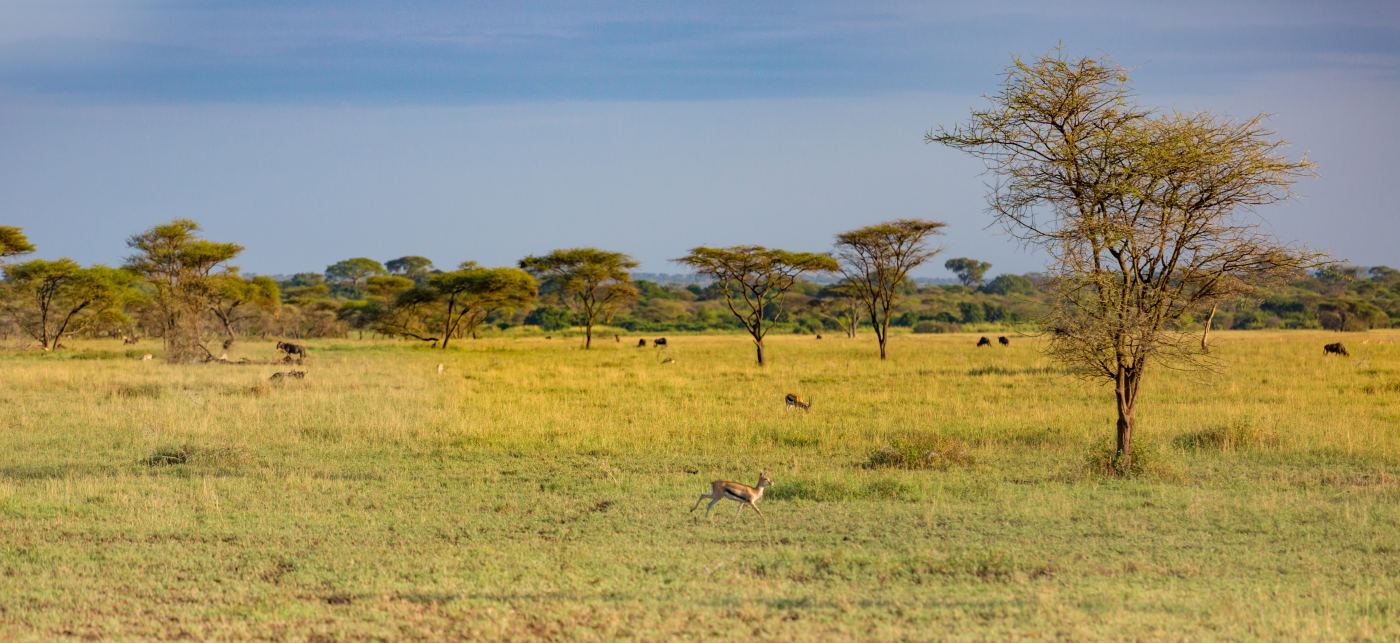
The scale also changes the experience. A day in the Serengeti can mean several hours of driving between areas, with long stretches empty of animals and then sudden concentrations of them. The migration moves around the ecosystem through the year, and where the herds are today may not be where they were last week. A guide in constant contact with colleagues knows this in real time, and can turn a long, empty drive into a decisive one. For most self-drivers, that gap is the deciding factor.
If you still want more independence
There are ways to get much of the independence you want without driving yourself. Book a private vehicle and a guide, and tell them you want a flexible schedule with long sits at sightings, no fixed timetable and the freedom to change plans. Ask for a photographer's setup, with a roof that opens and beanbags, if that is your interest. Choose camps with a lot of flexibility, such as small private camps where meals and drives are shaped around you. A good operator will welcome the conversation.
If you do want to drive yourself on parts of the trip, for example between towns or on a lodge-based self-guided leg in a non-park area, speak to a licensed operator about what is possible and what is allowed. They can tell you the current rules, arrange permits and make sure you are not caught out at a gate. We would not recommend driving yourself in the major parks without that advice, and we would never recommend driving at night.
Finally, think about what you want from the trip. If your main interest is driving, you may enjoy the roads and the freedom, but you will probably see fewer animals and carry more responsibility. If your main interest is wildlife, photography or simply relaxing, a guide is the better choice, because you can focus on the experience and leave the driving, navigation and logistics to someone who does them every day. Being honest about this at the start saves money, time and disappointment later.
Questions to ask before you decide
If you are weighing the options, ask yourself a few things. Do I know the park rules and fees for the parks I want, and have I verified them with the authorities? Am I comfortable with rough roads, navigation without signal and the possibility of a breakdown? Does my insurance cover self-drive in remote areas? Am I prepared to see less wildlife than I would with a guide? And does the cost, once everything is added, really beat a private safari? For most people, honest answers lead to a driver-guide.
We would rather you made the choice that suits you than the one that suits us, and we are happy to talk it through. If you are an experienced self-driver who wants a different kind of trip, we can tell you what is realistic, and where we think a guide makes a real difference. And if you want to see Tanzania at your own pace, with a private vehicle and a flexible schedule, that is exactly what we do.
Prefer independence with expert help? Ask Sokwe Africa Safaris about a private vehicle and a flexible schedule built around you.
Frequently asked questions
Can you self-drive in the Serengeti?
Reports suggest private vehicles can enter Tanzanian national parks, but fees can be higher, navigation is difficult and mobile signal is limited. Check the current rules with TANAPA or a licensed operator before planning, as we could not confirm an official statement.
Can you self-drive in Ngorongoro Crater?
Sources agree that visitors who drive themselves need a ranger-guide inside the crater, who accompanies you but does not drive, and that permits and fees need to be arranged in advance. Confirm the details with the Ngorongoro Conservation Area Authority.
Is self-drive cheaper than a private safari in Tanzania?
Not necessarily. Vehicle hire, fuel, insurance, higher park fees and guide fees add up, and a private safari includes the vehicle, driver-guide and logistics. Compare a full quote, not just the car rental price.
Is it safe to drive yourself in Tanzania?
It carries more risk than most visitors expect: rough roads, trucks, livestock and limited help in remote areas. We advise against driving at night or driving yourself in the major parks without professional advice.
Which side of the road do they drive on in Tanzania?
Tanzanians drive on the left. Check the licence requirements with your rental company, since many ask for an international driving permit.
Do I need a guide in the Tanzanian national parks?
Rules differ by park, and we could not find one official source for all of them. In Ngorongoro Crater a guide is required for self-drive visitors; for other parks, check with TANAPA or ask a licensed operator.