
What does Serengeti actually mean?
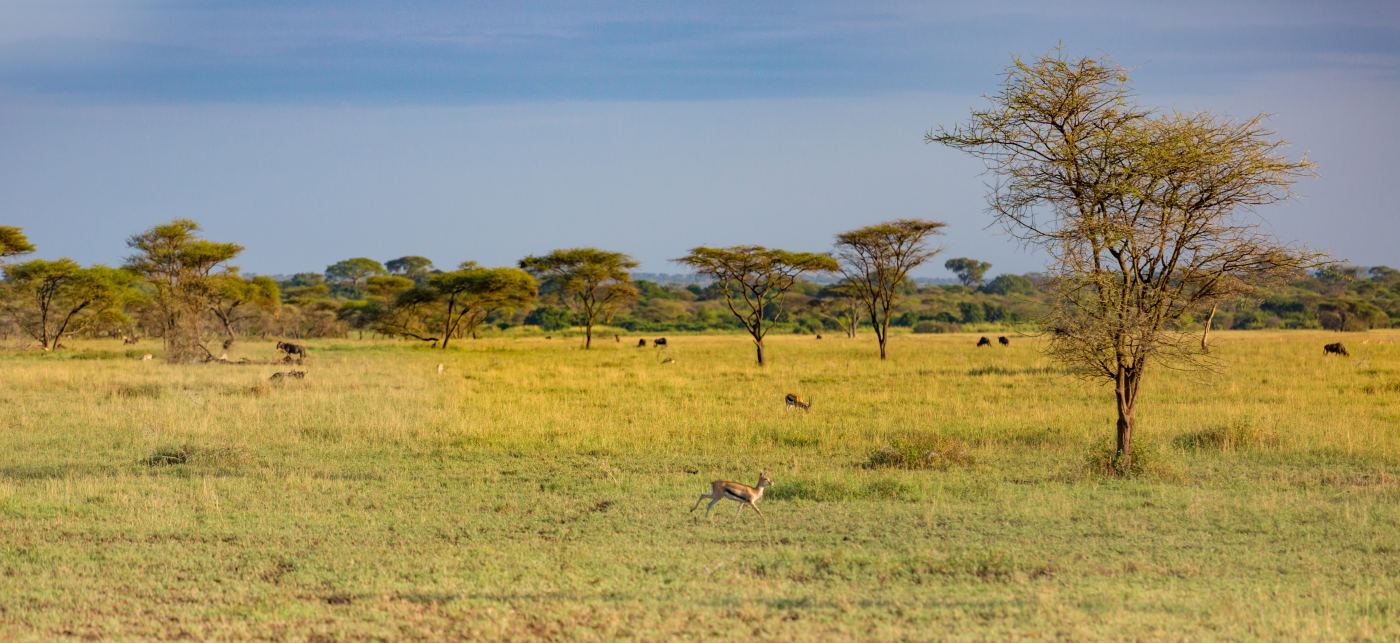
Serengeti National Park in Tanzania is the most famous wildlife reserve on earth, and yet most visitors arrive knowing surprisingly little about it beyond the name. The name itself is the best place to start: Serengeti comes from the Maasai word siringet, meaning endless plains — the place where the land runs on forever. Stand on the short-grass plains in the south of the park and the definition explains itself: grass to every horizon, a sky that seems twice its normal size, and more large mammals than anywhere else on the planet.
But the endless plains are only part of the story. The Serengeti is a park of remarkable variety — open grassland in the south, granite kopjes and river valleys in the centre, wooded hills and the Mara River in the north, and the Grumeti River corridor stretching west. Understanding this geography is the single most useful thing you can do before booking, because where you stay in the park matters far more than most first-time visitors realise. This guide covers what the park is, how it is laid out, and how to visit it well.
How big is the Serengeti, and why does it matter?
The park covers 14,750 km², which makes it larger than Northern Ireland or the American state of Connecticut, and it is only the core of a much larger ecosystem that includes the Ngorongoro Conservation Area, several game reserves and Kenya's Masai Mara. The Serengeti has been a UNESCO World Heritage Site since 1981, recognised for hosting the largest remaining unaltered animal migration in the world. Around 1.5 million wildebeest, hundreds of thousands of zebra and gazelle, and the densest large-predator population in Africa live within its boundaries.
The size matters practically as well as impressively. Driving from the southern plains to the Mara River in the far north takes the best part of a full day, so you cannot treat the Serengeti as a single place to be ticked off. A traveller who books a lodge in the wrong region for their travel month can spend precious hours driving to where the action is. The park rewards those who plan around its geography — which is exactly what the next section is for.
The four regions of the park
Think of the Serengeti as four distinct safari destinations sharing one boundary. Each has its own landscape, its own season and its own reason to visit, and the great migration moves between them in a roughly clockwise circuit through the year. Choosing your region — or combining two — is the fundamental decision of any Serengeti safari, and it should always be driven by your travel dates rather than by lodge marketing.
Central Serengeti and Seronera — the year-round heart
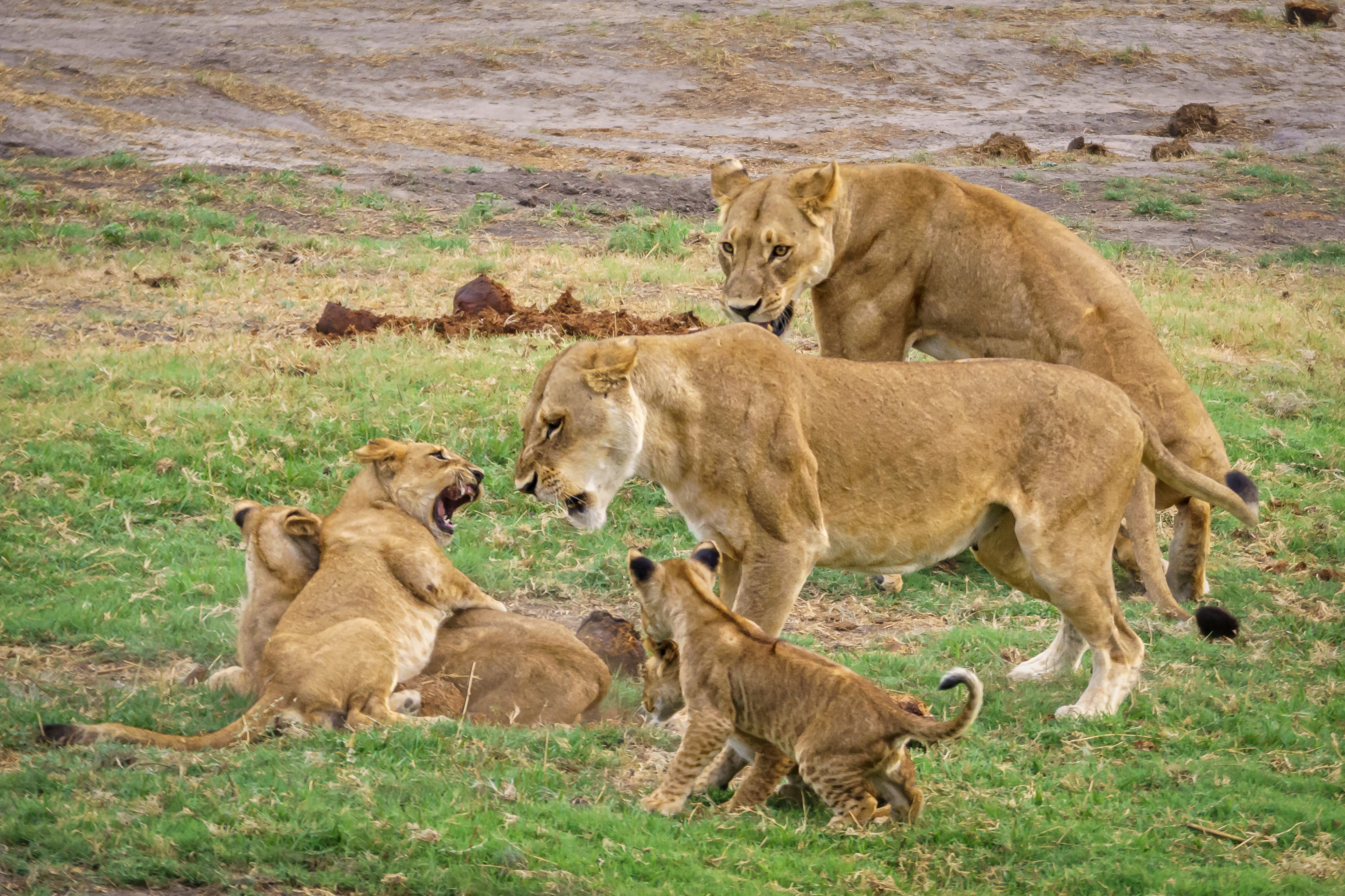
The Seronera Valley in the central Serengeti is the park's year-round engine room. Its rivers hold water through the dry months, so resident game — and the lion, leopard and cheetah that hunt it — stay in the valley regardless of where the migration happens to be. The granite kopjes that stud the central plains are classic lion territory and among the most beautiful landscapes in Africa. Seronera has the widest choice of lodges and the busiest airstrip; it is the sensible anchor for a first visit in any month.
Northern Serengeti — the Mara River and the crossings
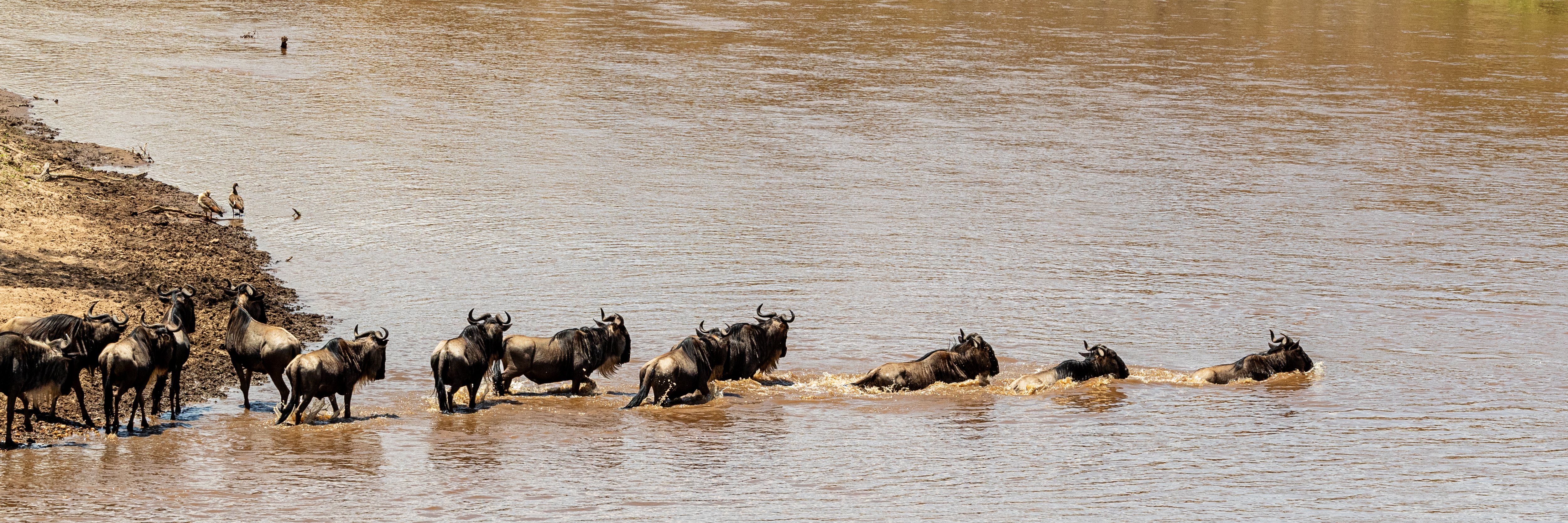
The northern Serengeti, around Kogatende and the Lamai Wedge, is where the famous river crossings happen. From roughly July to October the migration masses along the Mara River, and herds plunge through crocodile-filled water in the most dramatic wildlife spectacle on earth. The north is remote, beautiful and far less crowded than the equivalent viewing areas over the border in Kenya. We cover this region in depth in our guide to the Mara River area, but the short version is simple: if you travel between July and October, the north belongs on your itinerary.
Southern Serengeti and Ndutu — the calving season
From December to March the migration gathers on the short-grass plains of the southern Serengeti and the adjoining Ndutu area, and in a concentrated window around February some 500,000 wildebeest calves are born within a few weeks. The nutrient-rich volcanic soils make this the herds' nursery, and the predator action that follows is extraordinary — this is the best cheetah viewing of the year and a photographer's dream. The south is a seasonal destination: glorious in the green months, largely empty of migration once the herds move north in April and May.
Western corridor — the Grumeti River
The western corridor follows the Grumeti River towards Lake Victoria, and its moment comes around May to early July, when the migration pushes west and the herds face the river's enormous crocodiles. The west is quieter than the other regions all year, with a wilder, woodland character and some superb exclusive lodges and private concessions along its edge. For travellers in June it can be the smart alternative to waiting for the Mara crossings, and for repeat visitors it offers a Serengeti that feels almost private.
The great migration, briefly
The migration is not an event but a permanent condition: the herds never stop moving, following the rains in a circuit around the ecosystem all year. In broad strokes, they calve in the south from December to March, trek north-west through the centre and the Grumeti in April to June, spend July to October along the Mara River in the north, and stream back south in November. Every year varies with the rains — the migration reads the weather, not the calendar — which is why flexible planning and current local knowledge matter so much.
The most important thing we tell every guest is this: you do not choose when the migration happens, you choose where to be for your dates. There is no wrong month, only a wrong region for the month you travel. A February safari belongs in the south; an August safari belongs in the north; a June safari looks to the west and centre. Get the region right and the Serengeti delivers, every single time.
Wildlife beyond the migration
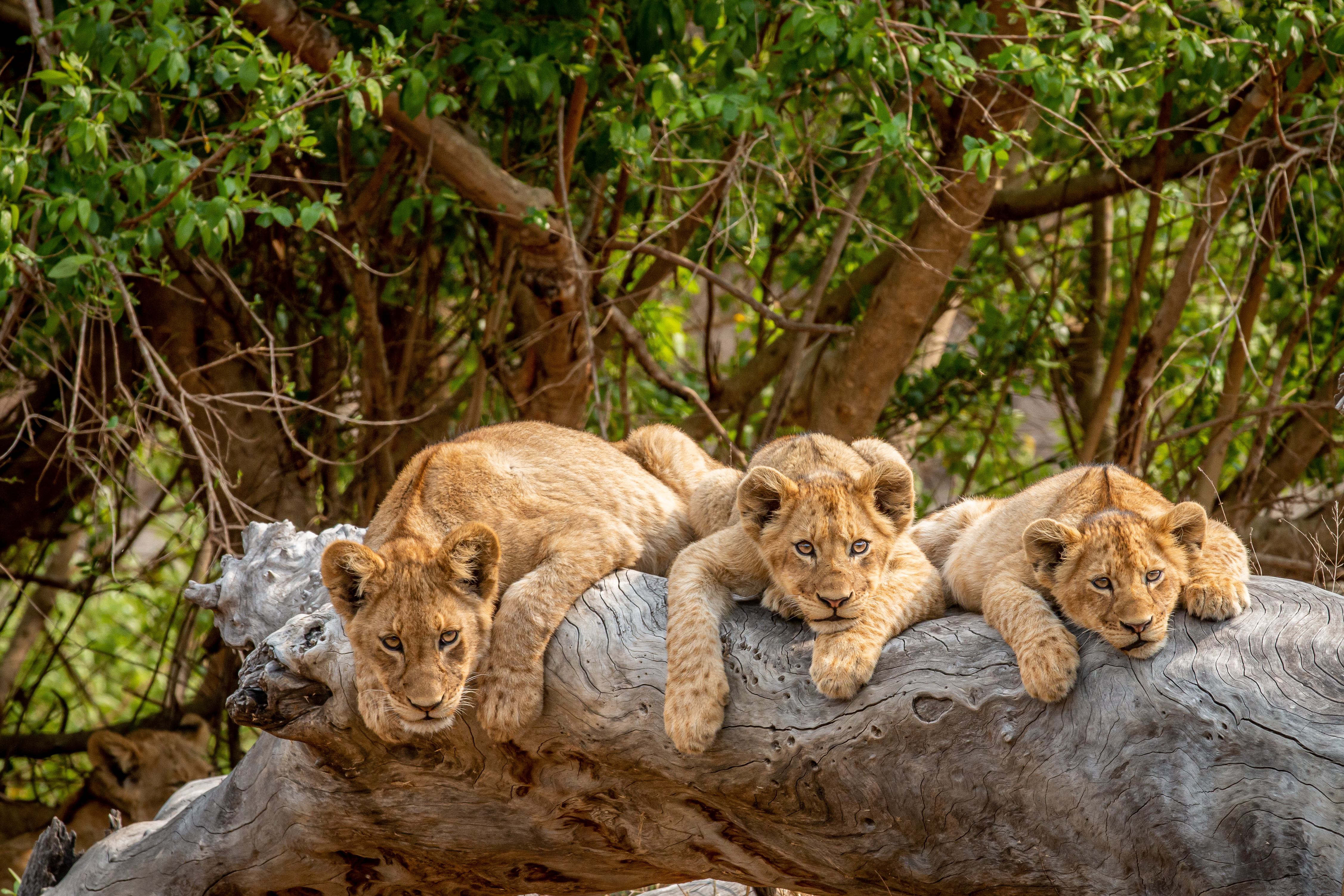
It is worth saying clearly that the Serengeti would still be Africa's finest park if the migration did not exist. The resident wildlife is astonishing in its own right: an estimated 3,000 lions in the ecosystem — the largest population anywhere — along with exceptional leopard viewing in the Seronera river valleys, healthy cheetah numbers on the open plains, and both spotted hyena clans and the rarer serval and caracal for the patient observer. Elephant, giraffe, buffalo and a dozen antelope species round out game viewing that never has an off season.
This is why a Serengeti safari works in any month, even for travellers whose dates miss the herds entirely. The big cats do not migrate; they hold territories around the rivers and kopjes and simply switch to resident prey when the wildebeest move on. Add over 500 recorded bird species, from ostrich and secretary birds on the plains to fish eagles along the rivers, and the park rewards every level of interest, from first-timer to obsessive photographer.
Park fees in context
Serengeti park fees are the highest in Tanzania, and it helps to see them as part of the cost picture rather than a surprise at the gate. As of 2026, non-resident adults pay 70 to 83 USD per day depending on season, plus a concession fee of roughly 50 to 71 USD per night for sleeping inside the park, plus 18 percent VAT on both — so a couple on a three-night stay contributes over 1,000 USD in fees alone. Our full breakdown of Tanzania park fees covers every category, but that is the honest headline.
Two points put the numbers in context. First, on a professionally arranged safari the fees are built into your quoted price — you never queue at a gate with cash — so their real effect is simply to explain why Serengeti itineraries cost more than those in smaller parks. Second, the fees fund the anti-poaching work and management that keep 14,750 km² of wilderness intact; they are, quite literally, the price of the endless plains still being endless. We consider them the best-spent dollars in travel.
How many days do you need?
Our honest minimum for the Serengeti is three nights. One or two nights, once you subtract arrival and departure logistics, gives you barely a day of real game viewing in a park the size of a small country — it can be done, but it shortchanges the very place you came to see. Three nights in a single region gives you two full days plus change, enough to settle in, follow a leopard sighting properly and let the park breathe around you rather than rushing between boxes to tick.
The ideal, if your time and budget allow, is four to five nights split across two regions — typically the central Serengeti plus whichever seasonal region matches your dates. That combination gives you the reliable year-round game of Seronera and the migration spectacle of the north, south or west, with a short drive or hop between them. Guests who give the Serengeti five nights almost never wish they had given it fewer; the reverse is heard all the time.
- 1–2 nights — possible but rushed; central Serengeti only
- 3 nights — our sensible minimum, one region done properly
- 4–5 nights — ideal; combine Seronera with the seasonal region
- 6+ nights — photographers and migration purists, two or three regions
Getting there: drive or fly?
There are two ways into the park and they suit different trips. The classic road route runs from Arusha through the Ngorongoro Conservation Area, crossing the crater highlands and descending onto the plains — around eight hours of driving to Seronera, but through some of the finest scenery in Africa, and it lets you build Ngorongoro Crater and Tarangire into the journey naturally. This is how most northern-circuit safaris work, and done over several days it is a superb road trip rather than a transfer.
Flying is the alternative: daily light-aircraft services from Arusha reach the park's airstrips in around one to one and a half hours, which is transformative if your time is short or your destination is the far northern Serengeti, an additional long drive beyond Seronera. Many of our best itineraries combine the two — drive in through Ngorongoro, game viewing along the way, then fly out of the Serengeti back to Arusha or onward to Zanzibar. You give up nothing and save a full day.
More on this in The Mara River crossing: when, where and how to see it.
If you are planning this route, read Ndutu Safari Lodge: the calving-season classic.
Related reading: Which Tanzania safari is best? Northern, southern or western circuit, and how to choose.
Where the Serengeti fits in a northern circuit
Almost nobody visits the Serengeti in isolation, and nor should they. The park is the crown of Tanzania's northern circuit, which typically runs Arusha, Tarangire, Ngorongoro Crater and then the Serengeti as the finale — a natural crescendo of landscapes that also happens to be the most efficient routing on the map. A classic seven-night circuit gives Tarangire one or two nights, the crater one, and the Serengeti three or four, and it remains, in our view, the finest first safari on the continent.
The park also pairs beautifully with a beach finish: direct flights link the Serengeti's airstrips with Zanzibar, so a week on safari flows straight into a barefoot week on the Indian Ocean. Whichever shape your trip takes, the principle from this guide holds — decide your month first, let the month choose your Serengeti region, and build the rest of the itinerary around that. It is the difference between seeing the Serengeti and truly experiencing it.
There is no wrong month for the Serengeti — only a wrong region for the month you travel.
Plan your Serengeti safari with Sokwe
The Serengeti is our backyard. Sokwe Africa Safaris is based in Arusha, at the gateway to the park, and our guides have spent their working lives reading its seasons — which crossing points are active this week, which kopjes hold cubs, which camps sit exactly where the herds will be for your dates. Tell us when you want to travel and what you want to see, and we will put you in the right region of the right park at the right time. That, in the end, is the whole art of the Serengeti.
Tell us your dates — we will plan your Serengeti safari
Frequently asked questions
Where is the Serengeti?
Serengeti National Park sits in northern Tanzania, in East Africa, running up to the Kenyan border where it meets the Masai Mara. It is the crown of Tanzania's northern circuit: around eight hours by road from Arusha through the Ngorongoro Conservation Area, or one to one and a half hours by light aircraft.
How big is the Serengeti?
The park covers 14,750 square kilometres — larger than Northern Ireland or the American state of Connecticut — and it is only the core of a much larger ecosystem taking in the Ngorongoro Conservation Area, several game reserves and Kenya's Masai Mara. Driving from the southern plains to the Mara River takes the best part of a full day.
What does Serengeti mean?
It comes from the Maasai word siringet, meaning endless plains — the place where the land runs on forever. Stand on the short-grass plains in the south of the park and the name explains itself: grass to every horizon, a sky that seems twice its normal size, and more large mammals than anywhere else on the planet.
Why was Serengeti National Park created?
To protect the plains and their migration from hunting and settlement. The Serengeti was gazetted as Tanzania's first national park in 1951, and UNESCO listed it in 1981 for hosting the largest remaining unaltered animal migration on earth. Today's park fees fund the anti-poaching and management work that keeps all 14,750 square kilometres intact.
How many days do you need in the Serengeti?
Three nights is our honest minimum — two full days plus change, one region done properly. Four to five nights is the ideal, splitting your time between the central Serengeti and whichever seasonal region matches your dates. Guests who give the park five nights almost never wish they had given it fewer; the reverse we hear all the time.
How much are Serengeti park fees?
As of 2026, non-resident adults pay 70 to 83 US dollars per day depending on season, plus a concession fee of roughly 50 to 71 dollars per night to sleep inside the park, plus 18 per cent VAT on both. On a properly quoted safari these are built into your price and never paid at a gate.