
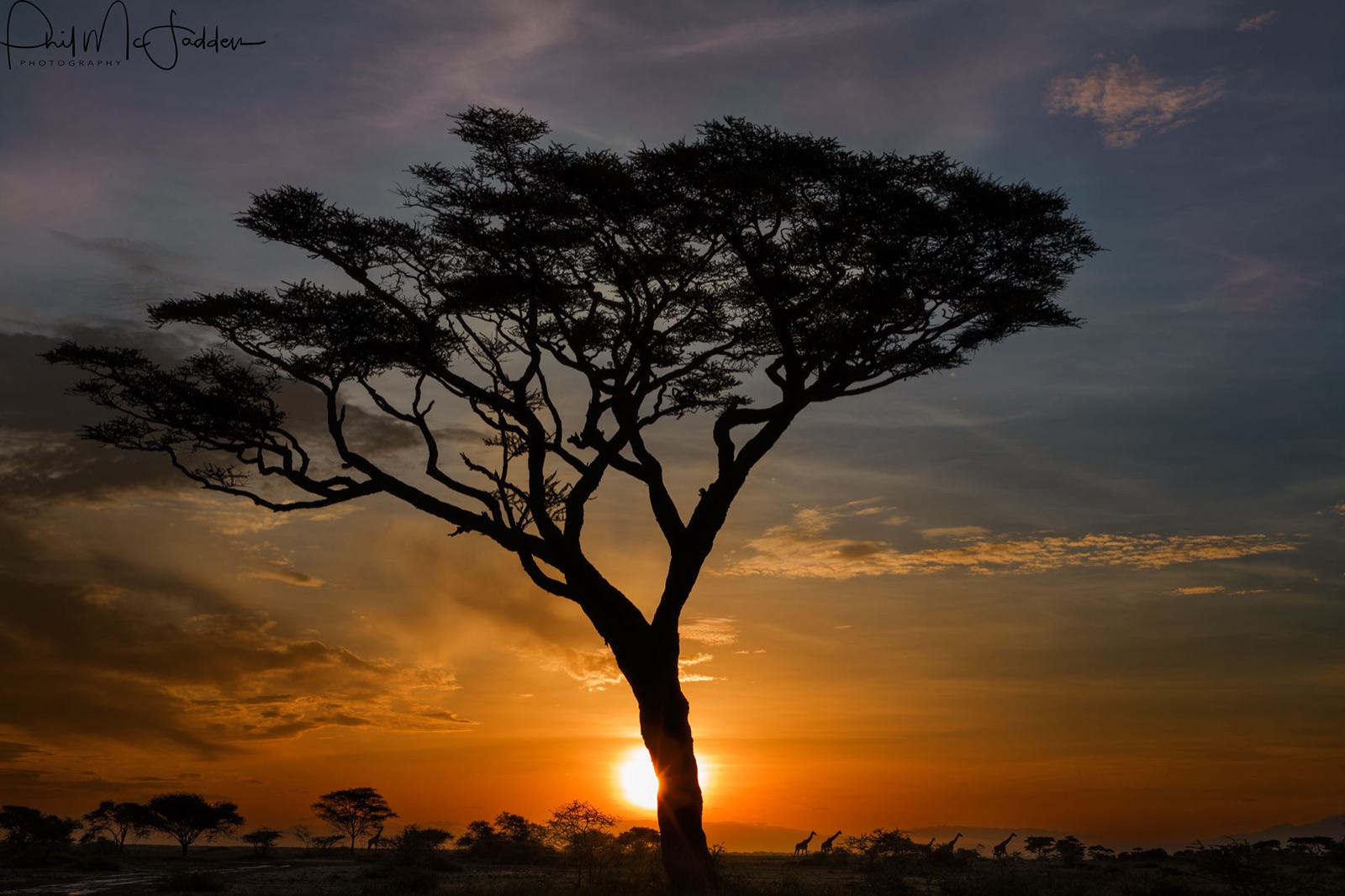
The short answer: safari means journey
The safari meaning that most travellers never learn is also the simplest one: in Swahili, safari means journey. Not a game drive, not a luxury tent, not a week of looking for lions — just a journey, of any kind, by anyone, to anywhere. A Tanzanian catching the bus from Arusha to Dodoma is on safari. So is a student flying to Nairobi, a trader driving to Mwanza, a grandmother going home to her village for Christmas. The word you have probably associated with khaki clothing and open-sided vehicles is, in the country that gave it to you, an ordinary word used dozens of times a day.
That gap between the English safari definition and the Swahili one is worth closing, because the history inside it is genuinely interesting — and not always comfortable. The word travelled from Arabic into Swahili, described trade caravans long before it described tourists, was carried into English by colonial hunters, was polished into myth by novelists, and then changed meaning again when the rifles were put down and the cameras came out. We are a Tanzanian company based in Arusha, and this is the story as we know it, without the romantic gloss.
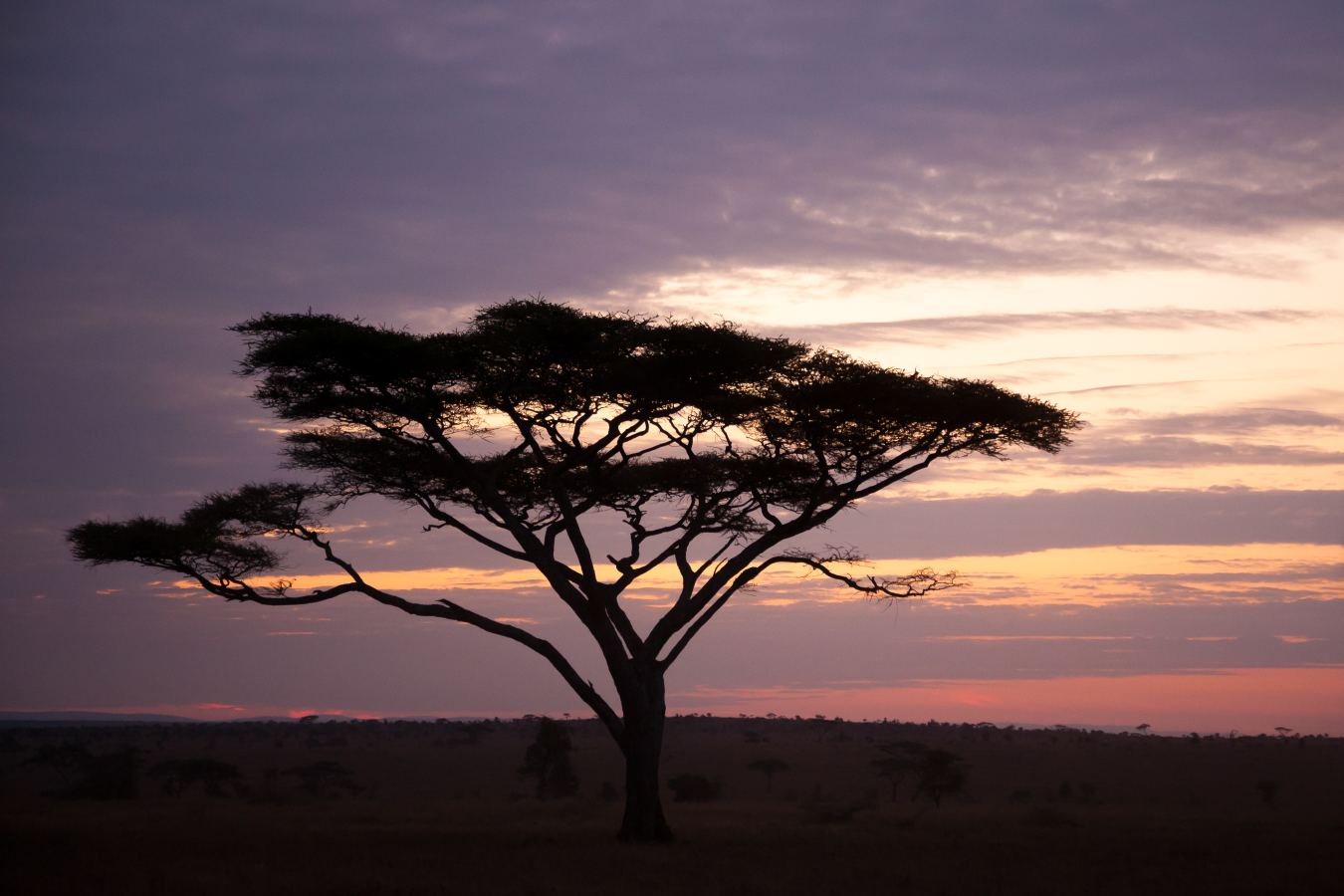
The Swahili root: safari, kusafiri, safari njema
Start with the grammar, because it explains a lot. Swahili builds meaning from roots, and this root gives you both a noun and a verb. Safari is the noun: a journey, a trip, a voyage. Kusafiri is the verb, to travel. Msafiri is the traveller. None of these words carries any hint of wildlife, wilderness or leisure. If you want to say game drive in Swahili you would not use safari at all — you would say something about going out to watch the animals, because safari alone only tells you that someone is going somewhere.
You will hear the word most often in a farewell. Safari njema means good journey, and it is what Tanzanians say to anyone leaving — at the bus stand, at the airport gate, at the end of a phone call. Travellers who pick up only a handful of Swahili phrases for travellers usually find this is the one that earns the widest smiles, because it is not a tourist phrase at all; it is what we say to each other. Karibu safari, welcome to the journey, is closer to how we think about your trip than any brochure line.
Before tourism: caravans, coast and the Arab trade routes
Swahili did not invent the word. It borrowed it from Arabic, where safar means journey or travel. That borrowing happened along the Swahili coast over centuries of monsoon-driven trade, when dhows ran between Arabia, the Gulf, India and the ports of what are now Tanzania and Kenya. Swahili is a Bantu language layered with Arabic loanwords precisely because the coast was a meeting place, and safari arrived on those ships alongside words for books, tables, time and money.
Inland, the word attached itself to the caravan. Through the nineteenth century, long trading columns left Bagamoyo and Zanzibar for Tabora, Ujiji and Lake Tanganyika, sometimes hundreds of porters strong, walking for months. Those expeditions were called safaris. Here honesty matters more than nostalgia: those caravans carried ivory, and they carried enslaved people. The routes that later brought explorers, missionaries and hunters inland were trade routes built on that commerce, and Bagamoyo's old buildings still stand as a reminder.
How the word reached English: the big-game hunting era
Safari entered English in the mid-nineteenth century through the writings of Europeans who had hired those caravans. Richard Burton, who set out from Zanzibar in 1857 in search of the great lakes, used the word in his accounts, and it spread through the explorer literature that followed. But what fixed safari in the English imagination was not exploration. It was the colonial big-game hunting era of roughly 1900 to the 1950s, when East Africa became the fashionable destination for wealthy Europeans and Americans who wanted to shoot large animals and be photographed beside them.
The scale of it is difficult to defend now. Theodore Roosevelt's expedition of 1909 to 1910, run with the Smithsonian Institution, collected specimens by the thousand. Hunting parties travelled with dozens of porters, gun bearers, cooks and trackers — African labour and African knowledge, largely uncredited — while the client was the one who appeared in the photograph. The English word absorbed all of it: the khaki, the tents, the trophies, the hierarchy. A plain Swahili word for going somewhere became a specific colonial performance, and that is the part most brochures quietly skip.
Hemingway, the movies and the myth
Literature and film then set the myth in place. Ernest Hemingway shot in Tanganyika in the 1930s and wrote Green Hills of Africa and The Snows of Kilimanjaro out of it; Hollywood followed with pictures that gave the world the visual shorthand of the safari — the wide hat, the campaign chair, the sundowner, the tracker pointing at the horizon. Karen Blixen's Kenya memoir added the elegiac note. The result endures in how safaris are still marketed, which is why the aesthetic can feel oddly frozen in 1935.
We do not think the answer is to sneer at it. Some of that writing is beautiful and the affection for this landscape in it was real. But it was written by visitors, about a place whose own people were scenery. To define safari honestly today you have to hold two things at once: a magnificent tradition of travelling into wild country, and a colonial framing that took an African word, an African skill set and an African landscape and made them the backdrop for someone else's story.
From rifles to cameras: how the meaning changed again
The shift began in earnest after independence. Wildlife populations had fallen, tourism was growing, and it became clear that a living elephant photographed by hundreds of visitors was worth vastly more, year after year, than a dead one sold once. Kenya banned hunting outright in 1977. Tanzania took a different route, keeping tightly regulated trophy hunting in certain game reserves while prohibiting it absolutely in the national parks — so in Serengeti, Ngorongoro, Tarangire, Ruaha and Nyerere, the only shooting is with a camera.
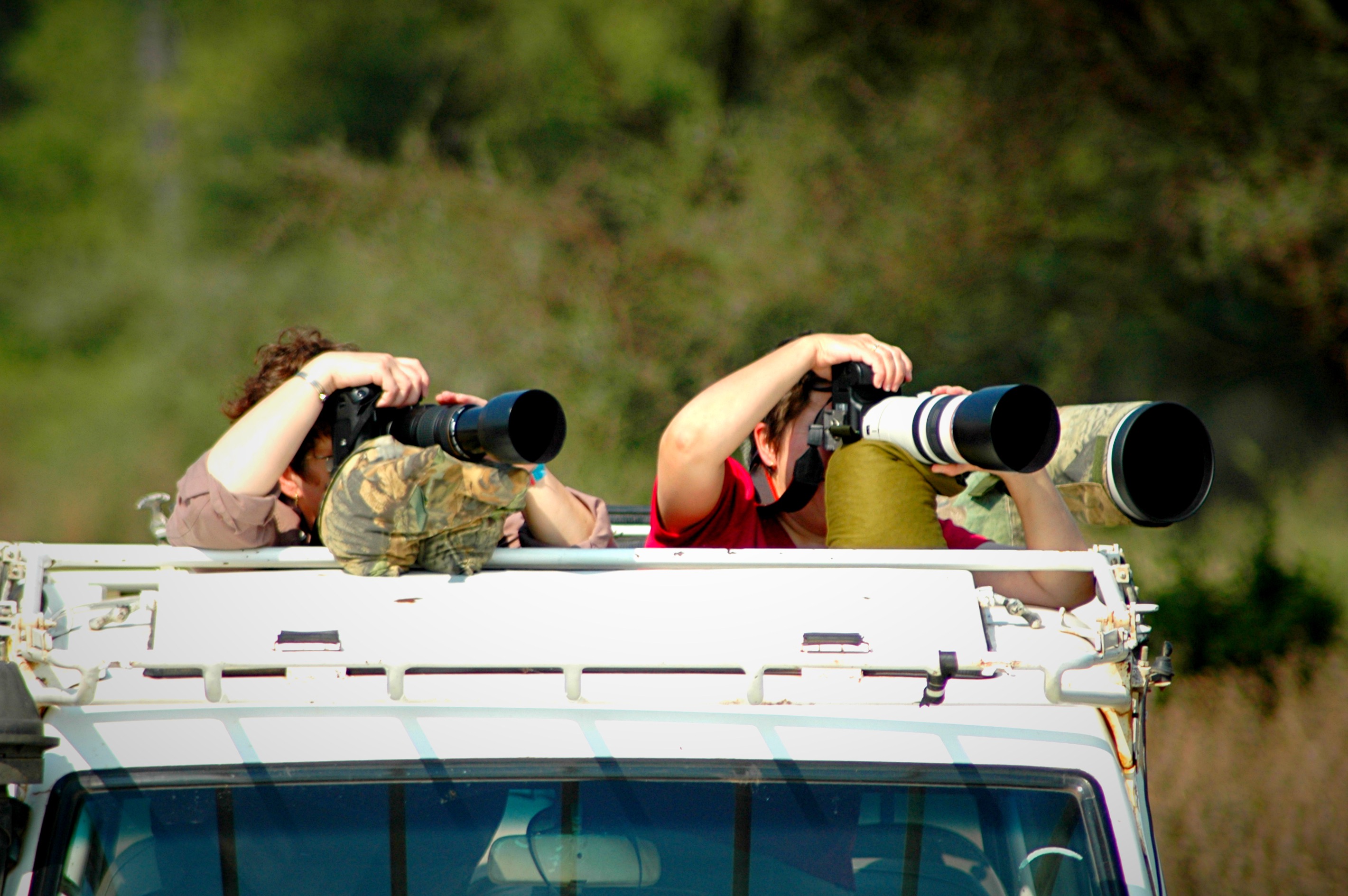
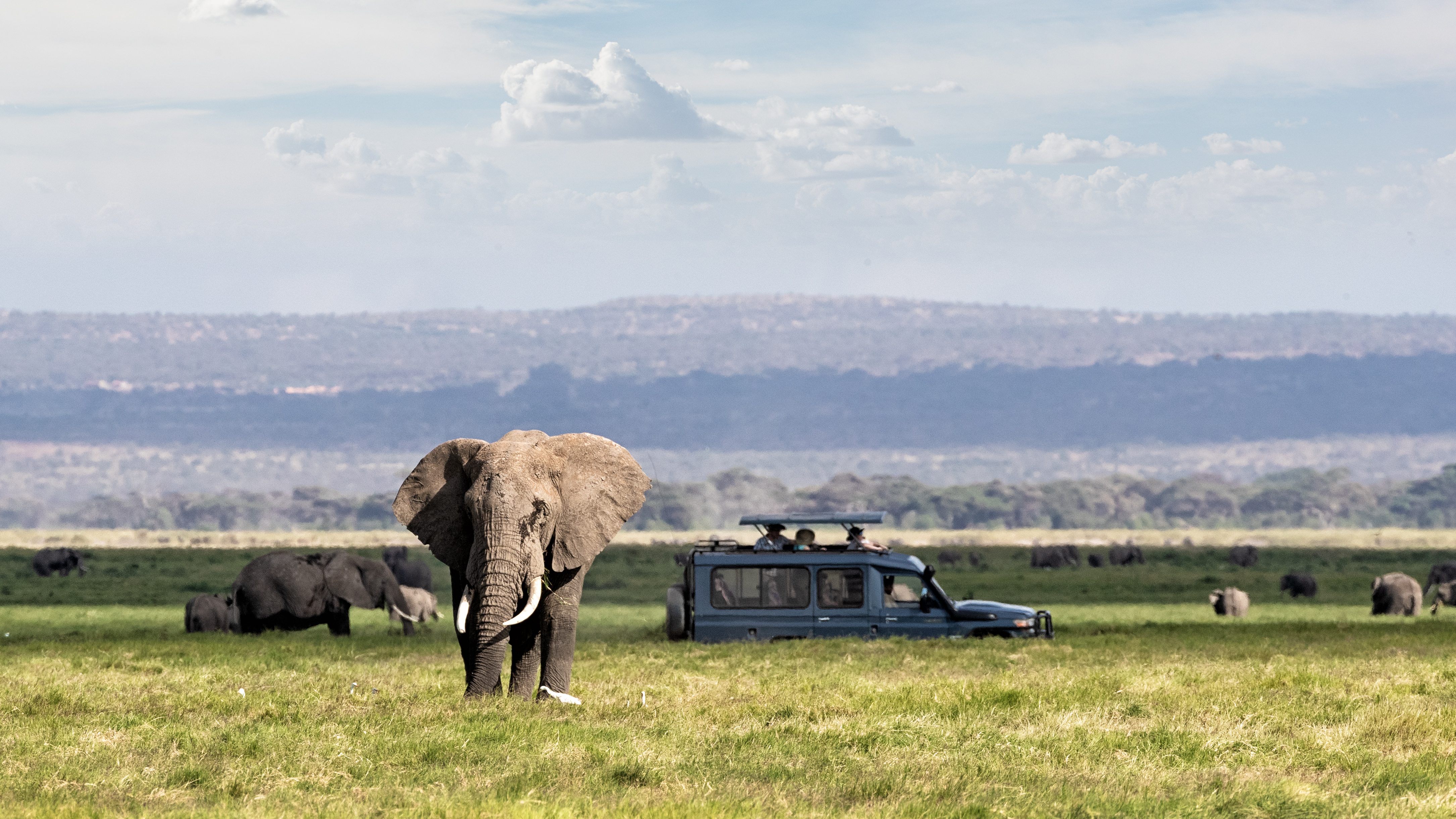
So what does safari mean now, in practice? For virtually every traveller who comes to Tanzania it means a photographic safari: days in a vehicle with a guide, finding animals, watching them behave, and leaving them exactly as you found them. The skills that made a good hunting outfitter — tracking, reading terrain, understanding wind and light and behaviour — turned out to be the skills that make a good photographic guide. The craft carried across intact; only the object of the exercise changed.
What conservation-funded tourism actually pays for
This is where the modern safari earns its keep, and it is worth being concrete rather than sentimental. Tanzania protects an unusually large share of its land — well over a quarter of the country sits inside national parks, conservation areas, game reserves and wildlife management areas. Protecting land on that scale is expensive. Rangers must be paid and equipped, boundaries maintained, roads, airstrips and research funded. Most of that money comes from visitors, through park and concession fees, and when visitor numbers collapse, as they did in 2020, budgets collapse with them.
You pay into this directly and visibly. Serengeti entry runs around 70 to 80 US dollars per person per day before tax, the Ngorongoro Conservation Area is similar with a crater descent fee of several hundred dollars per vehicle, and those fees are the single largest line in any honest safari quote. A mid-range Tanzania safari generally lands at 350 to 550 dollars per person per day all in, a good luxury camp 700 to 1,200 — but a substantial slice of that is the entry ticket to a landscape that stays protected partly because tourism pays for it.
None of that makes tourism a clean solution, and we would rather say so. Revenue sharing with communities beside the parks is uneven, some places carry more vehicles than they comfortably should, and the wildlife management areas meant to give villages a real stake have delivered mixed results. But the alternative to conservation-funded tourism is not untouched wilderness — it is farmland, charcoal and cattle, which is what happens to land that cannot pay for itself.
How Tanzanians actually use the word
Back home, the word remains gloriously ordinary. Ask a colleague in Arusha where the boss is and you may be told yuko safarini — he is on a journey, meaning he has gone to Dar es Salaam for a meeting. A bus company will advertise safari to Moshi and mean the six o'clock coach. Children go on safari to see their grandparents. Nobody hearing the word in Swahili pictures a leopard; they picture a bag being packed and a road going somewhere.
We rather like that our industry's name is such a plain word, because it keeps the thing honest. A safari is a journey. It happens to be a journey into some of the finest wildlife country left on earth, with people who have spent their working lives learning to read it, but it is still about going somewhere and paying attention. When a guide says karibu safari on your first morning, he is not performing a brand; he is using the same words he would use for any other journey.
So what is a modern safari, honestly?
Strip away the marketing and a Tanzanian safari today is a straightforward proposition. You fly into Kilimanjaro. You travel by four-wheel-drive or light aircraft between protected areas — Tarangire for elephants and baobabs, the Ngorongoro Crater for its density of game, the Serengeti for the plains, the predators and the migration, or Ruaha and Nyerere in the south if you want boats, walks and solitude. You sleep in a lodge or a tented camp, go out early, come back late, and spend the middle of the day out of the sun.
What determines whether it is a good safari has almost nothing to do with thread count. It is the guide, above everything, because the difference between a competent driver and a trained naturalist is the difference between seeing animals and understanding them. It is the itinerary — whether you are in the right area for the right month rather than being shuttled round a fixed loop. It is the vehicle and how many people share it. And it is pace: three parks in ten days beats five, almost every time.
A safari is not a product we invented for visitors. It is our ordinary word for a journey, and we are simply lucky in where ours happen to go.
- Safari is Swahili for journey; kusafiri means to travel
- Borrowed from Arabic safar, journey
- Described trade caravans long before tourism
- Entered English through explorers and colonial hunters
- Hunting is prohibited in all Tanzanian national parks
- Park fees fund the rangers and land you come to see
- Safari njema — good journey, said to anyone leaving
One last point on the safari meaning, because it changes how the trip feels. The word describes the going, not the seeing — a useful corrective to the checklist mentality that treats a safari as a list of species to collect, the Big 5 ticked off by Thursday. Some of the best days in the bush produce no dramatic kill and no rare cat. They produce an hour with elephants at a waterhole, a guide explaining why the wildebeest are all facing one way, and a very good cup of coffee somewhere improbable.
Safari njema — when you are ready for yours
If you have read this far you know the uncomfortable parts of the word's history as well as the beautiful ones, and that seems to us the right footing to start a journey on: no myth, no khaki nostalgia, just an honest account of where a word came from and what it still means to the people who use it daily.
Sokwe Africa Safaris is based in Arusha, and we plan trips one at a time rather than by the catalogue — tell us your dates, your budget and what you actually want out of it, and we will tell you honestly what is realistic in that month and in that range, including when the answer is to come at a different time of year. Safari njema — good journey. When you are ready for yours, we are in Arusha waiting.